

What are the benefits of virtual IT solutions for growing businesses?
Virtual IT solutions help growing businesses access secure, scalable technology without expanding a full in-house IT team. They can improve flexibility and efficiency by supporting remote access, centralised management and infrastructure that can adapt as the organisation develops.
Virtual IT solutions combine cloud-based infrastructure, remote management and outsourced technical expertise to provide a managed technology environment for a growing organisation. Their main benefits are access to specialist capability, more consistent governance, easier expansion, improved business continuity and a clearer basis for planning IT investment.
Access to specialist expertise
A growing business may need skills across infrastructure, cyber security, cloud platforms, connectivity and data protection without needing every specialism in-house. A virtual IT arrangement provides access to a broader range of technical knowledge through an external technology partner. This can help an organisation assess risks, plan upgrades and resolve complex issues using structured advice rather than relying on ad hoc troubleshooting.
This model is particularly useful when technology decisions have wider operational consequences. For example, changing a cloud configuration, replacing network infrastructure or introducing a new business application may affect access permissions, data handling, connectivity and user workflows. Specialist oversight helps these dependencies to be considered before changes are made.
More consistent IT governance
Virtual IT solutions can establish repeatable processes for user access, device configuration, software updates, backup management, monitoring and technical changes. Central records and standard procedures make it easier to identify what systems are in use, who has access to them and which controls need attention.
Consistency is important because security and operational weaknesses often develop through exceptions. A device configured differently from the rest of the estate, an account that retains unnecessary permissions or an unsupported application can create avoidable risk. Managed oversight helps bring these issues into a defined review and remediation process.
Support for controlled growth
As an organisation adds employees, sites, applications or operational processes, its IT environment becomes more complex. Virtual IT services can provide a framework for introducing those changes without treating every new requirement as a separate project. New users can be incorporated into established access and support procedures, while additional infrastructure can be assessed against existing standards.
This does not mean that growth is automatic or that every workload belongs in a virtual environment. Applications may have specific performance, integration, compliance or connectivity requirements. A suitable solution therefore starts with an assessment of the organisation’s workloads, dependencies and future plans.
Better visibility of the technology estate
Managed virtual environments can make it easier to monitor systems, identify recurring faults and review capacity. Visibility supports more informed decisions about hardware replacement, cloud resources, software licences, connectivity and cyber security controls. It also helps separate an isolated technical fault from a wider pattern affecting multiple users or locations.
For decision-makers, this creates a more useful relationship between technology and business operations. IT discussions can be based on documented requirements and observed usage rather than assumptions about what equipment or services are present.
Stronger continuity planning
Virtual IT solutions can support disaster recovery by reducing dependence on a single physical device or location, provided that the underlying design includes appropriate backup, recovery and access arrangements. Critical workloads can be assessed for their recovery requirements, dependencies and acceptable disruption. Recovery procedures can then be documented and reviewed rather than being left to informal knowledge.
The benefit is not simply having systems hosted away from the office. A continuity plan must also account for identity services, connectivity, backup integrity, user access, applications and the people responsible for recovery. These elements should be tested and updated as the business changes.
Improved security management
Virtual IT can make security controls easier to apply consistently across users, devices and systems. Examples include managed access permissions, multi-factor authentication, endpoint protection, patch management, email security, network controls and monitoring. The exact controls required depend on the organisation’s risk profile and the information it handles.
Centralised management can also make it easier to remove access when someone changes role or leaves the organisation, review unusual activity and maintain evidence of administrative actions. These practices support risk reduction, although they do not replace staff awareness, appropriate policies or regular security reviews.
A more structured approach to IT expenditure
Virtual IT solutions can help businesses distinguish between routine operational requirements, planned improvements and larger infrastructure projects. This can make budgeting and prioritisation clearer. Instead of responding only when equipment fails or a service becomes unsuitable, the organisation can plan around lifecycle information, business priorities and identified risks.
The financial model varies between providers and solutions. Charges may relate to users, devices, services, infrastructure or project work, so the commercial structure should be examined alongside technical scope. A lower headline cost is not necessarily better if important support, backup, security or transition activities are excluded.
More capacity for internal teams
Where a business has internal staff with some IT responsibility, a virtual IT partner can take on defined operational or specialist tasks. This allows internal employees to focus on their core roles while retaining visibility over technology decisions. Responsibilities should be documented clearly, including who approves changes, manages suppliers, handles incidents and owns business-critical applications.
Overall, the value of virtual IT solutions comes from combining technical capability with repeatable management. Before implementation, a growing business should review its existing systems, connectivity, security requirements, legacy dependencies, recovery objectives and likely growth. S2 Technology Group can use this type of assessment to advise on managed IT, cloud solutions, cyber security and infrastructure requirements without assuming that one virtual model suits every organisation.
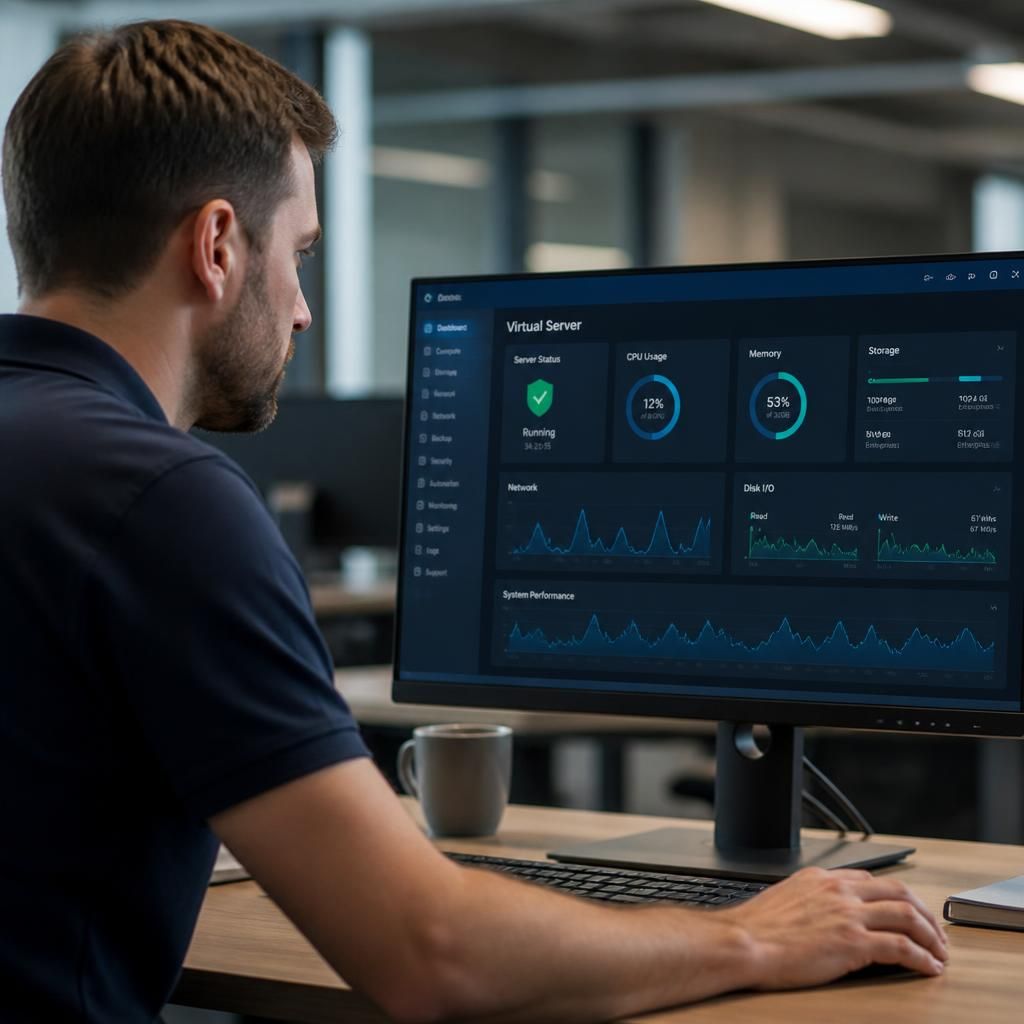
For businesses operating across multiple offices or a combination of office and remote locations, virtual IT solutions can provide a more consistent technology experience. Users can work within the same access framework, application environment and support process, rather than each location developing separate arrangements.
This consistency can simplify the introduction of new sites, changes to working arrangements and the use of shared business applications. It also makes location-based differences easier to identify, such as weaker connectivity, unsuitable equipment or access restrictions affecting a particular team. Reviewing these differences helps decision-makers address specific operational issues without redesigning the entire IT environment.
Discuss the benefits of virtual IT solutions for your business
Discuss your organisation’s requirements with S2 Technology Group to assess whether virtual IT solutions are suitable for your current systems and future plans. An initial review can identify relevant options, dependencies and priorities before implementation is considered.