

Outsourced IT for Your Business
Outsourced IT transfers responsibility for selected technology functions to an external provider. For a growing business, this can include service desk support, infrastructure management, cyber security and cloud administration, aligned with operational requirements and internal resources.
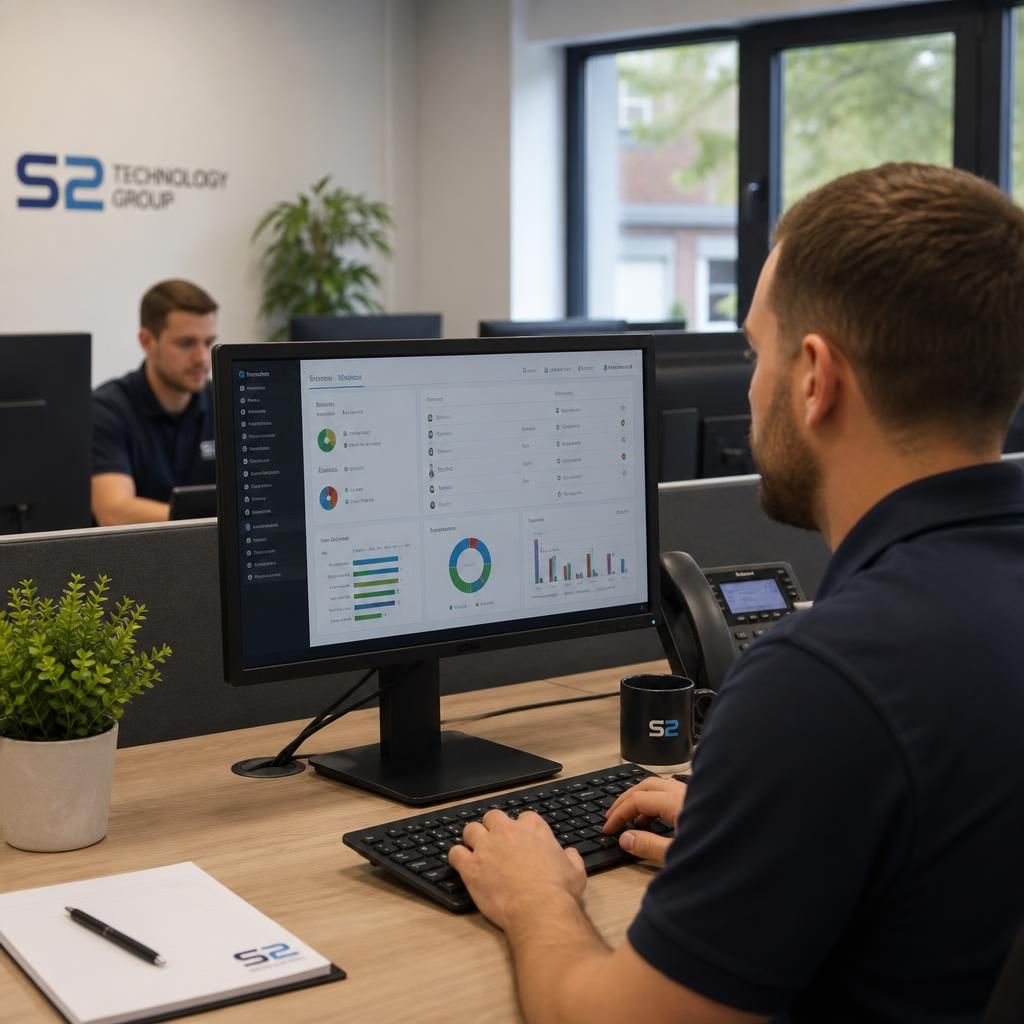
How Outsourced IT Fits Your Business
Outsourced IT is an operating model where an external provider carries out agreed technology responsibilities for a business. It does not have to replace every internal IT role: the organisation can retain strategic decisions, specialist knowledge or ownership of priorities while assigning defined work externally.
A sound arrangement begins with a documented scope covering systems, decision rights, security responsibilities, escalation routes and change management. Clear boundaries reduce duplicated effort and show whether an issue belongs to the provider, an internal team or another supplier.
The scope can be reviewed as the organisation changes. For example, project support may be added for a technology upgrade and adjusted after implementation. Regular review keeps outsourced IT aligned with business processes, risk management and future plans.
The S2 Approach to Outsourced IT
S2’s outsourced IT service is structured around practical business needs, combining strategic guidance with hands-on technical capability. The following strengths show how the service can support internal teams, manage technology risk and accommodate changing operational demands.
Flexible Service Scope
Outsourced IT can cover defined responsibilities rather than requiring a business to hand over every technology function. S2 can structure the service around the systems, workloads and internal capabilities that matter most to the organisation.
Clear Accountability
Documented responsibilities clarify which tasks sit with S2, the internal team or another supplier. This supports consistent decision-making across service management, infrastructure changes, security duties and supplier coordination.
Security Built Into Operations
Cyber security is considered alongside day-to-day IT management, rather than treated as a separate activity. This helps connect access controls, infrastructure decisions and operational processes within the outsourced arrangement.
Cloud and Infrastructure Capability
The service can support the management of cloud environments and core infrastructure as part of a wider technology plan. This is relevant to organisations developing their systems, supporting remote access or managing more complex IT estates.
Planned Technology Development
Outsourced IT can provide a structured basis for reviewing technology priorities and preparing for change. S2’s approach allows project work, upgrades and ongoing management to be considered within the same documented operating model.
The Risks of Relying on Informal IT Support
Outsourced IT is best assessed as an operating decision rather than simply a way to transfer technical tasks. The less obvious consideration is dependency: if knowledge, administration and access controls sit mainly with a provider, the business must retain enough visibility to make informed decisions and manage change.
Cost comparisons should therefore include more than the regular service charge. Transition work, software licensing, infrastructure changes, internal coordination and future exit requirements can all affect the true cost of outsourcing IT. Reviewing these elements helps distinguish a sustainable arrangement from one that only appears efficient at the outset.
The model can also provide an opportunity to identify ageing systems, duplicated tools and inconsistent working practices that are difficult to see when technology responsibilities are fragmented. S2 can help organisations assess these issues, prioritise practical improvements and shape outsourced IT support around operational requirements rather than adopting a one-size-fits-all package.
Choose the Right Outsourced IT Approach
Outsourced IT matches external expertise to the level of support an organisation requires. The appropriate model may address a skills gap, strengthen an internal team or cover ongoing technology administration.
The scenarios below compare options by operational need, helping you distinguish specialist project assistance from broader outsourced IT management. Use this to select the right level of involvement.
Outsourced IT Options by Business Need
Fill a Specific Skills Gap
Use outsourced IT for specialist expertise that is not available within the internal team, such as infrastructure, cloud or security knowledge.
Support an Internal IT Team
A co-managed arrangement adds external capacity for defined responsibilities while the organisation retains internal ownership of priorities and decisions.
Delegate Ongoing IT Management
A fully managed model assigns agreed responsibility for core IT administration, infrastructure oversight and user support to an external provider.
Assist with a Technology Project
Project-based outsourcing provides additional expertise for infrastructure upgrades, migrations or other changes without creating a permanent internal role.
Manage Cloud Administration
Outsource defined cloud responsibilities when the business needs structured administration of cloud platforms, access controls and related services.
Strengthen Cyber Security Oversight
External cyber security support can help maintain security responsibilities, review risks and coordinate practical controls alongside existing IT arrangements.
Questions to Ask About Outsourced IT
What evidence should an outsourced IT provider provide about security controls?
Define how performance is measured before signing: document service scope, reporting responsibilities, review criteria, user responsibilities and remedies for persistent gaps, ensuring the arrangement remains accountable as requirements change over time.
Which IT responsibilities should remain in-house rather than being outsourced?
Keep strategic direction, risk appetite, supplier governance and final decisions about data, access, business priorities and regulatory obligations in-house; outsource suitable operational tasks while retaining accountability and oversight for outcomes.
What role do subcontractors play in an outsourced IT service?
Subcontractors may deliver specialist services under the primary provider’s contract, but responsibilities remain clearly allocated. Check their access, vetting, competence, confidentiality, continuity arrangements and liability before authorisation by the business.
What should an outsourced IT exit plan include?
It should document termination notice periods, data export formats, credential and access revocation, asset return, knowledge transfer, outstanding projects, supplier dependencies and support during transition, with named owners and approval.
How can we assess an outsourced IT provider before committing long term?
Review documented processes, sample reports, technical capability, contract clarity, governance arrangements and cultural fit. Test assumptions through a defined pilot or review period before extending outsourced IT commitments for longer.
Ways Outsourced IT Can Support Your Business
Outsourced IT can be structured around particular responsibilities rather than adopted as an all-or-nothing arrangement. The options below show how organisations may assign support, expertise and oversight across user needs, technology changes, compliance obligations and operational planning.
User Support and Access
Outsource the day-to-day handling of user queries, account access, permissions and common technical issues. This can give employees a defined route for support while internal staff retain oversight of business priorities.
Device and Endpoint Management
Assign responsibility for configuring, maintaining and reviewing laptops, desktops and other business devices. A consistent approach helps address software standards, updates, encryption and device records across the organisation.
Cloud Administration
Use outsourced expertise for cloud accounts, storage, collaboration tools, backups and access settings. This can be useful where cloud services are important to operations but specialist administration is not needed as a full-time internal role.
Security Oversight
Outsourced IT can support security controls such as user permissions, patch management, monitoring and policy reviews. Responsibility should be clearly divided so the business understands who approves changes and manages risk decisions.
Connectivity and Sites
For businesses with multiple offices, remote users or complex connectivity needs, an external provider can coordinate networks, internet services and secure remote access. Documented ownership helps separate IT issues from telecoms or supplier responsibilities.
Technology Planning
Retain strategic control while using external expertise to assess priorities, plan upgrades and evaluate technology options. This approach supports informed decisions without requiring a business to build every specialist capability internally.
The Business Benefits of Outsourced IT
Outsourced IT gives a business access to an external technology function without the need to build every capability internally. This can make technical responsibilities easier to allocate, with defined ownership for day-to-day administration, planned improvements and specialist requirements.
A well-managed arrangement can also improve consistency. Standardised processes for user access, device configuration, software changes and security checks make it easier to apply the same controls across teams or locations, while providing a clearer basis for reviewing performance and identifying further improvements.
For growing organisations, outsourced IT can provide additional capacity as requirements change. S2 can support businesses in selecting the right responsibilities to outsource, coordinating technology work with operational priorities and maintaining a practical balance between external support and internal decision-making.
Frequently Asked Questions About Outsourced IT
How much does outsourced IT cost?
Businesses should assess which responsibilities require external expertise, the sensitivity of their systems, internal capabilities, governance needs and preferred working arrangements before selecting an outsourced IT provider or service model.
How is outsourced IT introduced without disrupting existing business operations?
Introduce outsourced IT through a phased transition: document current systems, agree priorities, test changes in a controlled setting, transfer knowledge, and schedule implementation activities around operational dependencies and existing responsibilities.
What can outsourced IT include for a small business?
For a small business, outsourced IT can include device and account administration, software platform oversight, backup monitoring, supplier coordination, technology planning, documentation and specialist project support when required by agreement.
How is outsourced IT performance measured?
Measure outsourced IT performance against agreed service levels, resolution quality, recurring incident trends, change success, security-control completion, user feedback and reporting accuracy, using reviews to guide adjustments and align priorities.
How does outsourced IT support compliance?
Outsourced IT supports compliance by assigning responsibility for access controls, audit records, policy enforcement, retention requirements and evidence collection, helping businesses demonstrate that agreed safeguards operate consistently across relevant operations.
Discuss Your Outsourced IT Requirements
Discuss your outsourced IT requirements with S2 to clarify which responsibilities should remain internal, which can be assigned externally and what support your organisation needs. An initial conversation can help define a practical scope for informed planning.