
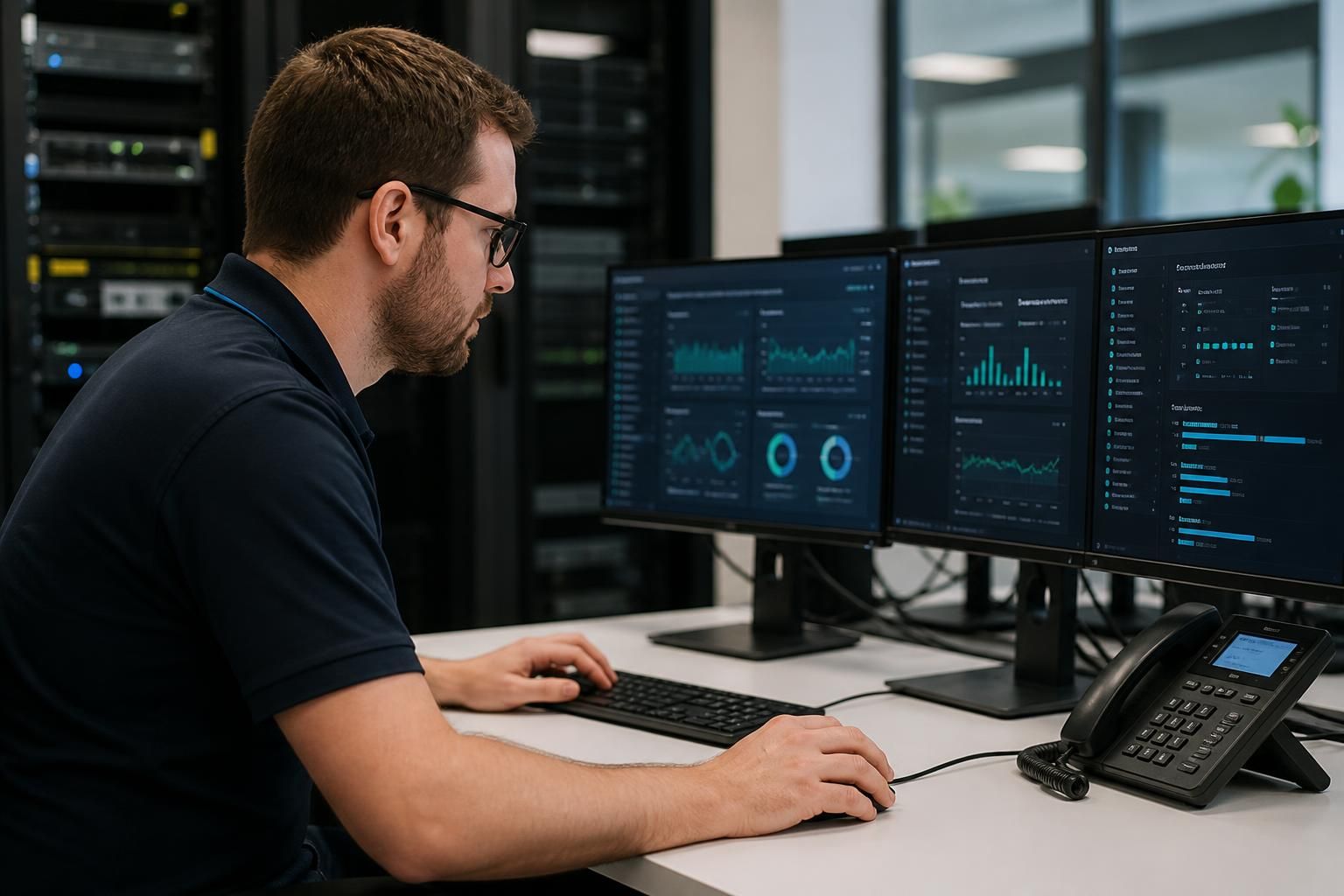
Managed IT Services
Managed IT services place day-to-day technology management with an external provider, covering areas such as infrastructure, user support, cyber security, cloud systems and connectivity. S2 Technology Group provides this for businesses that need structured oversight without a full in-house IT team.

From Reactive Fixes to Planned IT Management
Managed IT services replace a fix-on-failure model with a planned cycle of review, maintenance and improvement. The provider uses an agreed service scope to coordinate routine administration, identify risks and keep technology aligned with operational requirements.
Planning may include reviewing device and software inventories, checking security controls, assessing access arrangements and scheduling infrastructure changes. This creates a clearer basis for prioritising upgrades rather than waiting for an incident to expose a weakness.
For a growing organisation, the useful question is not simply who fixes faults, but how IT decisions are governed. S2 Technology Group combines ongoing management with IT consulting, cloud solutions, cyber security and connectivity advice, helping establish a practical roadmap for secure, scalable business IT.
What Sets S2 Managed IT Services Apart
S2 Technology Group’s managed IT services are structured around practical business requirements, combining clear accountability with technical oversight. Key strengths include the following areas, each supporting more consistent decisions, controlled change and sustainable technology management.
Business-Aligned IT Planning
Managed IT decisions are assessed against operational priorities, helping organisations distinguish essential improvements from lower-value technology changes.
Support for Growing Teams
S2 Technology Group provides technical oversight for small and medium-sized businesses that need dependable IT management without building a full in-house team.
Security Built into Management
Cyber security is considered alongside infrastructure, user access and cloud administration, rather than treated as a separate technical task.
Scalable Cloud Management
Cloud services can be reviewed as part of the wider IT environment, supporting practical decisions about access, collaboration, data and future requirements.
Joined-Up Technology Oversight
Infrastructure, connectivity, devices and business systems are considered together, reducing the risk of isolated changes creating wider operational problems.
When No One Owns the Whole IT Picture
Managed IT services are not only a way to delegate technical tasks; they establish an operating model for decisions that might otherwise sit informally with directors, office managers or individual technicians. This distinction matters because undocumented assumptions—such as why a system is configured, who owns a supplier relationship or when equipment should be replaced—can become operational risks.
A less obvious issue is reversibility. If a business cannot clearly identify its configurations, contracts, dependencies and change history, moving premises, adding a site, replacing software or recovering from disruption can become a reconstruction exercise. A managed IT service can make this information part of ongoing service management, giving project and support work a shared reference point.
This is where S2 Technology Group’s approach can extend beyond fault resolution: managed IT services can support documented standards, technology decisions and lifecycle planning alongside ongoing administration. For a growing organisation, examining how knowledge is recorded and transferred is a useful way to assess whether its current IT arrangement will remain workable as systems and responsibilities change.
Managed IT Services for Different Business Needs
Different organisations need different forms of managed IT support. The suitable option depends on whether you need a complete external IT function, added capacity for an existing team, specialist security oversight, or help with a defined change or recovery requirement.
Use the boxes to compare scope and identify the route that best matches your organisation’s responsibilities.
Choose the Managed IT Approach That Fits Your Organisation
A Complete External IT Function
Choose a fully managed service when your organisation needs an external provider to coordinate user support, infrastructure, cloud systems and cyber security as one defined IT function.
Support for an Existing IT Team
A co-managed approach can provide additional capacity for internal technicians by assigning routine administration, specialist work or agreed escalation responsibilities to an external provider.
Security-Focused IT Management
This option suits organisations that need ongoing oversight of access controls, security measures, device standards and cyber security risks alongside their wider IT management.
Cloud and Infrastructure Change
Use managed IT support when introducing cloud systems, upgrading infrastructure or changing connectivity and need implementation decisions to remain aligned with day-to-day operations.
Growing or Multi-Site Organisations
A structured managed service helps organisations with multiple locations or changing teams maintain consistent technology standards, documented dependencies and clear ownership of IT decisions.
Defined Projects and Recovery Needs
For a specific change, site move or recovery requirement, managed IT expertise can provide the planning, technical coordination and documentation needed without transferring every IT responsibility externally.
Questions to Ask Before Choosing Managed IT Services
What happens when a managed IT services contract ends?
An agreement should specify data ownership, documentation access, configuration records, supplier relationships and termination responsibilities, so the organisation retains operational control when circumstances change or providers are replaced in future.
What should managed IT services reporting include?
Useful reporting should connect service activity with business risk: incidents, recurring faults, unresolved vulnerabilities, asset changes, capacity concerns, projects, recommendations, and agreed actions, with ownership and status, recorded for review.
How do managed IT services adapt when business requirements change?
Adaptation should involve scheduled reviews, change control and prioritised planning, allowing users, sites, systems and risk controls to evolve without losing governance, documentation or accountability as needs evolve over time.
How are responsibilities defined in a managed IT services agreement?
A clear agreement assigns ownership for approvals, user administration, security decisions, supplier liaison, incident escalation, documentation and expenditure. It should also distinguish provider duties from client obligations and shared dependencies.
How does a managed IT services provider identify hidden dependencies?
Providers identify hidden dependencies through stakeholder interviews, asset discovery, configuration analysis and process mapping, revealing undocumented integrations, shared accounts, supplier links, network paths and failure points to support safer planning.
Explore Practical Managed IT Service Options
The options below show how managed IT services can be structured around operational priorities, from maintaining core systems to improving governance and resilience. Compare each focus area to identify which responsibilities deserve specialist oversight within your organisation.
User Support and Endpoint Management
A managed service can coordinate support for user devices, accounts and business software while maintaining consistent endpoint standards. This gives everyday technical issues a defined route and helps reduce variation between workstations.
Infrastructure Management
Servers, networks and core infrastructure require more than occasional fault finding. Ongoing management can cover configuration reviews, maintenance planning, capacity considerations and the dependencies between systems used by the organisation.
Cloud Administration
Cloud systems introduce decisions around account ownership, permissions, configuration and service dependencies. Managed cloud administration can provide structured oversight as employees, applications and business requirements change.
Cyber Security Management
Cyber security management brings protective controls into routine IT administration. This may include reviewing access arrangements, maintaining security standards, identifying weaknesses and coordinating improvements alongside wider technology changes.
Connectivity and Remote Access
Connectivity is part of the managed IT picture when staff, sites and cloud services depend on reliable network access. A structured approach can cover network requirements, secure remote access and the relationship between connectivity and other systems.
Governance and Technology Lifecycle
Managed IT can also support decisions about standards, suppliers, equipment and future projects. Recording ownership, dependencies and replacement considerations makes technology changes easier to assess and gives directors a clearer basis for prioritisation.
The Business Value of Managed IT Services
Managed IT services give a business a consistent way to organise technology support and administration through an external specialist. This can reduce the amount of routine technical work handled by directors, office managers or operational staff, allowing internal teams to focus on their main responsibilities.
A managed approach also helps apply the same standards across users, devices and locations. Processes such as setting up new starters, removing access for leavers and maintaining approved configurations can be handled as defined service activities rather than improvised each time, reducing avoidable variation as the organisation grows.
For decision-makers, the benefit is clearer ownership of IT responsibilities and a more informed basis for future investment. S2 Technology Group can help connect day-to-day management with wider business requirements, so changes to systems, users or infrastructure are considered as part of a structured technology plan.
Managed IT Services: Common Questions
How are managed IT services priced?
A suitable arrangement defines included responsibilities, escalation routes, security expectations, documentation and review arrangements. Before agreeing, confirm whether users, devices, cloud platforms, networks, backups and projects fall within scope.
What are the first steps when moving to managed IT services?
Begin with a discovery review covering users, devices, applications, cloud services, connectivity, security controls and documented risks. Agree priorities, responsibilities, access requirements and an implementation plan before formally transferring management.
Which IT functions can managed IT services cover?
Depending on scope, coverage may include, for example, user administration, endpoint and server oversight, network management, cloud platform administration, backup coordination, security monitoring, software management, documentation and technology project support.
How do managed IT services support compliance requirements?
Managed IT services support compliance by documenting controls, applying consistent access and device policies, maintaining records, and reviewing risks. They provide evidence for governance processes, though legal obligations remain organisation-specific.
What should businesses look for in a managed IT services provider?
Assess a provider’s technical capability, governance methods, documentation quality, communication process and understanding of your sector. Check references, contract boundaries, reporting quality and how regularly service performance is formally reviewed.