
Network Security & Firewalls
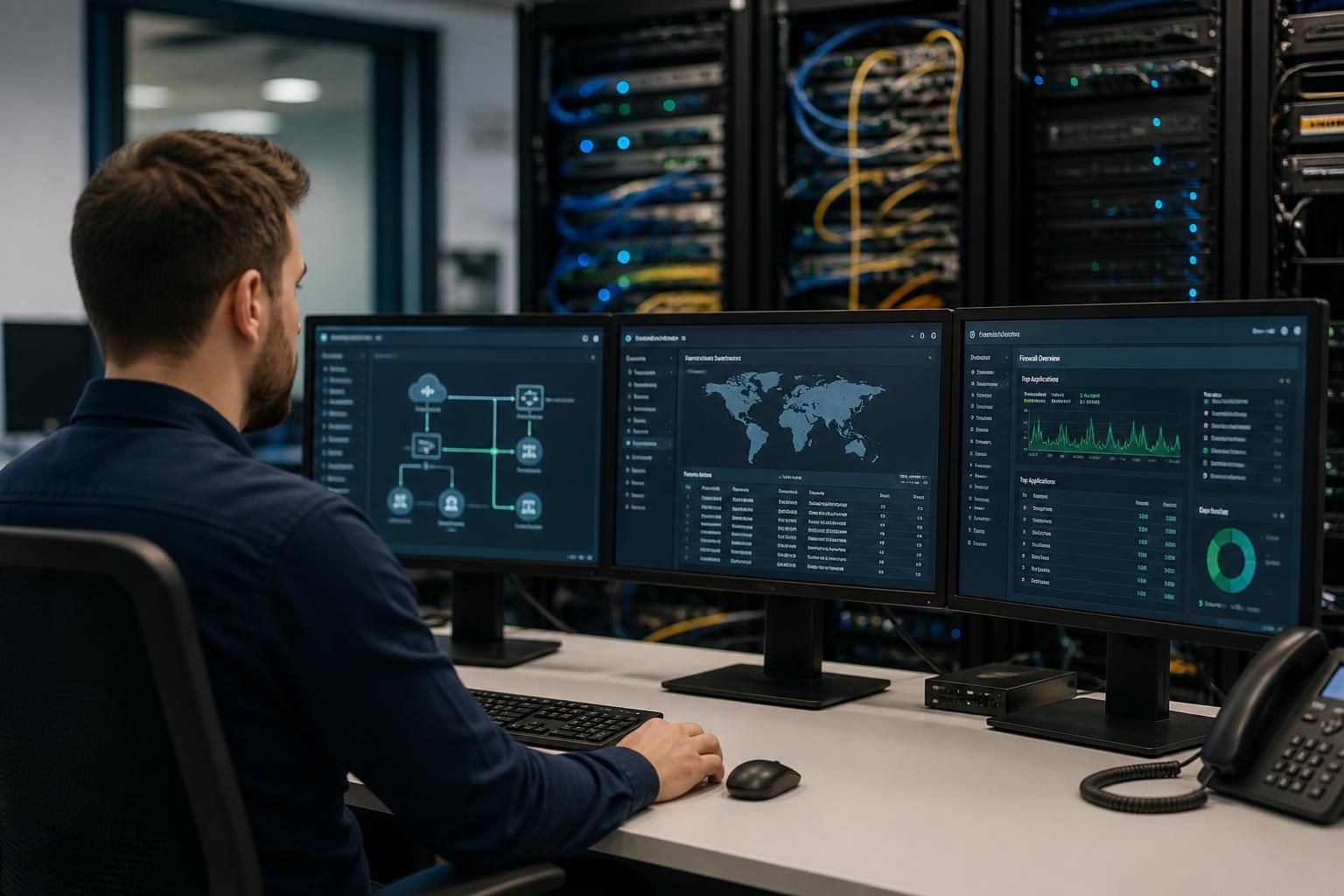
A network firewall monitors and controls traffic between your systems and external networks, using rules to block unauthorised access. S2 Technology Group provides firewall management and network protection for small and medium-sized organisations.
Benefits of Managed Network Firewall Protection
Effective firewall management gives organisations clearer control over permitted traffic, better visibility of suspicious activity and a structured way to apply security policies. It also supports safer remote access, network segmentation and consistent protection as systems change.
Reduced Exposure to Unauthorised Access
Firewall rules limit which connections can reach business systems, reducing the number of publicly accessible services that attackers can target.
Consistent Security Policy Enforcement
Documented rules apply the organisation’s approved access requirements consistently across network traffic, reducing reliance on ad hoc configuration changes.
Safer Internet and Application Use
Traffic controls can restrict unwanted websites, applications, protocols or connection types that introduce unnecessary security or operational risks.
Clearer Investigation of Security Events
Firewall logs provide records of permitted and blocked connections, giving IT teams useful evidence when investigating unusual traffic or potential incidents.
Controlled Access Between Network Areas
Firewall policies can help separate systems, users and services into defined network zones, limiting how far an incident can spread if one area is compromised.
Better Alignment with Business Changes
A managed firewall can be reviewed as users, offices, cloud services and applications change, helping ensure access rules remain relevant rather than becoming outdated.
Expert Guidance for Your Network Security
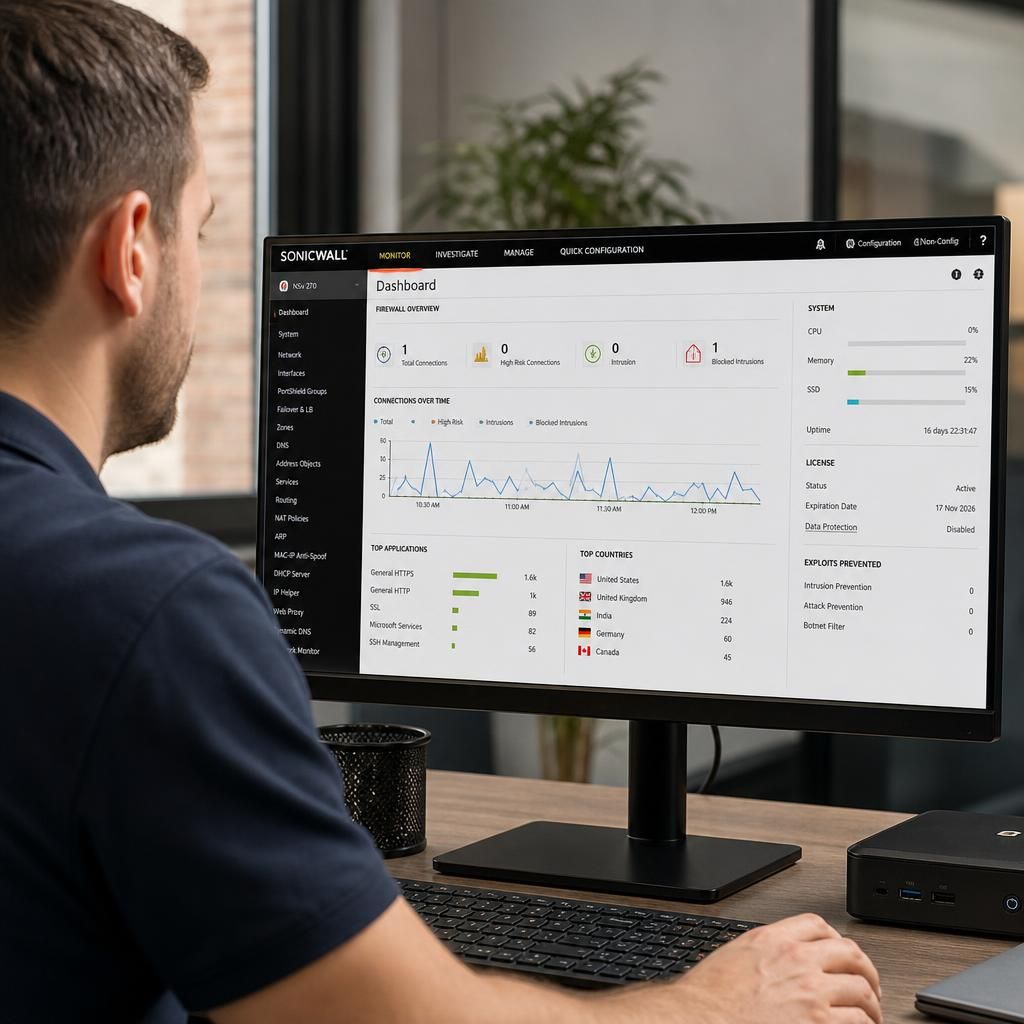
A business firewall is only as effective as its rules, configuration and ongoing oversight. Policies need to reflect how your organisation uses cloud applications, remote connections, guest networks and internal systems, while avoiding unnecessary access between devices.
At S2 Technology Group, we examine permitted services, administrative access, logging and update requirements as part of practical network security work. We can help separate essential traffic from risky or obsolete rules, making the configuration easier to understand and maintain.
That work is intended to support informed decisions rather than treat a firewall as a complete security programme. Firewalls sit alongside secure passwords, protected endpoints, staff awareness, backups and tested incident procedures. The right setup therefore depends on your systems, users and risk profile—not a one-size-fits-all product.
Specialist Expertise in Network Security and Firewalls
Network firewall management is the structured design, review and maintenance of controls that govern connections between business networks, users, applications and the internet. It includes assessing permitted services, restricting unnecessary exposure and ensuring changes are recorded and aligned with the organisation’s security requirements.
Effective protection depends on understanding network architecture rather than selecting a firewall device in isolation. S2 Technology Group considers traffic flows, administrative privileges, application dependencies and the separation of operational systems when advising on firewall design and network security controls.
Our approach gives organisations a clearer basis for evaluating firewall policies and identifying weaknesses that may be missed through routine configuration alone. Technical decisions can then be considered alongside governance, access management and monitoring requirements, supporting a network security model that remains appropriate as the business’s infrastructure develops.
Questions to Ask About Network Firewall Protection
What evidence should a firewall provider supply after configuration changes?
Compare solutions by examining vendor support, update processes, integration, licensing, reporting and administration; the lowest purchase price may create greater operational complexity or leave important controls unmanaged over time.
How should a firewall inspect encrypted traffic without weakening network security?
Encrypted traffic inspection should use controlled decryption, trusted certificates, privacy exclusions and clear logging. Review processor impact, application compatibility and access to decrypted content before enabling policies across business systems.
How should firewall rules be tested before affecting live business traffic?
Firewall rules should be tested in a staged environment using representative traffic, explicit allow and deny cases, logging, rollback procedures, and change approval before production deployment to reduce unintended disruption.
How can you tell whether a firewall is oversized for your business?
An oversized firewall can introduce unnecessary cost, administration and processing demands. Compare actual throughput, concurrent connections, security features and growth assumptions with documented business requirements before choosing the appropriate capacity.
When should a business replace its firewall?
Consider replacement when the appliance reaches vendor end-of-life, cannot accommodate essential architectural changes, or repeatedly causes instability; first document business requirements, migration dependencies and rollback arrangements before approving the change.
Context-Led Security
S2 Technology Group provides context-led firewall management, aligning network controls with applications, users and risk profile instead of generic rules.
Businesses We Support

Professional Services Organisations
Firms handling client information depend on controlled access to shared files, cloud applications and office networks. Network security and firewall policies can help separate administrative systems from general user traffic while supporting secure remote access.

Manufacturing Businesses
Manufacturers often connect office users, production systems and specialist equipment across the same wider environment. Firewall controls can help define which systems communicate, restrict unnecessary access and support clearer oversight of network activity.

Logistics Businesses
Logistics organisations rely on connected systems for planning, communication and operational coordination. A structured firewall approach can help protect these connections while accounting for authorised users, third-party access and cloud-based applications.

Growing Multi-Site Organisations
Businesses operating across several locations need network controls that reflect how offices, users and shared services connect. Firewall design can support consistent policies between sites while allowing legitimate business traffic to pass securely.
Firewall Protection for Different Network Environments
Firewall management is relevant when an organisation opens a new site, adopts a hybrid working model, replaces outdated network equipment, or needs clearer separation between departments and critical systems. Each situation calls for different rules, controls and review priorities.
Adding a New Site
A new office, warehouse or branch introduces additional networks, devices and internet connections. Firewall rules can define how the site communicates with central systems while limiting unnecessary exposure.
Supporting Hybrid Working
Remote users may need access to specific business applications without gaining broad access to internal systems. Firewall policies should account for remote connections, user permissions and the systems employees actually use.
Replacing Network Equipment
When routers or firewalls are replaced, existing rules need to be reviewed rather than copied without assessment. This helps identify obsolete services, unclear administrative access and settings that no longer match the network.
Separating Critical Systems
Departments, servers, operational equipment and guest devices may require different levels of access. Network segmentation uses firewall controls to restrict movement between these areas and make permitted connections easier to review.
Using More Cloud Applications
Cloud services change how users and devices connect to business systems. Firewall management can distinguish necessary application traffic from broad or outdated access, while considering remote connections and existing internal resources.
Reviewing Existing Rules
A firewall review can examine permitted services, logging, update requirements and administrative access. This is useful when rules have accumulated over time and the organisation needs a clearer view of its network controls.
Network Security & Firewall FAQs
What firewall features matter most for a small business network?
A suitable firewall depends on network size, users, applications, remote access, compliance requirements and internal segmentation. Professional assessment helps select appropriate hardware, software, rules and management arrangements for your organisation.
What is the difference between a firewall and an intrusion prevention system?
A firewall filters traffic at network boundaries using defined rules. An intrusion prevention system inspects activity deeply to identify and block suspicious patterns, including known attack signatures or anomalous behaviour.
How often should a business review its firewall rules?
Firewall rules should be reviewed after significant network changes, new applications, remote access arrangements or security incidents. A documented, risk-based schedule also helps identify obsolete permissions, excessive access and weaknesses.
What should a business monitor in its firewall logs?
Firewall logs should record permitted and blocked connections, administrative changes, unusual destinations, repeated failures and policy violations. Monitoring these events helps identify misuse, misconfiguration, reconnaissance and emerging threats requiring investigation.
Can a firewall protect remote workers?
Firewalls can help secure remote workers by controlling connections through approved VPN or secure access services, restricting exposed services, and applying network policies. Endpoint protection and identity controls remain essential.
Discuss Your Network Security Requirements
Enquire about a structured review of your organisation’s network firewall, including rule clarity, administrative access and logging. S2 Technology Group can explain relevant findings and outline practical options for strengthening your existing security controls.