

Fully Managed IT Support
Fully managed IT support places the day-to-day oversight of your technology with one specialist partner. S2 Technology Group combines proactive monitoring, security management, infrastructure guidance and user support to maintain dependable, well-governed systems for growing businesses.
What Fully Managed IT Support Delivers
A fully managed IT support arrangement should produce measurable operational improvements, not simply transfer technical tasks. The outcomes below show how structured oversight can reduce uncertainty, support informed decisions and align technology management with everyday business requirements.
Clear ownership of IT management
A single specialist partner coordinates monitoring, support, security and infrastructure decisions, giving your organisation a defined point of responsibility for day-to-day technology management.
Fewer avoidable technical issues
Proactive oversight helps identify emerging faults, configuration problems and maintenance requirements before they develop into wider operational disruption.
Stronger protection against cyber threats
Ongoing security management supports consistent protection across systems, users and connected devices, while helping address risks as the threat landscape changes.
Better-informed technology decisions
Regular guidance from an IT specialist provides a clearer basis for prioritising upgrades, resolving infrastructure weaknesses and selecting practical improvements.
More consistent support for users
Users have access to structured technical assistance when they encounter problems, helping maintain dependable working practices across the organisation.
Technology that can scale with the business
Planned management keeps infrastructure aligned with changing requirements, making it easier to support growth, new working arrangements and evolving operational needs.

A Human Approach To Fully Managed IT Support
Fully managed IT support is an ongoing working relationship between your organisation and an IT partner, not simply a helpdesk arrangement. It combines technical oversight with regular communication, so advice reflects how your teams work, the systems they depend on and the risks relevant to your business.
That human element matters when priorities compete. A useful discussion should distinguish an urgent technical fault from a change that needs planning, explain the practical implications in clear terms and record decisions for future reference. The aim is informed cooperation rather than unexplained technical instruction.
S2 Technology Group works with businesses to understand their operating environment before recommending a course of action. Whether reviewing an existing arrangement or considering fully managed IT support services, the conversation should cover responsibilities, priorities and appropriate next steps, without assuming that one model suits every organisation.
Specialist Expertise in Fully Managed IT Support
Fully managed IT support is the structured management of an organisation’s technology environment, covering the systems, devices, access controls and processes that users depend on. It requires more than resolving individual faults: the provider must understand how infrastructure fits together, identify dependencies and make changes in a controlled way.
S2 Technology Group applies this depth of knowledge across core business technology, including cloud environments, connectivity, cyber security and network infrastructure. Technical recommendations are considered in relation to operational requirements, existing configurations and future growth, helping ensure that improvements are practical rather than isolated fixes.
Effective management also depends on accurate records, clear accountability and informed technical judgement. Documented configurations, consistent maintenance and considered change planning provide a stronger basis for reviewing performance, investigating issues and deciding when systems or controls need to develop.
Questions To Ask About Fully Managed IT Support
Can fully managed IT support cover a mixed cloud and on-premises environment?
Assess whether the agreement defines systems, responsibilities, change control, documentation, security ownership and review arrangements. Ambiguous boundaries can create gaps, especially when projects, third-party services or legacy equipment are involved.
What does fully managed IT support include for new starters?
A well-defined onboarding process should provision accounts, assign suitable permissions, configure devices, apply security policies and record approvals, while removing unnecessary access when employment ends or responsibilities materially change over time.
How should you measure fully managed IT support performance?
Measure performance using agreed indicators such as incident trends, recurring faults, backup verification, patch compliance, security findings, project progress and user-impacting disruption, then review results regularly against defined business priorities.
Who owns our data under fully managed IT support?
Ownership should remain with your organisation unless contracts state otherwise. Define provider access, processing responsibilities, retention, portability, deletion, confidentiality and arrangements for retrieving data when the agreement ends or changes.
What should fully managed IT support include for business continuity?
Business continuity planning should define how critical services are restored after disruption, including recovery priorities, dependencies, backup access, alternative procedures, decision ownership and testing evidence that reflects operational requirements clearly.
Unified IT Management
S2 Technology Group combines strategic oversight, technical management and accountability in one fully managed IT support service for growing businesses.
Businesses Supported by S2 Technology Group

Professional Services Firms
Professional services firms depend on secure access to client information, dependable communication systems and well-managed user devices. Fully managed IT support can bring these responsibilities under a structured service, with technology oversight aligned to the way the organisation operates.

Manufacturing Organisations
Manufacturing businesses often rely on a combination of office systems, operational technology and connected devices. A fully managed IT support arrangement helps establish clear responsibility for maintaining the technology infrastructure that supports administration, communication and day-to-day operations.

Logistics Businesses
Logistics organisations need reliable systems for coordinating information across people, sites and processes. Managed IT support provides a consistent approach to user support, security management and infrastructure planning as those operational requirements develop.
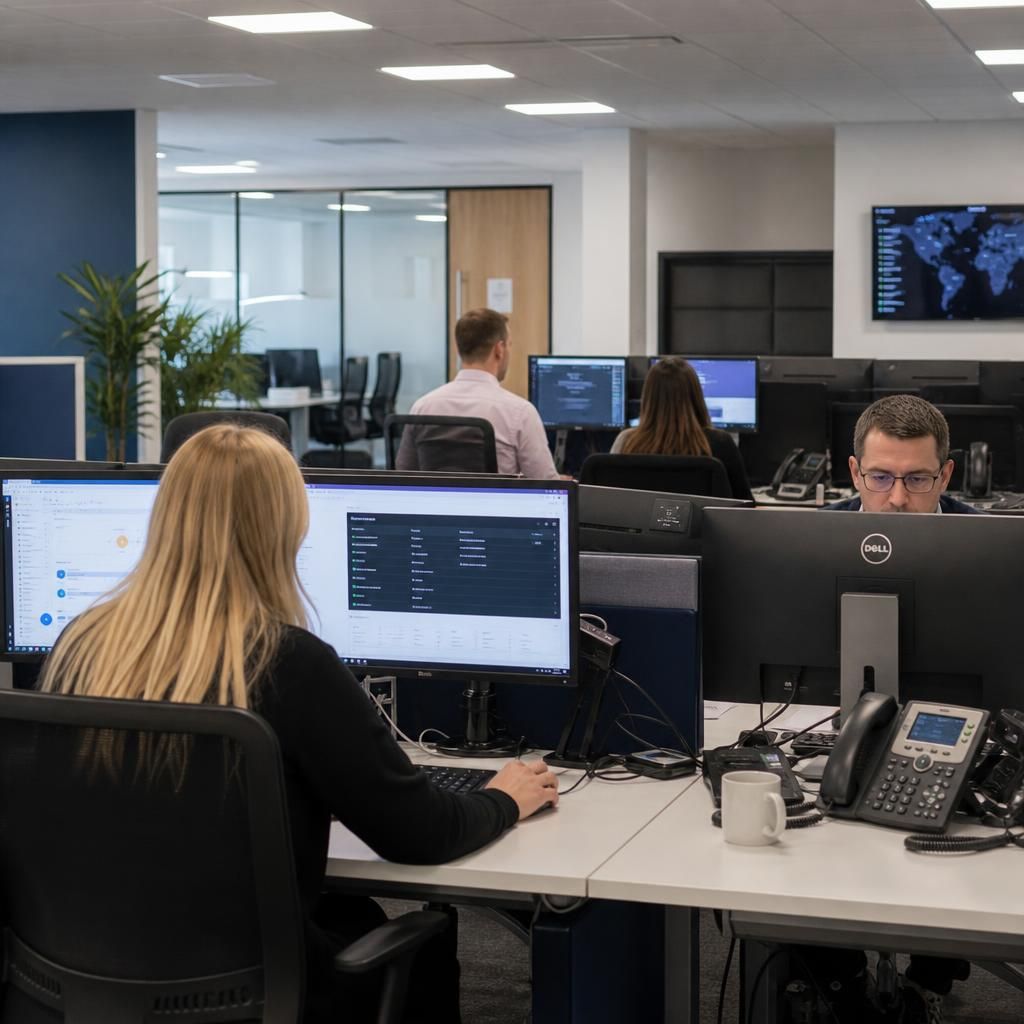
Multi-Site Organisations
Businesses working across multiple locations must consider access, connectivity, device management and security across each site. Fully managed IT support can provide a central framework for governing these areas while taking account of different users and local operational needs.

Growing Organisations
As an organisation grows, informal technology arrangements can become harder to manage consistently. Fully managed IT support helps create defined responsibilities for systems, security, user support and future infrastructure decisions without requiring the business to build a complete in-house IT function.
When Fully Managed IT Support Makes Sense
Fully managed IT support services can suit organisations with limited in-house capacity, dispersed users, ageing infrastructure or changing operational requirements. Each situation calls for a different emphasis, from user assistance and maintenance to security controls, cloud administration and technology planning.
No Dedicated IT Team
Fully managed IT support can provide the operational coverage needed by businesses without a full in-house IT department. A specialist partner can coordinate routine administration, user support, system oversight and technical planning within one defined service.
Growing Business Operations
As an organisation adds staff, sites or business systems, informal IT arrangements can become difficult to govern. Fully managed support introduces consistent processes for access, devices, infrastructure and technology decisions as the business develops.
Security Requires Regular Oversight
Businesses handling sensitive information may need security to be treated as an ongoing management responsibility rather than a one-off project. A fully managed service can bring together security controls, monitoring, user guidance and review of potential weaknesses.
Ageing or Inconsistent Infrastructure
Older servers, networks and devices can create maintenance issues and make future planning harder. Fully managed IT support helps assess the existing environment, prioritise upgrades and manage infrastructure changes against operational requirements.
Dispersed or Hybrid Teams
When users work across multiple locations, maintaining consistent access and support can require more structured oversight. A fully managed approach can help coordinate remote access, user administration and the technology standards applied across the organisation.
Cloud Services Need Coordination
Cloud platforms can simplify access to business applications, but they still require administration, permissions management and sensible configuration. Fully managed IT support can align cloud administration with security requirements, user needs and wider technology planning.
Frequently Asked Questions About Fully Managed IT Support
How does fully managed IT support differ from co-managed IT support?
An effective arrangement defines responsibilities, access permissions, escalation routes, maintenance expectations and reporting, ensuring both parties understand who manages each system and how changes are approved before implementation properly starts.
What happens during the transition to fully managed IT support?
The transition typically involves reviewing existing systems, documenting access and dependencies, agreeing responsibilities, then scheduling staged changes. Clear records and communication help preserve continuity while improvements are introduced carefully throughout.
How does fully managed IT support handle software licensing?
A fully managed IT support service can maintain an accurate licence register, track renewal dates, identify unused allocations and check that software use remains aligned with contractual terms and requirements.
What security controls should fully managed IT support include?
Controls should include multi-factor authentication, least-privilege access, secure backups, endpoint protection, patch management, email filtering, encryption, vulnerability reviews, tested incident procedures, monitoring and clear documentation across managed technology systems.
Can fully managed IT support manage multiple business locations?
Yes, fully managed IT support can standardise oversight across multiple locations, coordinating connectivity, user access, security policies, devices and cloud services while allowing for site-specific operational requirements and local dependencies.