
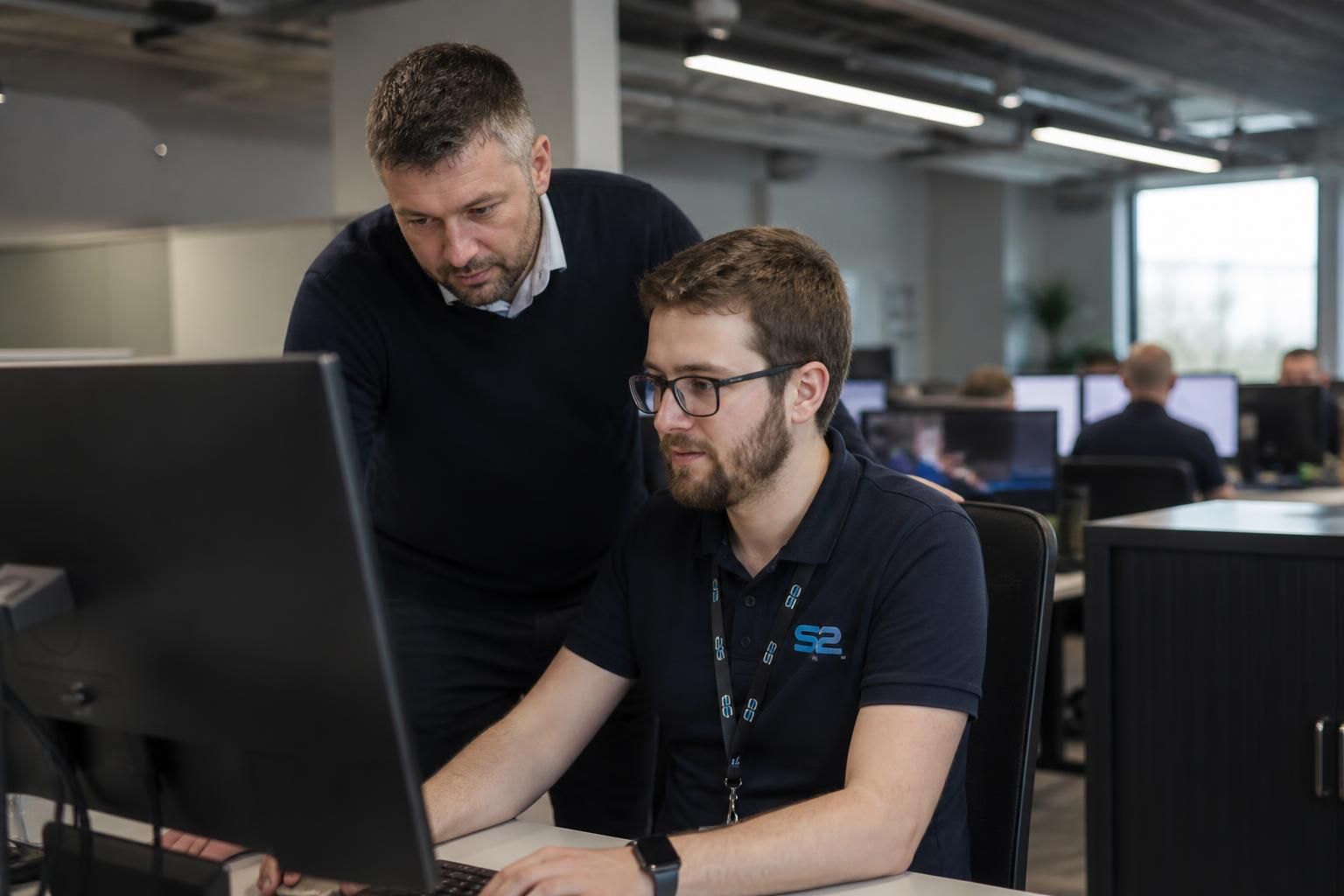
Outsourced IT Department
An outsourced IT department is an external team that manages a business’s technology operations, including user support, cybersecurity, cloud services, infrastructure and connectivity. S2’s managed approach provides practical expertise without requiring a full in-house team.
Practical Outcomes of an Outsourced IT Department
An outsourced IT department should produce practical operational improvements: clearer ownership of technology decisions, more consistent support processes, stronger control over risk, and a structured basis for planning changes as the organisation develops.
Clear ownership of IT operations
An outsourced IT department provides a defined team responsible for coordinating support, infrastructure, cybersecurity, cloud services and connectivity. This reduces uncertainty about who manages each area and how technology decisions are followed through.
More consistent user support
Documented processes and an ongoing support structure help handle user issues in a consistent way. This gives employees a clear route for resolving technical problems and helps identify recurring issues that require a broader fix.
Stronger control of technology risk
Regular management of security controls, systems and user access helps identify weaknesses before they become larger operational problems. Cybersecurity advice can then be considered alongside the organisation’s wider IT requirements.
Access to broader technical expertise
An external IT department brings knowledge across infrastructure, cloud platforms, connectivity and security rather than relying on one internal generalist. This supports better-informed decisions when systems need to change or problems span several technical areas.
More structured technology planning
Ongoing advice creates a basis for prioritising upgrades, replacing ageing infrastructure and planning changes around business requirements. Technology decisions can be assessed as part of a longer-term roadmap instead of being made only when an urgent issue arises.
IT that can support organisational growth
Managed technology services can be reviewed as the organisation adds users, locations, cloud systems or connectivity requirements. This provides a structured way to adapt the IT environment without requiring every capability to be built in-house.
Better-coordinated remote access
An outsourced IT department can manage the systems and security considerations involved in remote access. This helps connect people to the resources they need while keeping access arrangements aligned with the organisation’s wider infrastructure and cybersecurity approach.
The People Behind Your Outsourced IT Department
The human side of an outsourced IT department is the working relationship between your staff and the people responsible for technology decisions. Good collaboration depends on listening carefully to how teams actually work, not simply applying a standard package of services.
That means making space for questions, explaining technical choices in plain language and recording agreed actions. Staff should know where to raise concerns, while managers should have enough context to weigh operational risk, priorities and costs. Clear communication also helps identify recurring issues that may indicate a process or training need.
S2 Technology Group takes a practical, people-focused approach to managed IT. Its team can work alongside business leaders and employees to understand existing arrangements, clarify responsibilities and shape sensible next steps. The aim is a dependable relationship in which technology decisions are discussed openly, documented properly and aligned with the way the organisation operates.

Specialist Expertise in Outsourced IT Departments
An outsourced IT department is a structured technology function delivered by an external provider, combining operational management with specialist knowledge across infrastructure, cloud platforms, cyber security and connectivity. Its value lies in coordinating these disciplines as one service rather than treating each technical issue in isolation.
Effective delivery depends on sound technical governance: accurate asset and access records, documented configurations, defined security controls, planned maintenance and evidence-based recommendations. This creates a clearer basis for assessing risk, prioritising investment and managing changes without losing sight of business requirements.
S2 Technology Group applies this breadth of expertise to the needs of small and medium-sized organisations that require dependable technology management without replicating every specialist role in-house. Its approach is designed to support informed decisions as systems, users and operational demands develop, with advice grounded in the organisation’s existing environment.
Questions to Ask About an Outsourced IT Department
What happens to your systems and documentation if you change outsourced IT providers?
Check whether the agreement defines data ownership, documentation standards, handover responsibilities and transition support before signing. A well-designed arrangement should make leaving possible without losing access to systems and credentials.
How should an outsourced IT department measure service quality?
Use agreed indicators covering ticket accuracy, resolution quality, recurring incidents, user feedback, security events, patching and project delivery. Review trends alongside business impact, not isolated figures or raw totals alone.
What responsibilities should an outsourced IT department retain in-house?
Keep ownership of business priorities, risk acceptance, supplier decisions and access approvals in-house. The provider can advise and execute, but accountable leaders should authorise changes affecting operations, compliance or strategy.
What access controls should an outsourced IT department use?
Use role-based access permissions and least-privilege principles for systems and accounts. Require multi-factor authentication where supported, review privileged access regularly, remove leavers promptly, and retain logs for investigation and security audit.
What should an outsourced IT department include in its disaster recovery responsibilities?
Responsibilities should cover backup scope, recovery priorities, restoration procedures, dependency mapping, testing and incident coordination. The provider should document recovery objectives, while business leaders validate acceptable disruption and data loss.
Integrated IT Management
A fully integrated outsourced IT department unites user support, cyber security, cloud, infrastructure and connectivity under one coordinated technology function.
Businesses We Support

Professional Services Teams
Professional services organisations often depend on accessible files, reliable communications and controlled access to client information. An outsourced IT department can coordinate user support, device management, cyber security and cloud administration so these requirements are managed as part of one technology plan.

Manufacturing Operations
Manufacturing businesses may rely on a combination of office systems, production-related technology and dependable connectivity between sites. External IT expertise can help document the infrastructure, manage access and identify technology improvements without requiring a large internal IT function.

Logistics Businesses
Logistics organisations need technology that supports communication, information sharing and coordination across operational teams. An outsourced IT department can provide a consistent approach to user support, security, cloud services and connectivity as the business develops.
Multi-Site Organisations
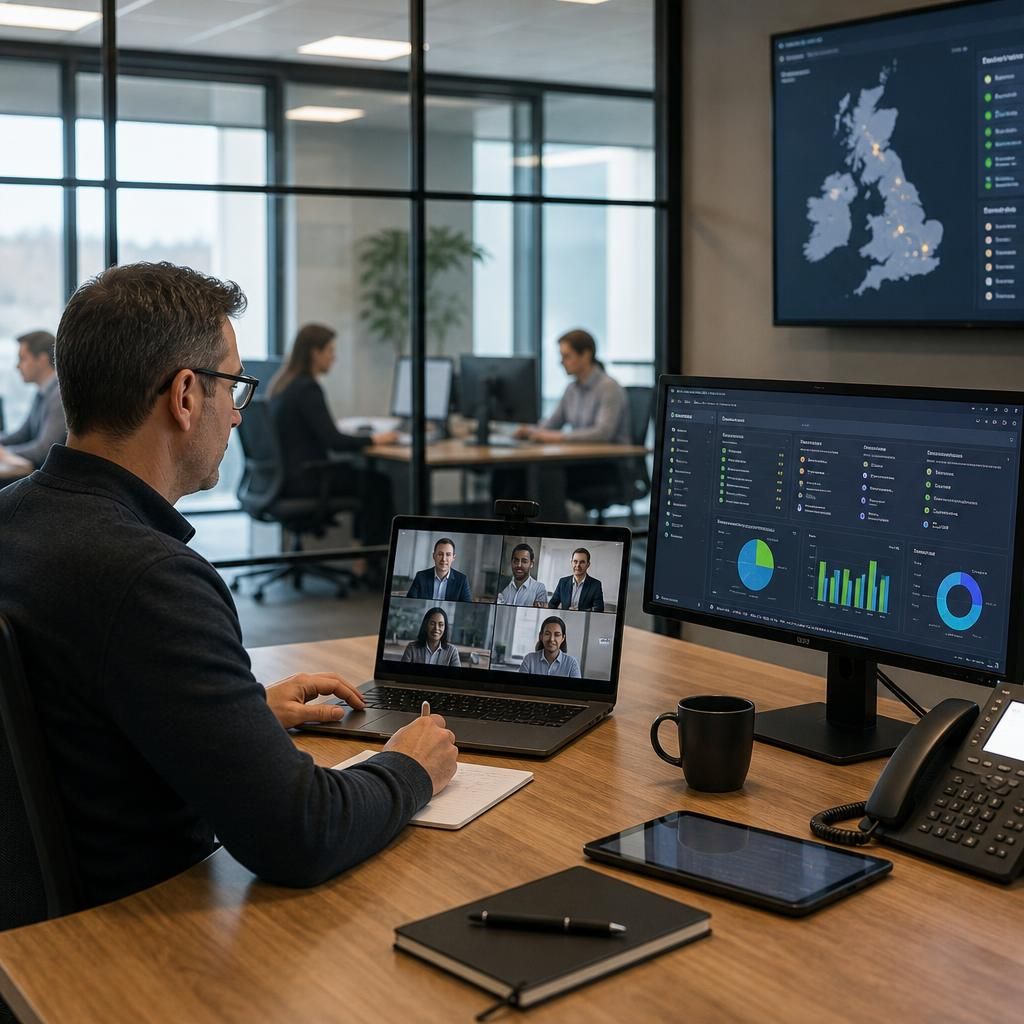
Businesses operating from several locations need clear technical ownership across users, devices, networks and shared services. A managed external department can help align standards between sites, support remote access and plan infrastructure changes with the wider organisation in mind.
When an Outsourced IT Department Makes Sense
An outsourced IT department can be structured around different operational needs, from supplementing an internal technician to managing technology across several sites. The right model depends on existing skills, risk profile, business plans and the support users require.
No In-House IT Team
Suitable for organisations that depend on technology but do not have dedicated internal IT staff. An outsourced department can bring together user support, infrastructure management, cybersecurity and technology planning under one coordinated arrangement.
Support for an Internal Technician
An outsourced IT department can extend an existing technician’s capacity without replacing internal knowledge. External specialists can assist with complex projects, security planning, cloud administration or issues that require additional expertise.
A Growing Organisation
As a business expands, informal technology arrangements can become difficult to manage. Outsourced IT support can help align user access, devices, systems and connectivity with changing teams, processes and operational requirements.
Several Offices or Sites
Businesses operating across multiple locations need consistent approaches to access, security, connectivity and support. An outsourced IT department can provide a coordinated framework while taking account of each site’s systems and working practices.
Greater Technology Risk
Organisations handling sensitive information or relying heavily on digital systems may need more structured oversight of cyber security and resilience. An outsourced IT department can help identify risks, clarify responsibilities and support practical improvements.
Outsourced IT Department FAQs
What does onboarding an outsourced IT department involve?
Businesses often choose this model when technology demands exceed internal capacity, but they still need accountable oversight, predictable processes and a single structure for managing operational risk across the organisation.
How much does an outsourced IT department cost?
Costs vary according to user numbers, locations, infrastructure complexity, security requirements and the responsibilities transferred. Providers usually scope existing systems and support needs before preparing a tailored proposal and agreement.
Can an outsourced IT department support multiple business locations?
Yes. An outsourced IT department can coordinate systems, user support, security and connectivity across multiple sites, using consistent policies while accounting for each location’s infrastructure, connectivity and local operational requirements.
Can an outsourced IT department work alongside an internal IT team?
Yes. An outsourced IT department can complement internal staff by handling specialist responsibilities, routine administration or user support, while internal colleagues retain strategic oversight, business knowledge and selected technical duties.
When is an outsourced IT department suitable for a growing business?
An outsourced IT department suits a growing business when technology needs are expanding faster than internal capability, requiring structured governance, specialist expertise and adaptable support without building a larger department.