

Business VoIP Phone Systems
Business VoIP phone systems use internet connectivity to manage business calls through cloud-based platforms rather than traditional telephone lines. They can support scalable calling across users and locations while enabling centralised administration and integration with existing business connectivity.
Practical Benefits of Business VoIP Phone Systems
The practical value of a business VoIP phone system extends beyond making and receiving calls. It can improve how teams handle conversations, manage call activity and present a consistent, professional service across day-to-day customer and supplier communications.
Scalable user management
Cloud-based VoIP systems allow administrators to add, remove or amend users as organisational requirements change, without redesigning the underlying telephone infrastructure.
Consistent communication across locations
Users in different offices or sites can operate through the same phone system, helping maintain consistent numbers, extensions and call-handling processes across the organisation.
Centralised administration
Call settings, user permissions, extensions and routing rules can be managed from a central platform, making day-to-day administration more structured than managing separate telephone systems.
More flexible call handling
Features such as call forwarding, auto-attendants, hunt groups and voicemail can direct callers to the appropriate person or team according to the organisation’s chosen rules.
Support for distributed teams
A VoIP system can connect users through internet-based platforms wherever they are working, helping organisations maintain a unified business phone system across offices and remote locations.
Useful call information
Depending on the platform and configuration, call records, voicemail and other activity data can give businesses a clearer view of how calls are being handled and where processes may need adjustment.
Integration with business tools
Business VoIP platforms can integrate with selected communication and productivity tools, reducing the need to manage calling separately from other systems used by the organisation.
The People Behind Your Phone System
Business VoIP phone systems transmit voice as data over an organisation’s internet connection, with call handling managed through software rather than a fixed telephone exchange. Their performance therefore depends on suitable connectivity, network configuration and effective security controls.
At S2 Technology Group, discussions start with how your organisation currently communicates: user numbers, locations, call routes, devices and any compliance considerations. This helps determine whether a cloud calling arrangement fits existing infrastructure, and identifies requirements for headsets, mobiles, reception functions or remote users.
Implementation is planned around clear responsibilities and usable administration. Our specialists can help configure users, permissions, call flows and associated connectivity, then explain the system to the people who manage it. Ongoing support focuses on resolving issues, reviewing changing requirements and keeping the phone system aligned with the wider IT environment.

Expertise in Business VoIP Phone Systems
A business VoIP phone system is a managed communications platform in which call processing, user features and administration are delivered through software and internet connectivity. Its suitability depends on more than the handsets or application: voice quality, traffic prioritisation, network design, user permissions and business continuity all require informed assessment.
S2 Technology Group applies this wider technical perspective when advising on VoIP. Our specialists consider how calling fits with connectivity, endpoint management and security controls, helping organisations distinguish between a system that simply provides telephone functions and one that can be governed as part of the wider IT environment.
Effective VoIP design also requires attention to operational detail, including number management, call recording considerations, access rights and the separation of voice traffic from other network activity where appropriate. This depth of assessment supports clearer decisions about platform suitability, implementation responsibilities and future changes as the organisation develops.
Questions to Ask About Business VoIP Phone Systems
How should a business VoIP phone system handle number portability?
Assess whether existing numbers can be ported, how emergency calling is handled, where call data is stored, and what happens if connectivity fails or users change roles.
What should a business VoIP contract include?
Check that contracts define user licensing, included features, support responsibilities, call-recording and data provisions, renewal terms, exit arrangements, number ownership, equipment charges, and procedures for handling service or connectivity changes.
What training does a business VoIP system require for staff?
Training should cover user login, call handling, transfers, voicemail, conferencing, mobile applications, presence settings, security responsibilities and escalation routes, with role-specific guidance and concise reference materials available for ongoing use.
How does a business VoIP phone system integrate with existing business applications?
Integration can connect calling with customer relationship management, helpdesk, email and collaboration platforms, allowing users to launch calls, record relevant activity, synchronise contacts and maintain auditable communication workflows where appropriate.
How should a business VoIP phone system prioritise voice traffic?
Voice traffic should receive Quality of Service controls, with separate network treatment where necessary. Assess bandwidth, latency, jitter, packet loss and failover, then validate call quality under peak demand.
Connected Expertise
S2 Technology Group unites VoIP design with connectivity, endpoint management and security controls, creating a governed communications environment for organisations.
Organisations We Support

Professional Services Teams
VoIP helps professional services organisations manage client calls, direct enquiries to the right person and maintain consistent call handling as teams work across offices or locations.

Manufacturing Operations
Manufacturers can use structured call flows to connect production, administration and customer-facing teams, while centralised user management supports changes as responsibilities develop.

Logistics Organisations
For logistics businesses, business VoIP can bring office and operational communications into one managed system, supporting clear routing between teams involved in transport, scheduling and customer service.
Multi-Site Businesses
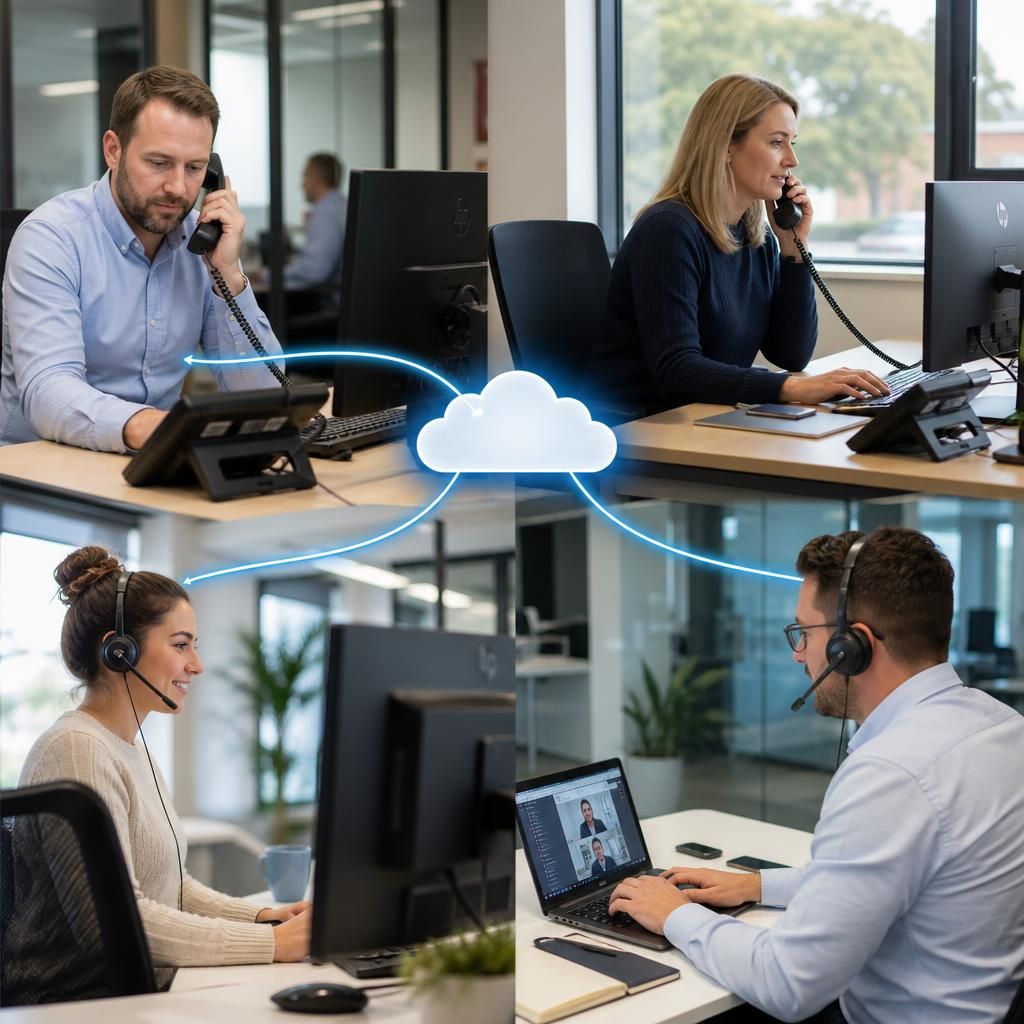
Cloud calling enables organisations with several locations to manage users, numbers and call routes through a shared platform, helping provide a consistent approach to communication across sites.
VoIP Phone Systems for Different Business Needs
VoIP is relevant when an organisation is replacing ageing telephone lines, consolidating separate services, supporting flexible user locations or introducing structured call queues. Each scenario calls for different decisions about numbering, devices, routing and administration.
Professional Services Teams
A VoIP phone system can give professional services firms a structured way to manage client calls, direct enquiries to the right team and administer user access as responsibilities change.
Manufacturing Businesses
Manufacturing organisations may need dependable communication between offices, production areas and management teams. VoIP can provide a central calling structure while fitting into the wider business network.
Logistics Operations
Logistics businesses often coordinate calls across office-based staff, operational teams and mobile users. A managed phone system can bring these users into a consistent numbering and call-handling arrangement.
Growing Organisations
As an organisation adds employees or departments, its phone system needs to accommodate new users without creating disconnected arrangements. Cloud-based administration can make user and permission changes more structured.
Multi-Site Businesses
Businesses operating from more than one location can use VoIP to create a unified communications framework, with centrally managed users, numbers and call routes across their sites.
Business VoIP Phone Systems: Frequently Asked Questions
How reliable are business VoIP phone systems?
Yes, provided the organisation has suitable internet connectivity, correctly configured network equipment and appropriate security controls. A review should consider call quality, device requirements, routing and resilience carefully beforehand.
How are users and extensions managed in a business VoIP phone system?
Users and extensions are managed through central administrative portals, allowing permissions, numbering, devices and call routing to be configured individually or by group as roles and responsibilities change over time.
How are emergency calls handled by business VoIP phone systems?
Emergency calls should be assessed during implementation because VoIP location information, number presentation and routing depend on provider, network and user location. Confirm arrangements, limitations and address updates before deployment.
How secure are business VoIP phone systems?
Security depends on encrypted signalling and media, strong authentication, restricted administration, patched devices, fraud monitoring and suitable network controls. Regular reviews help address account compromise, misuse and emerging digital threats.
Can business VoIP phone systems support multiple office locations?
Yes. VoIP phone systems can link offices through shared numbering plans and inter-office calling, while each site retains suitable local numbers, devices, call routes and operational arrangements where locally required.