
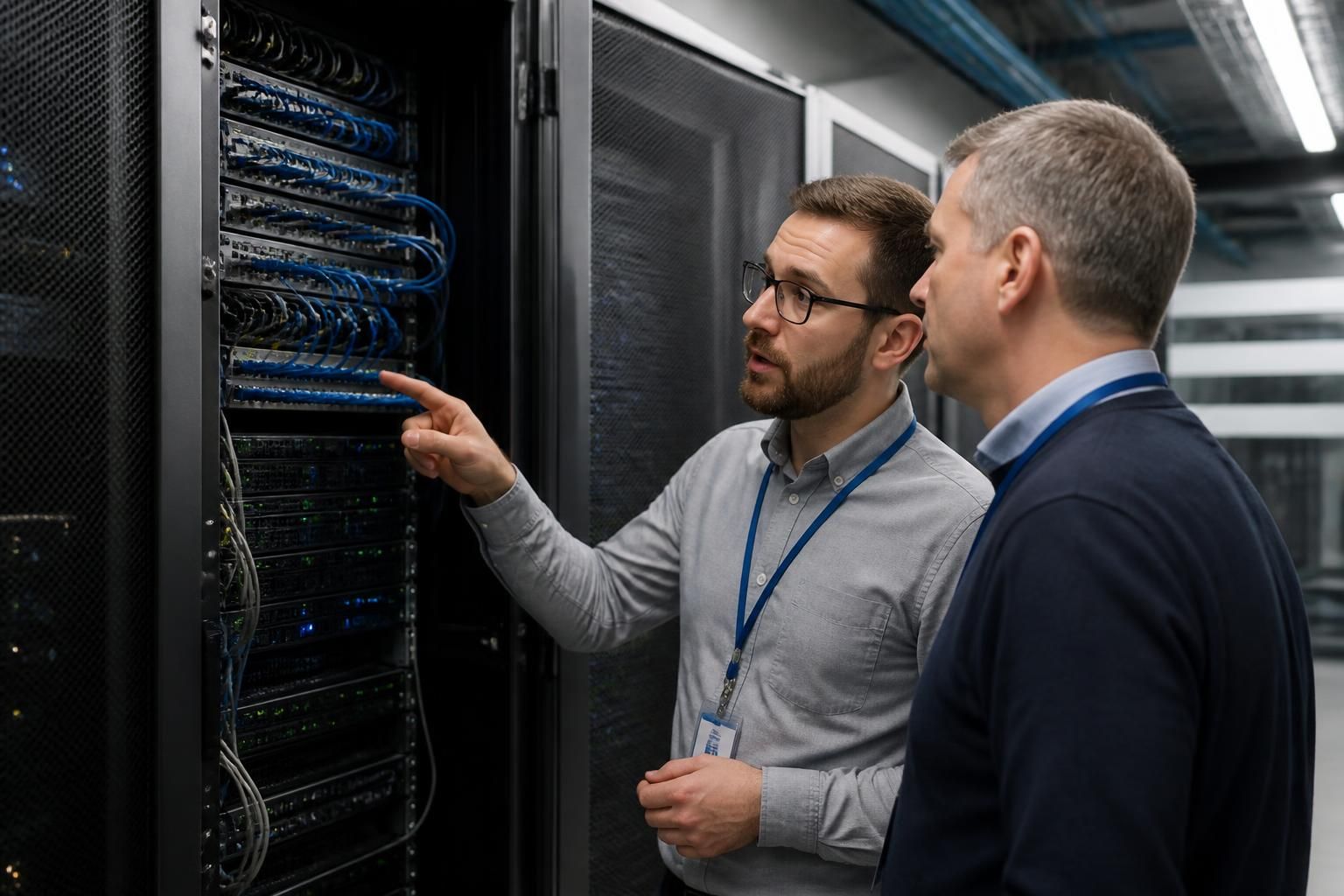
IT Infrastructure Outsourcing
IT infrastructure management outsourcing transfers responsibility for planning, maintaining and securing core technology systems to an external specialist. S2 Technology Group supports businesses with structured management of networks, servers, cloud environments, devices and connectivity, aligned with operational requirements.
What IT Infrastructure Outsourcing Delivers
The value of IT infrastructure outsourcing is measured through practical improvements in how technology is controlled, maintained and developed. Typical outcomes include clearer accountability, reduced operational disruption, stronger governance and infrastructure that can adapt as business requirements change.
Clearer accountability
A defined external responsibility for infrastructure planning, maintenance and security makes it easier to identify who owns each technology task and how issues should be managed.
Reduced operational disruption
Planned maintenance, infrastructure monitoring and structured support help identify technical problems earlier and reduce avoidable interruptions to day-to-day business operations.
Stronger infrastructure security
Outsourced management brings security considerations into routine infrastructure decisions, including the maintenance of systems, devices, networks and cloud environments.
More consistent technology management
Documented processes and regular oversight create a more consistent approach to updates, configuration, maintenance and infrastructure changes across the organisation.
Better control of infrastructure change
A managed approach provides a structured way to assess, plan and implement infrastructure changes, reducing the risk that upgrades or new requirements are handled in isolation.
Infrastructure that supports growth
Regular review of networks, servers, cloud services, devices and connectivity helps ensure the technology environment can adapt as operational requirements develop.
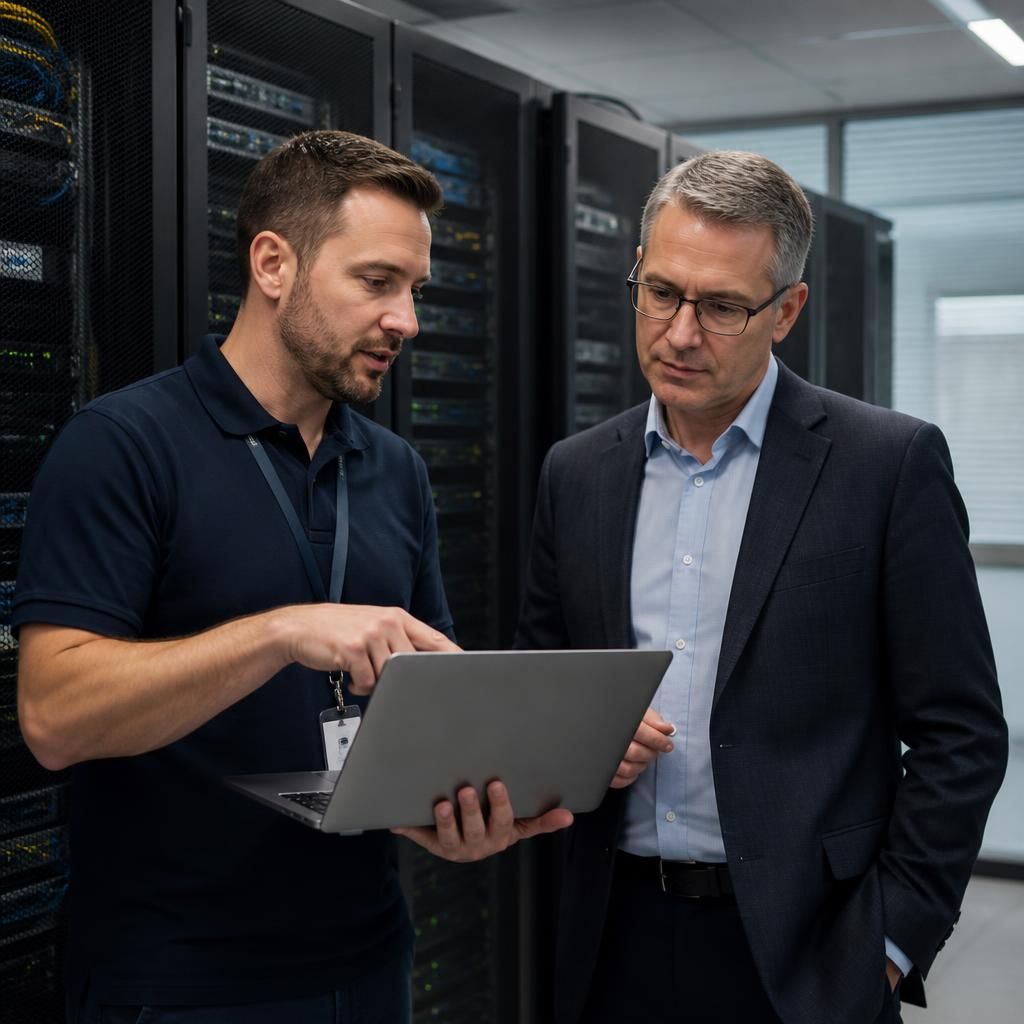
The People Behind Your IT Infrastructure
Effective infrastructure management depends on people who understand how technology supports day-to-day work, not simply on tools and monitoring. An experienced adviser can review dependencies, explain technical choices in plain language and identify where a change may affect users, sites or operational processes.
At S2 Technology Group, conversations form part of the service. The team can work with business leaders and internal contacts to clarify priorities, document the existing environment and agree practical next steps. This creates a shared view of what is in place, what needs attention and why.
That human input is particularly useful when infrastructure is being consolidated, moved to cloud services or prepared for growth. Decisions can then be assessed against security, continuity, usability and future management requirements, rather than made in isolation by a technical team.
Specialist Expertise in IT Infrastructure Management
IT infrastructure management outsourcing places responsibility for the design, lifecycle and technical coordination of core systems with an external specialist. The work extends beyond fault resolution: it includes establishing how infrastructure is configured, identifying dependencies between systems and assessing whether the environment remains suitable for the organisation’s size, risk profile and working practices.
S2 Technology Group approaches infrastructure as an interconnected operating environment. Network architecture, identity and access controls, backup arrangements, endpoint configuration, cloud resources and site connectivity must be considered together because a weakness or change in one area can affect reliability elsewhere. This joined-up view supports better-informed decisions about upgrades, consolidation and technical debt.
For organisations using outsourced IT infrastructure services, specialist value also comes from disciplined oversight. Clear records, defined ownership, change control and regular review provide a dependable basis for maintaining the environment and prioritising investment. S2 can provide that external technical perspective for businesses that need experienced infrastructure management without building every specialist capability internally.
Questions to Ask Before Outsourcing IT Infrastructure
How will infrastructure knowledge transfer if the outsourcing arrangement ends?
Require a documented exit plan covering asset ownership, configurations, credentials, licences, data export and knowledge transfer. This tests whether outsourcing preserves control and prevents avoidable dependency on a single provider.
What change-control process governs outsourced IT infrastructure?
Use a risk-based process that records the requested change, business justification, affected systems, testing, approval, implementation steps, rollback conditions and post-change review, with emergency changes documented retrospectively to preserve auditability.
How is outsourced infrastructure performance measured against agreed business requirements?
Use service-level metrics linked to business outcomes, such as availability, capacity, incident trends, recovery testing and user impact. Review results regularly, investigate variance and adjust priorities through documented governance processes.
How is data sovereignty managed in IT infrastructure outsourcing?
Data sovereignty requires clarity about where information is stored, processed and backed up. Assess UK or international hosting, transfer mechanisms, contractual access, legal jurisdiction and deletion controls, then document arrangements.
How is infrastructure compatibility assessed before outsourcing?
Assess applications, operating systems, network protocols, identity dependencies and device requirements against the proposed environment. Document unsupported components, integration constraints and remediation before transferring services to an outsourced infrastructure provider.
Proactive Oversight
S2 Technology Group brings infrastructure planning, maintenance and security under one coordinated service, connecting technical decisions directly with operational requirements.
Businesses Supported by S2 Technology Group

Professional Services Organisations
Professional services firms depend on secure access to documents, line-of-business applications and client information. Outsourced infrastructure management can bring networks, devices, cloud services and user access under a consistent management approach, while supporting the organisation’s security and governance requirements.

Manufacturing Businesses
Manufacturing environments often connect office systems with production, stock control and operational applications. Infrastructure outsourcing helps businesses document these dependencies, manage connectivity between sites and maintain the underlying systems that support production planning and administration.

Logistics and Distribution Teams
Logistics organisations rely on dependable connectivity, shared systems and secure access for teams working across offices, warehouses and operational locations. An outsourced IT infrastructure service can coordinate network management, cloud platforms and user devices across these connected environments.

Multi-Site Businesses
Businesses with several locations need infrastructure that is managed consistently without overlooking the requirements of individual sites. Outsourced support can help align connectivity, security controls, devices and access arrangements while giving decision-makers a clearer view of the wider technology environment.

Growing Organisations Without a Full In-House IT Team
A growing organisation may need specialist knowledge to manage infrastructure without building a complete internal IT function. Outsourcing provides access to structured planning and ongoing management for networks, servers, cloud environments and connectivity, with decisions considered against current operations and future requirements.
When IT Infrastructure Outsourcing Makes Sense
IT infrastructure outsourcing can be adapted to different operational pressures, from replacing fragmented systems to supporting new sites or changing internal resources. The most suitable arrangement depends on your existing estate, risk profile, technical requirements and plans for growth.
No Dedicated Infrastructure Team
Outsourcing can suit businesses that rely on technology but do not have specialist staff to manage networks, servers, devices and connectivity. External infrastructure management provides defined technical ownership without requiring a full in-house team.
Complex or Poorly Documented Systems
A mixture of legacy equipment, cloud services and independently managed systems can make infrastructure difficult to understand and maintain. Outsourcing starts with reviewing dependencies and documenting the environment so future decisions are based on a clearer technical picture.
Multiple Sites or Growing Operations
Businesses operating from more than one location may need consistent infrastructure standards across offices, warehouses or other premises. An outsourced arrangement can coordinate site connectivity, user access and core systems as the organisation develops.
Planned Infrastructure Change
Infrastructure outsourcing can support organisations preparing for network upgrades, server changes, cloud adoption or office moves. Planning and maintenance are coordinated around operational requirements, user impact and the dependencies between systems.
Greater Security and Risk Oversight
Where infrastructure risks are difficult to assess internally, an external specialist can review how systems, devices and connectivity are managed. This helps identify areas requiring attention and brings security considerations into ongoing infrastructure planning.
IT Infrastructure Outsourcing Questions Answered
What does IT infrastructure outsourcing include?
Businesses retain ownership of priorities and risk decisions, while the provider manages agreed technical responsibilities, maintains documentation and supplies information needed for budgeting, compliance and effective internal oversight and governance.
What are the risks of IT infrastructure outsourcing?
Risks include unclear responsibilities, inconsistent documentation, dependency on a provider, insecure access and disruption during change. Reduce them through defined service boundaries, ownership records, access controls, review points and exit planning.
When is IT infrastructure outsourcing suitable?
IT infrastructure outsourcing suits organisations facing limited internal capacity, expanding sites, outdated systems, heightened security requirements or major technology changes, where specialist management can support controlled, sustainable operations and growth.
How is IT infrastructure outsourcing priced?
Pricing typically reflects infrastructure scope, device and site numbers, support responsibilities, security requirements, project work and cloud services. Providers may charge fixed fees, usage-based costs, or separately quoted changes or additions.
How does IT infrastructure outsourcing support business continuity?
It supports continuity by reducing single points of failure, maintaining recoverable configurations, documenting dependencies and planning restoration for networks, servers, cloud services and connectivity across critical business operations.
Plan Your IT Infrastructure Outsourcing
Discuss your infrastructure requirements with S2 Technology Group to identify suitable outsourcing options. You can explore current risks, management responsibilities and priorities for future change, then establish practical next steps for a secure, well-managed technology environment.