
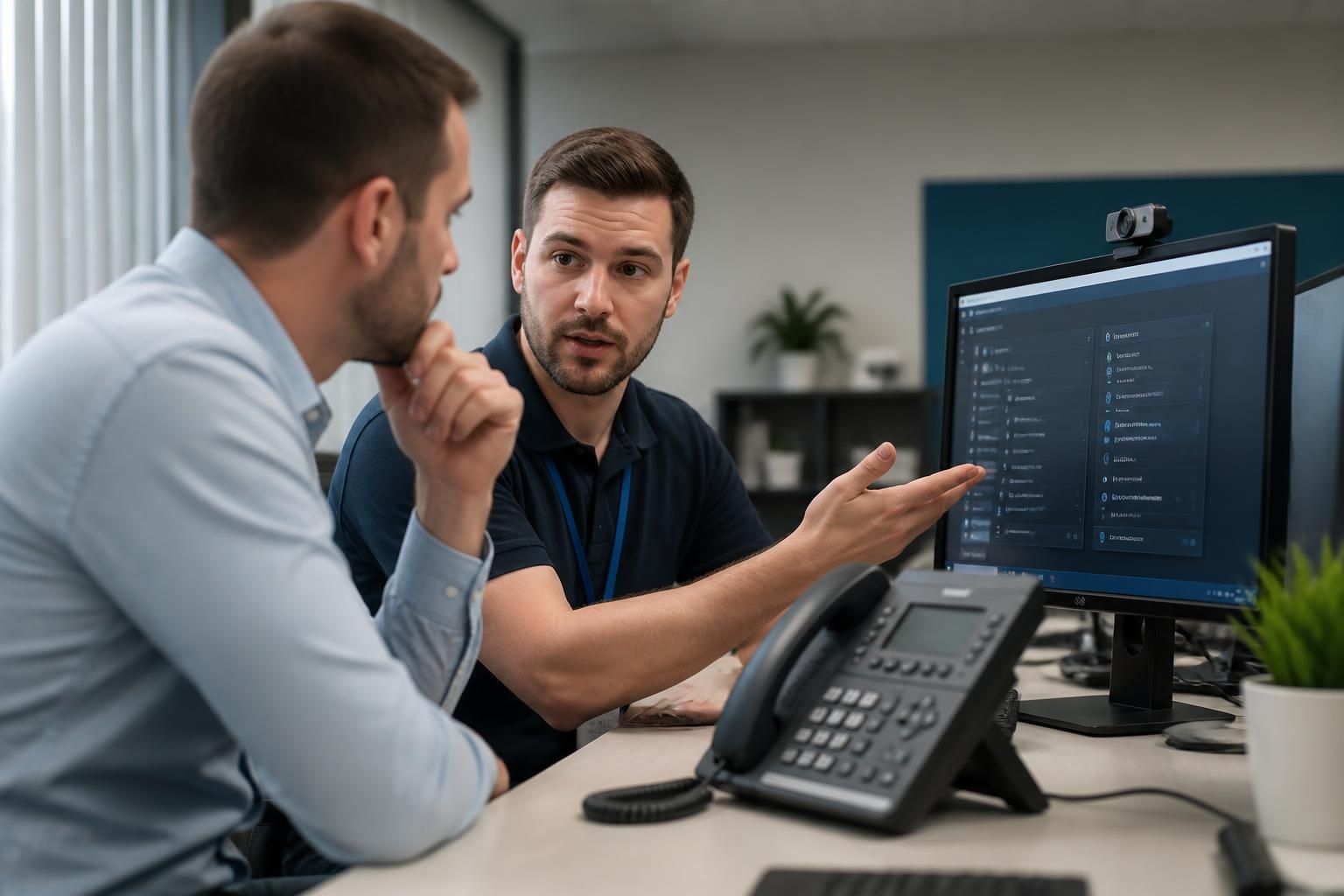
Managed IT Support for VoIP
Managed IT support for VoIP combines administration of internet-based phone systems with wider technology management. S2 Technology Group helps businesses maintain secure call connectivity by supporting networks, user access, device configuration and the infrastructure that VoIP depends on.
Benefits of Managed IT Support for VoIP
Effective VoIP support produces practical benefits beyond making and receiving calls. The outcomes below show how structured management can improve communication quality, reduce avoidable disruption, strengthen control over phone systems and help businesses adapt as requirements change.
More consistent call quality
Managing the network alongside the VoIP platform helps identify issues such as congestion, unsuitable configurations and connectivity faults that can affect voice quality. This provides a clearer basis for improving call stability and reducing problems such as delay, jitter and dropped calls.
Fewer avoidable disruptions
Proactive maintenance keeps VoIP-related software, devices, network settings and user accounts under review. Identifying faults and configuration issues before they interrupt communications can reduce avoidable disruption to day-to-day business calls.
Stronger control over user access
Centralised management makes it easier to apply appropriate access permissions when staff join, leave or change roles. This supports better control of extensions, call features and account security across the phone system.
Simpler changes to the phone system
A managed approach provides a structured way to handle changes such as adding users, updating devices, adjusting call routing or supporting office moves. Changes can be considered alongside the wider IT environment rather than treated as isolated phone-system tasks.
Better visibility of underlying faults
VoIP problems can originate in the internet connection, internal network, handsets, user devices or system configuration. Coordinated IT support provides a clearer route for investigating these dependencies and distinguishing a phone-system issue from a wider infrastructure fault.
A more adaptable communications platform
As an organisation grows or its working arrangements change, managed support helps review whether the existing VoIP setup, network capacity, devices and user access remain suitable. This makes future adjustments more considered and supports the ongoing development of the communications environment.

A Human Approach to VoIP Support
Managed IT support for VoIP is the oversight of the systems and practices that carry business calls over an internet connection. It considers how staff use calling features, where responsibility sits when faults occur, and whether technical decisions fit operational requirements.
A support relationship begins with a clear picture of call flows, priorities and known constraints. S2’s team can discuss requirements in plain language, separate a VoIP fault from a connectivity or application issue, and record relevant information for future troubleshooting.
For growing organisations, change management matters. New users, revised call routes or altered working arrangements should be considered, with decisions explained to the people who rely on them. This keeps VoIP support grounded in how the business communicates.
Specialist Expertise in Managed IT Support for VoIP
Managed IT support for VoIP is the structured management of call quality, telephony security and the technical dependencies that affect internet-based voice services. S2 Technology Group applies its wider expertise in IT support, cyber security and cloud solutions to assess factors such as latency, jitter, packet loss, bandwidth use and access controls before recommending appropriate improvements.
VoIP requires more than configuring handsets or user accounts. Its reliability depends on how voice traffic is prioritised, how firewalls and authentication are controlled, and how faults are distinguished between the phone system, local equipment, internet connection and associated applications. A managed approach gives these dependencies clear ownership and creates a more consistent basis for technical decisions.
For organisations with changing teams, multiple sites or distributed users, S2 can align VoIP management with broader technology planning. This includes reviewing how telephony fits existing security policies, connectivity arrangements and cloud services, while keeping technical documentation sufficiently clear for informed business decisions. The result is a specialist support framework that treats business calling as part of the wider IT environment rather than as an isolated system.
Questions to Ask Before Choosing Managed IT Support for VoIP
How should managed IT support for VoIP monitor call quality?
Assess whether the provider documents call flows, ownership boundaries, escalation routes and change procedures. Clear governance reduces duplicated troubleshooting and makes decisions readily auditable when VoIP, connectivity or applications interact.
What happens to VoIP during an internet connection failure?
During an internet connection failure, VoIP may lose registration and external calling, although internal or alternative routes can remain available. Documented failover options, mobile redirection and recovery procedures clarify continuity.
How should managed IT support assess compliance for VoIP call recording?
Assess recording purposes, consent requirements, retention rules, access permissions and deletion processes. The provider should document configuration, protect stored audio, and review controls when regulations or business practices change significantly.
How does managed IT support for VoIP manage handset and softphone compatibility?
Assess handset and softphone operating systems, browsers, headsets, codecs and firmware against the telephony platform. Confirm supported combinations, test updates in a controlled way, and document approved configurations for users.
How should managed IT support for VoIP secure administrator access?
Administrator access should use named accounts, multifactor authentication, least-privilege roles and secure credential storage. Review permissions regularly, remove leavers promptly, log privileged activity, and test recovery procedures and document governance.
Integrated Management
S2 Technology Group integrates VoIP management with wider IT, cyber security and cloud expertise through one coordinated technology service approach.
Businesses We Support with VoIP

Professional Services
Professional services firms often rely on VoIP for client calls, internal collaboration and controlled access to business information. Managed IT support helps align user accounts, devices, connectivity and calling features with the firm’s working practices.

Manufacturing Businesses
Manufacturers may need dependable communication between offices, production areas and operational teams. VoIP support sits alongside network management, device configuration and access controls to keep the phone system consistent with wider IT requirements.

Logistics Operations
Logistics organisations use business calling to coordinate teams, suppliers and customers across active operations. A managed approach considers call routing, user changes, connected devices and the network services that carry VoIP traffic.

Multi-Site Organisations
Businesses operating across more than one site need phone administration that reflects different locations, users and connectivity arrangements. Managed IT support can bring these requirements together through structured configuration, access management and coordinated troubleshooting.
VoIP Support for Different Business Needs
Different VoIP support requirements can arise from handset compatibility and software updates to number porting and fault ownership. These situations help businesses assess whether managed IT support for VoIP matches their technical and operational requirements.
No Dedicated IT Team
Managed IT support for VoIP can suit a business that relies on internet-based calling but does not have an in-house specialist to oversee handsets, softphones, accounts and related technical dependencies.
Multi-Site Calling
Organisations with more than one office may need consistent VoIP administration across locations, including shared calling arrangements, user setup and coordination between local connectivity and central systems.
Growing User Base
As teams expand, adding users and adjusting call permissions can become an ongoing IT task. Managed support provides a structured way to align VoIP changes with wider user and device administration.
Cloud-Dependent Operations
Businesses that depend on cloud applications alongside VoIP may need the underlying access, networks and user devices considered together, particularly when investigating whether an issue sits with calling or another service.
Security-Conscious Businesses
VoIP forms part of the wider technology environment, so its user access, devices and connectivity should be considered alongside cyber security practices rather than managed as an isolated phone system.
Frequently Asked Questions About Managed IT Support for VoIP
How does managed IT support for VoIP handle number porting?
Support typically covers call-system administration, user changes, device settings, connectivity dependencies, security controls and fault coordination, while the telephony provider remains responsible for its own platform directly.
Can managed IT support for VoIP integrate with business applications?
Managed VoIP can connect with CRM, helpdesk and collaboration platforms through supported integrations or configured workflows, linking caller information, records and task updates where application capabilities and permissions permit access.
How does managed IT support for VoIP support office moves?
Support for office moves includes reviewing the new site’s network readiness, internet connection, handset placement, call routing, cabling, firewall settings and user access before coordinating VoIP changes and testing continuity.
How does managed IT support for VoIP manage call queues?
Managed VoIP call queues use rules to direct incoming calls by department, priority or availability. Support can review routing logic, configure user groups, and check overflow destinations and voicemail settings.
How does managed IT support for VoIP manage call reporting?
Managed VoIP reporting can show call volumes, wait times, abandoned calls and extension activity. Support can define measures and restrict access, helping teams interpret trends without treating figures as definitive.