

Managed IT Support Services
Managed IT support services combine proactive maintenance, monitoring and technical assistance to keep business systems secure, reliable and aligned with operational needs. S2 Technology Group supports small and medium-sized organisations with IT management, cyber security, cloud solutions and connectivity.
Business Outcomes of Managed IT Support Services
Managed IT support services are intended to produce practical business outcomes: clearer oversight of technology, fewer avoidable disruptions, stronger control of access and data, and a better basis for planning future technology investment.
More reliable business systems
Proactive maintenance and monitoring help identify technical issues before they develop into wider operational problems, supporting dependable access to the systems employees use for their work.
Better visibility of IT performance
Managed IT support brings system monitoring, technical assistance and ongoing management into a structured service, making it easier to understand current issues, recurring risks and technology priorities.
Stronger day-to-day cyber security
Cyber security measures can be incorporated into routine IT management, helping organisations maintain better control over system protection, user access and potential digital threats.
More effective use of cloud services
Cloud solutions can be managed as part of the wider IT environment, supporting secure remote access, consistent administration and more flexible working arrangements where the organisation requires them.
Infrastructure that can support growth
Managed IT support helps align infrastructure upgrades and technology decisions with changing operational requirements, so systems can develop alongside a growing organisation.
More informed technology investment
Ongoing IT management provides a clearer basis for deciding which upgrades, security improvements and connectivity changes should be prioritised, rather than relying on isolated technical decisions.
The People Behind Your IT Support
Managed IT support services give an organisation an ongoing relationship for managing technology, rather than relying solely on occasional fault-fixing. This approach creates space to discuss how systems are used, where difficulties arise and what technical decisions need to support the wider business.
At S2 Technology Group, that work is grounded in conversations with the people who use the systems. Clear explanations help business owners and teams understand the implications of an issue, while practical recommendations can be considered in the context of existing processes, resources and future plans.
Good support also depends on accurate knowledge of the environment. Keeping records of devices, users, access arrangements and key systems helps establish a shared reference point for ongoing discussions. It means technical work can be considered alongside the organisation’s priorities, not treated as an isolated task.
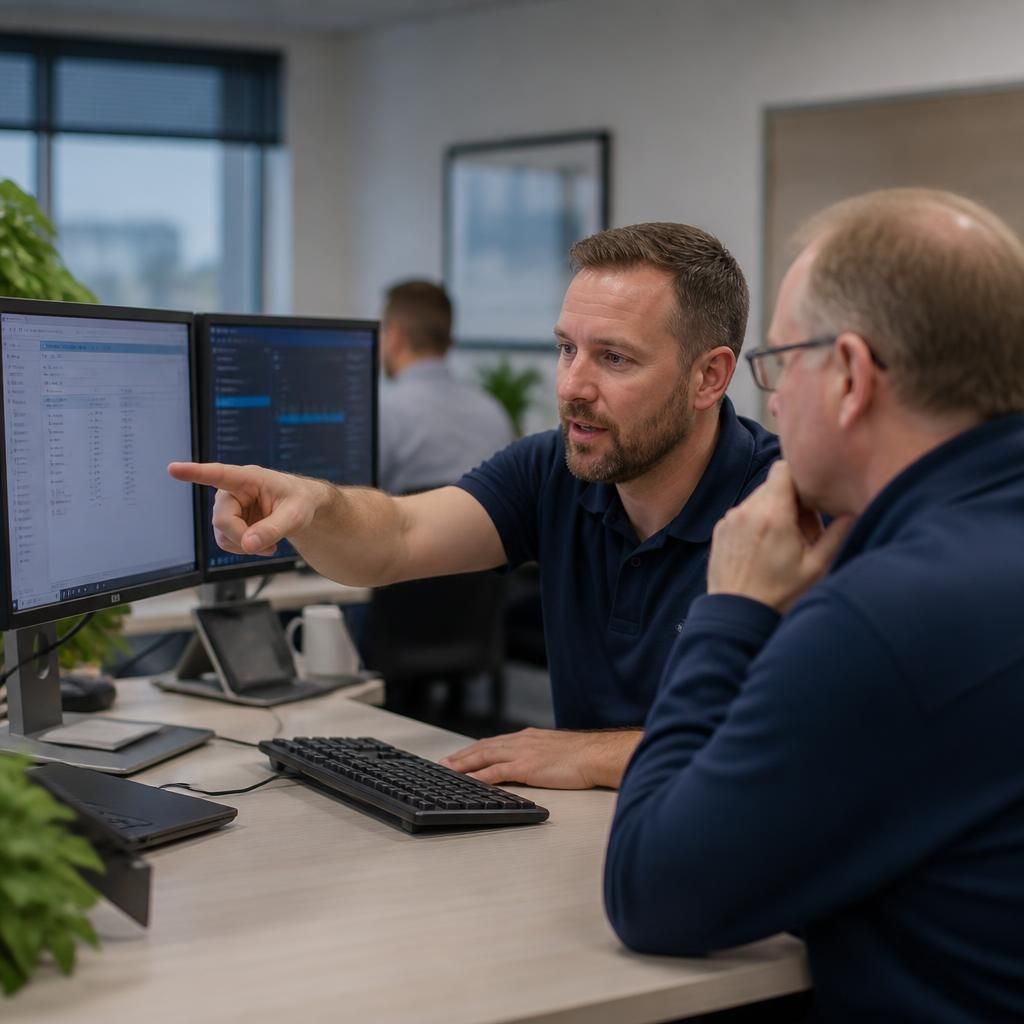
Specialist Expertise in Managed IT Support Services
Managed IT support services provide structured oversight of an organisation’s technology environment, covering the policies, maintenance tasks and technical decisions needed to keep systems fit for purpose. The work extends beyond resolving faults: it considers device and software lifecycles, user access, security controls, connectivity and the dependencies between core business systems.
Effective support requires the ability to assess technical risk in context. An experienced provider can distinguish between an isolated issue and a wider weakness, such as unsupported software, inconsistent configurations or excessive access permissions. This depth of assessment helps shape practical priorities for IT maintenance and support services, with recommendations based on operational requirements rather than one-size-fits-all packages.
S2 Technology Group applies this structured approach across managed IT support, cyber security, cloud and connectivity requirements. Its role is to bring together day-to-day technical management and longer-term technology planning, helping growing organisations make informed decisions about infrastructure, resilience and the controls needed to support secure business operations.
Questions to Ask About Managed IT Support Services
How does the provider document and review changes to our IT environment?
Assess whether the provider documents responsibilities, security practices, monitoring scope, maintenance routines, escalation routes and review processes. Clear boundaries make service comparisons more meaningful and expose gaps before any appointment.
How should managed IT support services be measured?
Measure recurring incidents, patch compliance, unresolved risks, user-impact patterns and progress against agreed priorities. Regular reviews with operational leaders should show whether support strengthens resilience and control over time.
What should managed IT support include beyond resolving user faults?
Look for coverage of patching, backups, access control, device lifecycles, security reviews, supplier coordination and continuity planning. These activities reduce unmanaged dependencies and keep technology aligned with business operational requirements.
What happens during the transition to managed IT support services?
A sound transition maps systems, users, access, suppliers and risks before responsibilities change. It should include knowledge transfer, documentation checks, prioritised remediation and a controlled handover, with ownership agreed.
How are third-party dependencies managed within managed IT support services?
Review external cloud, connectivity, supplier and software dependencies by recording ownership, contracts, licensing, security responsibilities and failure implications. Include supplier liaison and clear escalation routes when services become unavailable unexpectedly.
Business-Aligned Support
A single technology partner unites managed IT support, cyber security, cloud solutions and connectivity around your organisation’s requirements and needs.
Businesses We Support

Professional Services Organisations
Professional services firms depend on secure access to client information, dependable devices and well-managed user accounts. Managed IT support helps maintain these foundations while providing structured guidance as systems and working practices develop.

Manufacturing Businesses
Manufacturing environments require technology that supports office administration, production processes and communication between teams. Managed IT support can bring infrastructure oversight, user support and security considerations together across these connected requirements.

Logistics Operations
Logistics organisations rely on accurate access to systems used for coordination, records and communication. A managed IT support arrangement provides a consistent way to manage devices, permissions, connectivity and technical issues across operational teams.

Growing Multi-Site Organisations
As an organisation expands across locations, maintaining consistent systems and secure access becomes more complex. Managed IT support can help coordinate infrastructure, user requirements and cloud-based working practices across the wider business.
Managed IT Support for Different Business Needs
Managed IT support services can suit organisations at different stages, from those replacing ageing infrastructure to those integrating cloud-based working practices. They can also support businesses with distributed sites, changing workforce needs, or limited internal technical capacity.
Growing Without Dedicated IT Leadership
Organisations can use managed IT support when technology decisions are becoming difficult to coordinate internally. Ongoing guidance can help align systems, users and infrastructure with operational priorities.
Strengthening Cyber Security
Businesses reviewing their security arrangements can bring IT support and cyber security planning together. This can include considering access controls, device management and the practical risks associated with everyday working practices.
Adopting Cloud-Based Working
Managed IT support can help businesses assess how cloud services fit their existing systems and processes. It provides a structured way to consider access, user requirements, security and the administration of cloud-based tools.
Preparing for Business Growth
As an organisation expands, its technology may need to support more users, devices and operational requirements. Managed IT support helps inform decisions about scalable infrastructure, connectivity and future technical priorities.
Replacing Outdated Infrastructure
Businesses with ageing servers, devices or network equipment can use managed IT support to review what should be retained, upgraded or replaced. Planning the changes around business requirements helps reduce disconnected technology decisions.
Planning Technology Improvements
Some organisations need a clearer direction before investing in new systems. A managed IT support relationship can provide a practical framework for reviewing current arrangements, identifying priorities and sequencing infrastructure improvements.
Frequently Asked Questions About Managed IT Support Services
How does managed IT support differ from ad hoc IT support?
Managed IT support services cover ongoing oversight of business technology, including system maintenance, monitoring, security management, technical assistance and planning to keep infrastructure aligned with changing operational requirements and priorities.
Can managed IT support work alongside an existing in-house IT team?
Yes, managed support can complement internal IT by handling routine maintenance, monitoring and specialist tasks, while in-house staff retain control of priorities, users, projects, business-specific decisions and internal knowledge.
Which businesses benefit most from managed IT support services?
Managed IT support suits small and medium-sized businesses without full in-house expertise, growing organisations, and multi-site operations requiring dependable infrastructure, security oversight, cloud management, and technical planning.
How does managed IT support handle cybersecurity risks?
Cybersecurity risk management combines vulnerability reviews, security controls, user guidance, monitoring and incident procedures. Managed support helps maintain protective measures and coordinate technical responses as threats and systems change continuously.
Can managed IT support scale as a business grows?
Yes, managed IT support can scale through structured onboarding, cloud capacity planning, device and user administration, network changes, and service reviews that keep technology aligned with organisational growth and priorities.