What is out-of-band access in remote IT support?
Out-of-band access is a remote management method that connects to a device through a separate management channel from its main operating system or network connection. It can allow authorised IT staff to inspect, restart or recover servers and network equipment when the normal remote access route is unavailable.
Out-of-band access is valuable because it operates independently of the route normally used to administer a system. In a conventional, or in-band, support session, the device must be running sufficiently well, connected to the relevant network and able to accept management traffic through its operating system. Out-of-band management uses a separate control path, allowing an administrator to work with the underlying hardware or management controller when those conditions are not met.
This distinction matters during faults such as an operating system crash, failed network configuration, damaged remote-access software, or a security incident that requires the main system to be isolated. An authorised technician may still be able to view hardware status, access a console, restart the device, change certain boot settings or begin recovery procedures without relying on the affected operating system.
Common forms of out-of-band access include:
- Dedicated management interfaces: servers and some network appliances may include a separate controller with its own administration interface.
- Serial or console access: a direct management connection can provide command-line access to networking equipment and other infrastructure even when ordinary network administration is unavailable.
- Separate management networks: critical devices can be connected to a restricted network that is logically or physically separated from the production environment.
- Independent connectivity: suitably designed infrastructure may use a different communications route for management traffic, reducing dependence on the primary business connection.
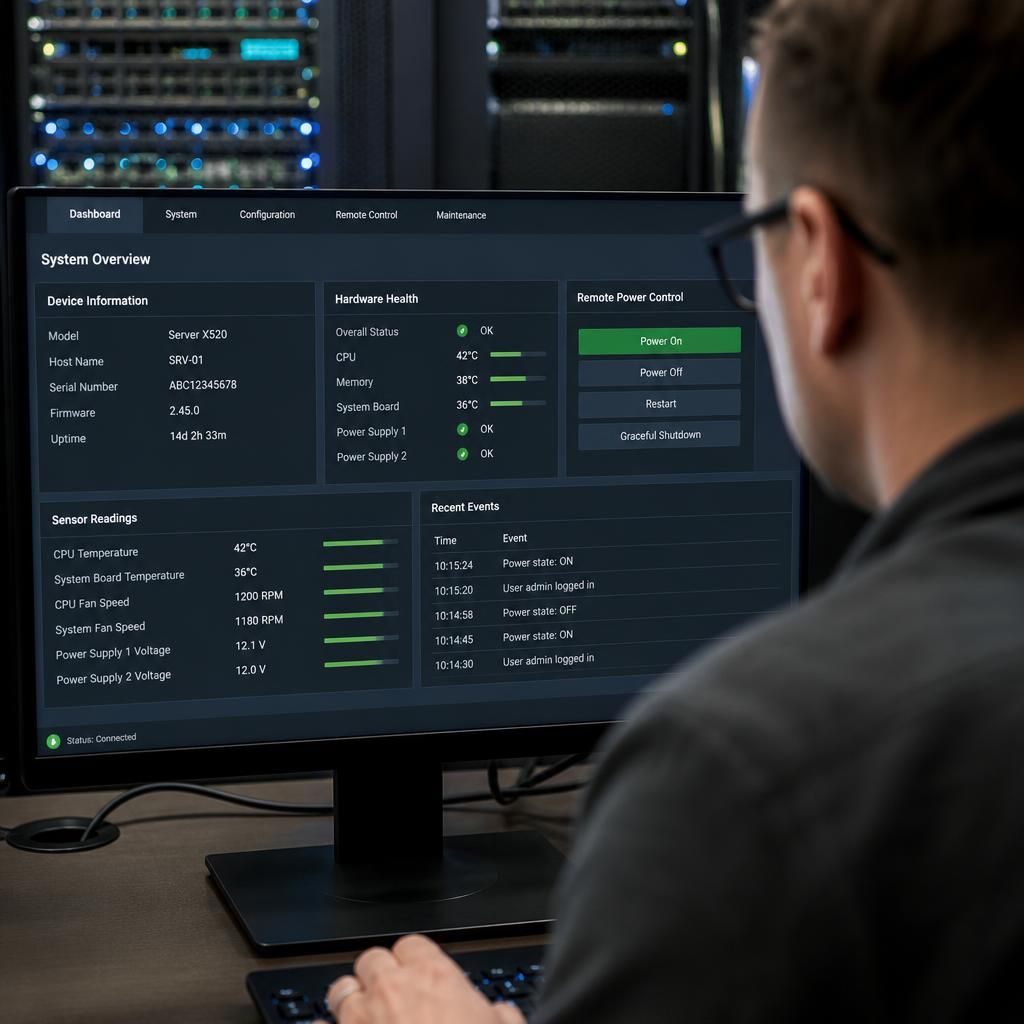
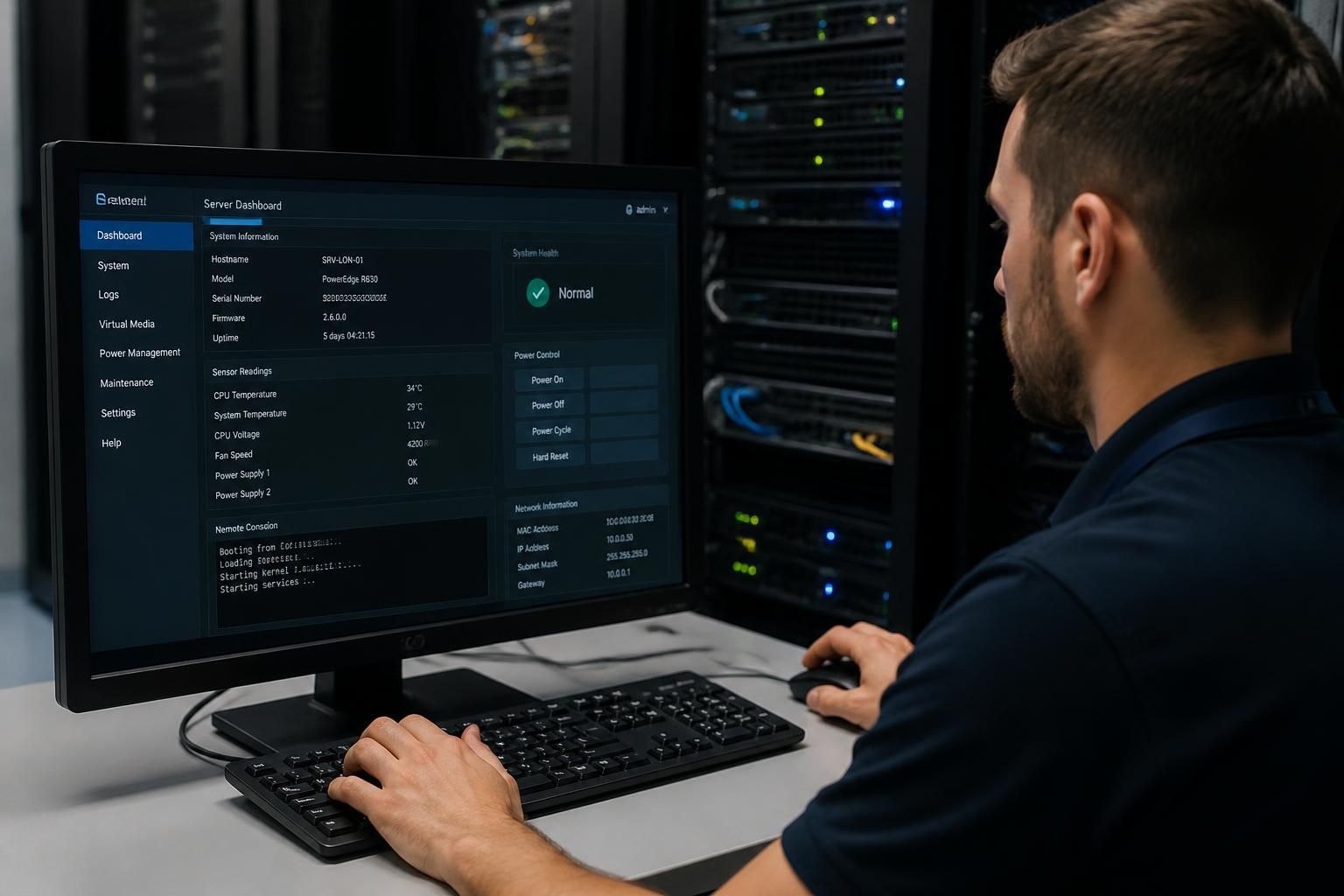
The exact capabilities depend on the device and its configuration. Some platforms provide power control, hardware monitoring, remote console viewing and virtual media for recovery. Others offer only a limited console or diagnostic interface. Out-of-band access should therefore be treated as a recovery and administration capability, not as a universal method for controlling every function of every device.
A typical support process begins by identifying the affected asset and confirming whether its separate management path is available. The technician then authenticates to the management interface, checks the device state and collects relevant diagnostic information. Depending on the fault, the next step might be to restart a service through the console, reboot the equipment, correct a configuration, start from approved recovery media or hand the issue to an engineer who can work on the hardware directly.
Out-of-band access is particularly useful for infrastructure that supports many users or locations. A failed core network device, virtualisation host, storage system or security appliance can prevent ordinary remote administration, while its management interface may remain usable. In a multi-site environment, this can give the support team a controlled route to investigate equipment without relying entirely on access through the affected site’s user network.
Its independence also creates security responsibilities. A separate management channel is not automatically a secure one. It should be protected with strong, individual authentication, appropriate privileged-access controls and encryption where supported. Management interfaces should not be exposed directly to the public internet unless there is a carefully designed and justified security architecture. Network segmentation, access restrictions, monitoring and logging help limit who can reach the interface and provide an audit trail of administrative actions.
Credentials for out-of-band systems should be managed separately from ordinary user accounts, with access granted only to people who need it. Organisations should also establish how emergency access is approved, recorded and reviewed. If a management interface can restart equipment or alter boot settings, compromise of that interface could have serious consequences, including service disruption or assistance to an attacker attempting to bypass normal controls.
Testing is an important part of the design. A management port that has never been configured, has an expired credential or is connected to the wrong network cannot be relied upon during an incident. Tests should verify connectivity, authentication, console access, power controls and any recovery media process that the organisation expects to use. The test should be planned so it does not interrupt production systems unnecessarily, and its results should be documented alongside the asset’s support information.
There are practical limitations. A separate management path may be unavailable if the equipment has lost power, the management controller has failed, the independent connection is damaged or the credentials are not accessible. It may also provide visibility without resolving a physical hardware fault. Out-of-band access is therefore one layer in a wider support and resilience plan, alongside backups, documented recovery procedures, replacement arrangements and appropriate on-site escalation.
For a business, the useful question is not simply whether a device has an out-of-band feature, but whether that feature is securely configured, reachable through an approved route and included in the organisation’s recovery procedures. S2 Technology Group can help organisations around Stourbridge, Kinver, Wordsley, Kingswinford, Kidderminster, Halesowen, Dudley and neighbouring areas assess remote administration arrangements and incorporate suitable management controls into their broader IT support and cyber security planning.
Out-of-band access is only genuinely independent if its supporting dependencies are separate from the failed production system. A management interface may use a different network address but still rely on the same switch, firewall, power supply, identity service or communications link as the equipment it is intended to recover.
For that reason, organisations should document the complete management path for each critical device. This should show how an administrator reaches the interface, which credentials are accepted, where the connection enters the environment and which infrastructure must remain operational. Any shared dependency should be treated as a potential single point of failure rather than assuming that a separate port provides complete resilience.
Recovery documentation should also state what can be done through the interface and when physical intervention is required. This helps support staff choose the appropriate route without confusing out-of-band administration with remote desktop access, a VPN connection or a second general-purpose internet connection.