What monitoring is included with IT Infrastructure as a Service?
IT Infrastructure as a Service monitoring typically covers infrastructure performance, availability, capacity, connectivity and security events across the systems included in the service. Alerts identify issues such as resource constraints, service interruptions or suspicious activity so they can be investigated and managed before they develop into wider operational problems.
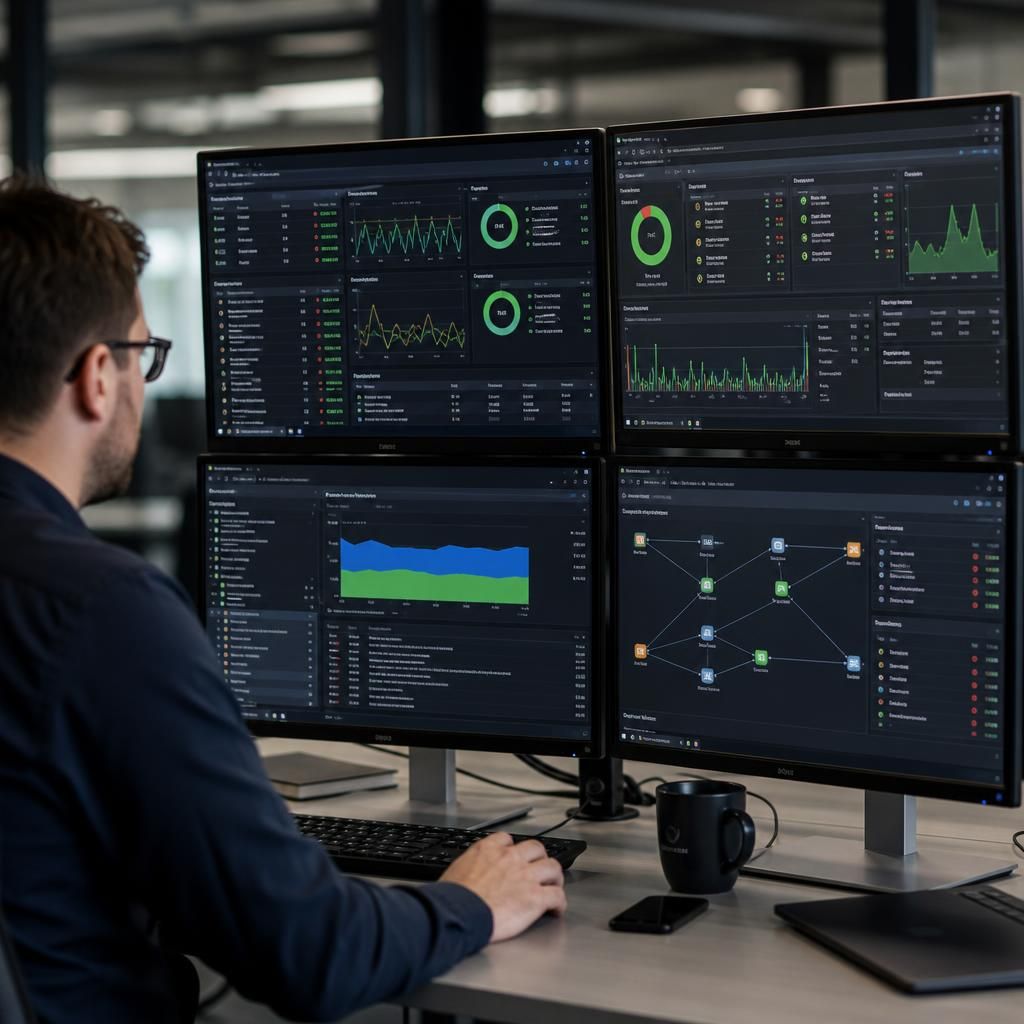
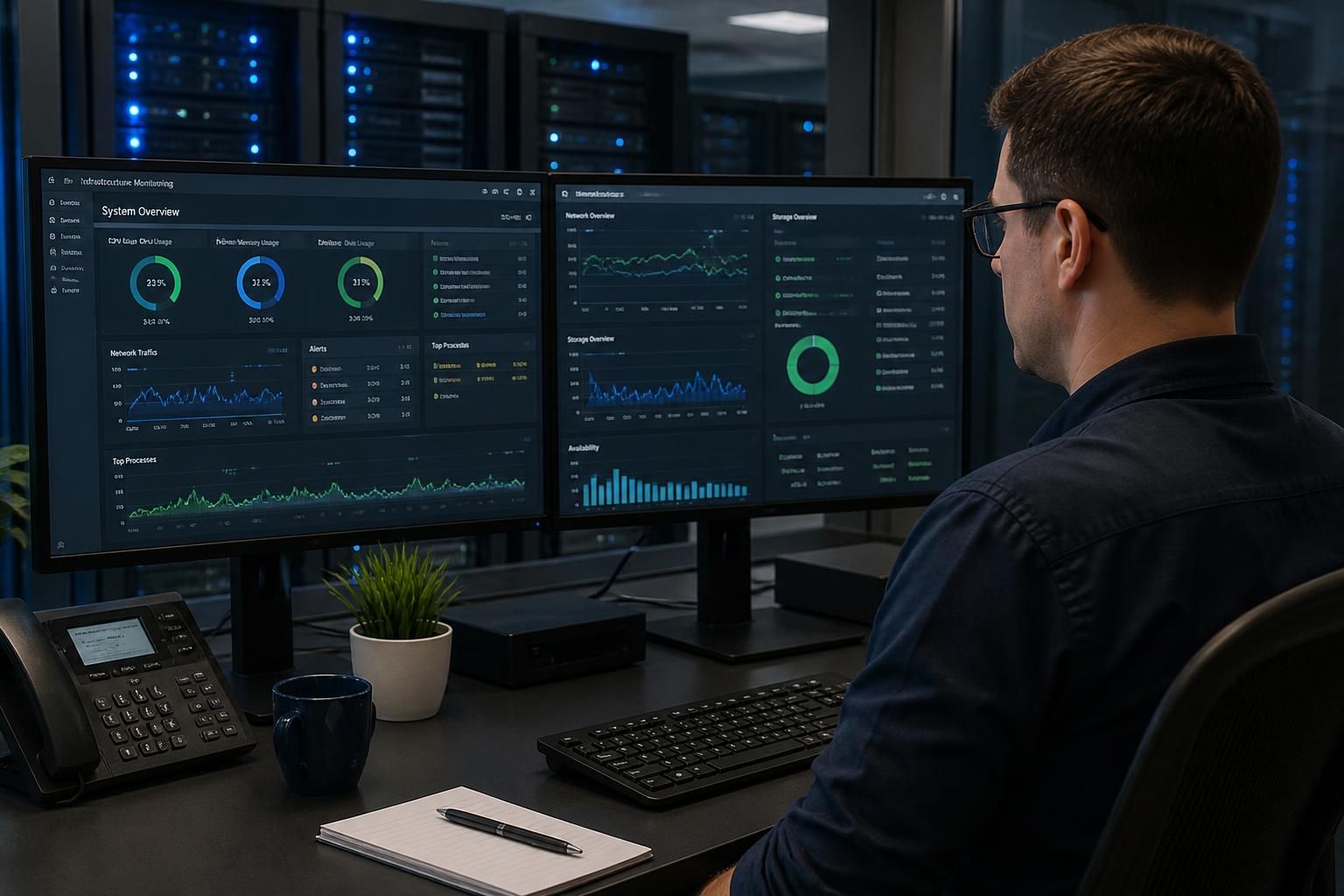
Monitoring included with IT Infrastructure as a Service usually provides continuous oversight of the infrastructure components covered by the agreement, together with alerting, investigation and operational reporting. Its purpose is to give the service provider usable information about the condition of servers, virtual machines, storage, networks and associated services, rather than simply recording whether a system is switched on.
The precise scope depends on the IaaS design and service schedule. A well-defined monitoring service should state which resources are monitored, which measurements are collected, alert thresholds, who receives notifications and what action follows an alert.
- Compute and virtual machines: processor utilisation, memory consumption, system load, operating system status and the health of virtual machine hosts or instances.
- Storage: available capacity, disk health, input and output activity, latency and conditions that could affect an application’s ability to read or write data.
- Network and connectivity: link status, packet loss, latency, throughput, interface errors and the reachability of important infrastructure services.
- Core services: the status of services such as directory services, DNS, DHCP, authentication components and other dependencies identified as important to the hosted environment.
- Application dependencies: selected service checks, ports, processes or transaction tests where an application’s operation depends on more than the underlying server being available.
Monitoring should measure both current condition and developing trends. A single reading may not indicate a fault, whereas steadily reducing storage capacity, repeated authentication failures or increasing network latency can justify investigation. Thresholds therefore need to be set with the workload in mind. A limit that is appropriate for a lightly used file server may be unsuitable for a database or a system supporting several sites.
Security-related monitoring may include operating system and infrastructure logs, privileged account activity, repeated failed logins, unexpected configuration changes, suspicious network connections and other events identified by the agreed security tooling. This is not necessarily the same as a complete managed detection and response service. The contract should clarify whether monitoring only generates alerts, whether events are correlated and triaged, and whether investigation or containment is included.
Useful monitoring also covers the monitoring system itself. The provider should be able to identify when an agent stops reporting, a data collection method fails or an alerting route is unavailable. Otherwise, a dashboard can appear quiet simply because it is no longer receiving information. The service should also explain how monitored devices are added, removed and checked after infrastructure changes.
When a threshold or event is reached, the normal process may include:
- Collecting supporting information, such as recent metrics, logs and configuration changes.
- Assessing whether the event is an actual fault, a capacity trend, a security concern or an expected maintenance condition.
- Recording the event and assigning it to the appropriate technical owner.
- Taking the agreed remedial action, which might involve service adjustment, capacity planning, configuration correction or escalation to the business.
- Reviewing the cause and updating thresholds or monitoring coverage where the event reveals a gap.
Monitoring is not the same as fixing every condition automatically. Automated remediation can be appropriate for tightly controlled tasks, but actions that restart services, change firewall rules or alter production resources should have defined safeguards and approval requirements. The IaaS agreement should distinguish between notification, investigation, routine administration and actions that require the customer’s authorisation.
Customers should also check what is excluded. Common boundaries include software inside a customer-managed virtual machine, specialist application performance, user devices, customer-owned network equipment, third-party services and workloads that have not been onboarded into the monitoring platform. If a business retains responsibility for a system, it may also retain responsibility for supplying access, maintaining agents, confirming alert contacts and responding to decisions that only it can make.
Reports can make monitoring useful for planning as well as fault management. Depending on the agreement, these may show recurring alerts, capacity trends, infrastructure changes, unresolved issues and recommendations for improving the environment. The most useful reports relate technical measurements to business workloads, identify repeated causes and separate genuine risks from informational events.
For an IaaS service from S2 Technology Group, the practical question is not simply whether monitoring is available, but which infrastructure is covered and what happens when it identifies a condition. Those details should be confirmed during service design so that monitoring responsibilities, alert handling and customer-owned tasks are clear before the environment is placed into operation.
Monitoring should account for planned maintenance and approved infrastructure changes. A server restart, network migration or storage expansion can generate alerts that resemble an unplanned fault. The monitoring service should therefore record the change, identify the affected resources and distinguish expected activity from conditions requiring investigation.
The service schedule should explain how maintenance notifications are managed, who approves any temporary alert suppression and how monitoring is verified once the work is complete. This helps prevent unnecessary escalation while ensuring that alerts resume when the change window ends. It also creates a useful audit trail linking infrastructure events to authorised changes, making it easier to identify whether an issue was caused by the change or developed independently.