

Is outsourced IT suitable for a growing business?
Outsourced IT can suit a growing business when technology needs are expanding faster than its internal resources or expertise. It provides access to managed IT support, cyber security and scalable cloud solutions without requiring a fully in-house IT team.
Outsourced IT is suitable for a growing business when the organisation needs structured technology management, specialist oversight and dependable decision-making that its current resources cannot consistently provide. The relevant question is not simply whether the business has an internal IT employee; it is whether the existing operating model can support its users, systems, security requirements and growth plans without creating avoidable risk.
Growth increases IT demands in several ways. New employees require accounts, devices, permissions and training. Additional sites or hybrid working arrangements create more complex access requirements. Business-critical applications become more numerous, data volumes increase and technology decisions have longer-term financial and operational consequences. At the same time, an organisation may need expertise in areas such as infrastructure design, cyber security, cloud governance, backup strategy and compliance that are difficult to maintain through a small internal team alone.
An outsourced arrangement can provide a defined operating model for these responsibilities. Instead of dealing with IT issues individually or making technology decisions only when a problem occurs, the business can establish agreed processes for user support, maintenance, monitoring, risk management, projects and strategic planning. This can make technology responsibilities easier to manage as the organisation becomes larger or more distributed.
Common indicators that outsourcing may be appropriate include:
- IT decisions are being made reactively, with no documented priorities or roadmap.
- A single employee carries most of the technical knowledge, creating a dependency that is difficult to manage.
- Internal staff spend substantial time resolving routine technology issues instead of focusing on their primary roles.
- New starters, leavers, permissions and equipment are handled inconsistently.
- The business is adopting new applications, sites or working arrangements without a consistent architecture.
- There is uncertainty about whether systems are patched, backed up, monitored and configured appropriately.
- Senior leaders lack a clear view of technology risks, renewal dates, suppliers and upcoming investment needs.
These signs do not automatically mean that every IT function should be transferred to an external provider. A business may choose a fully outsourced model, retain an internal IT lead and use external specialists, or divide responsibilities between employees and a managed service provider. The right structure depends on the organisation’s size, risk profile, technical complexity and preference for internal control.
Outsourcing can complement an internal team. An external provider may take responsibility for defined operational tasks while internal employees retain ownership of business priorities, relationships with department leaders and decisions about how technology supports the organisation. Alternatively, the provider may supply specialist capability for projects or complex issues rather than act as the organisation’s main IT function. Defining these boundaries is important because unclear ownership can result in duplicated work, unresolved issues or assumptions that another party is responsible.
The arrangement should also fit the way the business operates. A professional services firm may place particular importance on secure access to client information and dependable collaboration systems. A manufacturer may need to distinguish office technology from operational systems and control changes carefully. A logistics business may depend on connectivity, mobile users and systems that support movement of goods. A multi-site organisation may need consistent policies while allowing for differences between locations. Outsourced IT is most useful when its scope reflects these operational requirements rather than applying the same package of activities to every organisation.
Cost is only one part of the suitability assessment. The business should compare the proposed arrangement with the full cost and risk of its current model. This includes employee time, recruitment and training, software and infrastructure management, specialist consultancy, project work, security measures, business disruption and the consequences of an unresolved technical failure. The comparison should distinguish recurring management from one-off improvements, since a provider may identify work needed to bring systems, documentation or security controls to an appropriate standard before ongoing services begin.
Control and accountability should be examined before an agreement is signed. A prospective customer should understand:
- Which systems, devices, users and locations are included.
- Which activities are the provider’s responsibility and which remain with the business.
- How requests, incidents, changes and projects are recorded and prioritised.
- Who can approve access, configuration changes, purchases and exceptions to policy.
- How performance, risks, outstanding work and technology priorities will be reviewed.
- How documentation, credentials, configurations and business data will be maintained and returned if the arrangement ends.
Growing businesses should pay particular attention to scalability in the practical sense. The provider should be able to accommodate changes in users, sites, systems and business processes through a controlled process, with any effects on cost and responsibility made clear. Growth can also expose weaknesses that were less visible in a smaller organisation, so the arrangement should include regular review of architecture, access rights, resilience, data protection and supplier dependencies.
Outsourcing is not a substitute for business ownership. Directors and senior managers still need to set risk appetite, approve priorities, protect sensitive information and ensure that technology decisions support operational objectives. Employees also need suitable policies and training, because user behaviour remains relevant to data protection and cyber security even when technical management is external. A provider can advise, implement and manage agreed controls, but it cannot make every business decision on the organisation’s behalf.
Before choosing a provider, the business should document its current environment and future requirements. This should cover users and locations, important applications, data types, dependencies, known weaknesses, planned changes and any regulatory or contractual obligations. It should then assess potential providers on technical capability, communication, governance, security practices, service scope, transition method and how clearly responsibilities are documented. References and assurances are useful, but they should be considered alongside the proposed working processes and the provider’s understanding of the organisation’s circumstances.
S2 Technology Group works with small to medium-sized organisations that need a managed approach to IT support, cyber security, cloud services and business connectivity. For a growing business, the value of that relationship should be judged against its particular requirements: whether it introduces clearer accountability, better-informed technology decisions and a more manageable way to support changing operations. Where those needs can be met through a clearly defined division of responsibilities, outsourced IT may be a suitable long-term operating model.
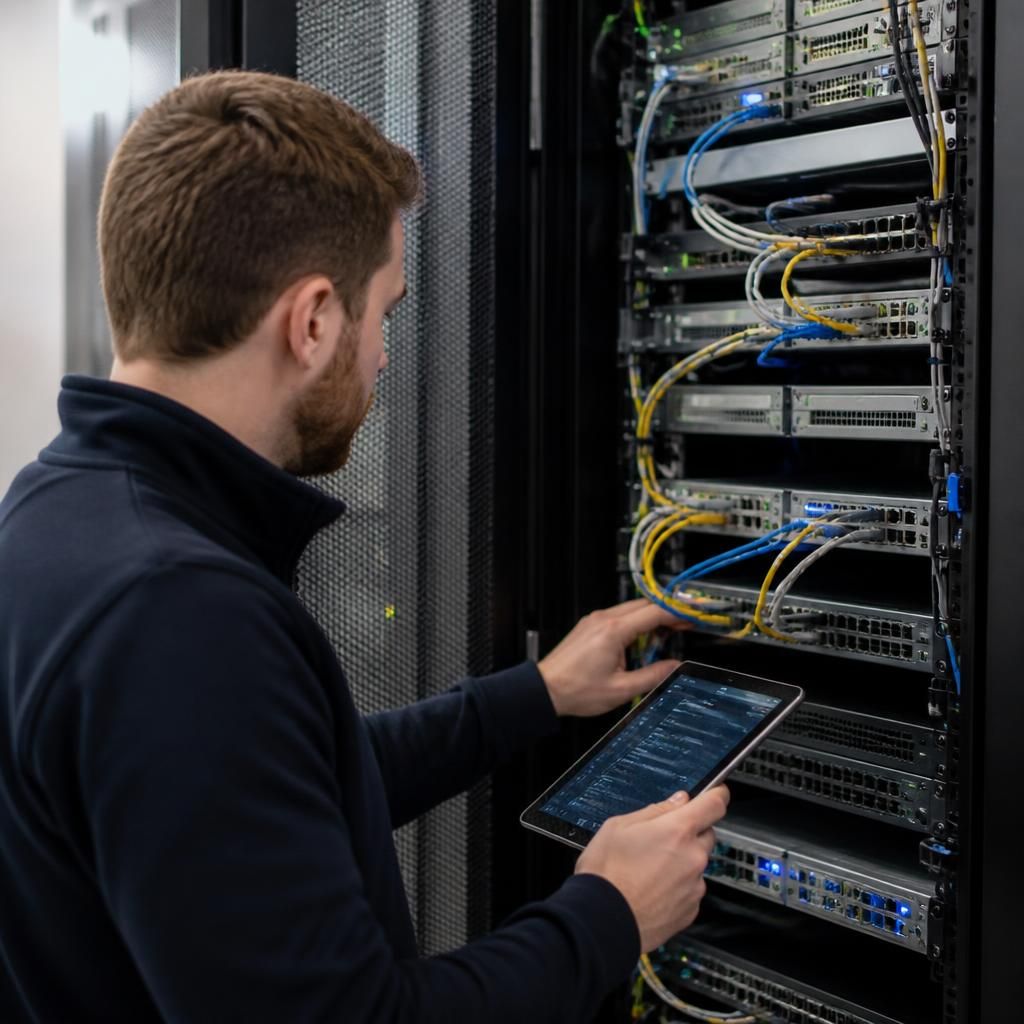
Outsourced IT is suitable for a growing business only when its employees can work effectively within an agreed support model. The provider may manage systems and technical issues, but staff still need to report problems accurately, follow access and security procedures, and understand which requests require management approval.
Before outsourcing, consider how the arrangement will affect day-to-day communication. Employees should know where to raise requests, what information to provide, how urgent issues are identified and who can authorise changes. Managers should also understand how recurring user problems, training needs and process weaknesses will be identified rather than treated as isolated technical faults.
This is particularly important when a business has different departments, sites or working practices. A suitable provider should be able to explain technical matters clearly to non-specialists and adapt its communication to the organisation’s structure. If employees are unlikely to use the agreed processes, or if managers cannot support those processes consistently, outsourcing may not deliver its intended value without changes to internal procedures first.
Discuss whether outsourced IT suits your business
Discuss your current IT model and growth plans with S2 Technology Group to identify whether outsourced IT is an appropriate fit for your organisation. The conversation can help clarify suitable responsibilities, priorities and next steps before any commitment is made.