
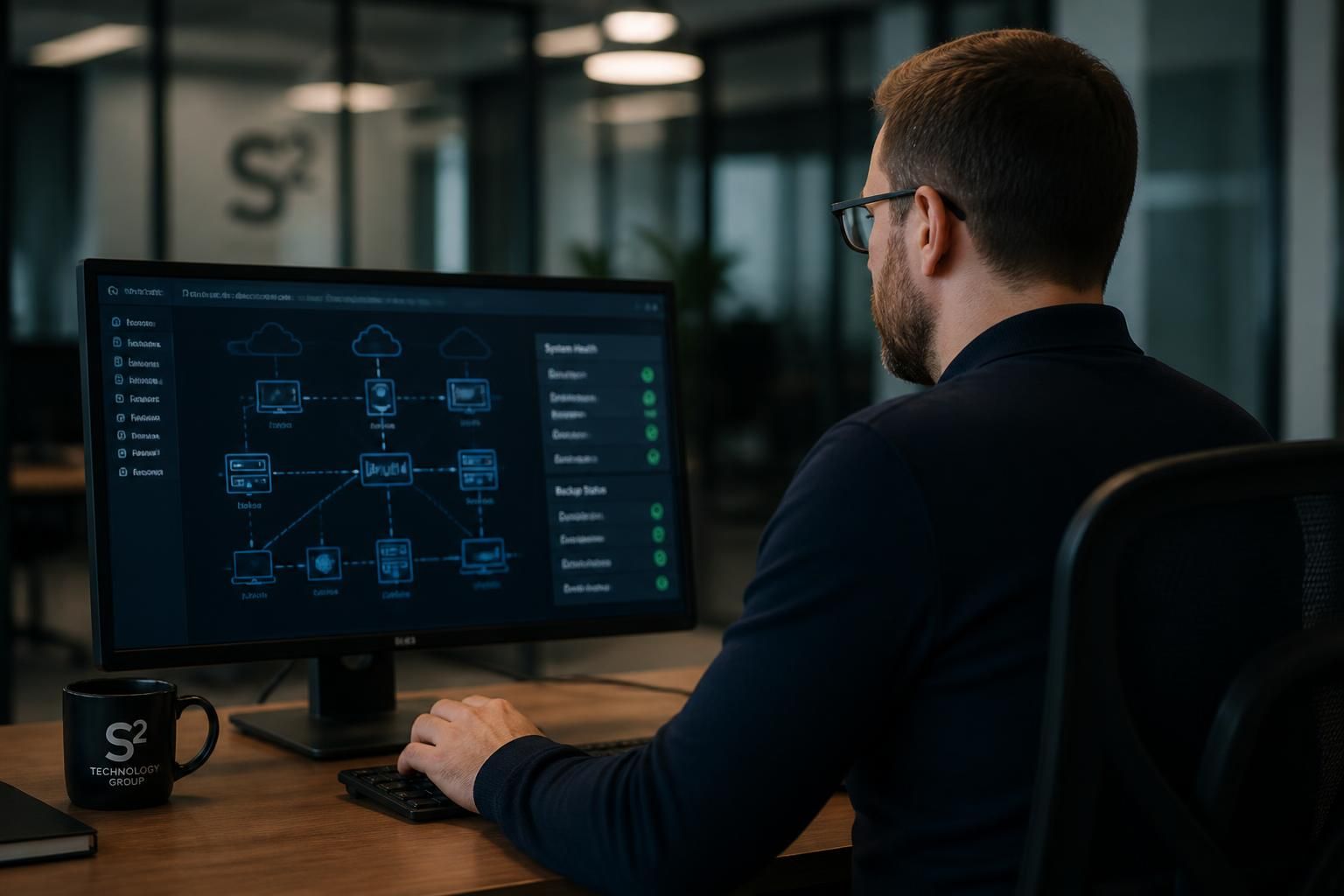
How does IT infrastructure outsourcing support business continuity?
IT infrastructure outsourcing supports business continuity by providing structured management of the systems, connectivity and access that an organisation depends on, reducing disruption when faults, cyber incidents or infrastructure changes occur. An outsourced provider can also maintain documented recovery processes, secure remote access and scalable infrastructure so the business can restore essential operations and adapt as its requirements change.
IT infrastructure outsourcing supports business continuity by applying a defined operating model to the technology on which critical business processes depend. Instead of treating continuity as a document used only after an incident, the organisation and its provider can build resilience requirements into infrastructure design, maintenance, security controls, recovery planning and day-to-day governance.
The process usually begins by identifying which services are essential to the organisation. These may include line-of-business applications, file and document systems, identity services, telephony, connectivity, production systems and access to cloud platforms. Each dependency should be linked to the business activity it supports, the people responsible for it and the consequences of its unavailability. This helps distinguish a genuine priority from a system that can be restored later.
Once those dependencies are understood, the outsourcing arrangement can define recovery objectives. A recovery time objective establishes how long a service may be unavailable, while a recovery point objective establishes how much recent data the organisation could afford to lose. These objectives should be agreed with business stakeholders rather than selected solely by the IT provider, because the appropriate level of protection depends on operational, legal and commercial requirements.
- Resilience design: critical components can be assessed for single points of failure, capacity limitations and dependencies on individual devices, locations or suppliers.
- Backup governance: backup schedules, retention, access permissions and protection from unauthorised alteration can be documented and reviewed. A backup is only useful for continuity if it can be recovered and the restored data is usable.
- Recovery testing: restoration exercises can expose incomplete backups, outdated credentials, missing application dependencies and unclear ownership before a real incident occurs.
- Change control: infrastructure changes can be assessed for their effect on resilience, recovery procedures and business-critical services before they are introduced.
- Incident coordination: technical actions, internal communications, supplier escalation and decisions about temporary working arrangements can be assigned in advance.
Outsourcing can also improve the consistency of routine controls that are often difficult to maintain without dedicated infrastructure expertise. Patch management, configuration reviews, capacity monitoring, vulnerability management and access reviews all affect the likelihood and impact of an interruption. Their value is not simply that individual tasks are completed; it is that they are recorded, assigned and reviewed as part of a repeatable process.
Cyber security is closely connected to continuity. A security incident may affect data, user accounts, devices or the ability to trust an entire environment. Continuity planning therefore needs to consider isolation of affected systems, identity recovery, privileged access, malware containment and validation before services are returned to operation. Recovery should not reintroduce compromised accounts or unverified systems into the live environment.
The outsourcing contract should make responsibilities clear. It may specify which party owns business continuity decisions, who approves changes, who maintains technical documentation, who communicates with staff and customers, and who coordinates with software, connectivity or hardware suppliers. Service descriptions should also identify exclusions and dependencies, so that an organisation does not assume the provider controls systems that remain under another party’s management.
Continuity arrangements need to reflect people as well as technology. Procedures should be understandable to authorised staff who may need to follow them during a disruption, including instructions for alternative access, approval routes and the restoration order for dependent services. Regular review is necessary when the organisation changes its applications, premises, workforce, suppliers or regulatory obligations.
An outsourced provider should be able to demonstrate how continuity is managed rather than relying on general assurances. Useful evidence may include asset and dependency records, backup reports, recovery-test results, change records, risk registers, incident reviews and agreed performance measures. These records give management a basis for deciding whether the infrastructure remains aligned with business requirements.
For small and medium-sized organisations, this approach can provide access to structured infrastructure management without requiring every specialist capability to be maintained internally. S2 Technology Group applies this type of IT support, cyber security, cloud and connectivity expertise for organisations around Stourbridge, Kinver, Wordsley, Kingswinford, Kidderminster, Halesowen, Dudley and neighbouring areas, with the specific continuity arrangements shaped around the organisation’s systems and operational priorities.
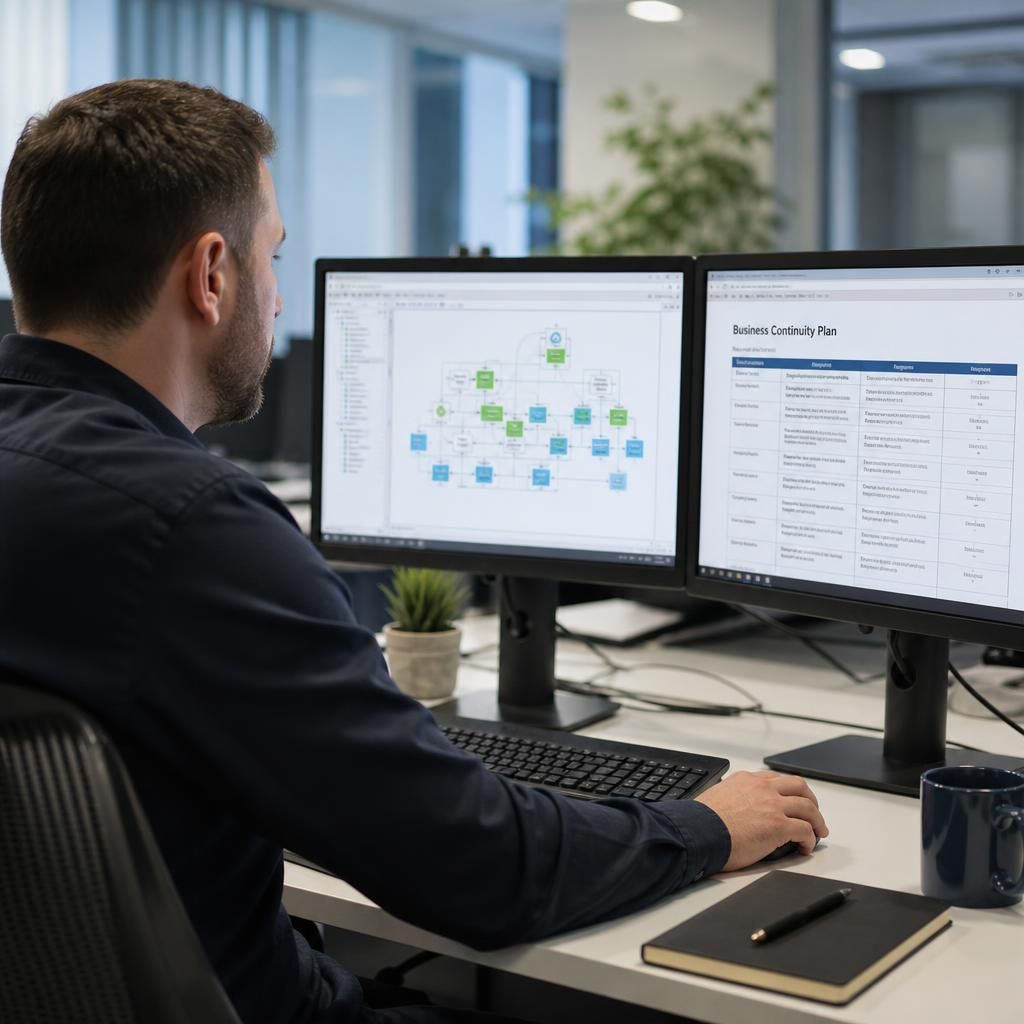
Business continuity depends on clear decision-making as well as technical recovery. An outsourced IT infrastructure arrangement can define who is authorised to invoke continuity procedures, which conditions trigger escalation and how competing restoration requests are prioritised.
This avoids delays when systems cannot all be returned to service at the same time. The agreed process may cover approval of temporary workarounds, allocation of technical resources, acceptance of operational limitations and communication of decisions to affected teams. It should also record when normal service can resume and who confirms that the environment is suitable for ordinary use.
These decision rules can be reviewed through scenario exercises and updated when the organisation’s systems, responsibilities or operating model changes. The result is a continuity plan that supports coordinated business decisions, rather than relying on technical staff to determine commercial priorities during an incident.