
How does managed IT support handle cybersecurity risks?
Managed IT support handles cybersecurity risks through continuous oversight of systems, security controls, updates and user access, helping identify weaknesses before they become incidents. It also provides structured incident response, backup management and ongoing security advice so businesses can reduce exposure and recover in a controlled way.
The main cybersecurity value of managed IT support is the consistent application of risk controls across devices, accounts, applications and networks. Rather than treating security as a one-off installation, the provider establishes how the environment should be configured, checks that those standards are maintained and helps the business make informed decisions when risks change.
It typically addresses cybersecurity risks through several connected activities:
- Risk assessment: identifying important systems, sensitive information, common attack routes and weaknesses in the existing environment. This helps separate issues that require immediate attention from longer-term improvements.
- Identity and access management: applying least-privilege principles so people have the access needed for their role, without unnecessary access to systems or data. Account reviews can also identify dormant accounts, excessive permissions and risks created when employees change roles or leave.
- Endpoint protection: securing laptops, desktops and servers through hardened configurations, malware protection, encryption where appropriate and restrictions on unauthorised software or devices.
- Email and web security: reducing exposure to phishing, malicious attachments, unsafe links and impersonation attempts. Technical filtering is more effective when combined with clear procedures for reporting suspicious messages.
- Network design: separating systems where appropriate and controlling which devices, users and services can communicate with one another. This can limit the spread of an attack if one account or device is compromised.
- Vulnerability management: assessing security weaknesses, prioritising them according to their potential business impact and tracking remedial work through to completion.
A managed service should also establish clear ownership. The provider may administer technical controls, but the business remains responsible for decisions such as which data is most sensitive, who should approve access and how much operational disruption is acceptable during a security event. Documented responsibilities prevent uncertainty when an issue involves staff, suppliers, cloud services or physical equipment.
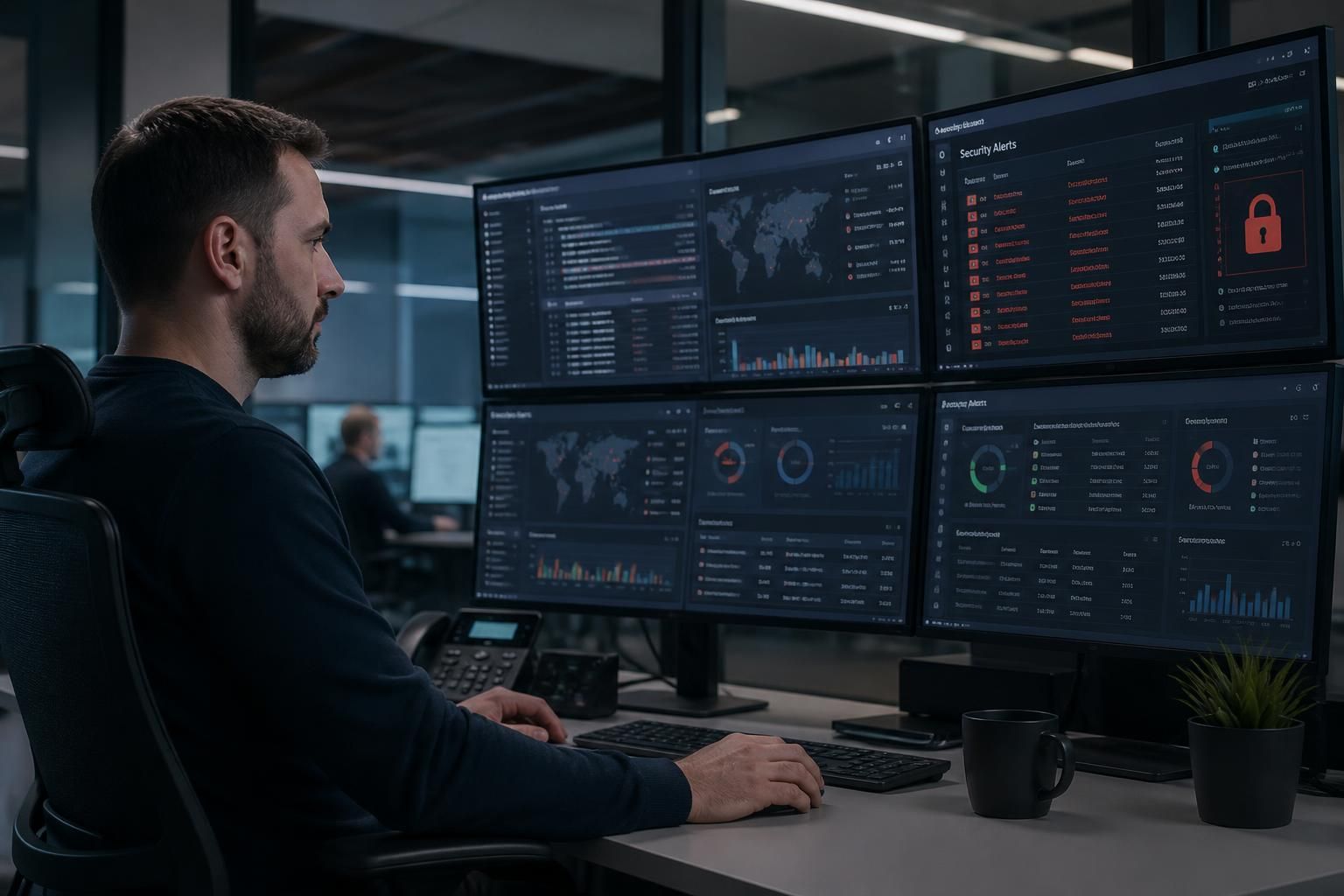
Security monitoring is useful only when it leads to appropriate action. A managed IT provider can help distinguish routine technical activity from indicators such as unusual sign-in behaviour, unexpected privilege changes, suspicious processes or attempts to access restricted data. Investigations should be recorded so that recurring patterns can be identified and controls can be adjusted rather than repeatedly dealing with the same symptom.
People and process are equally important. Staff should know how to handle sensitive information, verify unusual payment or access requests and report suspected phishing. Policies should cover acceptable use, password and authentication requirements, mobile working, personal devices, data sharing and the handling of leavers. These controls reduce the likelihood that a technically protected environment is undermined by an avoidable process failure.
Managed IT support can also provide evidence that security measures are being operated rather than merely purchased. Useful records may include access reviews, vulnerability findings, configuration changes, security alerts, completed remediation and tests of recovery arrangements. This documentation supports internal governance and can help a business answer questions from customers, insurers, auditors or other stakeholders.
No support arrangement removes every cyber risk. Effective protection depends on the quality of the design, the scope of the service, the cooperation of users and the way business-critical suppliers are managed. A sensible review therefore considers not only whether tools are installed, but whether they are correctly configured, monitored, maintained and tested against realistic failure scenarios.
For a small or medium-sized organisation, this approach can provide access to structured security management without requiring every specialism to be maintained in-house. S2 Technology Group incorporates cybersecurity into its managed IT support, helping businesses around Stourbridge, Kinver, Wordsley, Kingswinford, Kidderminster, Halesowen, Dudley and neighbouring areas develop a more controlled and maintainable technology environment.
Managed IT support also reduces cybersecurity risk by controlling how suppliers, contractors and cloud services connect to the business environment. Each external connection should have a defined purpose, limited permissions and an identified owner, rather than remaining active indefinitely or relying on informal arrangements.
In practice, this means reviewing supplier access, checking authentication requirements, removing accounts when work ends and recording which systems depend on each service. The provider can also help assess whether a supplier has suitable security practices and whether the business could continue operating if that service became unavailable or was compromised. This makes third-party access part of the organisation’s overall security process, rather than an unmanaged exception.
Discuss Your Managed IT Cybersecurity Requirements
Discuss your managed IT cybersecurity requirements with S2 Technology Group to clarify the scope, responsibilities and priorities for your organisation. A structured conversation can help you decide which areas of your managed IT support arrangement require further review.