
How is IT support adapted for multi-site organisations?
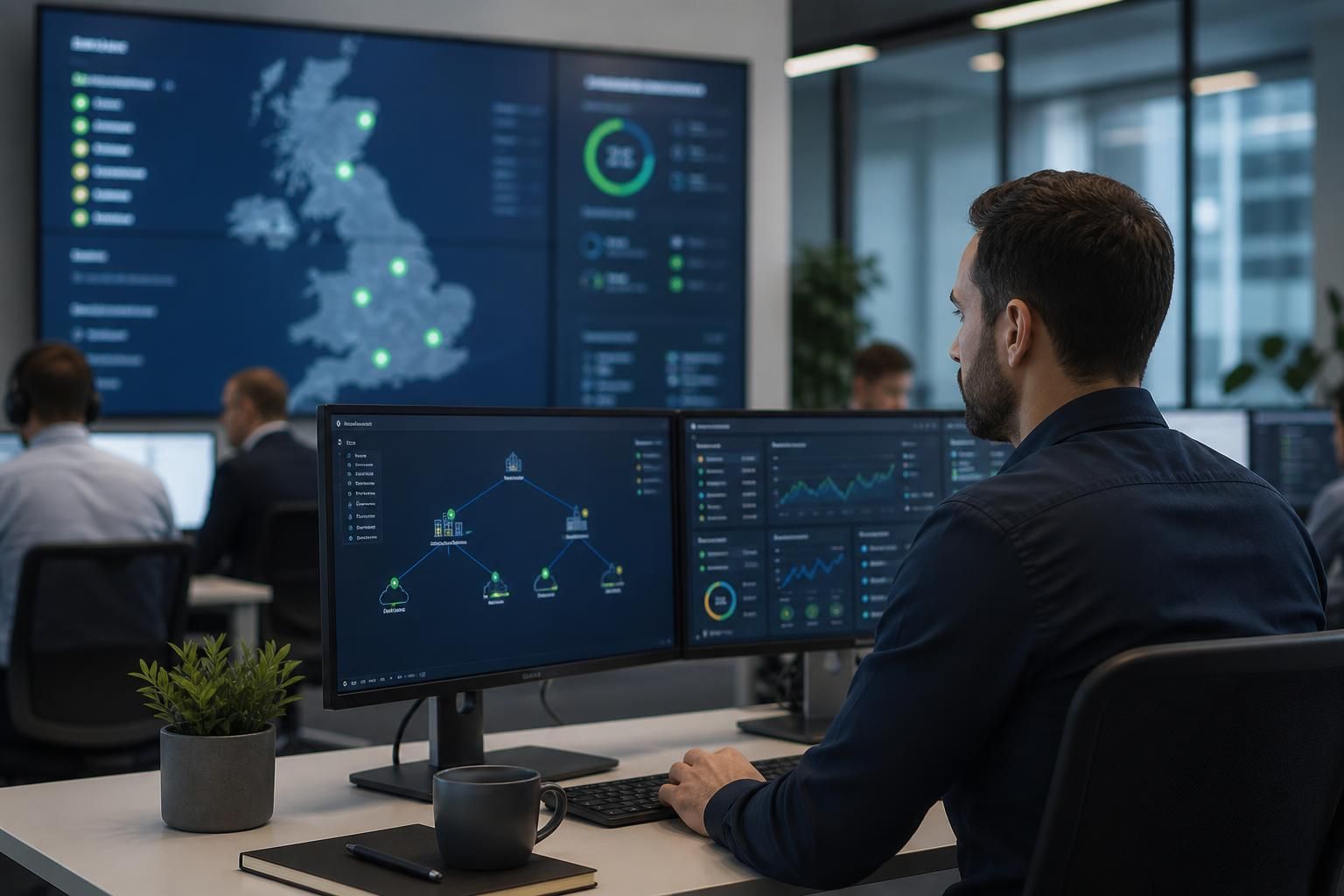
IT support for multi-site organisations combines centralised oversight with site-specific planning, so each location can use consistent security, systems and policies while accounting for different connectivity, infrastructure and operational needs. It typically includes coordinated monitoring, user support, access control, backup planning and scalable cloud or networking solutions across all sites.
IT support for multi-site organisations is adapted by combining shared standards with a service model that reflects how each location operates. The aim is to make technology easier to govern across the organisation without forcing every office, depot or production site into an identical technical arrangement.
A suitable support model begins with an accurate record of each location. This should cover users, devices, network equipment, applications, internet circuits, suppliers, physical access arrangements and the business services that depend on them. Site documentation should also identify local dependencies, such as production equipment, warehouse scanners, telephony, CCTV or specialist applications. Keeping this information current helps IT teams assess the effect of a fault or proposed change before taking action.
Organisations commonly use a baseline of technical and security standards, then apply controlled exceptions where a site has a genuine operational requirement. The baseline may define:
- approved device configurations and software;
- identity and access rules for employees, contractors and visitors;
- security controls for endpoints, networks and cloud services;
- minimum documentation and asset-record requirements;
- permitted methods for connecting sites, users and business applications; and
- the process for requesting and approving technical changes.
This approach reduces unnecessary variation while preserving flexibility. For example, a professional services office may depend mainly on cloud applications and video conferencing, whereas a warehouse may require dependable links to stock systems, label printers and handheld devices. A manufacturing site may also have operational technology that cannot be updated or restarted in the same way as standard office equipment. Support arrangements must account for these distinctions when planning maintenance, troubleshooting faults and introducing new systems.
Service desk processes also need to reflect the organisation’s structure. Requests should record the affected site, business function, device or service, and the operational impact. Issues affecting a shared application or connection between locations may need to be treated differently from an isolated workstation problem. Clear escalation paths help distinguish local equipment faults from wider infrastructure issues and ensure that the right technical expertise is involved.
Identity management is particularly important when people work across several locations. Access should be based on a person’s role rather than their physical office, with joiner, mover and leaver processes applied consistently. Permissions for shared files, applications and administrative systems should be reviewed as responsibilities change. Where contractors or temporary workers move between sites, their access should be limited to the systems and locations required for their work.
Change management must include a view of how alterations at one site could affect others. A network change, application update or authentication adjustment may have organisation-wide consequences even when the work is carried out locally. A controlled process should document the proposed change, affected services, dependencies, testing requirements, approval, implementation steps and rollback method. Changes that could disrupt production, logistics or customer-facing operations may need additional planning with the relevant site manager.
Support is also adapted through clear local responsibilities. A central IT function or managed service provider may handle configuration, security and technical escalation, while nominated contacts at each site assist with physical access, equipment identification and local coordination. These roles should be documented so that incidents do not depend on informal knowledge held by one employee.
Site reviews can be used to identify differences that are not visible from central systems. They may examine equipment condition, cabinet organisation, power and cabling, wireless coverage, environmental risks, spare equipment and the practical location of network hardware. The findings can inform a prioritised improvement plan rather than treating every location as if it had the same requirements.
Performance and service reporting should be meaningful at both organisation and site level. Useful measures may include recurring incident themes, unresolved risks, ageing equipment, capacity constraints, failed changes and user-impacting dependencies. Comparing this information across locations can reveal whether a problem is isolated, caused by a common design decision or linked to a particular supplier or application.
For growing organisations, the model should be repeatable when a new office, depot or facility is added. A site onboarding process can define the required technical assessment, connectivity checks, equipment standards, security review, documentation, user setup and acceptance testing. This makes expansion more predictable and avoids creating unsupported local systems that later become difficult to secure or maintain.
S2 Technology Group supports this type of planning through managed IT services, cyber security, cloud solutions and business connectivity advice. For a multi-site organisation, the relevant question is not simply whether each location has IT support, but whether the locations are managed as connected parts of one properly documented and governed environment.

Multi-site IT support should include a coordinated incident communication process, not just technical fault resolution. When a shared service affects several locations, each site may report different symptoms even though the underlying cause is the same. A central incident record helps avoid duplicated investigations and gives technical teams a complete view of the disruption.
The process should identify who assesses the business impact, who authorises workarounds and who communicates with site managers and affected users. Updates should explain which locations and services are affected, what users should do, and when the next review will take place. Site-specific information remains important: a connectivity problem affecting a warehouse, for example, may have different operational consequences from the same issue affecting an administrative office.
After the incident, records should capture the timeline, decisions, affected sites and any temporary measures introduced. Reviewing this information across locations can show whether the support model, service ownership or communication process needs adjustment.
Discuss your multi-site IT support requirements
Discuss your multi-site IT support requirements with S2 Technology Group to identify practical priorities for managing your organisation’s connected locations. Share your current setup, operational challenges and planned changes for informed advice on suitable next steps.