How is access to remote monitoring data controlled?
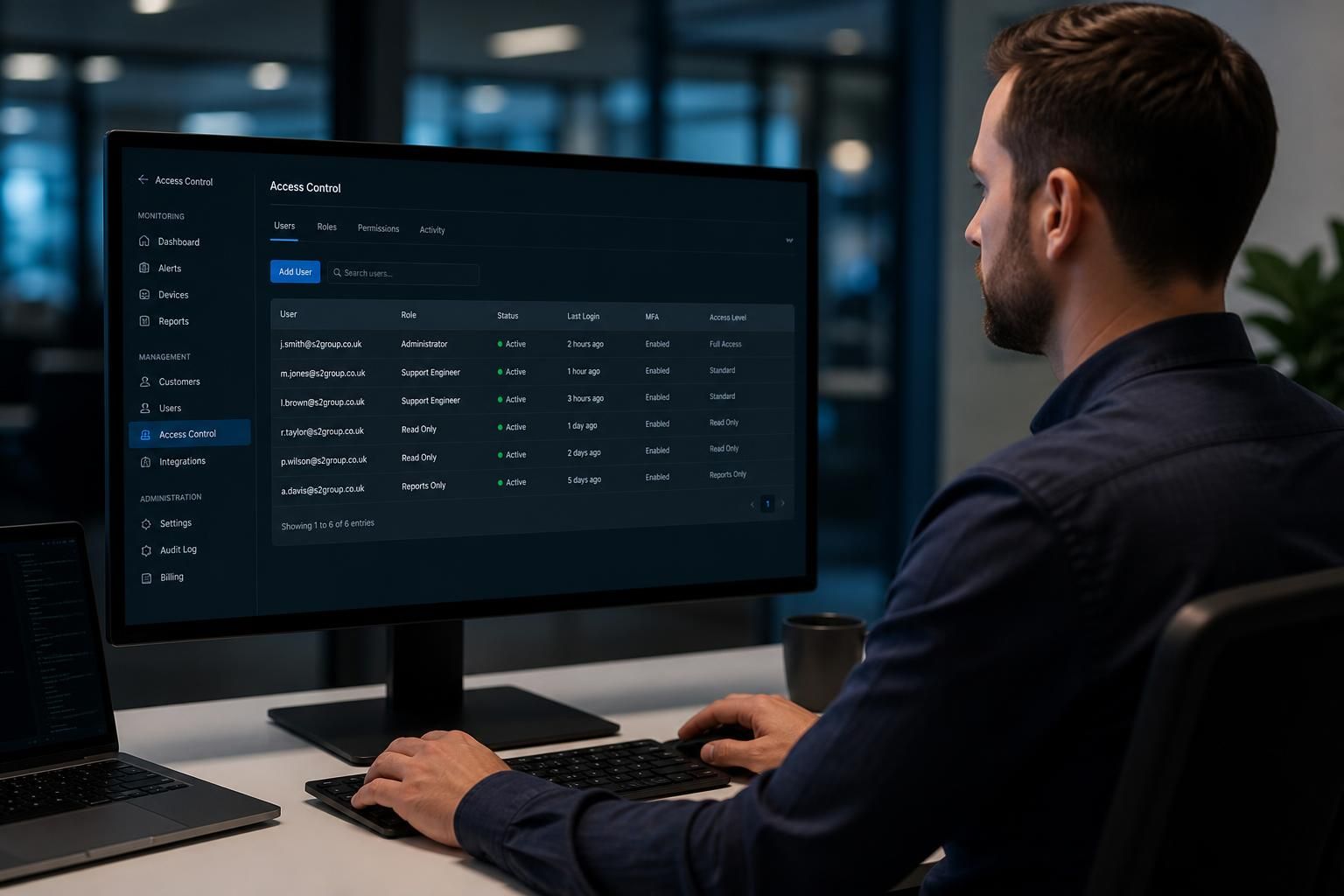
Access to remote monitoring data is controlled through role-based permissions, multi-factor authentication and least-privilege access, so each user can view only the information needed for their responsibilities. Access activity should be logged and reviewed to identify inappropriate use, while permissions are updated when staff roles or responsibilities change.
Access to remote monitoring data is controlled through a combination of data governance, secure system design and clearly defined responsibilities between the organisation and its IT provider. The aim is to ensure that monitoring information is available for legitimate operational purposes without exposing sensitive business, user or infrastructure details unnecessarily.
Remote monitoring platforms can collect information about device health, software status, system performance, security events and connectivity. Some records may also contain hostnames, usernames, network details or descriptions of technical incidents. Before access is granted, the organisation should establish what types of information are collected, who owns that information and which uses are permitted. This prevents monitoring data from being treated as a general-purpose information store.
A sound control framework normally includes the following measures:
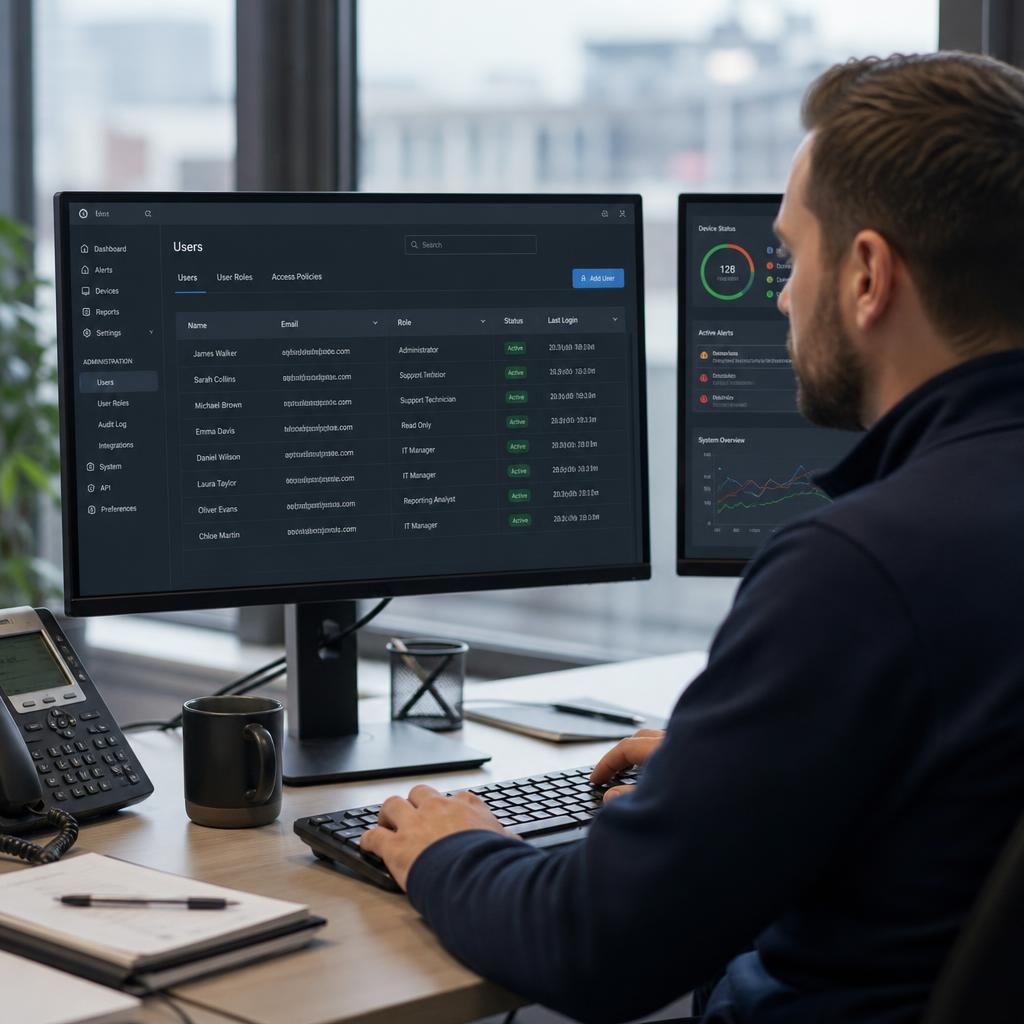
- Defined access roles: technical support staff, internal IT contacts, managers and third-party specialists may require different views of the monitoring platform. A service desk user may need device status and alert details, whereas an infrastructure specialist may require diagnostic information. Access should reflect these distinct duties rather than giving every user the same level of visibility.
- Separate customer environments: where a provider manages monitoring for multiple organisations, each customer’s devices and records should be logically separated. This reduces the risk of information being displayed in the wrong customer account or included in an unrelated report.
- Secure administration paths: administrative access should take place through protected management interfaces, with secure connections and controls around privileged sessions. Direct exposure of monitoring consoles or agents to the public internet should be avoided where the platform can operate through safer connection methods.
- Controlled data sharing: reports, screenshots, exports and alert notifications can disclose more information than the monitoring dashboard itself. Sharing rules should specify where these materials may be stored, who may receive them and how they are removed when no longer required.
- Retention rules: monitoring records should be retained for a defined operational or compliance purpose. Keeping historical data indefinitely increases the amount of information that could be exposed and can make investigations more difficult by leaving irrelevant records in place.
Access should also be considered across the monitoring system’s full lifecycle. When a device is enrolled, its monitoring agent or connection must be associated with the correct organisation and asset record. When equipment is retired, sold or rebuilt, its monitoring relationship should be removed or disabled so that old connections do not continue to report data. Changes to the monitoring platform, integrations and reporting destinations should follow the same governance process as other infrastructure changes.
Remote monitoring data may be connected to ticketing systems, security tools, reporting platforms or automated notification services. Each integration creates another route through which information can be accessed or copied. The organisation should therefore assess what data an integration receives, whether it can write changes back to the monitoring platform and whether the connection remains necessary. Unused integrations and obsolete technical accounts should be removed.
Access controls are only effective when they are supported by an appropriate agreement between the business and its IT provider. This should clarify who may view monitoring information, how it may be used during troubleshooting, whether subcontractors can access it, and how records are handled when the relationship ends. It should also define how suspected misuse or unauthorised disclosure is escalated and investigated.
For organisations using managed IT services, S2 Technology Group can help map monitoring data flows, establish suitable governance controls and align remote monitoring access with the wider IT support and cyber security arrangements. The right approach depends on the systems being monitored, the sensitivity of the information collected and the number of people or organisations involved in managing the environment.
Periodic access reviews confirm that remote monitoring permissions still match each person’s current responsibilities. A secure login is not enough if an employee has changed role, no longer supports the environment or retains access through an account that is rarely used.
Reviews should identify dormant accounts, excessive permissions and temporary access that was never removed. A named manager or system owner can confirm whether each access level remains necessary, record the decision and approve any change. Exceptions should have a documented reason, an expiry date and a clear owner.
This creates an auditable process for controlling access over time, rather than relying solely on the original setup. It also gives the organisation evidence that monitoring data is being managed deliberately during internal checks, supplier reviews or investigations.