

How do IT support services handle recurring technical faults?
IT support services handle recurring technical faults by analysing incident patterns, identifying the underlying root cause and applying a lasting corrective action rather than repeatedly treating symptoms. They then monitor the affected system and document the resolution so the fault can be prevented or addressed consistently if it returns.
Recurring technical faults are managed through a structured problem-management process that looks beyond individual support tickets. The purpose is to establish why the same disruption keeps occurring, determine its business impact, and introduce controlled changes that prevent repetition without creating new risks elsewhere in the environment.
First, the support provider establishes what is actually recurring. Similar symptoms do not always have the same cause. For example, repeated application crashes might result from a software defect, insufficient system resources, incompatible updates, damaged user profiles or an underlying network issue. Support records are therefore compared using details such as affected users, devices, locations, applications, error messages, times and recent changes. A fault affecting one workstation requires a different investigation from one appearing across a department or multiple sites.
Incidents are also separated from problems. An incident is the immediate interruption experienced by a user, such as loss of access to a shared application. A problem is the condition that allows that interruption to recur. Restoring access may resolve the incident, but the related problem remains open until the provider has enough evidence to understand and address the wider issue.
Good investigations use evidence rather than assumptions. Depending on the system involved, this can include:
- service desk records and previous troubleshooting steps;
- system, application, security and network logs;
- device health information, configuration data and update history;
- recent changes to permissions, infrastructure, software or connectivity;
- user descriptions of the steps that trigger the fault; and
- information showing whether the issue is isolated, intermittent or widespread.
The provider may recreate the fault in a controlled setting, compare an affected device with a working one, or test one variable at a time. This helps distinguish correlation from causation. For instance, if failures appear after an update, the update may be relevant, but further testing is needed to determine whether the update itself is defective or has exposed an existing compatibility or capacity issue.
Impact and risk determine how the work is managed. A recurring fault that prevents staff from accessing essential systems receives different attention from a minor inconvenience affecting a single user. The assessment should consider operational disruption, data protection, security exposure, affected locations, dependency on third-party systems and the availability of a safe workaround. A workaround can keep work moving, but it should be recorded as a temporary measure rather than treated as a permanent resolution.
Before making a change, the provider should define the proposed action, the systems affected, dependencies, testing requirements, implementation steps and rollback method. Changes may include correcting a configuration, replacing failing equipment, applying a suitable update, modifying a network rule, improving capacity or changing a process. Where a third-party application or connectivity service is involved, the investigation may need to be coordinated with that supplier while retaining a clear record of ownership and next steps.
Testing should reflect the circumstances in which the fault occurs. A technical fix that works on one device may not be suitable for every user, location or operating system. Appropriate validation can include testing normal workflows, permissions, integrations, remote access, backups and security controls. For a business with multiple sites or a mixture of office and remote users, the provider should check that the change behaves consistently across the relevant environments.
Recurring faults also require operational safeguards. The support team may create a known-error record containing the symptoms, affected systems, approved workaround, risk information and escalation route. This allows future incidents to be handled consistently while the underlying issue is being addressed. Support documentation should be updated when the environment changes, otherwise technicians may repeat obsolete troubleshooting or apply an unsuitable workaround.
Communication is part of the technical process. Business stakeholders should be told what is affected, what users should do, whether a workaround is available, what risks accompany the proposed change and how the result will be assessed. Technical detail can be recorded separately from user guidance, but both should remain accurate. If the evidence is inconclusive, that should be stated rather than presenting an assumption as a confirmed cause.
After implementation, the provider reviews whether the original symptoms have stopped and whether the change has introduced secondary problems. This may involve checking support records, system alerts, error logs and feedback from affected users. The problem can then be closed with a clear account of the findings, actions taken, validation completed and any remaining monitoring or maintenance requirement. If the fault returns, the new information should reopen the investigation rather than simply restarting the same temporary workaround.
For a small or medium-sized organisation without a full in-house IT team, this approach provides a repeatable way to deal with faults that consume staff time or threaten operational reliability. It combines technical investigation with change control, security review, accurate records and business-focused prioritisation, so recurring issues are managed as continuing operational risks rather than as a series of unrelated support requests.
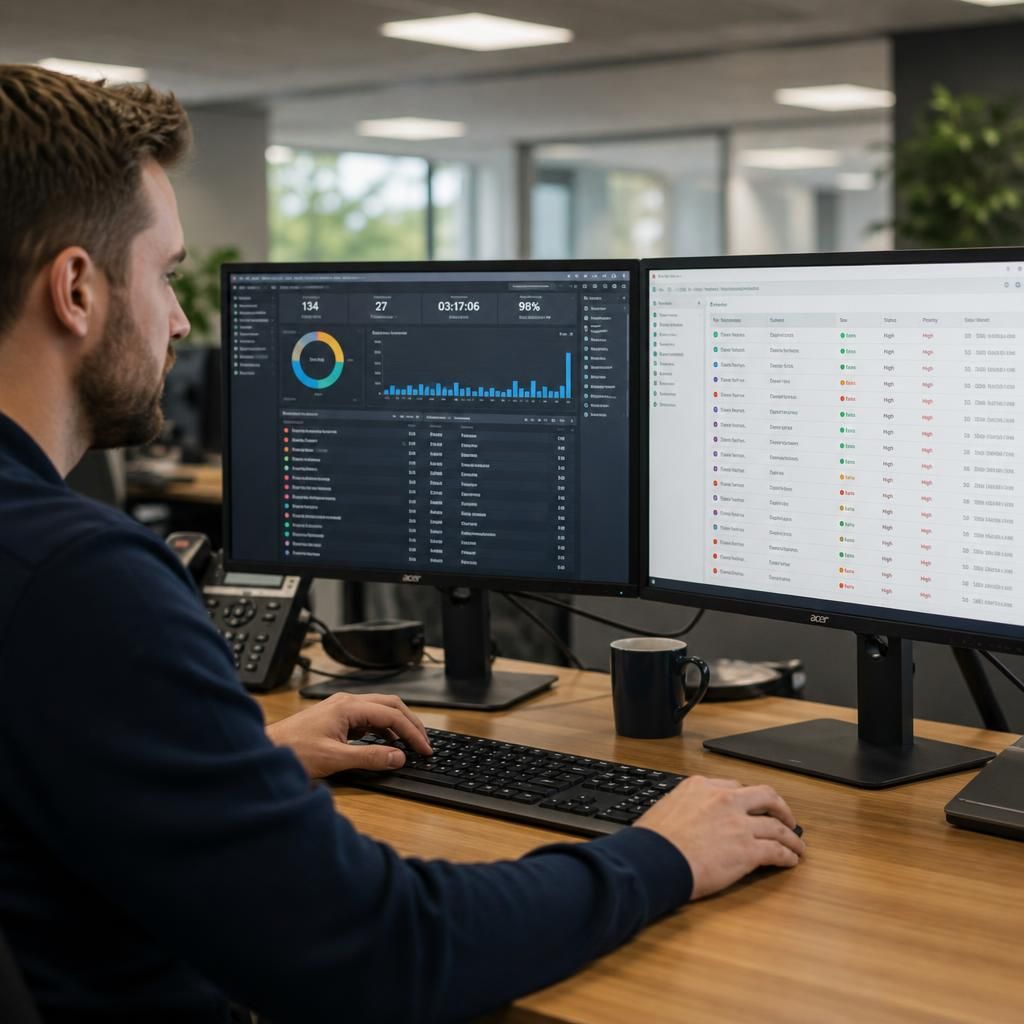
A recurring technical fault can indicate that a component has reached the limit of what maintenance can reasonably achieve. Repeated patches may keep the symptom under control while leaving an ageing device, unsupported software version or poorly matched configuration in place. In these cases, the appropriate resolution may be a planned replacement, redesign or migration rather than another isolated repair.
The decision should consider the component’s business importance, security position, compatibility with dependent systems, support status and the practical risks of changing it. A provider should explain why continued remediation is suitable or why investment in a different solution is justified, then record the decision in the organisation’s technology plan. This turns recurring incidents into useful evidence for managing infrastructure sustainably.