
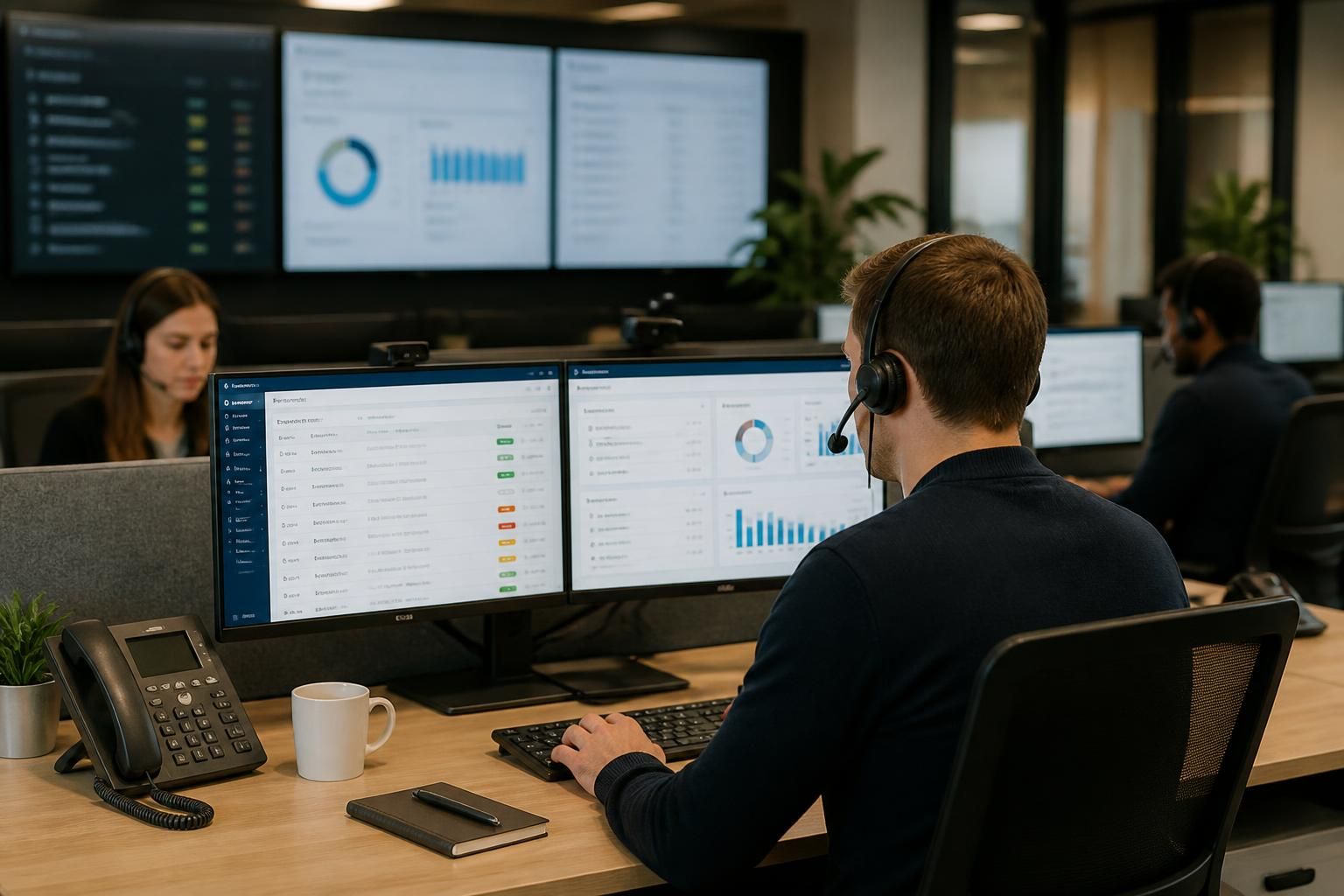
What is the difference between an IT helpdesk and a service desk?
An IT helpdesk primarily provides frontline assistance for technical incidents and user requests, such as faults, access problems and software issues. A service desk has a broader role, combining user support with IT service management processes such as request fulfilment, change coordination, communication and continual improvement.
The distinction is mainly one of scope and operating model. An IT helpdesk is a support function focused on resolving user problems and fulfilling straightforward technical requests, while a service desk is the managed point of contact for the wider delivery, control and improvement of IT services. In practice, a helpdesk can operate as part of a service desk, but the terms are not always interchangeable.
An IT helpdesk is usually centred on assistance. Its work commonly includes diagnosing a device that cannot connect, helping a user regain access, investigating software faults, answering technical questions and recording the steps taken to resolve an incident. The emphasis is on restoring the user’s ability to work or providing the requested technical help.
A service desk includes this frontline support but places it within a broader service management structure. It may coordinate requests that do not involve a fault, oversee approvals, communicate planned changes, identify trends in recurring incidents and maintain a consistent method for managing the user’s relationship with IT. Its scope can therefore extend beyond troubleshooting individual issues.
- Primary focus: a helpdesk focuses on technical assistance, whereas a service desk manages the end-to-end interaction between users and IT services.
- Types of work: a helpdesk tends to handle incidents and routine technical requests; a service desk may also manage access requests, equipment provisioning, service changes, complaints, communications and improvement activities.
- Process ownership: helpdesk staff may resolve or escalate an issue, while a service desk may own the processes that govern how incidents, requests, changes and problems move through the organisation.
- Business context: a helpdesk is often judged by the quality of individual support interactions; a service desk also considers service performance, user experience, operational risk and alignment with business needs.
The difference becomes clearer when looking at a typical request. If an employee cannot print, a helpdesk may record the incident, check the device and network connection, apply a fix or pass the issue to a specialist. A service desk would perform those actions as part of an agreed incident process, keep ownership visible, coordinate communication where necessary and review the incident data to determine whether a wider problem needs investigation.
Similarly, a request for access to a business application may appear to be a simple helpdesk task. Within a service desk model, the request may require identity verification, manager approval, confirmation that the user has the correct level of access, completion of the change and an audit record. The technical action is only one part of the controlled service process.
The terms can also vary between organisations. Some businesses use “helpdesk” for any IT support team, even where that team performs service desk activities. Others use “service desk” to describe a formal function based on IT service management practices. The job title alone is therefore less useful than the responsibilities, processes and ownership assigned to the team.
A useful way to assess the difference is to ask what happens beyond the immediate fix:
- Is the team responsible only for responding to user contacts, or does it own the complete request lifecycle?
- Are standard requests handled through defined approval and fulfilment procedures?
- Are recurring incidents analysed to identify underlying problems?
- Are planned changes assessed, communicated and recorded?
- Is support information used to improve services, documentation and user experience?
- Does the function provide reporting that helps the organisation understand service performance and technology risks?
If the work is primarily reactive and centred on fixing user-facing technical issues, “IT helpdesk” is likely to be the more accurate description. If the function combines support with structured service management, governance, communication and continual improvement, “service desk” better describes its role.
Neither model is automatically appropriate for every organisation. A small business may need a clearly managed helpdesk with reliable processes for logging, prioritising and resolving requests. A growing or more complex organisation may benefit from the wider controls of a service desk, particularly where it has multiple locations, business-critical systems, formal access requirements or frequent infrastructure changes. The important point is that the support function should match the organisation’s operational risks and need for oversight.
S2 Technology Group can help organisations assess how their IT support function should be structured, including the processes needed to manage incidents, requests, access, changes and recurring issues. This can help clarify whether a conventional helpdesk, a broader service desk or a combination of both is the most suitable approach.
An IT helpdesk is not necessarily a lower technical tier, and a service desk is not automatically a team of more advanced engineers. The difference describes the function’s scope and accountability, not the technical ability of the people providing support.
For example, a helpdesk may include experienced technicians who investigate complex faults, while a service desk may route technical work to specialist teams and remain responsible for coordinating the overall request. This means organisations should assess how support is organised, who owns communication and which processes are managed, rather than judging the service solely by its name.
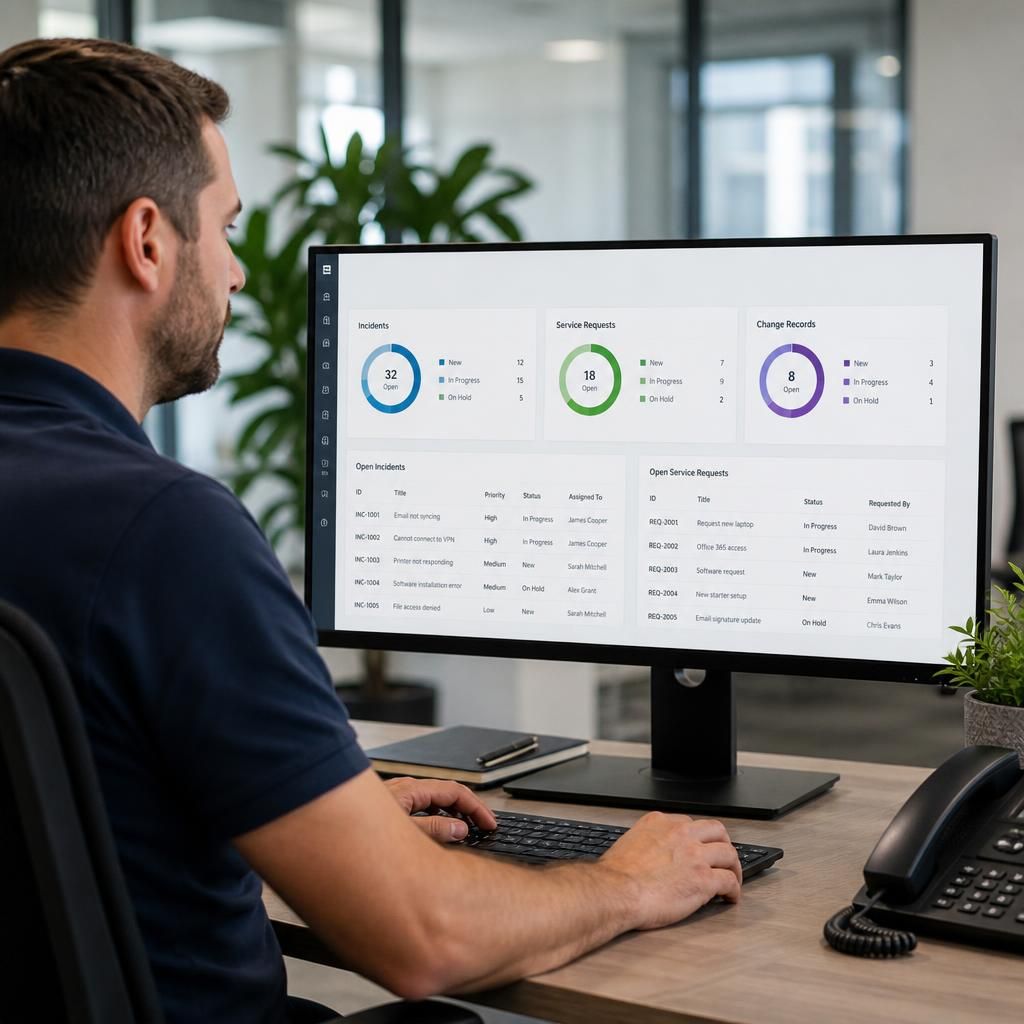
Discuss the right IT support structure for your organisation
If you are reviewing whether your organisation needs an IT helpdesk or a broader service desk, discuss your current support processes and operational requirements with S2 Technology Group. We can help you identify a suitable IT support structure for your business.