
Can SIEM security monitoring replace an internal security team?
No. SIEM security monitoring can collect and correlate security data, identify potential threats and reduce the workload on an internal team, but it does not replace the human expertise needed to investigate incidents, assess business impact and coordinate remediation. It is most effective alongside internal staff or a managed security service with clearly defined responsibilities.
A SIEM is a technology layer for collecting, analysing and presenting security events; it is not a complete security function. It can take over parts of log monitoring, event correlation and alert prioritisation, but it cannot independently set security priorities, make business decisions or manage every stage of an incident. Whether it can reduce the need for internal security staff depends on the organisation’s risk, technical complexity and arrangements for investigation and response.
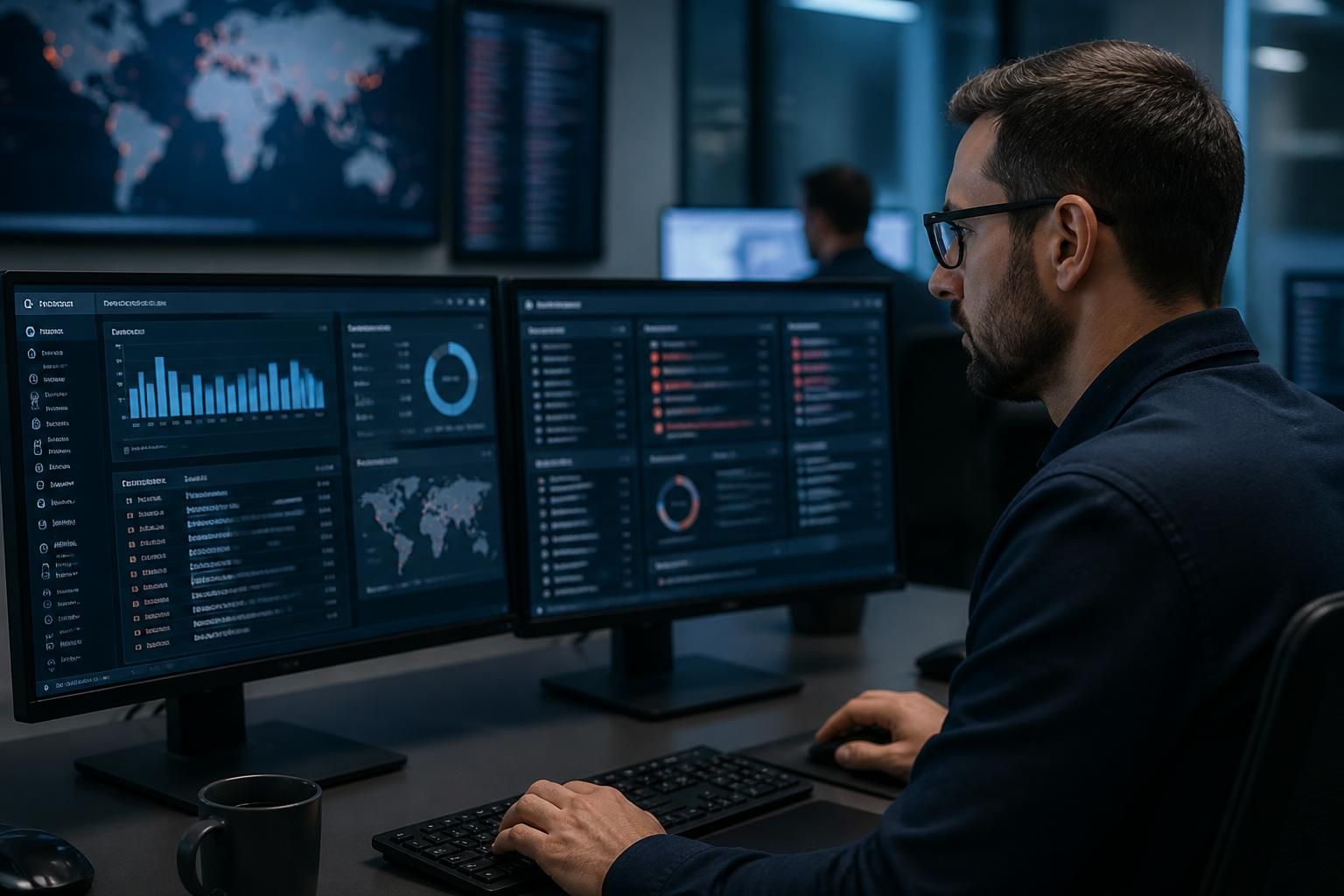
It is useful to separate the work performed by a security team into distinct activities. SIEM security monitoring primarily supports the detection stage by bringing together records from sources such as identity systems, endpoints, firewalls, cloud services and business applications. Detection rules can identify combinations of events that would be difficult to spot in isolated logs. The platform can then create an alert for review, add relevant context and help analysts trace activity across systems.
That capability may replace some manual checking. For example, staff do not need to inspect every individual authentication record if the SIEM can identify repeated failed logins followed by a successful sign-in from an unusual location, then associate that activity with endpoint or network events. It can also automate routine searches, reporting and escalation. These efficiencies can allow a small internal team to concentrate on higher-value analysis rather than continuously reviewing raw event data.
However, the SIEM still requires people to make its monitoring meaningful. Someone must decide which data sources are relevant, confirm that logs are being collected correctly, define detection rules and tune them as the organisation changes. Poorly configured collection can leave important systems invisible. Untuned rules can produce excessive false positives, while overly narrow rules may miss activity that does not match an expected pattern. A platform cannot compensate for missing telemetry or an incomplete understanding of the environment.
Human judgement is particularly important after an alert is raised. An analyst may need to determine whether an event is malicious, investigate the affected account or device, establish what data or systems may be involved and decide whether the issue is contained. The appropriate action can depend on operational context: disabling an account, isolating a device or blocking traffic may protect the business, but may also interrupt production or customer-facing services. Those decisions require knowledge of the organisation and an agreed incident process.
Responsibilities that normally remain outside the SIEM include:
- assessing business and regulatory risk;
- setting security policies and acceptable levels of risk;
- designing access controls, network architecture and resilience measures;
- co-ordinating incident response with management, suppliers and relevant advisers;
- deciding when systems should be isolated, restored or rebuilt;
- communicating with affected employees, customers or other stakeholders; and
- reviewing incidents and changing controls to reduce the likelihood of recurrence.
For some organisations, SIEM monitoring can form part of a model without a dedicated internal security operations team. In that arrangement, an internal IT or management function retains ownership of risk and business decisions, while monitoring, alert triage and selected investigative work are assigned to a managed security provider. This is not the SIEM replacing the security function; it is a division of responsibilities in which technology and external expertise provide capacity that the organisation does not maintain in-house.
A larger organisation may instead operate its own security team and use the SIEM as its central investigation workspace. The platform can standardise evidence gathering, support threat hunting and provide a record of activity for incident reviews. It may reduce repetitive work, but it does not remove the need for suitably skilled staff who understand the organisation’s systems and can respond when an event falls outside the available detection rules.
The practical question is therefore not whether the SIEM can replace people in general, but which activities it can automate or delegate safely. Before changing staffing or service arrangements, an organisation should document:
- which systems and accounts must be monitored;
- who owns each log source and checks its data quality;
- which alert types require investigation and at what priority;
- who can approve containment actions;
- how evidence is recorded and preserved;
- who communicates during an incident; and
- how detection rules and response procedures are reviewed.
This responsibility model should also account for periods when the nominated person is unavailable, staff turnover, specialist investigations and incidents affecting the monitoring infrastructure itself. If an alert is generated but nobody has clear authority to assess it or act on it, purchasing a SIEM has not solved the underlying operational problem.
S2 Technology Group can help businesses assess how SIEM security monitoring should fit with their wider IT support and cyber security arrangements. For a small or growing organisation, the appropriate outcome may be a managed monitoring model with clearly documented ownership. For an organisation with internal security capability, the focus may instead be integration, data coverage, alert quality and better use of existing staff. In both cases, the SIEM should be treated as an enabling control within a broader security process, rather than as a substitute for accountability and expertise.
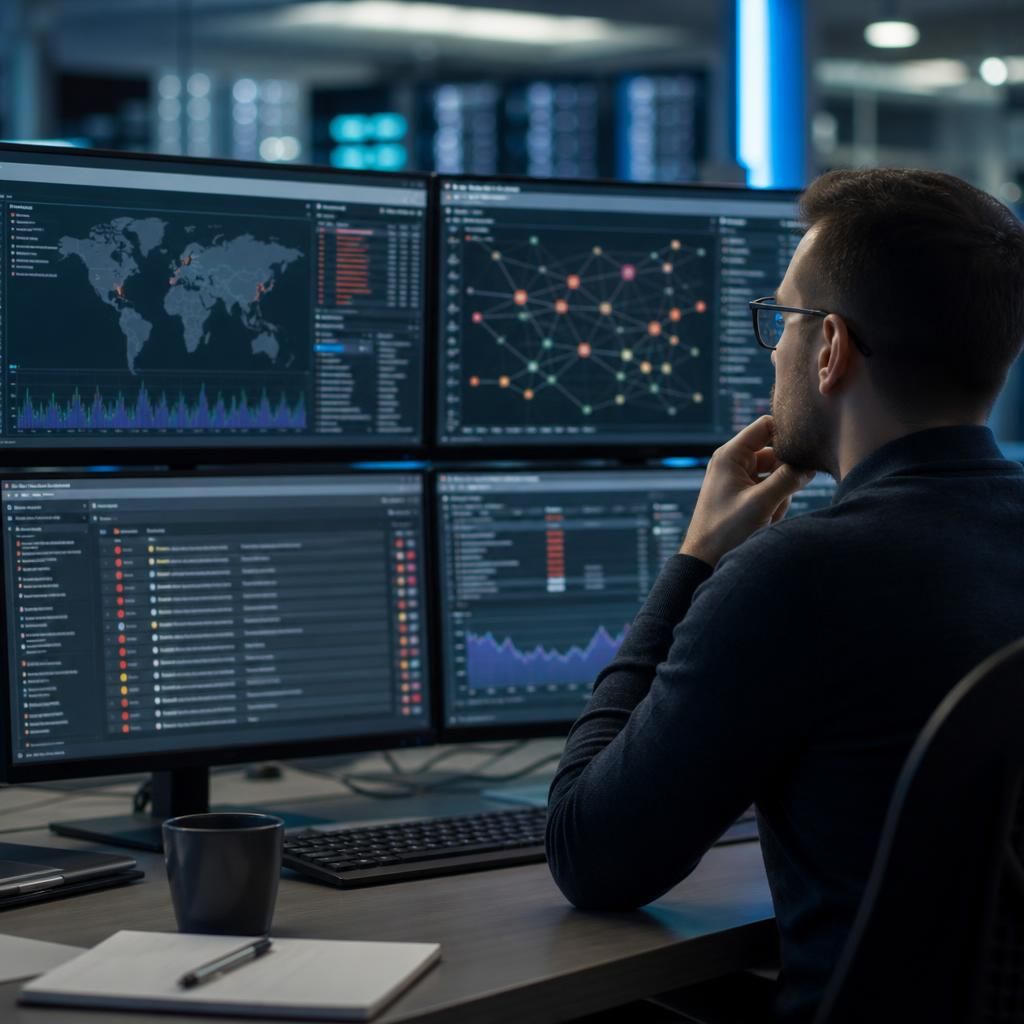
SIEM security monitoring is primarily a detection and investigation capability, not a replacement for the other controls that protect and recover a business. It can highlight suspicious activity in collected data, but it does not by itself prevent compromise, remove vulnerabilities, restore systems or ensure that users and devices are securely configured.
This distinction matters when assessing whether an internal security team can be reduced. A business may still need separate ownership for controls such as:
- identity and access management, including account provisioning and privileged access;
- endpoint protection, patching and vulnerability remediation;
- network and cloud security configuration;
- backup, recovery and operational resilience; and
- security awareness, policy management and compliance evidence.
A SIEM can bring evidence from these areas together, making weaknesses or suspicious combinations of events easier to identify. It cannot correct the underlying weakness unless an authorised person or process takes action. The right assessment is therefore whether the organisation has coverage for prevention, detection, response and recovery, with the SIEM supporting the detection element rather than being treated as the entire security function.