
How do cyber security services protect businesses from phishing attacks?
Cyber security services protect businesses from phishing attacks by combining email filtering, anti-malware controls, multi-factor authentication, security awareness training and monitoring to reduce the chance of deceptive messages reaching users or leading to unauthorised access. They also support clear verification procedures and incident response, helping identify suspicious activity, contain compromised accounts and prevent similar attacks from succeeding.
Cyber security services protect businesses from phishing attacks by reducing the number of deceptive messages that reach users, limiting what a compromised account can do, and establishing dependable processes for checking unusual requests. Effective protection is layered: no single technical control can identify every convincing message or prevent every user from making a mistake.
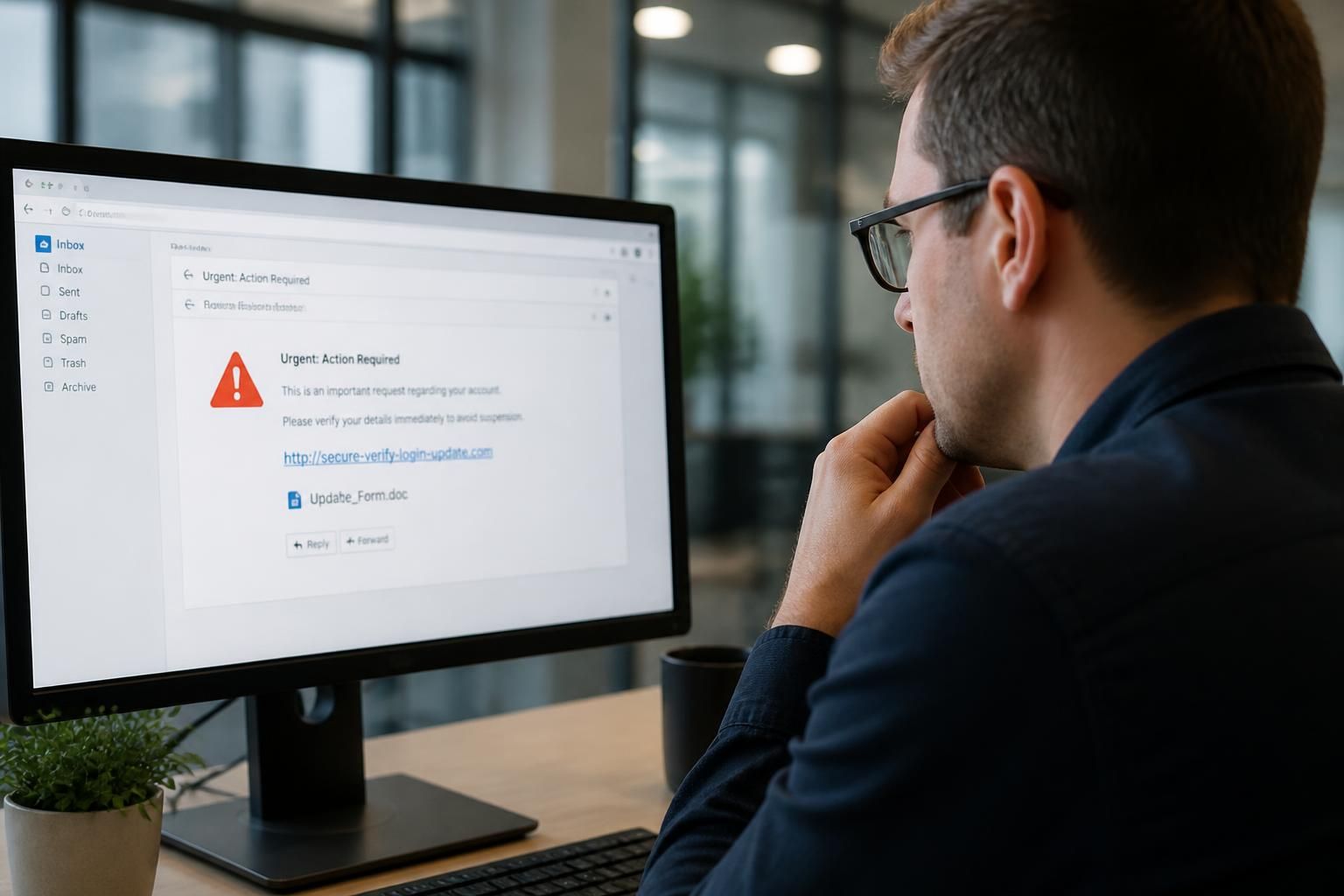
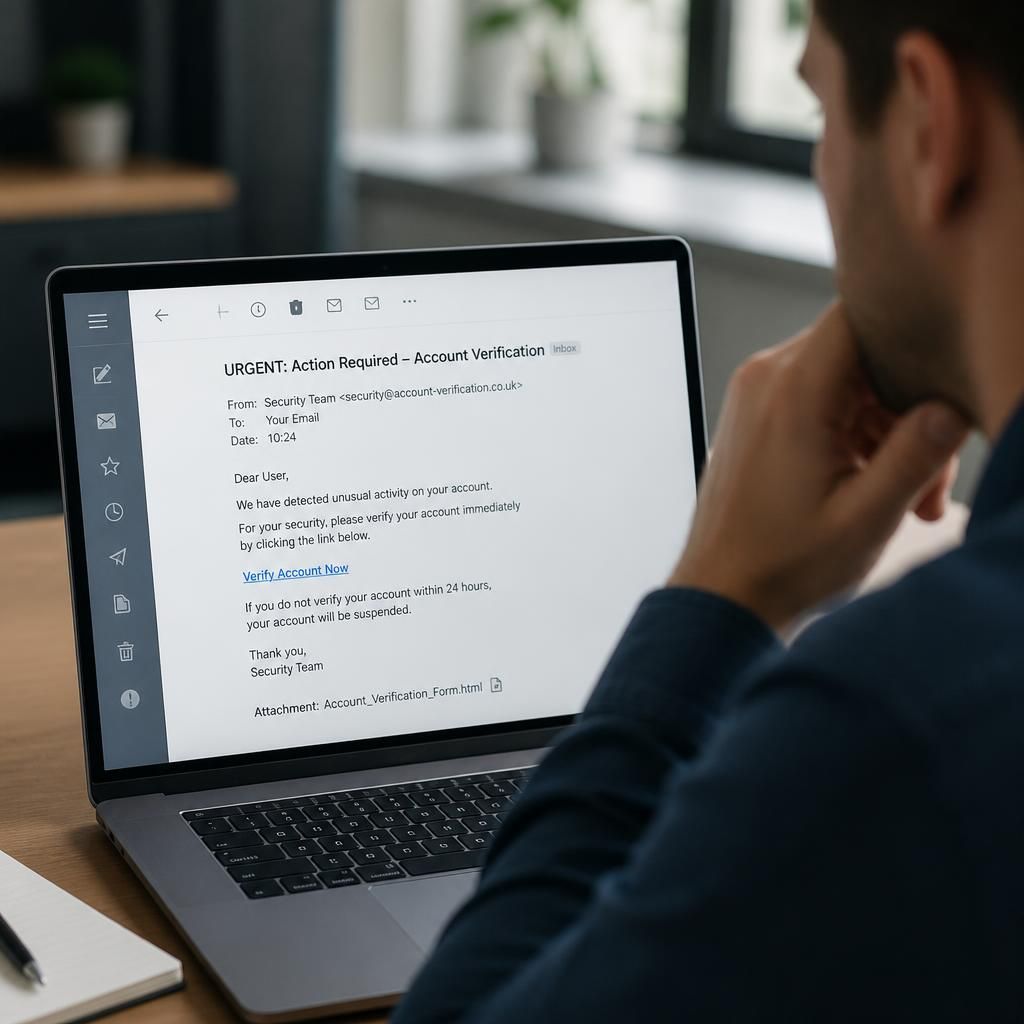
Phishing commonly aims to obtain passwords, payment details, confidential documents or access to a business account. Some attacks use a copied sign-in page, while others impersonate a director, supplier or customer and request a payment, change to bank details or disclosure of sensitive information. The message may contain a malicious attachment, a link to a fraudulent website or instructions designed to create urgency. Cyber security services assess these attack routes rather than treating phishing as only an email problem.
Email authentication helps receiving systems establish whether a message is genuinely authorised by the domain it claims to come from. SPF identifies approved sending systems, DKIM adds a cryptographic signature to messages, and DMARC sets a policy for handling messages that fail these checks. Correct configuration can reduce domain impersonation, although it cannot stop every attack because criminals may use lookalike domains, compromised legitimate accounts or unrelated email addresses.
Filtering controls can assess sender reputation, message structure, links, attachments and other indicators before delivery. More advanced protection may analyse the relationship between the sender and recipient, detect unusual wording or identify newly registered domains. These controls should be configured carefully so that suspicious messages are isolated without disrupting legitimate business correspondence. Policies should also cover personal webmail, collaboration platforms and other channels if staff use them for business activity.
Protection must continue after a user opens a message. Web and browser controls can block known malicious destinations, while endpoint security can restrict unsafe scripts, files and processes. Access permissions are equally important: users should have only the rights needed for their role, and administrative privileges should be separated from ordinary day-to-day accounts. This limits the damage if a phishing attack succeeds in obtaining a user’s credentials.
Business processes provide an important safeguard against payment diversion and impersonation. Requests to amend supplier bank details, make an unusual transfer, disclose confidential information or create a new user account should be checked through an independent channel using previously trusted contact details. A policy should define who can approve these requests, what evidence is required and how exceptions are recorded. This removes reliance on the apparent sender’s message alone.
Cyber security services can also help businesses assess phishing risk by reviewing exposed domains, supplier relationships, user permissions and common transaction processes. Findings should be prioritised according to the potential effect on operations, finances, personal data and regulatory obligations. The review should include telephone-based scams, text messages and fake collaboration notifications where those channels are part of the organisation’s working practices.
Technical controls and procedures need regular maintenance. Domain authentication records, filtering policies, web protections, access permissions and approval workflows can become inaccurate as staff, suppliers and systems change. A useful review checks whether controls still reflect the organisation’s current domains, applications, offices, users and payment arrangements. It should also examine suspicious messages reported by staff to identify recurring attack patterns and gaps in existing safeguards.
For small and medium-sized organisations without a full in-house IT team, managed cyber security services can bring these activities together through policy development, configuration reviews, risk assessments and ongoing technical administration. S2 Technology Group supports businesses around Stourbridge, Kinver, Wordsley, Kingswinford, Kidderminster, Halesowen, Dudley and neighbouring areas with cyber security and managed IT services tailored to their technology environment.
Phishing-resistant authentication protects business accounts by preventing stolen passwords from being used through counterfeit sign-in pages. Unlike a password or a code entered into a website, a security key or passkey verifies the genuine service and the intended website before completing authentication.
Cyber security services can assess which business applications support phishing-resistant sign-in, identify accounts that should be prioritised and plan enrolment without disrupting normal work. They can also define secure recovery procedures, because poorly controlled recovery options may provide an alternative route into an account. This approach is particularly useful for administrators, finance users and anyone with access to sensitive systems.
Phishing-resistant authentication does not replace email filtering, safe working procedures or account monitoring. It strengthens the position after a deceptive message has reached a user by making captured passwords and intercepted sign-in codes less useful to an attacker.
Review your business’s protection against phishing attacks
Contact S2 Technology Group to review your business’s protection against phishing attacks, including email controls, authentication, user procedures and account safeguards. The review can identify gaps and help prioritise practical improvements for your organisation.