
What is remote network management?
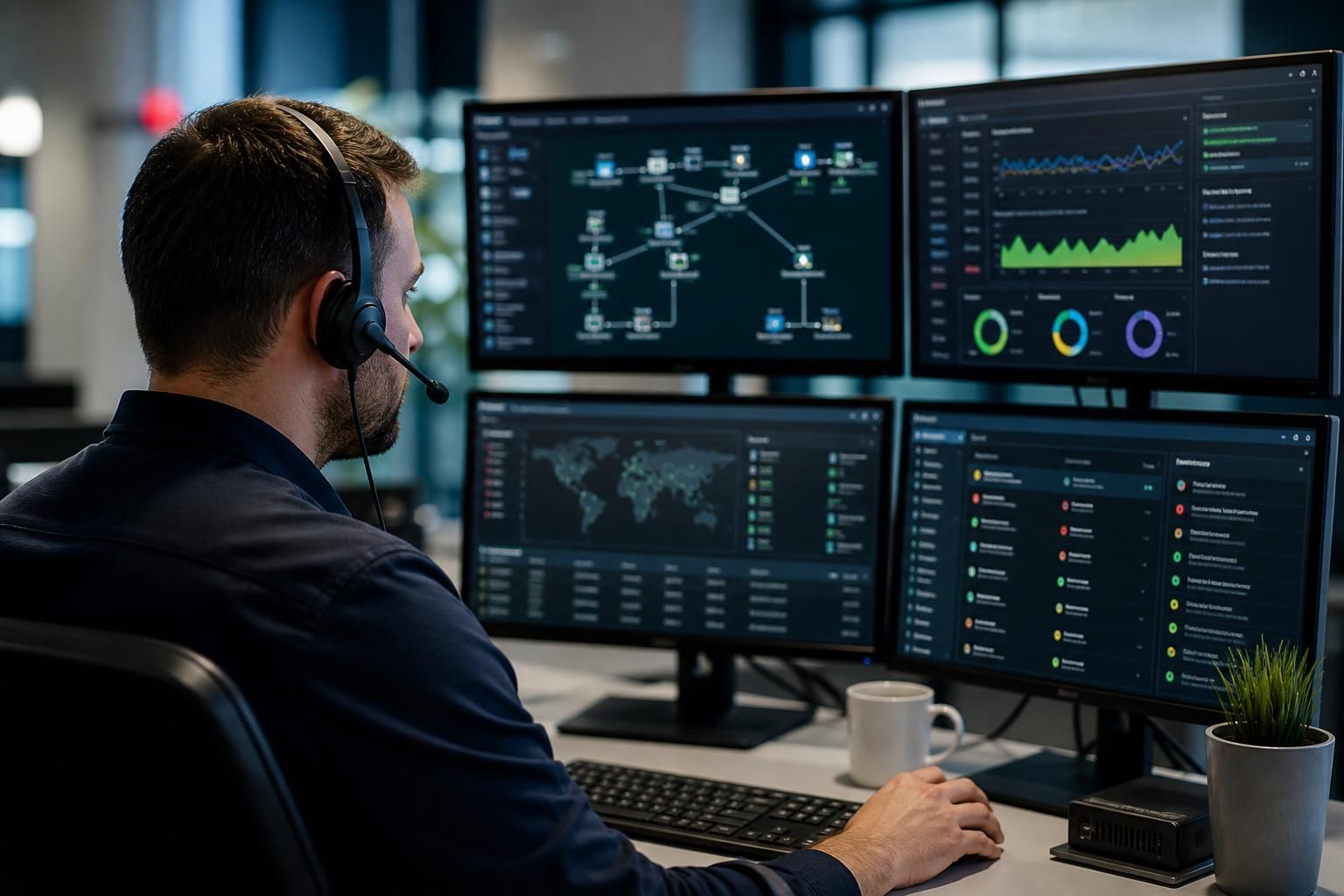
Remote network management is the monitoring, maintenance and administration of a business network from an external location, using secure remote access tools. It enables IT specialists to review network performance, manage configurations, identify faults and apply updates without being physically present on-site.
Remote network management is the ongoing oversight and control of the systems that connect a business’s users, devices, sites and cloud services. It combines network monitoring, configuration control, security administration and technical maintenance so that faults and risks can be identified and addressed through controlled access rather than requiring an engineer to be physically present for every task.
A business network is more than its internet connection. It can include routers, switches, wireless access points, firewalls, virtual private network (VPN) services, domain name services, addressing services and links between offices or cloud platforms. Remote management considers how these components work together, rather than treating an individual connectivity problem in isolation.
What does remote network management involve?
- Monitoring: Reviewing the condition and performance of network equipment, connections and key services. Monitoring can identify unusual traffic, failed components, capacity issues or repeated errors.
- Configuration management: Controlling settings such as access rules, network segments, routing, wireless policies and VPN connections. Keeping an accurate record of approved configurations makes changes easier to assess and faults easier to trace.
- Maintenance: Applying firmware, software and configuration updates where appropriate, checking that changes have been implemented correctly and removing obsolete settings that may create risk.
- Fault investigation: Using logs, alerts, device information and connection tests to narrow down whether a problem relates to the local network, internet service, security control, endpoint or cloud application.
- Security administration: Reviewing firewall rules, remote access arrangements, administrative accounts and network activity to help reduce unauthorised access and limit the impact of a compromised device.
- Capacity planning: Examining usage patterns and recurring performance issues to inform decisions about additional bandwidth, equipment, wireless coverage or changes to the network design.
How the process normally works
- Establish an accurate baseline. The network’s devices, connections, software versions, IP arrangements and dependencies are documented. This provides a reference point for identifying unauthorised changes or abnormal behaviour.
- Collect relevant information. Management tools gather status data, event logs and performance information from the systems that have been included in the service. Access should be limited to the information and actions needed for the agreed work.
- Assess alerts and events. Not every alert indicates a serious fault. Technical staff assess the context, frequency and potential effect before deciding whether investigation, maintenance or escalation is appropriate.
- Make controlled changes. Changes should be recorded, reviewed and tested where practical. A planned approach reduces the risk of disrupting users or creating conflicts between security, connectivity and application requirements.
- Verify the result. After maintenance or remediation, the relevant services are checked to confirm that the intended outcome was achieved and that dependent systems remain usable.
- Review and improve. Recurring incidents, ageing equipment, weak configurations and changing business requirements can be used to inform future network improvements.
What are the benefits?
Remote network management gives an IT team a consistent view of network health without relying solely on user reports. This can make it easier to spot trends, compare performance across devices and investigate an issue using technical evidence. It also supports standardisation: similar equipment and sites can be configured according to documented policies instead of developing separate, inconsistent arrangements.
It can be particularly useful for organisations with several offices, remote users, cloud-dependent systems or limited internal IT capacity. A central management approach can help maintain consistent security and connectivity policies across those environments. It does not remove the need for sound network design, appropriate equipment or local work when physical access is required.
How is security maintained?
Because remote management introduces an administrative route into the network, the management arrangement itself must be protected. Important controls include strong authentication, individual user accounts, least-privilege access, encrypted connections, activity logging and prompt removal of access that is no longer needed. Management interfaces should not be exposed unnecessarily to the public internet, and access should be reviewed as staff responsibilities change.
It is also important to separate monitoring from unrestricted control. A service may need to read status information from some devices but require elevated permission only for specific maintenance tasks. Clear authorisation, change records and approval procedures help establish who made a change, why it was made and what was affected.
What remote network management cannot do
Some issues require work at the premises. Examples include damaged cabling, failed power supplies, equipment that cannot be reached over the network, poor wireless coverage caused by the physical environment and hardware replacement. Remote diagnostics can often narrow down the likely cause, but a physical intervention may still be necessary.
Remote management is also not a substitute for resilient design. Monitoring may identify a failed connection, but it cannot by itself create a second internet circuit, replace unsupported hardware or correct an unsuitable network layout. These matters require planning, equipment and, where necessary, on-site technical work.
What should a business check before adopting it?
- Which network devices, sites and services are included?
- Which activities are monitoring-only and which permit configuration changes?
- How are remote administrator accounts authenticated, restricted and audited?
- How are alerts prioritised, documented and escalated?
- How are updates and configuration changes tested and recorded?
- How are network diagrams, inventories and access records kept accurate?
- What happens when a fault needs physical access or specialist infrastructure work?
For a small or medium-sized organisation, the value lies in combining technical visibility with disciplined administration. S2 Technology Group can assess network requirements as part of a broader managed IT approach, connecting network oversight with cyber security, cloud services, infrastructure improvements and remote access needs. The appropriate arrangement depends on the organisation’s sites, users, critical applications, existing equipment and risk profile.
Remote network management is most effective when monitoring is linked to business priorities rather than treated as a collection of technical alerts. The relevant question is not simply whether a device is online, but whether the network is supporting the applications, users and locations that the organisation depends on.
This means defining which services are important, identifying their network dependencies and setting sensible thresholds for investigation. For example, repeated packet loss affecting a business-critical cloud application may deserve attention before a minor error on a non-essential device. Reviewing events in this context helps distinguish routine background activity from issues that could disrupt operations.
A well-defined service should therefore record:
- Which applications, sites and user groups depend on each network component.
- Which performance changes indicate degradation rather than normal variation.
- Which events require investigation, planned maintenance or wider escalation.
- Who is authorised to approve changes affecting important services.
This business-led approach makes remote network management more useful for planning. It can show where recurring technical issues are affecting a particular process, site or service, helping decision-makers assess whether the answer is configuration work, additional capacity, equipment replacement or a change to the wider network design.