
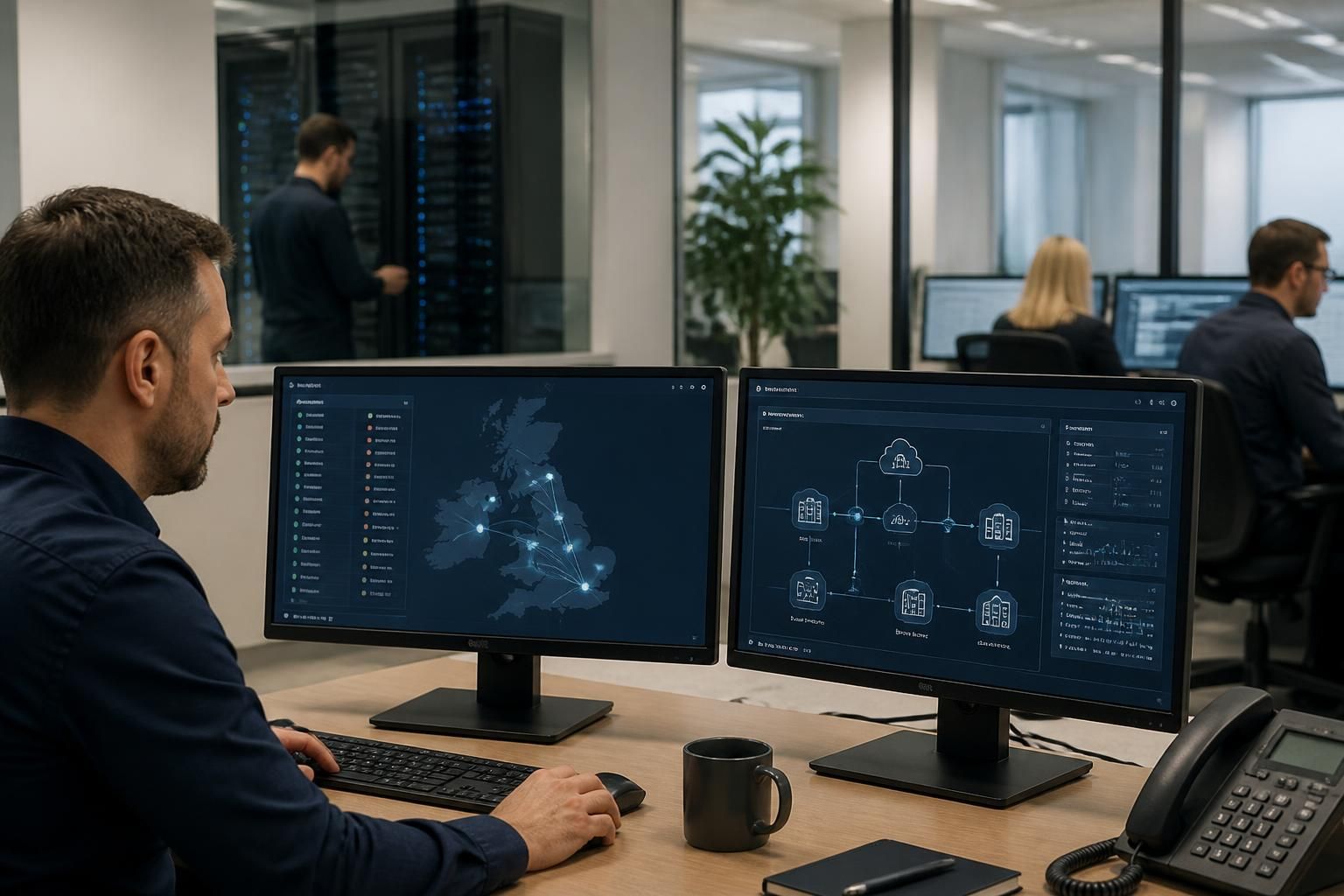
Can fully managed IT support manage multiple business locations?
Yes. Fully managed IT support can coordinate users, devices, security policies, connectivity and support processes across multiple business locations, while allowing for site-specific requirements; S2 Technology Group provides this type of support for organisations around Stourbridge and neighbouring areas.
Yes. Fully managed IT support is suitable for organisations with several offices, branches, warehouses or other operating sites, provided the service is designed around shared governance and location-specific dependencies. The provider can manage the common technology estate centrally while maintaining the access, connectivity and equipment requirements of each individual site.
The main benefit is a consistent operating model. Rather than each location developing separate IT practices, the managed service can apply agreed standards for user access, device configuration, security, software deployment, backup and change control. This reduces variation between sites and gives the organisation a clearer view of its overall technology environment.
Key areas that need to be planned include:
- Site inventory: Each location should have an accurate record of its users, computers, network equipment, printers, servers, internet connections, wireless infrastructure and operational systems.
- Connectivity: The design should document how sites connect to cloud services, private systems and one another. Bandwidth, resilience, routing and the effect of an individual connection failure all need to be considered.
- Identity and access: User accounts, permissions and authentication should be controlled through a consistent process, with access based on job requirements rather than the site a person happens to work from.
- Endpoint management: Laptops, desktops and other managed devices should receive consistent configuration, updates, security controls and support, regardless of their physical location.
- Security segmentation: Guest wireless access, staff devices, operational equipment and sensitive systems may need to be separated so that a problem in one area does not provide unnecessary access to another.
- Local dependencies: Manufacturing equipment, warehouse systems, telephony, access control and other site-specific technologies may require separate technical requirements or coordination with specialist suppliers.
Central management does not mean that every site must be identical. A head office may host internal systems, while a smaller branch may depend almost entirely on cloud applications. A warehouse may need reliable wireless coverage across a large physical area, whereas a professional office may have different requirements for meeting rooms, printing and remote access. The managed service should document these differences and manage them as deliberate exceptions rather than allowing inconsistent arrangements to develop informally.
A sound multi-site support model normally begins with a baseline assessment. This identifies unsupported devices, obsolete infrastructure, duplicated services, weak permissions, undocumented connections and single points of failure. The findings can then be separated into immediate risks, planned improvements and routine management tasks. This is particularly important where sites have been added through expansion, relocation or acquisition and have inherited different systems.
Ongoing management should use central monitoring and a shared service process. Alerts, support requests and planned changes can be recorded against the correct site and asset, allowing recurring problems to be distinguished from isolated incidents. Documentation should show network layouts, equipment ownership, configuration responsibilities, supplier contacts and dependencies between locations. Without this information, troubleshooting can become slower and changes at one site can create unexpected effects elsewhere.
Security controls also need to work across organisational boundaries. A managed service should be able to apply policies for authentication, endpoint protection, patching, privileged access and data handling consistently, while checking whether local infrastructure meets the same standard. When staff travel between sites or work remotely, their access should follow the organisation’s identity and security policies rather than relying on informal local arrangements.
Business continuity requires a site-by-site view as well as an organisation-wide plan. The relevant questions include which systems are hosted locally, which depend on a particular internet connection, whether another site can support essential work, and how users will access critical data if a building or device becomes unavailable. Backups should be assessed for coverage, security, restoration and ownership, not simply whether a backup job has been configured.
Responsibilities should be agreed before service commencement. A fully managed arrangement may include responsibility for infrastructure, user support, security administration and supplier coordination, but the exact boundary depends on the service specification. The organisation may still retain responsibility for approving access, setting business priorities, authorising expenditure or managing specialist operational systems. Clear responsibility matrices prevent local staff from assuming that an issue is covered when it falls outside the agreed service.
Performance can be reviewed using evidence such as unresolved issues by site, recurring faults, device compliance, patch status, backup results, security alerts, connectivity incidents and completion of planned improvements. These measures help identify whether one location is receiving disproportionate support or whether a common control is not being applied consistently.
For S2 Technology Group, the relevant approach is to treat multiple locations as one managed technology estate with documented differences between sites. That provides a structured basis for support, security, cloud management, infrastructure upgrades and connectivity planning without removing the operational requirements that make each location different.
For multiple locations, technology changes should be introduced in a controlled sequence rather than applied everywhere at once. A software update, network configuration change or security policy can be tested at one suitable site first, reviewed for operational effects and then extended to the remaining locations.
This approach is particularly useful where sites use shared applications but have different equipment or working practices. Each change should have a defined scope, an agreed implementation window, a record of any site-specific dependencies and a rollback plan. It allows the organisation to identify compatibility issues before they affect every location, while keeping the overall technology estate aligned.
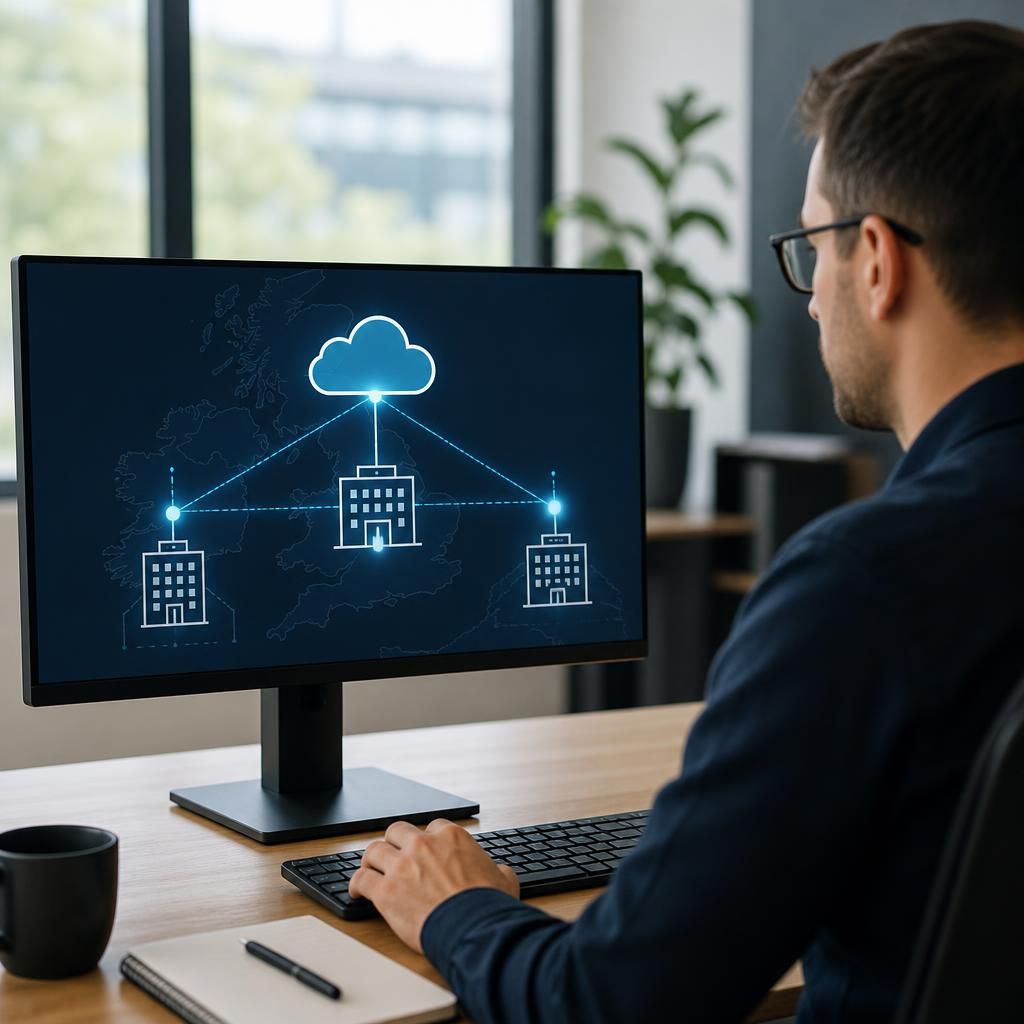
Discuss managed IT support for your business locations
If your organisation operates from several locations, discuss your current systems, site dependencies and support requirements with S2 Technology Group. A structured review can help identify where a managed IT support model would fit your business.