What is cyber threat intelligence?
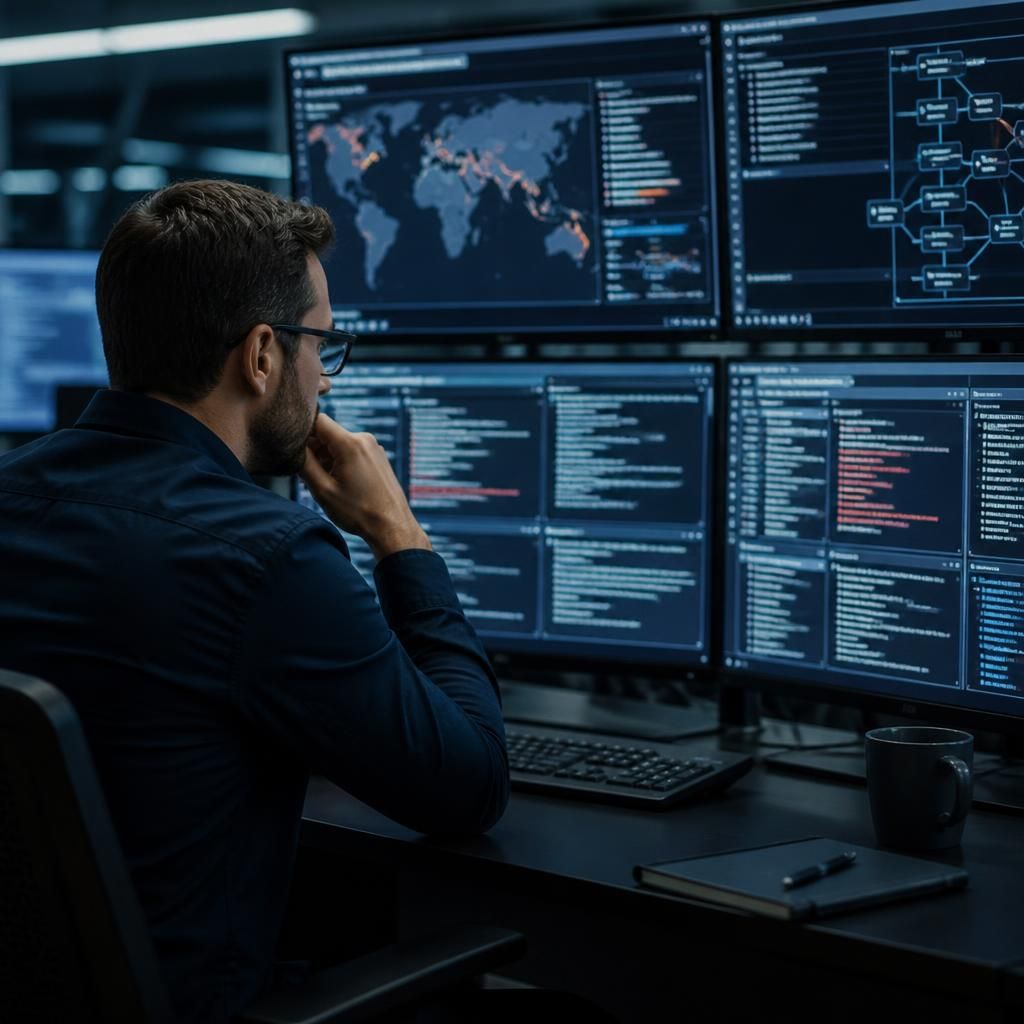
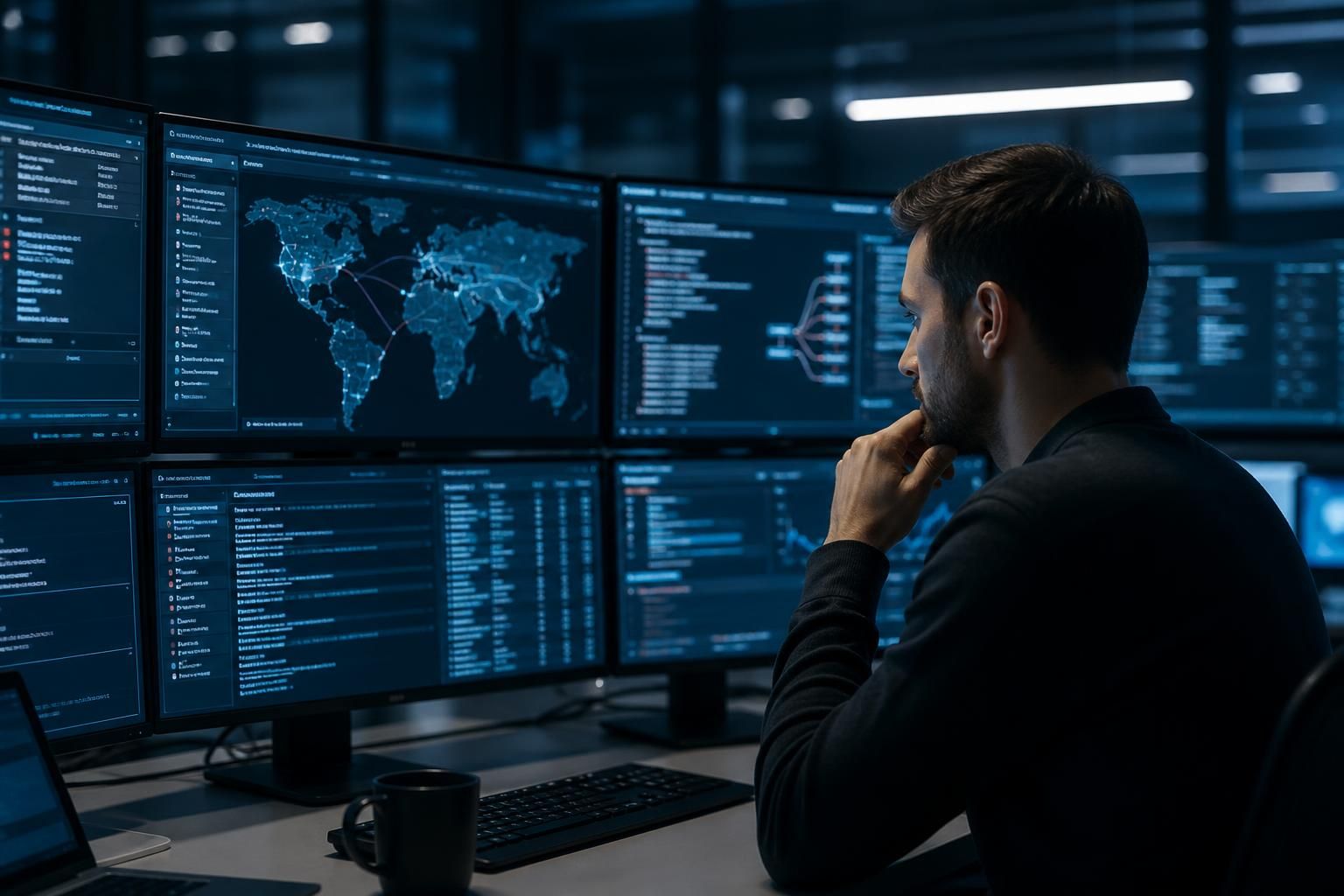
Cyber threat intelligence is the collection, analysis and interpretation of information about cyber threats, threat actors, vulnerabilities and attack methods. It gives businesses contextual insight to identify relevant risks, strengthen security controls and support informed incident response.
Cyber threat intelligence is decision-ready understanding that helps an organisation judge which cyber threats are relevant, how they may affect the business and what action should follow. It turns technical observations and external reporting into assessed information that can support decisions across security, IT, risk management and senior leadership.
Threat data and threat intelligence are not the same. A list of suspicious IP addresses, malware names or newly disclosed vulnerabilities is raw data. It becomes intelligence when it has been evaluated, given context and connected to a business decision. For example, an organisation may need to know whether a vulnerability affects its own systems, whether it is being actively exploited, which assets are exposed and whether mitigating controls are already in place.
Useful intelligence normally answers several practical questions:
- Who might target the organisation, and what would they be trying to achieve?
- Which systems, identities, suppliers or data would be most relevant to that activity?
- What techniques or indicators could suggest that an attack is being prepared or is already under way?
- How credible and current is the information?
- What should the organisation change, investigate or communicate as a result?
Different types of cyber threat intelligence
Threat intelligence is often divided into four categories, although the boundaries can overlap:
- Strategic intelligence explains the broader threat environment in business terms. It can inform investment, risk appetite, supplier decisions, insurance discussions and business continuity planning. It is generally intended for directors, risk owners and senior managers rather than security analysts.
- Operational intelligence focuses on campaigns, threat groups and likely attack activity. It helps security teams understand why an organisation might be targeted and what an adversary may do next.
- Tactical intelligence describes the behaviours and techniques used during attacks. It can support the design of defensive controls, detection rules and security testing.
- Technical intelligence covers more specific artefacts, such as domains, file hashes, email characteristics, network addresses and other indicators. These can be used by security tools, but they usually have a short useful life and require careful validation.
The most useful programme connects these levels. A technical indicator may help identify suspicious activity, while tactical information explains its significance and strategic intelligence helps determine whether the associated risk matters to the organisation.
Where threat intelligence comes from
Sources may include internal security logs, endpoint and network monitoring, vulnerability assessments, incident investigations, sector information-sharing groups, public research, government advisories and carefully assessed commercial feeds. Internal information is particularly important because it shows how the organisation’s own users, systems and suppliers are behaving. External information provides wider context and can reveal emerging activity before it is visible internally.
Source quality should be assessed rather than assumed. Important considerations include provenance, publication date, technical evidence, independence, relevance to the organisation and whether other credible sources support the assessment. A feed containing a large volume of indicators is not necessarily valuable if the information is outdated, duplicated or unrelated to the business.
How the intelligence lifecycle works
A structured lifecycle helps prevent threat intelligence from becoming an unmanageable stream of alerts:
- Direction: define the decisions the intelligence must support. These might concern exposed services, ransomware risk, a particular sector, remote access or a critical supplier.
- Collection: gather relevant information from suitable internal and external sources.
- Processing: remove duplication, standardise formats, check timestamps and prepare the material for assessment.
- Analysis: establish relevance, confidence, likely impact and possible relationships between events or indicators.
- Dissemination: deliver the right information to the right audience in a usable form, such as a technical alert, risk summary or management report.
- Review: assess whether the intelligence influenced a decision and whether the original requirement still reflects the organisation’s needs.
This lifecycle should be connected to existing security processes. Intelligence that identifies a relevant vulnerability may inform remediation prioritisation. Information about an attack technique may lead to a detection rule, configuration change or staff awareness activity. A suspected compromise may require investigation through the incident response process rather than simply being added to a blocklist.
How businesses use cyber threat intelligence
For a growing business, practical uses include:
- checking whether reported threats relate to the organisation’s sector, locations, technology or data;
- prioritising security improvements where resources are limited;
- strengthening email, endpoint, identity and network monitoring;
- reviewing whether exposed services or credentials appear in relevant threat reporting;
- testing whether existing controls would detect known attack behaviours;
- supporting incident triage by adding context to unusual events;
- briefing senior decision-makers on material changes in cyber risk; and
- informing security requirements for suppliers and business partners.
Intelligence can also reduce wasted effort. A vulnerability may be serious in theory but have limited relevance if the affected product is not used, cannot be reached by an attacker or is protected by effective compensating controls. Conversely, a less publicised weakness may deserve attention if it affects an exposed, business-critical system.
Limitations and common mistakes
Threat intelligence does not predict attacks with certainty and cannot replace sound security controls, monitoring, patch management or recovery planning. Attackers can change infrastructure, reuse legitimate services and alter their methods. Indicators can also become obsolete, generate false positives or be deliberately planted to mislead defenders.
Common weaknesses include collecting information without defining its purpose, treating every alert as equally important, relying on a single source, failing to record confidence levels and distributing technical material to people who need a business conclusion instead. Another problem is separating intelligence from action: if no team owns the resulting investigation or control change, the information has limited security value.
A mature approach records the reasoning behind an assessment. It distinguishes confirmed facts from assumptions, identifies gaps in the evidence and states what would change the conclusion. This makes intelligence more useful for audits, incident reviews and future decisions.
S2 Technology Group can help businesses understand how threat intelligence should fit within a wider cyber security approach, including the relationship between monitoring, risk assessment, protective controls and incident response. For organisations around Stourbridge, Kinver, Wordsley, Kingswinford, Kidderminster, Halesowen, Dudley and neighbouring areas, the appropriate starting point is usually to identify the decisions and systems that matter most, then build intelligence processes around those priorities rather than collecting information indiscriminately.
Cyber threat intelligence can contain personal data, such as email addresses, usernames, IP addresses or details taken from security logs. Businesses should therefore manage it as controlled security information, not as unrestricted reference material. Before collecting or sharing intelligence, define its purpose, limit access to people who need it and consider whether the information can be minimised, anonymised or pseudonymised.
A practical handling process should record:
- where the information came from and whether its use is subject to sharing restrictions;
- what business or security decision it is intended to support;
- who may access, amend or distribute it;
- how long it should be retained; and
- how inaccurate, outdated or disputed information will be corrected.
This is particularly important when intelligence is exchanged with suppliers, industry groups or public authorities. Sharing only the relevant indicators and context reduces unnecessary disclosure, while clear records help demonstrate that information has been handled proportionately. Good governance allows threat intelligence to support security decisions without creating avoidable privacy, confidentiality or data-quality risks.