
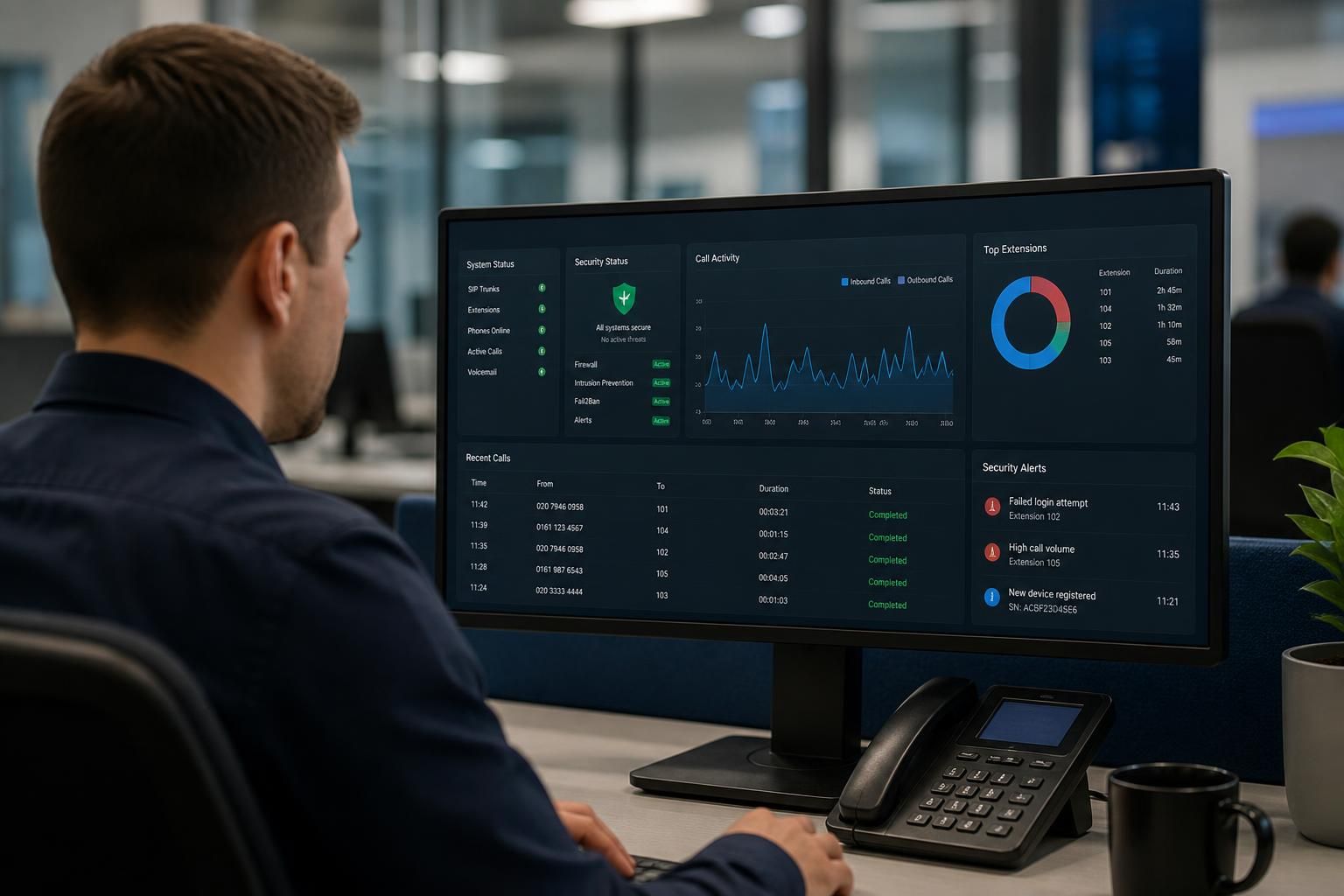
How secure are business VoIP phone systems?
Business VoIP phone systems can be secure, but their protection depends on controls such as strong authentication, encrypted signalling and media, restricted administration, secure network design and timely updates. Without these measures, attackers may intercept calls, compromise user accounts, redirect inbound numbers or use the system for fraudulent calls.
Business VoIP phone systems are secure when the provider, network, applications and users are governed as one system rather than treated as separate components. Protecting the conversation itself is only part of the requirement: voicemail, call recordings, contact data, call logs, administration portals, mobile apps and connected business applications can all expose sensitive information or create routes into the system.
Security should cover the entire VoIP service lifecycle. This includes how accounts are created, how devices are approved, where communications data is stored, who can access it, how changes are recorded, and what happens when an employee leaves or a device is lost. A technically well-protected platform can still be exposed by poor onboarding, excessive permissions or unmanaged endpoints.
Voicemail and recordings require particular care. Voicemail messages may contain commercially sensitive information, personal data or details about customers and suppliers. Call recordings can create additional obligations because they may identify individuals and capture confidential discussions. Businesses should define when recording is necessary, who may retrieve recordings, how long they are retained and how they are securely deleted. Where calls are recorded, callers and staff may also need appropriate information about that processing under the organisation’s privacy policy.
Call detail records and contact lists should be treated as business information rather than harmless technical data. They can reveal customer relationships, employee activity and operational patterns. Access should be limited to legitimate roles, exports should be controlled, and reports should not be left in shared folders or personal storage. A provider’s data-processing terms should explain its responsibilities, subprocessors, storage locations and arrangements for deleting or returning data.
Fraud prevention is a separate security concern from call confidentiality. A compromised extension or administration account may be used to place unauthorised chargeable calls, alter forwarding destinations or change routing rules. Useful safeguards include spending and destination restrictions, approval for international or premium-rate calling, alerts for unusual call patterns, and a documented process for suspending suspected accounts. These controls should be tested so that an alert leads to a practical investigation rather than simply generating unnoticed notifications.
Endpoints can undermine a secure platform. Desk phones, softphone applications, headsets, mobile devices and browsers may hold credentials or display live business conversations. Businesses should maintain an inventory of authorised devices, remove access from lost or retired equipment, apply supported software versions and prevent users from installing unapproved communications applications. Personal devices require clear rules covering screen locking, application access, local recording and the removal of business data.
Integration security also matters where VoIP connects to customer relationship management, helpdesk, contact-centre or collaboration systems. An integration should receive only the permissions it needs, use separately managed credentials and be reviewed when its purpose changes. API keys and tokens should not be stored in scripts, spreadsheets or shared documentation. A breach in one connected application can otherwise expose call histories, contact records or click-to-dial functions.
Good monitoring makes misuse more detectable. Administrators should be able to review sign-ins, configuration changes, forwarding changes, unusual call activity, recording access and failed connection attempts. Logs need reliable timestamps, suitable retention and protection from unauthorised alteration. Monitoring should be proportionate to the information being processed, with access to the logs itself restricted and reviewed.
Supplier due diligence is important because a hosted VoIP service may involve several technical and operational parties. Before choosing a service, ask how the provider separates customer environments, protects management access, handles vulnerabilities, supports security investigations and notifies customers about incidents. Contract terms should identify data responsibilities, subcontracting arrangements, exit processes and the treatment of recordings, voicemail and call records.
VoIP security should form part of the organisation’s incident response plan. The plan should explain how to disable a compromised user, revoke sessions, preserve relevant logs, check forwarding and routing changes, contact the provider, investigate fraudulent calling and communicate with affected parties. It should also identify who can approve emergency configuration changes and how those changes will later be reviewed. Testing these procedures is more useful than relying on undocumented assumptions.
Businesses should also consider data protection requirements when deciding whether to record calls, retain voicemail or transfer information between applications. The purpose for collecting the data, the lawful basis, retention period, access rights and deletion process should be documented. Security controls do not remove the need for appropriate privacy notices or internal policies.
A practical security review should therefore ask:
- Which VoIP data is created, including recordings, voicemail, contacts, logs and billing information?
- Where is each type of data stored, and who can access it?
- How are joiners, movers and leavers managed?
- What restrictions and alerts reduce the risk of fraudulent calling?
- Which phones, apps and personal devices are authorised?
- What systems are integrated with the phone service, and what permissions do they hold?
- Which events are logged, who reviews them and how long are logs retained?
- What will the business and provider do if an account, device or supplier environment is compromised?
S2 Technology Group can help organisations assess these questions as part of wider managed IT and cyber security planning. The appropriate design depends on the business’s users, locations, applications, data and risk profile; security should be reviewed when the phone system, workforce or connected systems change.
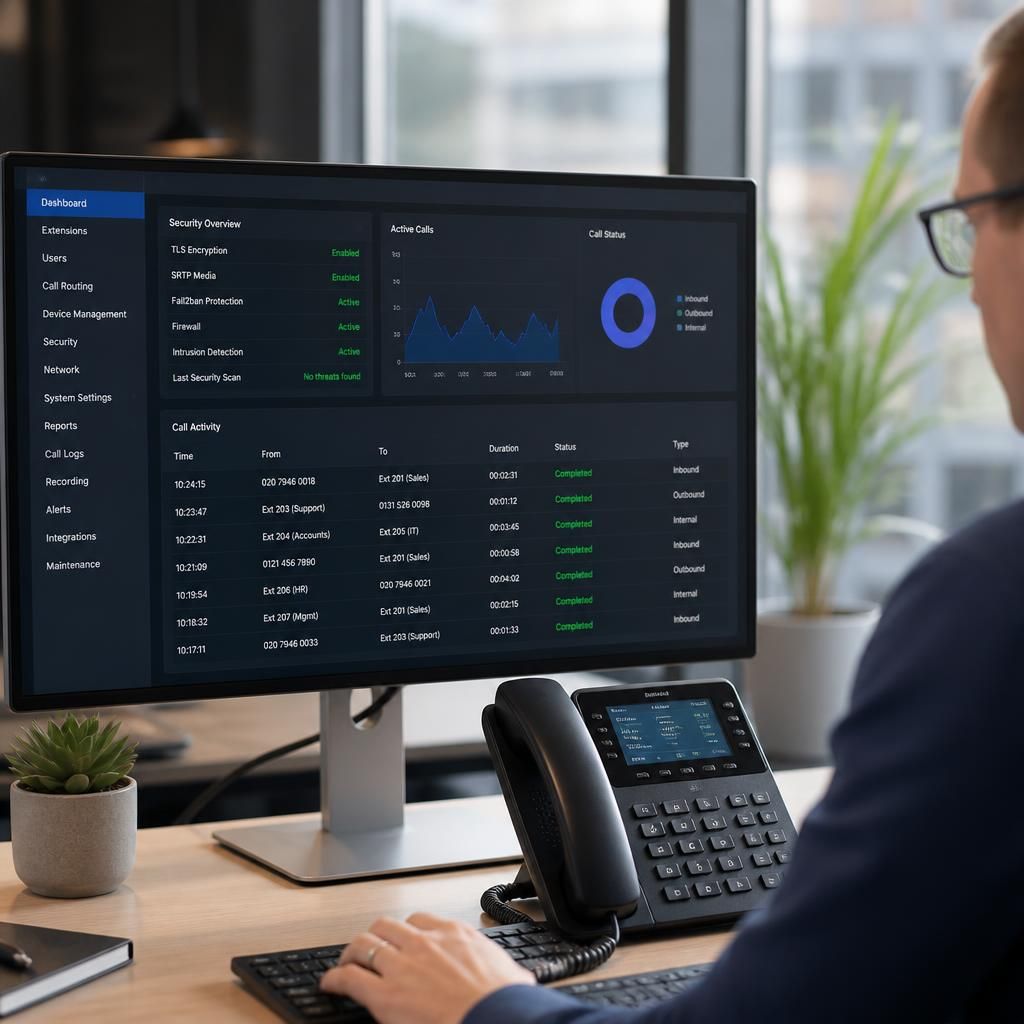
A secure business VoIP deployment should protect its control plane as carefully as the calls themselves. The web portal, provisioning services and signalling endpoints should not be exposed more broadly than necessary. Firewall rules, an appropriately configured session border controller and restricted management access can limit unsolicited connections and reduce the risk that an internet-facing service becomes a route into the organisation.
Voice devices should also be separated from general-purpose systems where the network design allows it. A dedicated voice network can limit how far an attacker moves if a workstation or handset is compromised, while traffic rules can permit only the services required for calling, provisioning and updates. Disable obsolete protocols and unused extensions, and review firewall and routing rules after changes to the phone system. These measures do not replace account security, but they reduce the number of systems and services that need to be trusted.