
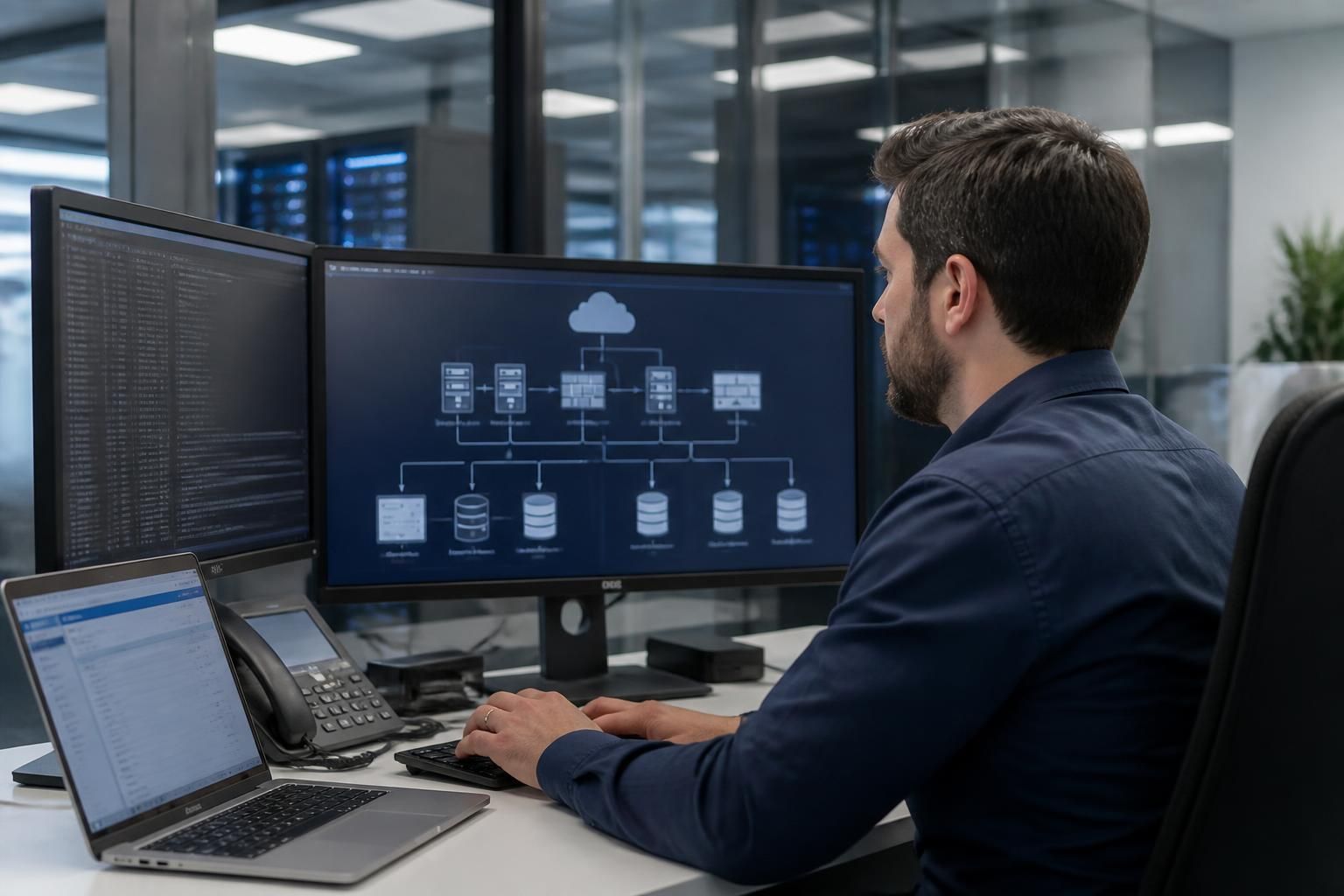
How does managed IT infrastructure support system integration?
Managed IT infrastructure supports system integration by providing the secure networks, cloud platforms, devices and access controls that allow business applications to exchange data reliably. It also coordinates compatibility, configuration, monitoring and troubleshooting across connected systems, helping integrations remain stable as the organisation’s technology changes.
Managed IT infrastructure supports system integration by providing the operational controls, standards and technical oversight needed for different applications to work together consistently. It helps an organisation connect systems without creating unmanaged dependencies, unclear data ownership or avoidable risks to business operations.
Effective integration begins with understanding how information moves through the organisation. A managed infrastructure approach can document which system creates, updates and consumes each type of data, such as customer records, orders, stock information or financial transactions. This helps establish a clear source of truth and reduces the risk of conflicting records being created in separate applications.
It also supports the technical conditions that integrations depend on, including:
- Consistent naming, addressing and configuration standards across servers, endpoints and cloud resources.
- Reliable identity management so users, applications and automated processes receive appropriate permissions.
- Controlled access to application interfaces, databases and shared services.
- Network routes, firewall rules and connectivity arrangements that permit required data flows without exposing unrelated systems.
- Centralised records of system dependencies, credentials, certificates and integration components.
- Monitoring and logging that can show whether a connection is operating, failing or producing unexpected results.
System integration often depends on more than a direct connection between two applications. Data may pass through an API, middleware service, scheduled process, virtual machine, cloud resource or database. Managed infrastructure makes these supporting components part of an accountable environment rather than leaving them as isolated technical workarounds. This is particularly important when an employee who created an integration leaves, when an application is upgraded or when a business adds another site or service.
Security must be designed into the integration path. Separate service accounts can be used for automated processes instead of sharing personal credentials, while permissions can be limited to the data and actions each connection requires. Encryption, network separation, access reviews and audit records help reduce the consequences of a compromised account or incorrectly configured integration. Backups and recovery arrangements should also cover integration configuration and supporting data where their loss would interrupt an important business process.
Managed infrastructure further supports integration through controlled change. Before connecting or modifying systems, an organisation can assess dependencies, record the intended configuration and define how the change will be reversed if it causes an issue. Testing should consider authentication, data formats, duplicate records, failed transactions and the effect of unavailable services. Changes can then be introduced in a controlled sequence rather than altering several connected systems at once.
Monitoring is most useful when it identifies the business effect of a technical fault. For example, an integration may appear connected while orders are queuing, data is arriving late or one field is being rejected because its format has changed. Reviewing logs, alerts and transaction records helps distinguish an infrastructure fault from an application, data-quality or permissions problem. Clear ownership is needed so that the appropriate internal team, software supplier or IT partner can investigate each type of failure.
A managed approach also helps preserve integration quality as the technology estate changes. New cloud services, upgraded operating systems, replaced devices and revised access policies can all affect existing data flows. Maintaining an up-to-date configuration record and reviewing integrations as part of infrastructure planning reduces the likelihood that an apparently unrelated change will disrupt a connected process.
For a small or medium-sized organisation, this provides a practical alternative to treating every integration as a one-off project. The infrastructure can be assessed alongside business requirements, data protection obligations, operational dependencies and future plans. S2 Technology Group can support this type of joined-up planning as part of managed IT infrastructure services for businesses around Stourbridge and neighbouring areas, including Kinver, Wordsley, Kingswinford, Kidderminster, Halesowen and Dudley.
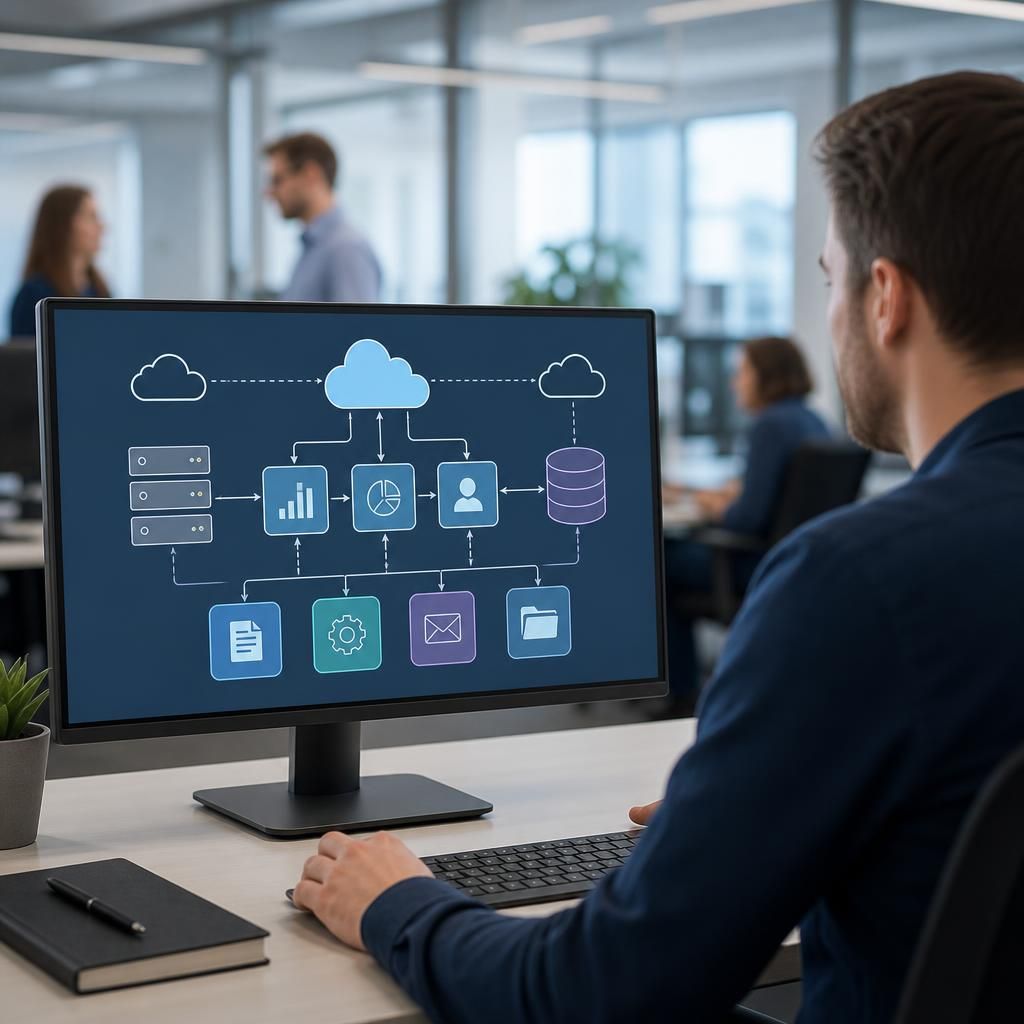
Managed IT infrastructure supports system integration by maintaining clear interface standards between applications. An interface contract defines the data a system sends or receives, the format it uses, the permitted values and what should happen when a request cannot be completed. This gives each connected system a consistent technical expectation.
These standards are particularly important when software is updated independently. Rather than allowing one application change to silently alter a shared data flow, the organisation can record interface versions and assess whether dependent systems remain compatible. Where changes are unavoidable, an older interface may be retained temporarily while the receiving application is adapted and validated.
- Field definitions: records what each item means, such as whether a date represents creation, dispatch or completion.
- Validation rules: identifies which values are required, optional or invalid before information is passed onward.
- Version control: distinguishes a revised interface from the previous one, making changes easier to trace.
- Failure handling: sets out how rejected or incomplete transactions are recorded for investigation rather than silently discarded.
Keeping these details alongside infrastructure documentation reduces reliance on individual employees remembering how an integration works. It also makes future system changes easier to assess because the relationships between applications are defined before a new connection, upgrade or replacement is introduced.