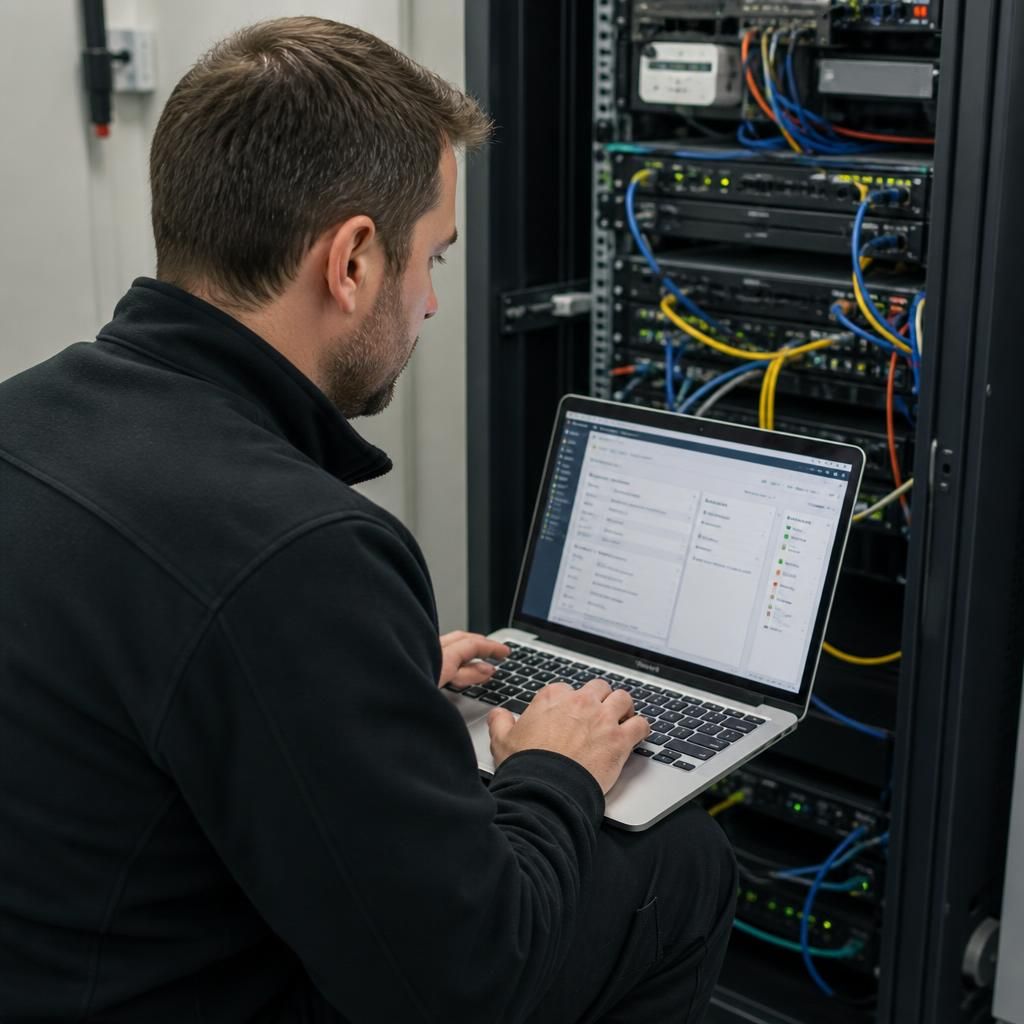
How are onsite IT support findings documented?
Onsite IT support findings are typically documented in a service report that records the equipment inspected, symptoms observed, diagnostic results, changes made and any outstanding risks. Recommendations are then assigned as follow-up actions, creating a clear record for future troubleshooting, maintenance and security decisions.
Onsite IT support findings should be documented as an evidence-based, traceable record rather than as informal notes. The documentation should show what was discovered, how the conclusion was reached, what was affected, which decisions were made and how any resulting work was verified.
A useful record normally begins with visit context, including the site, date, relevant business area and the person who reported or witnessed the issue. Each finding should then be linked to the correct asset or service. Asset tags, device names, user identifiers, network locations and operating-system details can prevent confusion where several machines appear similar. If an asset cannot be identified confidently, that uncertainty should be recorded instead of attaching the finding to the wrong device.
Technicians should distinguish between different types of information, because they do not carry the same evidential weight:
- Reported symptoms: what the user or site contact experienced, including when the problem began and how often it occurs.
- Direct observations: conditions seen during the visit, such as error messages, damaged connections, unusual noise or visible environmental issues.
- Diagnostic results: the tests performed, their outcomes and any relevant logs or system information.
- Professional assessment: the most likely cause, clearly identified as an assessment where it has not been conclusively proven.
- Limitations: tests that could not be completed because of access, downtime, dependency or other practical constraints.
This distinction prevents a user’s assumption from being presented as a confirmed technical cause. It also helps a later technician understand which conclusions may need further testing.
Good documentation records the sequence of investigation in enough detail to make the reasoning reproducible. Rather than writing only that a device was checked, the record can state which connection, service, configuration, log or component was examined, what was found and why the next diagnostic step was chosen. Relevant timestamps are useful when symptoms are intermittent, when several systems are involved or when events need to be compared with monitoring or security records.
Where evidence supports the finding, it may include photographs, screenshots, exported logs, configuration comparisons or test results. Images should be relevant and labelled with the asset or location they relate to. They should not unnecessarily expose passwords, personal data, confidential documents or information displayed on a user’s screen. Sensitive attachments should be stored through the organisation’s controlled systems, with access limited to people who need them for support, security or governance purposes.
The record should explain business significance without overstating technical risk. For example, a failed workstation, an unstable network connection and an unsupported device may all require different priorities. A useful assessment considers factors such as:
- the users, site or business process affected;
- whether work is prevented, degraded or merely exposed to a future risk;
- the likelihood of recurrence or further failure;
- dependencies on other equipment, applications or connectivity;
- security, data-protection or compliance implications; and
- whether temporary workarounds are creating additional risk.
When changes are made during the visit, the documentation should provide a change history. This can include the original state, the action taken, the reason for it, the person who authorised it and the resulting state. If a setting, component or connection was altered, noting how it could be reversed is valuable. Any interruption to users or services, even where brief, should be recorded along with the test used to confirm that the affected function was working afterwards.
Follow-up work needs more detail than a general recommendation. Each action should have a clearly defined outcome, such as replacing a failed component, reviewing a firewall rule, updating a device or investigating an unresolved fault. The record should identify dependencies, required approvals, risks of delay and the evidence that will demonstrate completion. If the proposed work involves business-critical equipment, the documentation should also capture any agreed maintenance window, fallback arrangement or decision not to proceed.
Before the record is closed, the technician and site contact should check that it accurately reflects the visit. The contact may be able to confirm the operational impact or identify information missing from the technical notes, but approval of the record does not necessarily mean that every recommendation has been accepted. Completed actions, deferred actions and rejected actions should remain distinguishable, with the reason for deferral or rejection retained where relevant.
Finally, documentation should be stored where authorised support staff can retrieve it alongside related service history and asset information. Consistent naming, status labels and links between incidents, changes and assets make recurring faults easier to identify without relying on an individual technician’s memory. Over time, this creates a dependable technical and governance record that supports troubleshooting, maintenance planning, security reviews and informed infrastructure decisions.
An onsite IT support report should be understandable to both technical staff and the person responsible for business decisions. Alongside technical evidence, it should include a concise summary of the operational effect, the decision required and the consequence of taking no further action. This allows a manager to approve, defer or escalate work without having to interpret logs or specialist terminology.
Where several findings are recorded, each should have a clear status, such as confirmed, under investigation, resolved or awaiting approval. Keeping these statuses separate prevents an initial observation from being mistaken for a completed fix and makes the report easier to review during future support work.