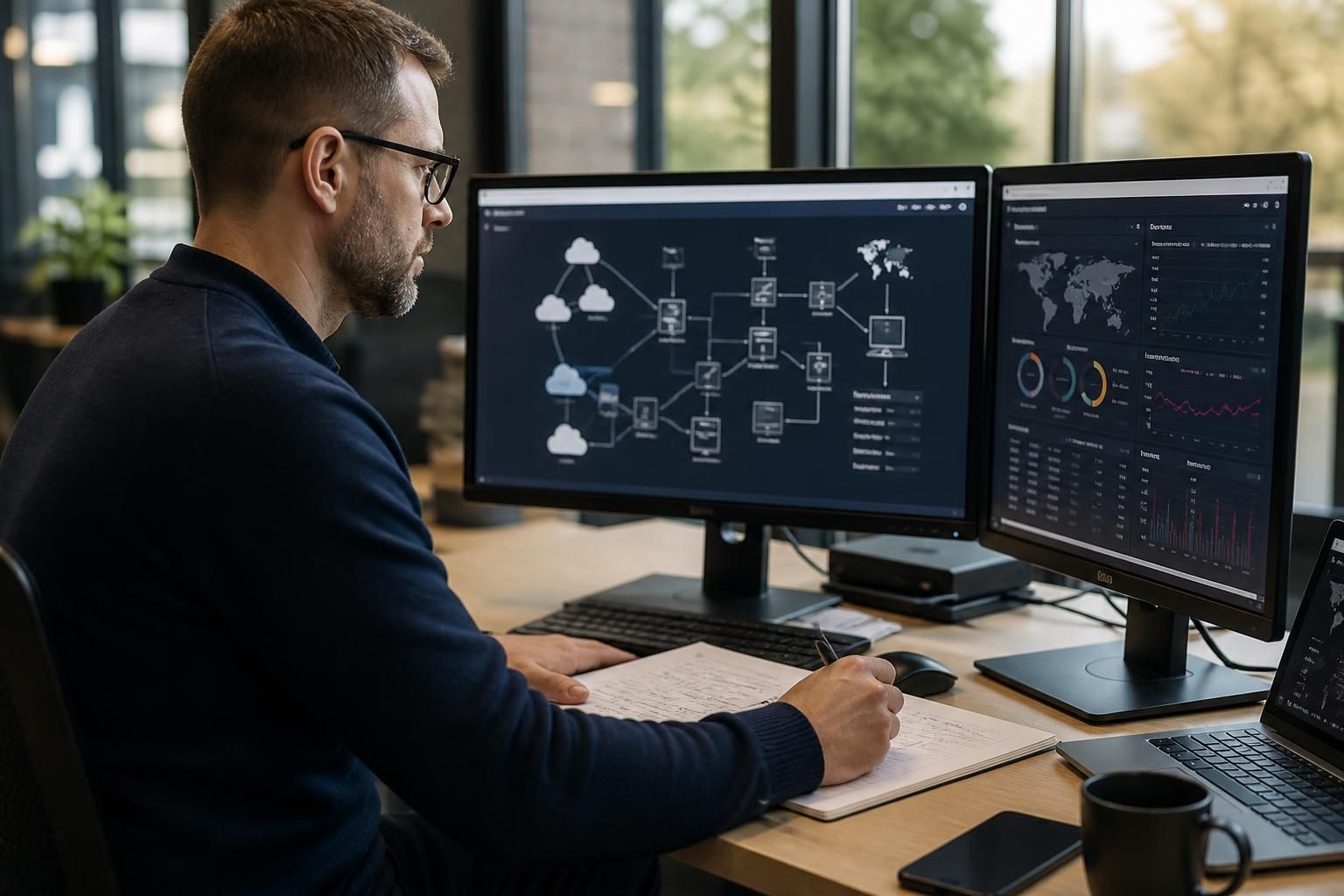
When should a business engage an IT security consultant?
A business should engage an IT security consultant when it needs an independent assessment of its cyber risks, security controls or compliance obligations. This is particularly valuable before a major technology change, after a security incident, when systems are becoming more complex, or when internal teams need specialist guidance to prioritise improvements.
A business should engage an IT security consultant when it cannot confidently demonstrate that its important systems, information and users are adequately protected. The need is not limited to a suspected breach. Independent security expertise is also useful when responsibility is unclear, evidence is incomplete, risks are difficult to compare, or operational demands are preventing internal teams from examining security in sufficient depth.
Common indicators that specialist input is appropriate include:
- Security ownership is unclear. If no one has defined responsibility for access control, backups, monitoring, vulnerability management and incident procedures, important tasks can be missed between IT, management and third-party suppliers.
- The organisation cannot describe its current security position. A business should be able to identify its critical systems and data, who can access them, how privileged accounts are controlled, and how security events would be detected and handled. If this information is based on assumptions rather than documented evidence, a consultant can establish a reliable baseline.
- Customers, insurers or business partners are asking for assurance. Due-diligence questionnaires, supplier assessments and contractual requirements may require evidence of specific controls. A consultant can help distinguish controls that are genuinely operating from policies that exist only on paper.
- Third-party dependencies have become difficult to manage. Cloud platforms, outsourced IT, software providers and connectivity partners can all affect the organisation’s security. Specialist review can identify where responsibilities sit between the business and its suppliers, and whether supplier access is proportionate.
- There are recurring warning signs. Repeated phishing attempts, unexplained account activity, unpatched systems, excessive administrator access, unreliable backups or poor staff reporting may indicate weaknesses that need structured investigation rather than isolated fixes.
- The business is preparing for greater operational complexity. Additional sites, increased reliance on remote access, new applications or a larger workforce can change how identities, devices and data need to be controlled. Security planning is more effective when these dependencies are understood before they become difficult to manage.
- Internal IT is focused on keeping services running. Operational IT teams may be capable and experienced but still lack the time or specialist separation needed for a detailed security review. An external consultant can examine controls objectively without being responsible for defending every existing decision.
- Senior management needs a defensible risk view. Investment decisions are easier to assess when security concerns are linked to business processes, affected information and realistic consequences. A consultant can help turn technical observations into a prioritised risk picture for decision-makers.
The appropriate point of engagement depends on the potential impact and the quality of the evidence available. Immediate specialist advice is sensible where there is unexplained unauthorised access, suspected data exposure, disabled security tooling, a failed recovery test or a serious weakness affecting a critical service. The priority in such circumstances is to preserve evidence, contain risk and establish what is known before normal system changes obscure the facts.
A planned review is more suitable when the business has no clear baseline, security documentation is out of date, controls have developed inconsistently, or management is setting future technology and risk priorities. This allows the consultant to review the organisation’s systems, processes and suppliers in a structured way, speak with relevant stakeholders, and separate urgent corrective work from longer-term improvement.
Engaging a consultant does not mean that every recommendation must be implemented immediately or that all security responsibility can be transferred externally. The business remains accountable for its risk decisions. The consultant’s role is to provide specialist analysis, explain the significance of findings, identify practical options and clarify which actions should be owned by management, internal staff or technology providers.
Before appointing an IT security consultant, the business should be able to explain what prompted the review, which systems and information matter most, who owns relevant decisions, and what constraints may affect the work. A clearly defined scope produces more useful advice than a broad request to check whether the organisation is secure.
For small and medium-sized organisations without a dedicated security function, an IT consultancy such as S2 Technology Group can provide an external perspective alongside wider IT support, cyber security and infrastructure expertise. The most useful engagement is one that leaves the business with a clearer understanding of its exposure, its responsibilities and the practical steps required to strengthen its defences.
An IT security consultant should be engaged before a merger, acquisition or major business transfer when the organisation will inherit systems, users, suppliers or information that it has not assessed itself. Security weaknesses in the incoming environment can become part of the combined business before ownership and responsibilities are fully established.
A focused review can examine:
- how identities, administrator accounts and remote access will be transferred or combined;
- whether inherited systems are supported, patched and monitored adequately;
- where business data is stored and which parties can access it;
- whether contracts and supplier arrangements create security obligations;
- how backups, incident procedures and recovery arrangements apply across the enlarged environment; and
- which risks should be resolved before the transfer and which require formal acceptance by management.
Engaging the consultant before technical integration gives decision-makers evidence to plan the transition rather than discovering weaknesses after systems and responsibilities have been combined.