How are data protection responsibilities handled by IT outsourcing companies?
IT outsourcing companies usually act as data processors, while the client remains the data controller responsible for deciding how personal data is used. Responsibilities should be defined in a data processing agreement covering GDPR obligations, security controls, access, breach reporting, subcontractors, retention and the secure return or deletion of data.
Data protection responsibilities in an IT outsourcing arrangement are handled through a combination of legal governance, documented procedures, technical safeguards and regular oversight. The outsourcing company supports the client’s data protection framework by applying agreed controls to the systems it manages, while the client retains responsibility for making lawful business decisions about personal information.
Responsibilities should be mapped to specific activities. A useful starting point is to identify where personal data is collected, stored, accessed, transferred, backed up and removed. This may include email systems, cloud applications, file servers, remote access tools, user devices and line-of-business software. The outsourcing arrangement should then record which organisation is responsible for each activity, who can authorise changes and what evidence must be retained.
This prevents broad statements such as “the IT provider is responsible for security” from creating uncertainty. The provider may manage firewalls, endpoint protection, patching and backup systems, for example, while the client may remain responsible for approving user access, checking that information is collected fairly and deciding how long records should be kept.
Compliance begins with understanding the data and the processing involved. Before taking on services, an IT outsourcing company may review the types of personal data handled, the systems involved, user groups, access routes and relevant business risks. Particular attention is normally required for confidential employee, customer, patient or financial information, as well as any special category data covered by stricter rules.
This assessment helps determine whether additional safeguards are needed. It can also identify unsupported applications, excessive user permissions, duplicated records, unsecured devices or data flows that have not been documented. Where processing is likely to create a high risk to individuals, the client may need to complete a data protection impact assessment, with technical input from the IT provider where appropriate.
Security controls should be proportionate to the risk. Common measures include:
- multi-factor authentication for administrative and remote access;
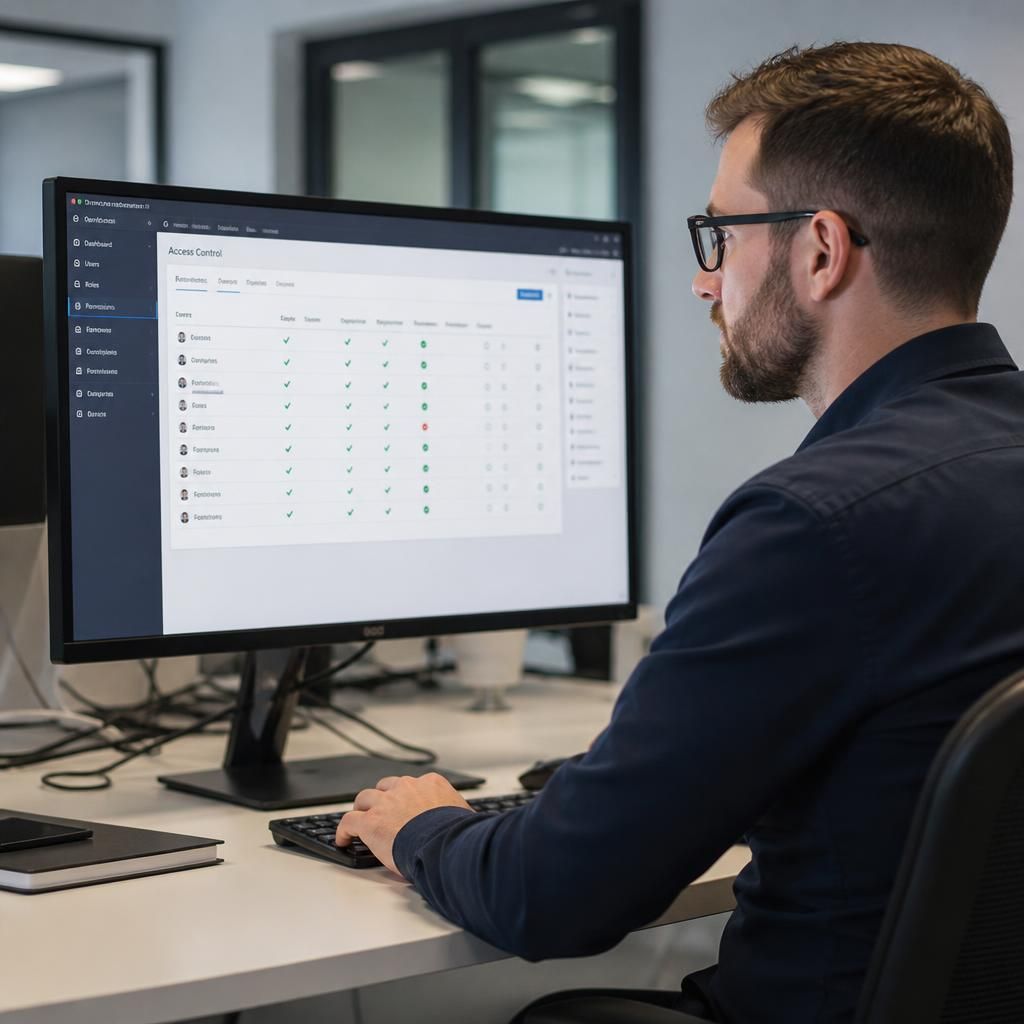
- role-based permissions so users can access only the information required for their duties;
- encryption for data in storage and during transmission where appropriate;
- secure configuration of servers, cloud services, laptops and mobile devices;
- patch management and vulnerability monitoring;
- malware protection, email security and web filtering;
- network segmentation to limit the spread of a security incident;
- backups protected from unauthorised alteration or deletion; and
- logging and monitoring that can help identify suspicious activity.
These controls are not a substitute for lawful processing, good information management or staff awareness. They are practical measures that reduce the likelihood and impact of unauthorised access, accidental disclosure, loss and destruction.
Access management is an ongoing responsibility rather than a one-off setup task. An outsourced IT team may administer accounts and permissions, but the client should determine who is entitled to access particular systems and information. A sound process covers new starters, role changes, leavers, temporary access and external users. Privileged accounts should be restricted, separately controlled and reviewed more closely than ordinary user accounts.
Regular access reviews can reveal permissions that are no longer justified. The review should consider both technical access and the business reason for having it. Where an individual changes role or leaves the organisation, permissions should be amended or removed through an agreed process rather than relying on informal notifications.
Incident handling requires clear coordination. An IT provider may be the first party to detect unusual login activity, malware, data loss or a system misconfiguration. Its procedures should explain how suspected incidents are recorded, investigated, contained and escalated to the client. The client then needs enough information to assess the effect on individuals, meet any regulatory notification duties and communicate appropriately.
Useful incident records normally include what happened, which systems were affected, what information may have been exposed, the actions taken, relevant timestamps and the decision-making process. Testing these procedures through tabletop exercises or technical recovery tests can expose gaps before a real incident occurs.
Data protection also depends on resilience and recovery. Backups should be designed around the information’s importance and the consequences of losing access to it. An outsourcing company may manage backup jobs, storage and restoration testing, but the client should understand what is covered, how recovery is prioritised and which systems or records require separate protection. A backup that cannot be restored, or that contains unnecessary historic data, does not provide effective protection by itself.
Ongoing assurance provides evidence that controls remain effective. Depending on the arrangement, this may include security reports, vulnerability findings, access review records, backup test results, incident summaries, change records and details of remediation work. The client should consider whether the evidence is sufficiently current and relevant to its risks, rather than relying solely on a general statement of compliance.
Oversight should also cover changes to the technology environment. New cloud services, integrations, remote access methods or software suppliers can alter how personal data is processed. A change-control process should identify those effects before implementation, update the relevant documentation and confirm that security settings remain suitable.
Subcontracting and supply-chain risk need separate attention. An outsourcing company may use other providers for hosting, security monitoring, backup storage or specialist support. The client should be able to understand where its data may be processed, how those organisations are assessed and how changes to the supply chain are communicated. Due diligence may consider security practices, access controls, incident procedures, resilience and the provider’s ability to meet contractual obligations.
For businesses in and around Stourbridge, Kinver, Wordsley, Kingswinford, Kidderminster, Halesowen and Dudley, a managed IT provider can contribute technical expertise to this framework without taking over every data protection decision. S2 Technology Group supports businesses with managed IT, cyber security, cloud solutions and connectivity, helping organisations translate their data protection requirements into practical controls and repeatable management processes.
The most effective arrangements therefore combine clearly assigned accountability with regular technical and organisational review. Data protection should be considered during service design, access changes, technology upgrades, incident response and contract reviews, not treated as a document completed only when outsourcing begins.
Where an outsourced IT service involves hosting, support access or storage outside the UK, the data protection arrangement should address international transfers explicitly. The contract should identify where personal data may be accessed or stored, which suppliers are involved and what lawful transfer mechanism applies.
The client should also understand how changes in hosting locations or suppliers will be communicated and assessed. This helps ensure that a change to the technical service does not create an undocumented transfer risk or alter the safeguards applying to personal data.