

When should a small business outsource IT support?
A small business should consider outsourcing IT support when its technology needs exceed the capacity, expertise or availability of its internal team. This is particularly relevant when the business needs proactive maintenance, stronger cyber security, dependable user support or strategic guidance without building a full in-house IT function.
The right time for a small business to outsource IT support is when technology has become too important, complex or risky to manage informally, but a full in-house IT department would not be proportionate to the organisation’s needs. The decision should be based on operational risk, business growth and the level of technical oversight required, rather than on employee numbers alone.
Common signs that outsourcing is appropriate include:
- IT problems are disrupting work. Repeated faults, unreliable systems, connectivity issues or device problems can consume management time and interrupt revenue-generating activities.
- Technical decisions are being made reactively. Replacing equipment only when it fails, applying updates inconsistently or adding systems without a wider plan can create avoidable cost and security exposure.
- No one owns IT risk. If responsibility for backups, user access, software updates, cyber security and supplier management is divided between several people, important tasks may be missed.
- The business is growing. New employees, additional locations, remote working and increased data volumes create requirements that may not be manageable through ad hoc support.
- Existing staff are carrying IT responsibilities alongside their main roles. A technically confident employee may be able to solve everyday issues, but that does not necessarily provide the monitoring, documentation, planning or security knowledge needed to manage business technology properly.
- There has been a security incident or near miss. Suspicious emails, compromised accounts, lost devices or weak access controls indicate that the business needs a structured approach to reducing future exposure.
Outsourcing can also be sensible before these signs become serious. A business does not need to wait for a major outage or cyber incident to review its support model. Bringing in external expertise during a period of growth, before moving systems to the cloud, or while introducing remote access can help ensure that technology decisions are made consistently from the outset.
Consider the business impact, not just the number of support requests. A small organisation may have relatively few users but still depend heavily on email, cloud applications, shared data, online services or specialist systems. In that situation, a single account issue or prolonged device failure may affect several processes. Conversely, a business with more users may have straightforward requirements that can be handled internally. The key questions are how critical the systems are, how much downtime or data loss would matter, and whether the current arrangements control those risks adequately.
Before outsourcing, the business should document its current position. This review should cover:
- the devices, networks, applications and cloud services in use;
- who has administrative access and how that access is controlled;
- how backups are carried out and whether restoration has been tested;
- how software updates, antivirus protection and security alerts are managed;
- how new users, leavers and changes in responsibility are handled;
- which systems are essential to daily operations;
- any contractual, regulatory or client requirements affecting information security; and
- the support arrangements currently available, including their limitations.
This assessment helps distinguish between a genuine need for managed IT support and a narrower requirement, such as a one-off infrastructure project or advice on selecting software. Outsourcing does not have to mean transferring every technology responsibility immediately. Some businesses retain an internal contact for routine coordination while using an external provider for specialist support, security management, strategic planning or complex technical work.
The main outsourcing models are different in scope. Break-fix support deals with faults when they occur, whereas managed support generally includes planned maintenance, monitoring, user assistance and ongoing technical oversight. Project-based consultancy may be suitable for a migration, office move or infrastructure upgrade, but it does not replace day-to-day ownership. A business should therefore define whether it needs incident handling, proactive management, strategic advice, cyber security support, cloud administration, connectivity assistance or a combination of these services.
Cost should be assessed against business risk and internal capacity rather than compared with the salary of an IT employee alone. An internal employee may provide useful business context and direct access to users, but the organisation must also consider recruitment, training, leave cover, specialist knowledge, security processes, tools and the time spent managing suppliers. An external provider may offer access to a broader range of expertise, although the arrangement still needs clear responsibilities and effective communication.
A suitable provider should be assessed carefully. Ask how it documents the technology environment, manages privileged access, handles backups, approaches cyber security, records support work and reports on recurring issues. Check whether the proposed service covers the systems the business actually relies on, how projects are separated from routine support, and what information the provider needs from the client. It is also important to understand contract terms, ownership of documentation, data handling arrangements, escalation procedures and the process for ending the relationship.
The transition should begin with an agreed baseline rather than an assumption that the provider already understands the environment. The business and provider should identify critical systems, verify administrator accounts, review backup arrangements, record known faults and establish priorities. Documentation should be updated as changes are made. This reduces dependency on individual knowledge and gives the business a clearer view of its technology estate.
S2 Technology Group supports small and medium-sized organisations with managed IT, cyber security, cloud solutions and business connectivity. Its role can be considered where a business needs structured technical management and strategic guidance without creating a complete internal IT function. The appropriate point to outsource remains specific to each organisation: it is usually when the cost of unmanaged risk and lost internal time is greater than the effort required to establish a properly defined external support arrangement.
The decision to outsource IT support should be reviewed whenever the organisation’s technology estate changes materially. New business systems, additional sites, acquisitions, changes in client security requirements or a move towards cloud-based working can alter the level of expertise and oversight required.
A practical review should record what has changed, which business processes depend on the affected technology and whether existing responsibilities remain clear. It should also identify any new administrative, security or continuity requirements. Setting a named owner for this review helps prevent the support arrangement from becoming unsuitable as the business develops.
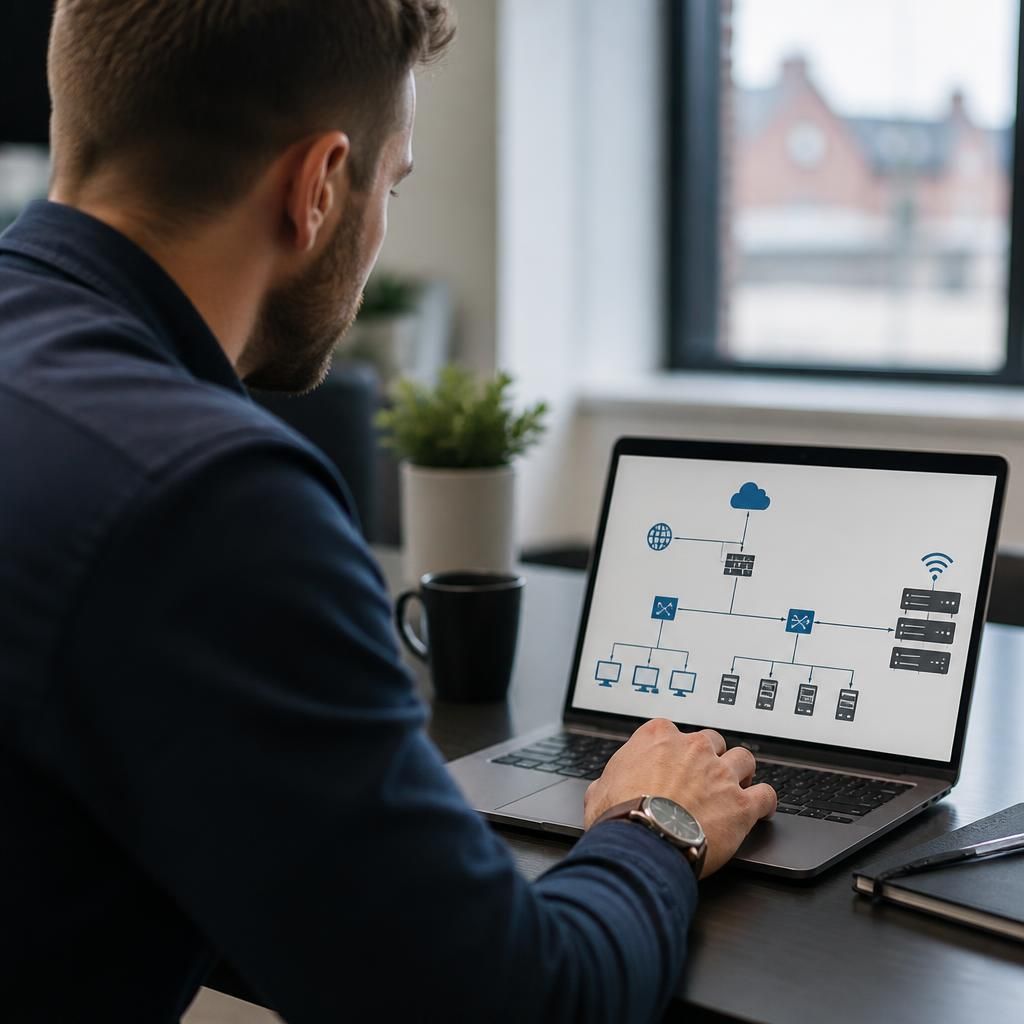
Discuss whether outsourcing IT support is right for your business
Review your current IT responsibilities and discuss whether external support fits your organisation’s requirements with S2 Technology Group. A structured conversation can help clarify the scope of support and the next steps for your business.