
What is the difference between business broadband and residential broadband?
Residential broadband is designed for household use, while business broadband typically offers features suited to operational needs, such as static IP options, business-focused support arrangements and greater choice around resilience and security. The differences depend on the provider and package, so businesses should compare service terms and technical features rather than relying on advertised download speed alone.
Business broadband is built around organisational requirements, whereas residential broadband is designed primarily for household internet use. The underlying access technology may be similar, but the contract, service management, fault process, usage assumptions and available network features can differ substantially. A business connection is therefore not automatically better simply because it is labelled “business”; the relevant package must match how the organisation operates.
Different assumptions about usage
Residential services are generally designed for individual or family use, including streaming, browsing, gaming and personal devices. Business services are intended to support activities such as cloud software, hosted voice, file transfers, remote access, payment systems and connections between offices. These activities can make a short interruption or inconsistent performance more disruptive than it would be in a household.
Businesses should consider the number of users and devices, the applications they rely on, the amount of cloud-based work taking place and whether staff work from more than one location. A connection that is adequate for light office browsing may become unsuitable when several employees use voice, video, cloud storage and line-of-business applications at the same time.
Contention and performance
Broadband capacity is shared within the provider’s network. The practical performance of a connection can therefore be affected by network design, local demand, the access technology used and the provider’s traffic management policies. Residential packages are often planned around variable household demand, while business packages may provide different performance commitments or network treatment. This is not universal, so the provider’s service description should explain what is actually included.
Advertised download speed is only one part of the assessment. Businesses should also examine upload capacity, latency, packet loss, performance at busy periods and the effect of usage limits or traffic policies. These factors can affect cloud applications, remote desktops, backups, video meetings and hosted telephony even when a speed test shows a reasonable download result.
Contractual support and fault management
One of the more important distinctions is how the service is managed when something goes wrong. Business packages may include a different fault-reporting route, defined service targets, clearer escalation arrangements or service credits. Residential terms may be more heavily centred on self-service diagnostics and standard consumer support processes.
Businesses should read the service level agreement rather than assuming that a business label guarantees a particular response or restoration standard. Check the definitions of a fault, the hours to which any target applies, exclusions, compensation terms and whether the agreement covers the access circuit only or also the provider’s equipment. The business should also establish who is authorised to report faults and what information the provider needs for diagnosis.
Installation and equipment
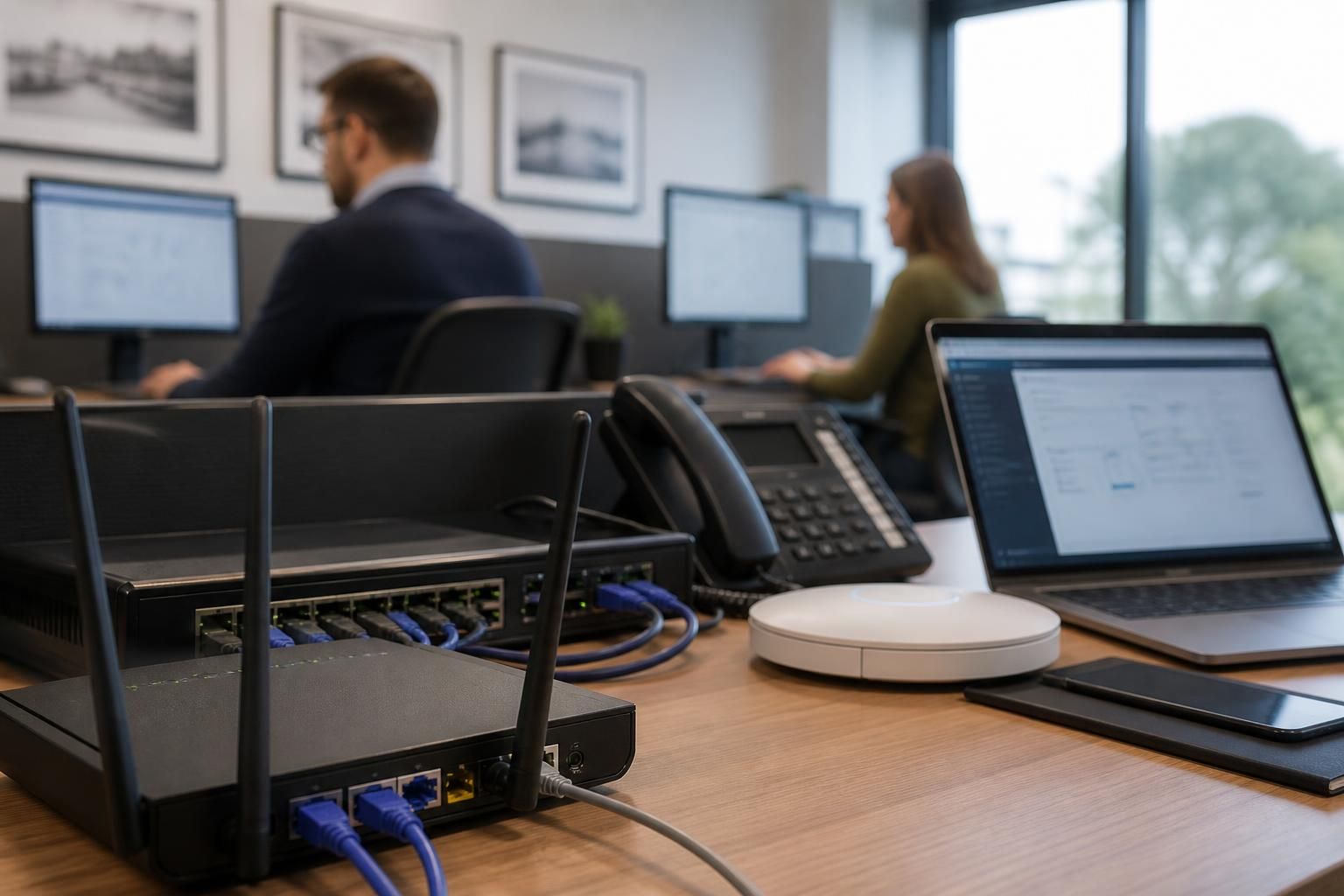
Residential installations are normally planned for a home environment with relatively straightforward internal cabling. Business installations can involve a comms room, firewall, managed router, structured cabling, multiple access points or coordination with other suppliers. The physical service may still enter the premises through the same type of infrastructure, but the design and handover requirements can be more involved.
Before ordering, confirm where the provider’s responsibility ends. Questions should cover the demarcation point, router ownership, configuration changes, replacement equipment, internal cabling and responsibility for the local network. A broadband service cannot compensate for inadequate Wi-Fi coverage, an overloaded switch or an incorrectly configured firewall.
Security and business continuity
Neither type of broadband connection is secure merely because it is provided by an established operator. The organisation remains responsible for controls such as firewall configuration, secure Wi-Fi, software updates, multi-factor authentication, endpoint protection and appropriate access permissions. Business packages may make it easier to integrate managed security features, but those features need to be identified and configured rather than assumed.
Businesses should also consider what happens if the primary connection fails. Options may include a separate access network, a mobile backup connection, automatic failover or a second circuit delivered through suitably independent infrastructure. The right approach depends on the importance of connectivity and the consequences of losing access to cloud systems, telephony or operational data.
Commercial and administrative differences
Residential contracts are usually set up for an individual consumer and a single household address. Business services may support an organisation’s billing requirements, named contacts, multiple locations, technical account management and documented changes. Contract terms can also differ in areas such as minimum duration, installation charges, equipment responsibilities, renewal, cancellation and relocation.
Businesses should check whether the quoted price includes the required router, installation work, public addressing, support options, taxes and any additional circuit or equipment costs. They should also establish whether the service can be transferred if the organisation moves premises and how changes to bandwidth or site configuration are handled.
Which should a business choose?
A small organisation may find that a residential-grade connection meets its needs if its applications are not business-critical and the contract permits business use. However, relying on a residential service can create uncertainty around support, contractual usage, fault handling and future growth. A business package is more appropriate where connectivity supports core operations, several users depend on cloud systems, staff require reliable remote access, or the organisation needs documented service arrangements.
The comparison should begin with operational requirements rather than the product name. Review the connection’s technical performance, service terms, security design, backup arrangements, installation responsibilities and total cost. S2 Technology Group can help businesses around Stourbridge, Kinver, Wordsley, Kingswinford, Kidderminster, Halesowen, Dudley and neighbouring areas assess those requirements as part of a wider IT and connectivity plan.
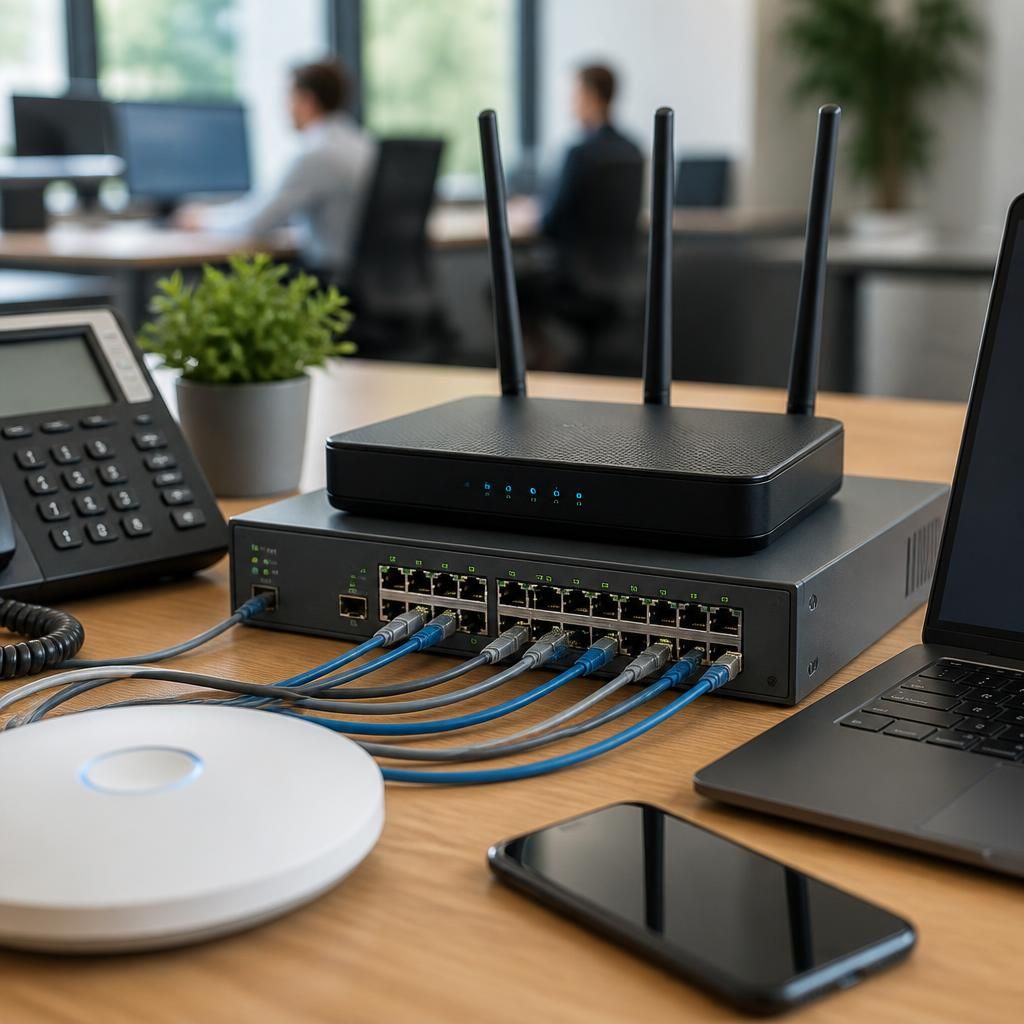
One practical difference between business and residential broadband is the way the connection can be addressed and accessed. Business packages may offer a static public IP address, whereas residential services commonly use an address that can change. A consistent address can simplify site-to-site VPNs, secure remote access and allowlisting for third-party systems, provided those services are configured correctly.
This feature is not included with every business package, and a static IP does not make a connection secure by itself. The organisation should confirm whether the address is public, how many addresses are available, whether inbound traffic is restricted and who manages the firewall rules. If remote access or externally hosted services are important, these requirements should be identified before selecting the broadband service.