How does managed IT support for VoIP handle number porting?
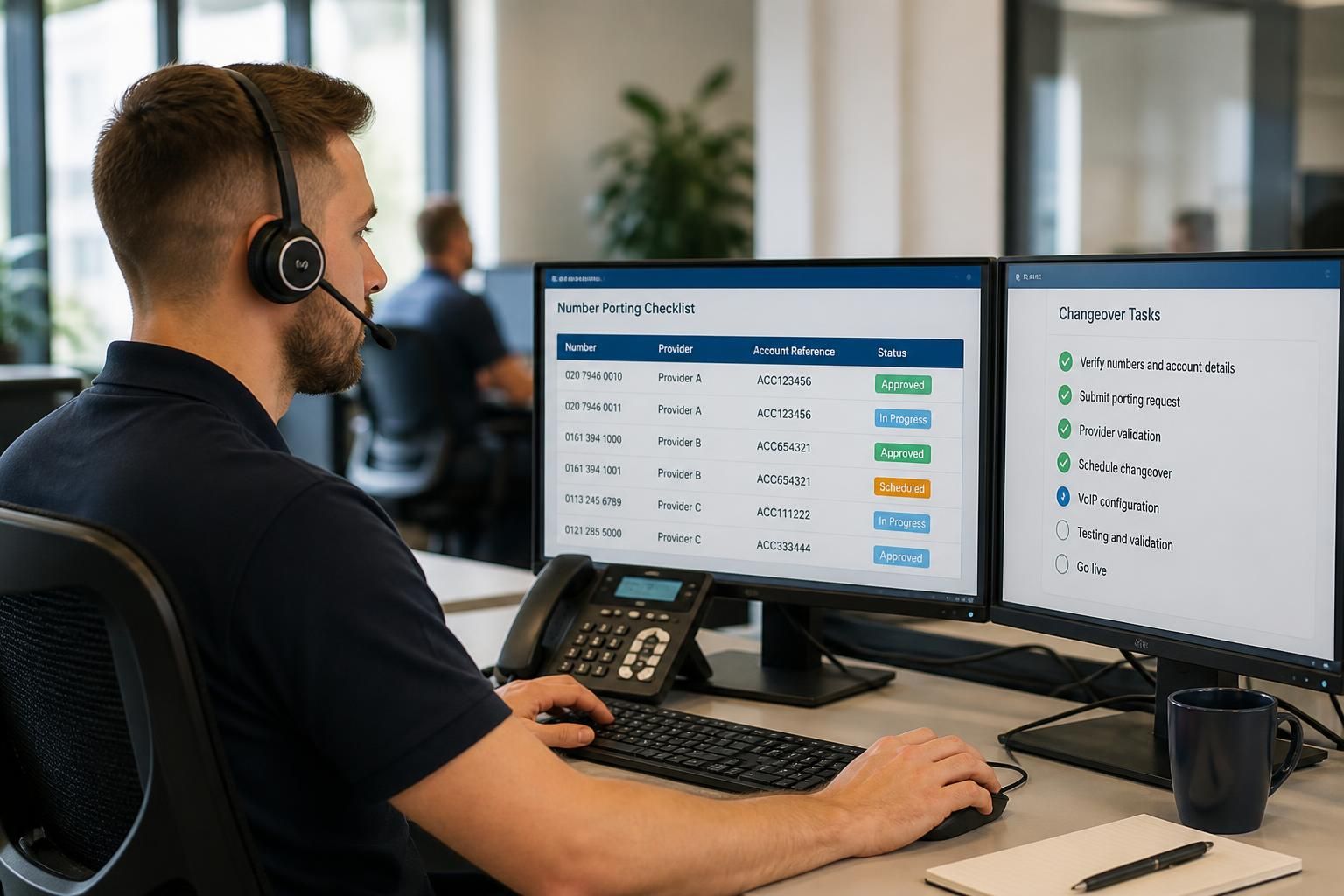
Managed IT support for VoIP coordinates number porting by verifying the numbers and account details, submitting the porting request to the relevant providers, and planning the changeover with the VoIP configuration. It also checks routing and call functionality before and after the transfer to reduce the risk of disruption.
Managed IT support handles VoIP number porting as a controlled transfer of a telephone number from one communications provider to another while preserving the number’s business use. The work combines provider administration, account validation, service planning and technical configuration, because a port can affect direct-dial numbers, main reception lines, hunt groups, call queues, voicemail, caller ID and emergency-service location information.
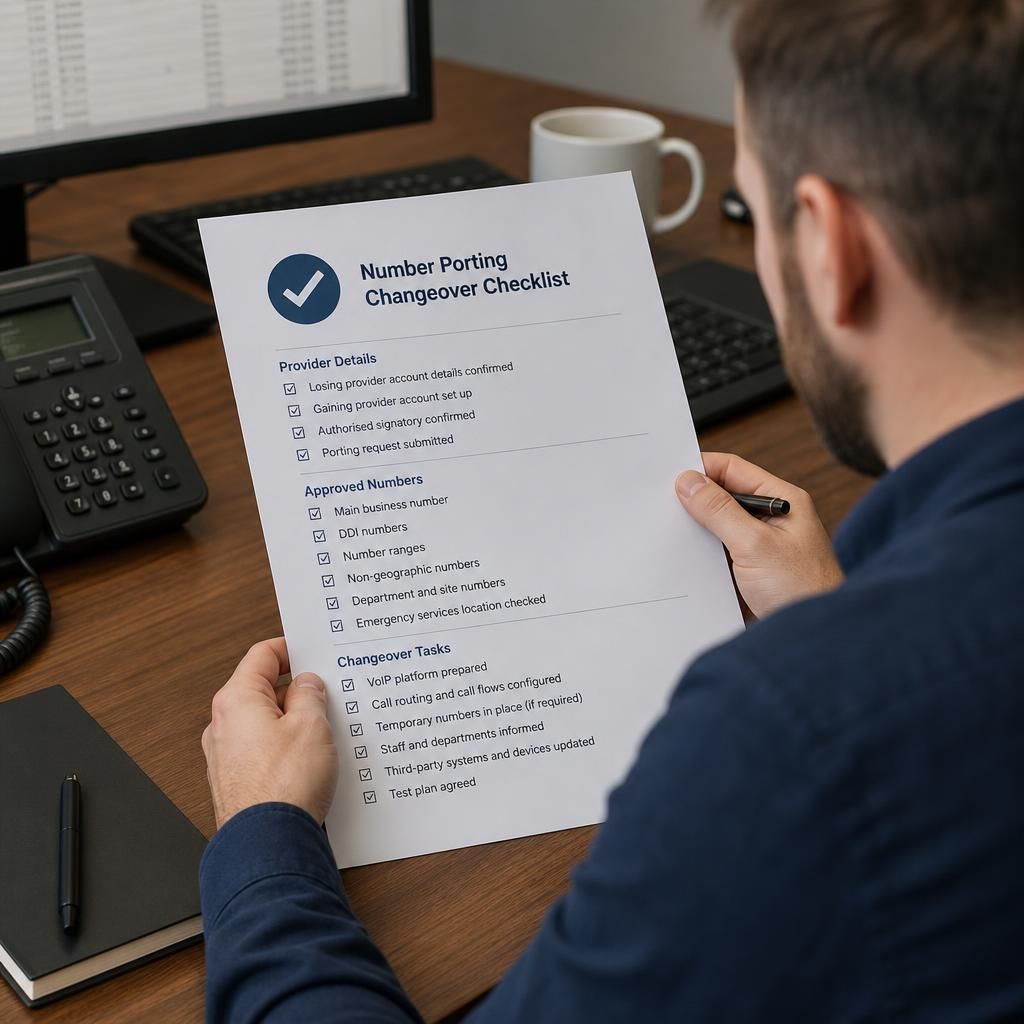
The process usually starts with an inventory of the numbers involved. This should identify the main business number, individual DDI numbers, number ranges, non-geographic numbers and any numbers used by departments, sites or applications. It is also important to record how each number is currently used. A number may appear on stationery and websites while also being linked to an auto-attendant, a call queue or a third-party system. Treating every number as an isolated line can result in incomplete routing after the transfer.
Porting eligibility depends on the number, its current provider and the service arrangement attached to it. Common causes of rejection include an incorrect account reference, a mismatch between the customer’s records and the losing provider’s records, an unsuitable service address, a disconnected number or an existing order that has not completed. Managed support helps identify these issues before the request progresses and keeps the relevant evidence together, such as billing records, account information and confirmation that the organisation is authorised to make the change.
Authorisation and data protection are important parts of the process. The porting request should be made by an authorised representative and should disclose only the information required by the providers. Support teams can maintain a clear record of who approved the transfer, which numbers were included, what documentation was supplied and which changes were agreed. This creates an audit trail and reduces the risk of an unauthorised transfer or an accidental cancellation of a service that still needs to remain active.
Before the port takes place, the VoIP platform needs to be prepared for the incoming numbers. This may involve assigning numbers to users, reception groups, queues, voicemail, interactive menus and location records. Existing temporary numbers may be used during a transition where appropriate, allowing the organisation to configure the new call flows before the permanent numbers arrive. The old service should not be cancelled simply because a new VoIP account has been created; the correct sequence depends on the providers and the services being migrated.
Number porting is not always the same as moving the whole telephone service. A business may transfer its numbers but replace its handsets, softphones, call flows or internet connection separately. Alternatively, it may retain some services with the existing provider while moving only selected numbers. Managed IT support maps these dependencies so that a port does not unintentionally remove broadband, alarm connectivity, payment terminals or another service associated with the original account.
On the agreed change date, the number’s routing is transferred through the communications network. The visible timing and behaviour can vary by provider and number type, so the organisation should have a documented change plan rather than relying on an assumption that every number will move in the same way. The plan should state:
- which numbers and ranges are included;
- which services must remain with the existing provider;
- the intended inbound and outbound routing;
- the people responsible for approving or investigating changes;
- the checks to complete once the transfer has been processed; and
- the conditions under which an unresolved issue is escalated.
Post-port testing should cover more than whether a call reaches one handset. Calls should be placed to the main number, individual DDIs and any published numbers from suitable external networks. The checks can include caller ID presentation, outbound calling, direct routing, queue membership, menu options, voicemail, transfers, forwarding and calls between sites. If emergency calling is provided through the VoIP service, the registered location and the associated routing information should also be checked against the organisation’s actual arrangements.
When a problem is found, support should establish whether it relates to the number transfer, the VoIP platform, the local network or a handset and then provide the relevant evidence to the responsible provider. Useful evidence includes the affected number, time of the test, calling and called numbers, the result observed and any error message. Keeping the old service and related configuration documented makes investigation more controlled, particularly where the organisation is migrating in stages.
After the transfer, the number register and service documentation should be updated. This includes recording the new provider, the assigned users or call flows, any retained services and the agreed administrative contacts. The old account should only be closed after the organisation has confirmed that all required numbers, routing and dependent services are working correctly. Managed IT support therefore treats porting as a documented service transition, not merely a provider form or a switch made on a single day.
Number porting also requires a review of every customer-facing place where a telephone number appears. Transferring the number preserves its identity, but outdated contact details, incorrect call instructions or untested third-party records can still create confusion after the change.
- Check the company website, email signatures, invoices, quotations and printed documents.
- Review contact details held by suppliers, service partners and relevant online business directories.
- Confirm that staff know which numbers have moved and whether reception, departments or individual users have new internal instructions.
- Test any forms, applications or customer-service processes that use the number as a contact or verification method.
Managed IT support can include these communications and records within the porting change plan, giving the organisation a clear list of updates to complete once the transferred numbers are confirmed as working.