

What does IT infrastructure outsourcing include?
IT infrastructure outsourcing typically includes the management and support of an organisation’s devices, networks, servers, cloud services and connectivity. It may also cover proactive monitoring, cyber security controls, data backup, infrastructure upgrades and strategic advice, with the exact scope defined around the business’s operational requirements.
IT infrastructure outsourcing includes the people, processes and technical controls used to operate an organisation’s technology environment on its behalf. The service is broader than fixing faults: it normally defines who manages each part of the infrastructure, how requests and incidents are handled, how access is controlled, and how the environment is reviewed as business requirements change.
The precise scope is set out in an agreement and supporting service documentation. Common elements include:
- Service desk and incident management: a structured route for reporting faults, access issues and service requests, with incidents recorded, prioritised, assigned and tracked through to resolution. The agreement should explain which issues are included, what information the customer must provide and how escalations are handled.
- Routine administration: configuration changes, user and permission administration, account maintenance, policy updates and other recurring technical tasks. These activities keep systems aligned with approved business processes rather than relying on informal, one-off intervention.
- Asset and configuration management: maintaining an accurate record of equipment, software, subscriptions, licences, dependencies and ownership. Configuration information helps the provider understand how services are connected and supports troubleshooting, audits and future planning.
- Identity and access management: managing joiner, mover and leaver processes; applying least-privilege access; reviewing permissions; and supporting stronger authentication controls where appropriate. This is particularly important when staff work across multiple locations or use hosted services.
- Patch and vulnerability management: assessing available updates, testing where necessary, scheduling deployment and investigating systems that cannot be updated. The process should account for compatibility, operational risk and unsupported software, rather than treating every update as an automatic change.
- Endpoint and equipment lifecycle management: planning the provisioning, replacement, secure disposal and standardisation of workstations and other business equipment. It can also include maintaining approved configurations so that newly deployed devices are consistent with the organisation’s requirements.
- Capacity and performance management: examining resource use, storage, processing demand and service dependencies to identify constraints before they affect operations. This provides evidence for infrastructure planning and helps determine when a design or service needs to change.
- Documentation and reporting: keeping technical diagrams, operating procedures, inventories, risk records and change histories up to date. Regular reports may summarise incidents, outstanding risks, completed work and recommended actions, giving the customer a basis for governance decisions.
- Business continuity support: documenting recovery responsibilities, dependencies and restoration procedures, then helping to validate whether the arrangements remain suitable. Continuity planning is not simply the existence of copies of data; it also concerns the systems, access and processes needed to resume critical operations.
- Supplier and licence coordination: managing relevant technology suppliers, renewals, support contracts and licensing information where this responsibility is included. The agreement should make clear whether third-party charges are included in the service or billed separately.
Outsourcing may be comprehensive or limited to selected infrastructure layers. For example, an organisation might outsource technical administration while retaining ownership of policy, procurement and information security decisions. Another may transfer day-to-day management but keep application support with an internal team or specialist supplier. The boundaries should identify dependencies between infrastructure, business applications, telecommunications, premises and internal responsibilities.
A well-defined scope also separates included work from chargeable projects and excluded services. It should address ownership of equipment and data, approved maintenance methods, access to administrative accounts, documentation standards, change approval, subcontractor use, data handling and the process for returning information when the arrangement ends. These details prevent routine support, project work and emergency remediation from being treated as the same activity.
For a small or medium-sized organisation, the practical value of outsourcing is usually the combination of operational administration and structured oversight. S2 Technology Group can shape outsourced IT infrastructure support around the systems and working practices of businesses in and around Stourbridge, rather than applying an identical scope to every organisation. The appropriate package depends on the technologies in use, regulatory obligations, internal capability and the degree of control the business wishes to retain.
A complete IT infrastructure outsourcing arrangement usually includes the transition into managed service, not just the ongoing administration that follows. This initial phase establishes an accurate baseline of the organisation’s technology, confirms responsibilities and identifies issues that could affect reliable support.
- Discovery and validation: the provider reviews the existing environment, including infrastructure dependencies, administrative access, support arrangements and known risks.
- Service transition: relevant information, credentials, monitoring requirements and operational procedures are transferred securely. Gaps in documentation or ownership are recorded rather than assumed away.
- Baseline and priorities: the provider distinguishes routine management from remediation or improvement work, then agrees which actions require approval as projects or separate changes.
- Operational handover: support routes, escalation responsibilities and reporting arrangements are confirmed so that the outsourced service can be managed consistently.
This transition work is important because inherited infrastructure may contain unsupported systems, undocumented dependencies or inconsistent configurations. Identifying those conditions at the outset helps define what the outsourced service includes and prevents pre-existing issues from being confused with failures in ongoing service management.
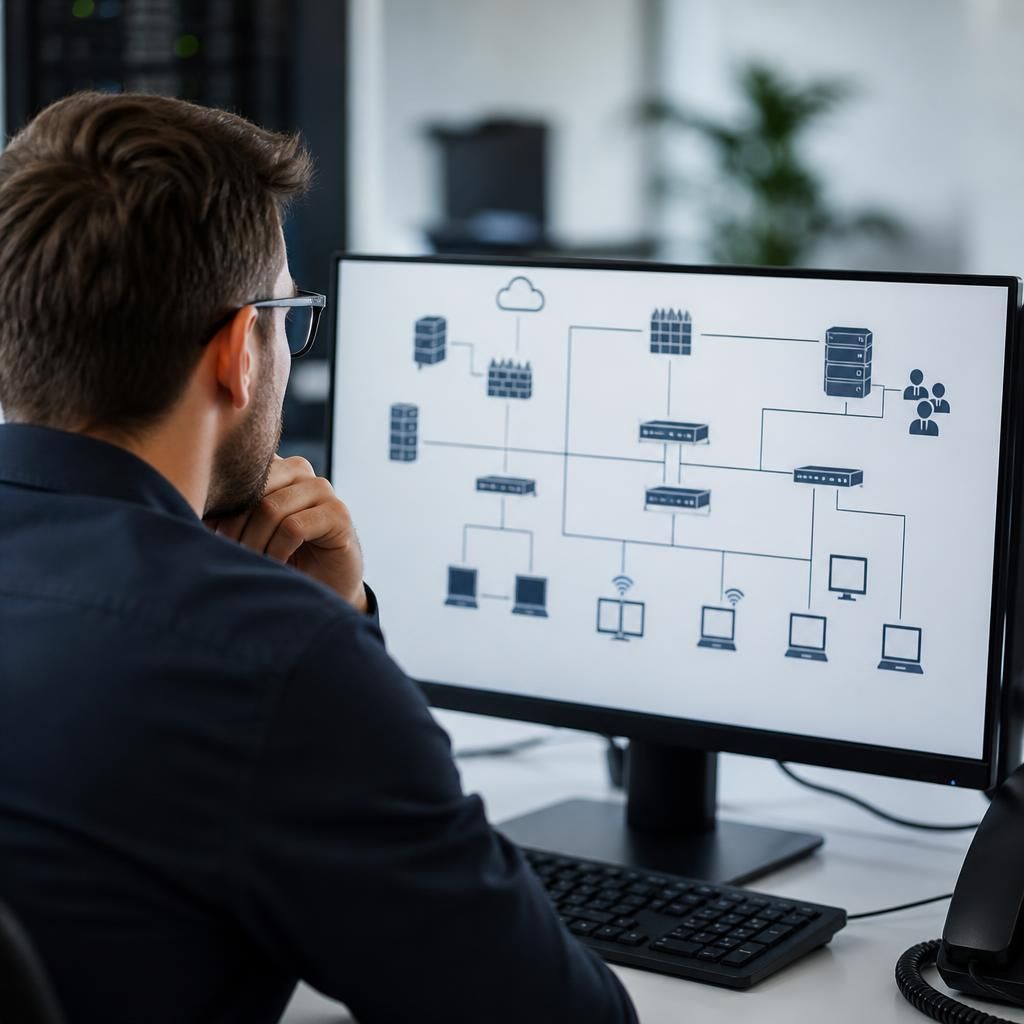
Discuss What IT Infrastructure Outsourcing Should Include
If you are assessing whether infrastructure outsourcing fits your organisation, speak to S2 Technology Group about defining the right scope, responsibilities and service boundaries. A practical discussion can help identify which infrastructure functions should remain internal and which could be managed externally.