
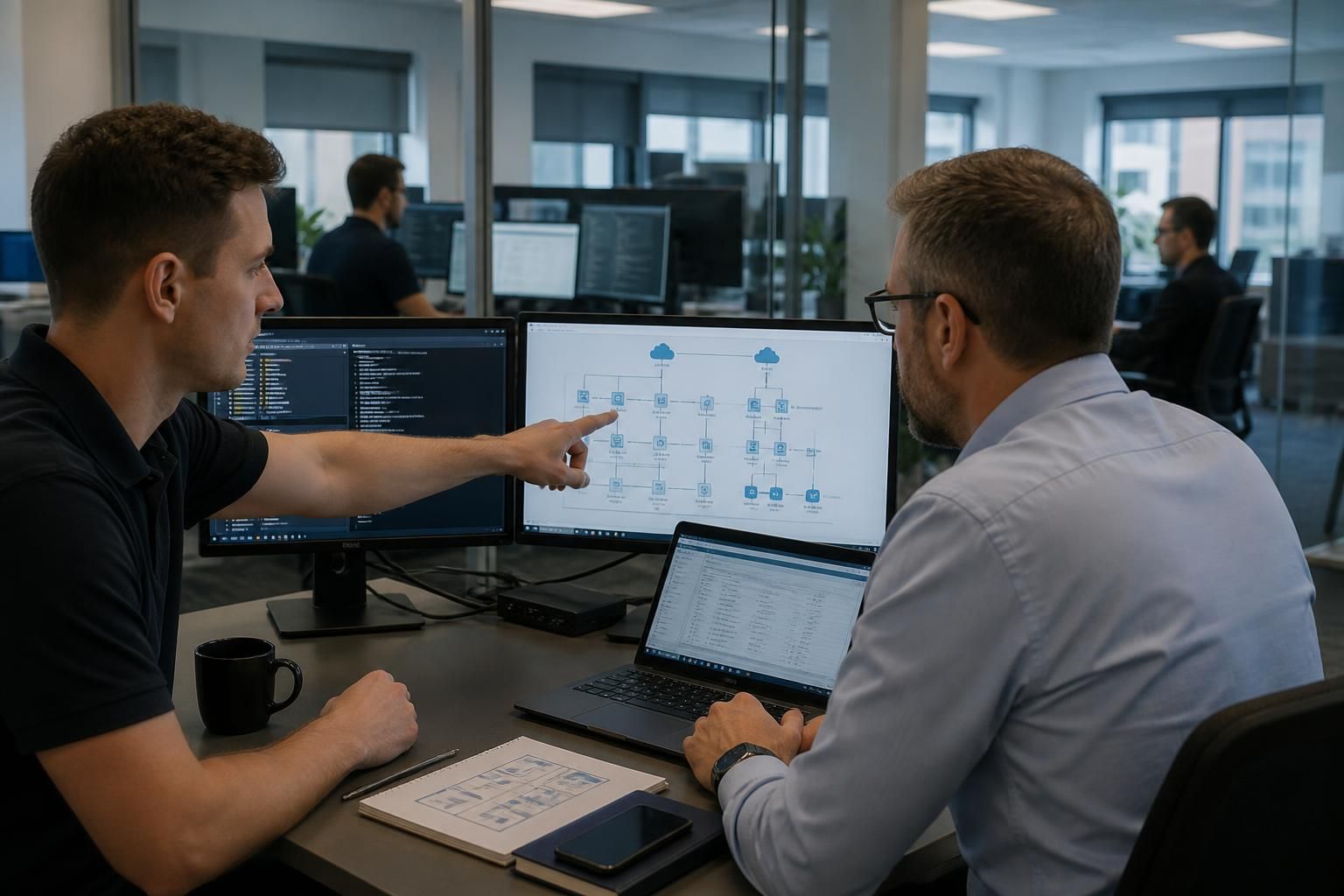
Can local IT support work alongside an existing IT team?
Yes. A local IT support provider can work alongside an existing IT team through a co-managed arrangement, with responsibilities clearly divided so internal staff retain control while the provider contributes specialist expertise, proactive support or additional capacity where needed.
Working with an existing IT team is most effective when the organisation defines which responsibilities remain internal and which are assigned to the external provider. The arrangement should be designed around capability, capacity, risk and business priorities, rather than treating the provider as a replacement for the in-house function.
Several operating models are possible:
- Specialist support: the internal team manages day-to-day technology while the provider contributes expertise in areas such as cyber security, cloud platforms, infrastructure or business connectivity.
- Capacity support: the provider takes on an agreed portion of routine work, allowing internal staff to focus on projects, users or strategic improvements.
- Shared service ownership: both teams manage defined parts of the environment, such as internal staff handling applications while the provider manages networks, security controls or cloud infrastructure.
- Project-based assistance: the provider supports a particular upgrade, migration, security improvement or infrastructure change without taking responsibility for the wider IT function.
The right model depends on the existing team’s skills, the complexity of the technology estate and the level of control the business wants to retain. A written responsibility matrix is useful because it identifies the owner, contributor and escalation point for each important service. It should cover user support, endpoint management, identity and access, networks, servers, cloud services, backups, security monitoring, supplier management and technology projects.
Incident handling needs particular attention. Staff should know where to report different types of issue, and both teams should use an agreed process for categorising, assigning and escalating tickets. Without this clarity, requests can be duplicated, passed between teams or left unresolved because each assumes the other is responsible. The process should also explain who communicates with users, who approves technical changes and who reviews incidents that indicate a wider problem.
Access to systems should be limited to the duties each team performs. External engineers may need administrative access to investigate or maintain systems, but that access should be individually assigned, protected with strong authentication and reviewed periodically. Shared administrator accounts make accountability difficult and should generally be avoided. The business should also agree how access is granted, recorded, changed and removed when responsibilities change.
Technology management tools must support the arrangement rather than create separate versions of the truth. Where practical, both teams should work from compatible service records, asset information, monitoring data and documentation. If separate tools are necessary, the parties should define how information is synchronised and which record is authoritative. This is particularly important for device ownership, network diagrams, backup status, licences, supplier details and known technical risks.
Change management should remain coordinated even when different teams implement changes. A simple approval process can record the proposed change, its purpose, affected services, testing requirements, rollback plan and owner. This reduces the risk of one team altering a configuration that another team depends on. Significant changes should be reviewed jointly, while routine low-risk work can follow a lighter process.
The arrangement should include a regular service review. These reviews are not limited to ticket volumes; they can examine recurring faults, unresolved risks, security events, ageing equipment, backup findings, capacity concerns and progress against agreed projects. The purpose is to identify where the division of work is functioning well and where responsibilities, resources or controls need to be adjusted.
Documentation is another important safeguard. The provider and internal team should record the current configuration, dependencies, approved standards and recovery procedures in a shared, controlled location. Documentation should be updated as part of normal work rather than left until a project or personnel change exposes a gap.
A well-defined arrangement can give an internal IT team access to additional expertise without removing its knowledge of the organisation or its influence over technology decisions. S2 Technology Group supports businesses around Stourbridge, Kinver, Wordsley, Kingswinford, Kidderminster, Halesowen, Dudley and neighbouring areas by contributing managed IT, cyber security, cloud and connectivity expertise where it fits the organisation’s existing responsibilities.
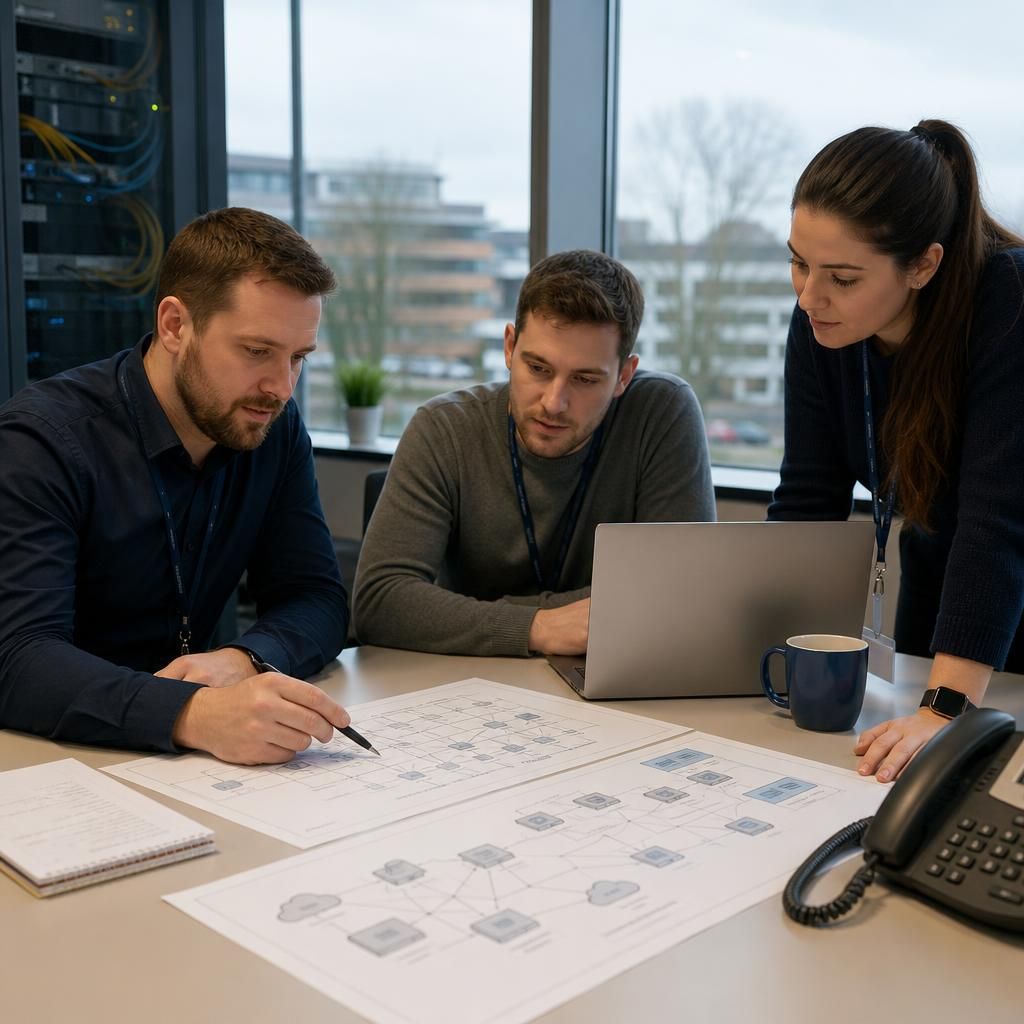
A phased introduction can help an existing IT team assess whether an external provider adds value without changing the whole support model at once. The business can begin with one defined workstream, such as a cloud migration, security review or network improvement, while the internal team retains responsibility for the wider environment.
Before the work starts, agree the scope, decision-making authority, information the provider needs and how the teams will assess the arrangement. After the initial work, review whether the collaboration improved access to specialist knowledge, reduced pressure on internal staff or exposed any gaps in ownership. The scope can then be extended, revised or ended on the basis of evidence rather than assumption.