How is remote IT support performance measured?
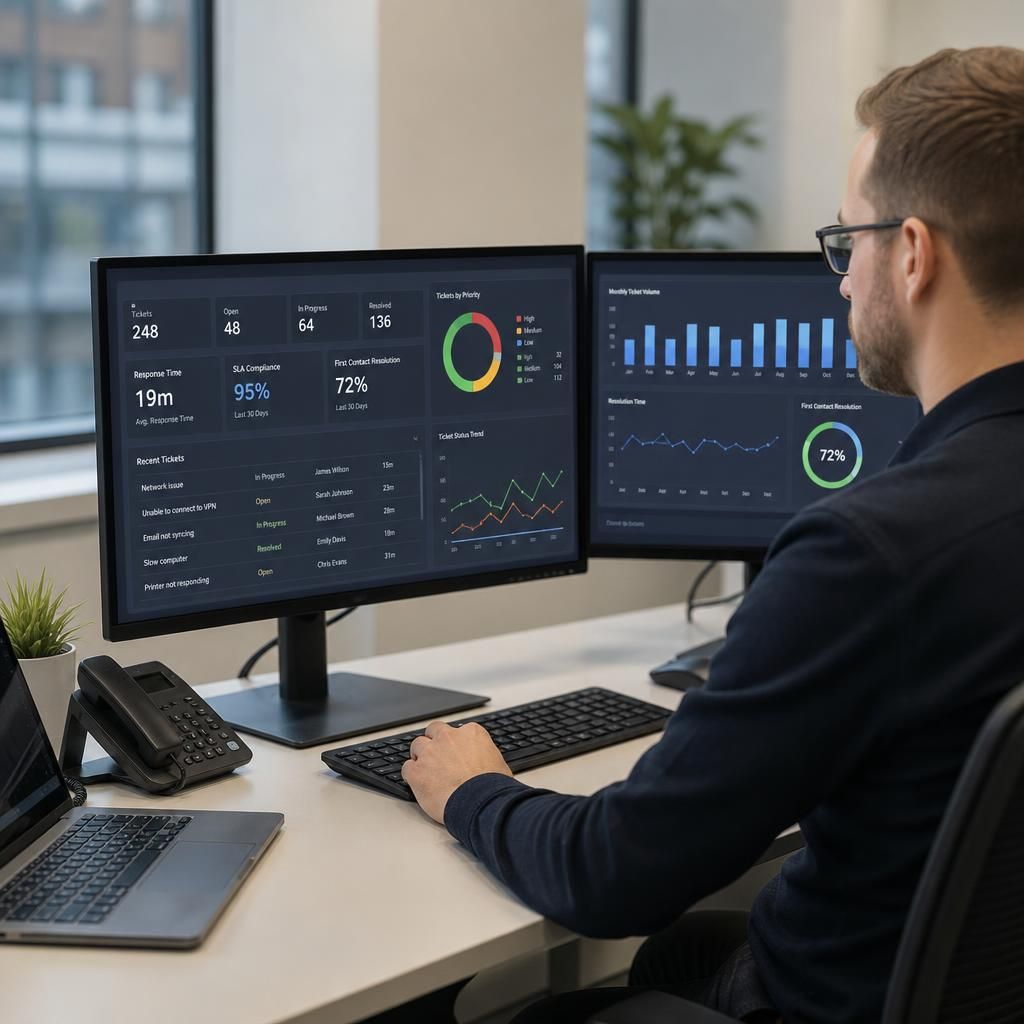
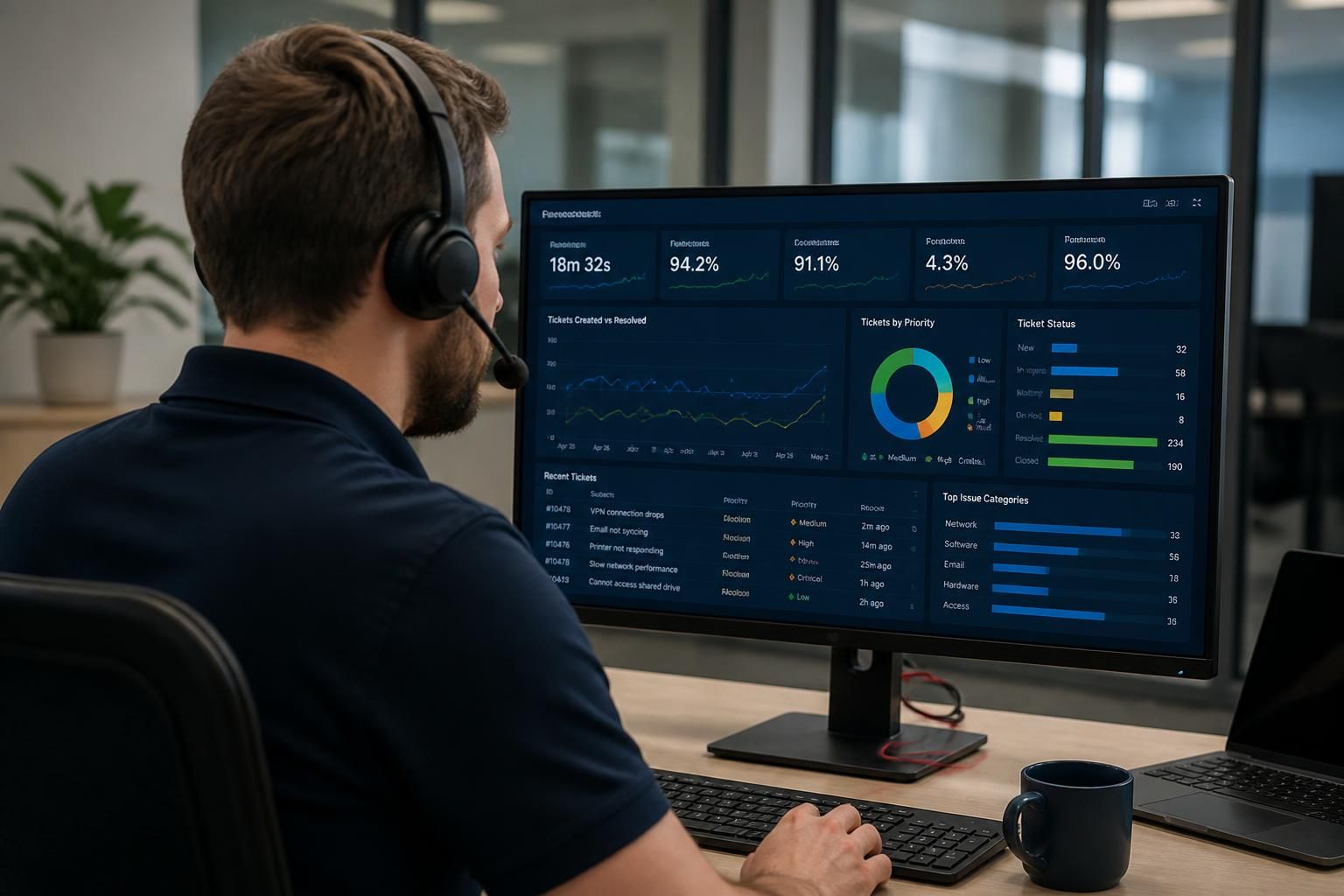
Remote IT support performance is measured using operational metrics such as response times, resolution rates, first-contact resolution, ticket backlogs and adherence to agreed service levels. User satisfaction feedback and recurring-issue trends add context, showing whether support is resolving problems effectively and improving service quality over time.
Remote IT support performance is measured effectively by combining service data with evidence of technical quality, security, consistency and business impact. A useful measurement framework shows not only how much work the support function handles, but whether remote interventions are accurate, properly controlled and producing a stable technology environment.
Measurement normally begins with clear definitions. The organisation and its IT provider should agree what counts as a support request, an incident, a service request, a major issue and a completed task. Priority categories should reflect business impact rather than simply the order in which tickets arrive. This creates a consistent basis for comparing similar cases and prevents performance reports from being distorted by different interpretations of the same event.
Reliable reporting depends on complete and accurate records. Data may be drawn from ticketing systems, remote monitoring tools, endpoint management platforms, authentication logs and change records. A useful record should show the device or service affected, the actions taken, the person or team responsible, the outcome and any follow-up required. Missing categories, inaccurate timestamps or tickets closed without meaningful notes can make otherwise detailed reports misleading.
Technical quality should be assessed alongside activity levels. Relevant checks include:
- whether the underlying cause was identified rather than only the visible symptom;
- whether the chosen fix was appropriate for the device, application or network service;
- whether the technician followed the approved troubleshooting and change process;
- whether the user received clear instructions about any action still required;
- whether the solution remained effective after the intervention; and
- whether support records were sufficiently detailed for another technician to understand the work.
Remote support also needs measures for operational control. Access should be granted only to authorised technicians, limited to the systems needed for the task and recorded in an audit trail. Performance reporting can therefore examine the use of privileged access, adherence to authentication requirements, closure of remote sessions and handling of sensitive information. A fast technical action is not a good outcome if it creates an avoidable security or compliance risk.
Changes made during a support session should be assessed separately from ordinary troubleshooting. Useful indicators include the proportion of changes completed with an approved record, the number requiring rollback, the effect on dependent services and whether documentation or configuration records were updated. This helps distinguish productive engineering work from repeated corrective work caused by poorly controlled changes.
For organisations with many devices or locations, coverage and consistency are important. Reports can compare the state of managed endpoints, operating system versions, security controls, monitoring coverage and configuration standards across groups. Differences between offices, departments or device types may indicate an asset-record problem, a deployment gap or a process that works in one environment but not another. These comparisons are more informative than a single organisation-wide figure.
Business impact provides another layer of interpretation. A technical issue affecting a shared file service, production system or customer-facing process should be assessed differently from an inconvenience affecting one individual device. Useful evidence may include the effect on work being carried out, dependencies between systems and whether temporary workarounds were needed. This ensures that reporting reflects operational importance rather than simply counting technical tasks.
Reports should segment information by priority, service, location, device type and issue category where the data supports it. Trends can then be reviewed over an agreed period to identify changes in workload, control quality or system stability. Results should be explained with context: a rise in support activity may reflect a planned technology change, a new application or improved reporting rather than weaker support performance.
Good governance also tests whether the measures themselves encourage the right behaviour. Closing work prematurely, splitting one issue into several records or prioritising simple tasks over important complex work can make a dashboard look favourable without improving service. Measures should therefore be reviewed against ticket notes, audit evidence and feedback from the people responsible for affected business processes.
For a managed IT provider such as S2 Technology Group, performance reviews can use this combination of operational records, technical checks, security evidence and business context to identify practical improvements. The aim is to make remote support measurable, comparable and accountable while ensuring that reporting leads to better processes rather than a focus on figures alone.
Remote IT support performance is measured more accurately when user experience is assessed alongside technical and operational results. A ticket may be resolved correctly, yet still indicate a service weakness if the user was not told what changed, did not understand the workaround or had difficulty getting the issue recognised.
Useful feedback can be collected after support work is completed and reviewed alongside the relevant ticket. Questions should focus on specific aspects of the interaction, such as:
- whether the issue was understood and explained clearly;
- whether the user knew what action, if any, was required;
- whether the support process was straightforward;
- whether the solution addressed the original difficulty; and
- whether further assistance was needed for the same problem.
Feedback should be interpreted rather than treated as an isolated score. Comments can reveal unclear guidance, repeated user confusion or problems with a particular application or device type. Comparing these themes with support records helps determine whether an apparent performance issue relates to communication, technical diagnosis or an underlying service problem. For S2 Technology Group, this provides an additional way to assess remote support quality for businesses around Stourbridge and neighbouring areas.