How are third-party dependencies managed within managed IT support services?
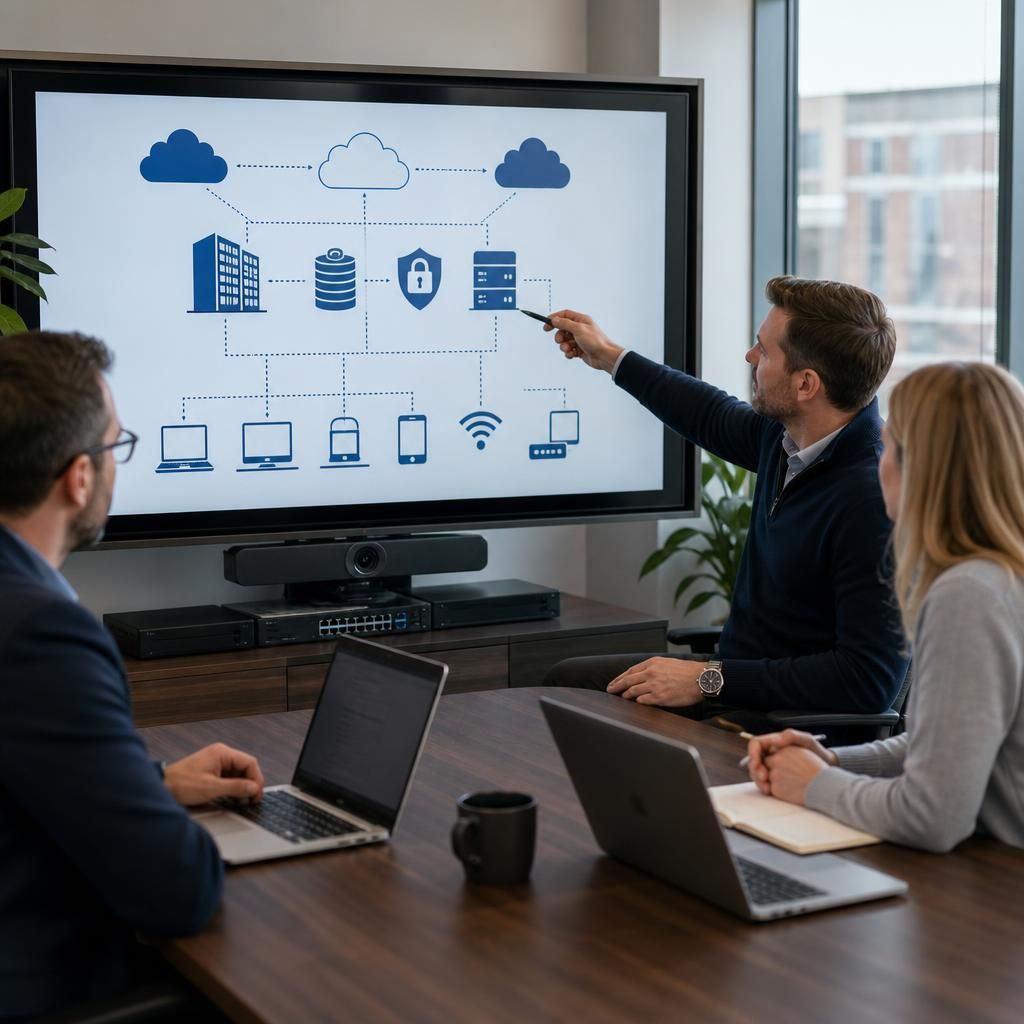
Managed IT support services manage third-party dependencies by identifying the external platforms, suppliers and connections the business relies on, then documenting ownership, access, responsibilities and escalation routes. Regular reviews, supplier coordination, security checks and contingency planning help reduce the risk that a third party disrupts IT operations or introduces a vulnerability.
Third-party dependency management is an ongoing control process that governs how external suppliers, hosted platforms and connected services are selected, configured, monitored and replaced. Within managed IT support, the objective is to ensure that a supplier’s failure, security weakness or unplanned change does not create an unmanaged risk for the organisation.
A practical approach normally starts by assessing each dependency according to its business importance. A service supporting core operations requires more scrutiny than a tool used for a non-essential task. The assessment should consider:
- Which business processes would be affected if the service became unavailable or unreliable
- What information the supplier stores, processes or can access
- Whether the service connects to internal systems, user accounts or other suppliers
- How difficult the service would be to replace
- What recovery, export or alternative arrangements are available
This classification helps the IT provider apply proportionate controls rather than treating every supplier in the same way. Critical dependencies may require more frequent reviews, stronger authentication controls, clearer recovery procedures and closer attention to supplier assurance information.
Access and identity controls are particularly important. External providers may need administrative access, application programming interfaces or privileged accounts to deliver their service. Managed IT support should ensure that access is limited to what is necessary, assigned to named individuals where possible and removed when it is no longer required. Multi-factor authentication, separate administrative accounts and periodic access reviews reduce the chance that a compromised supplier account can be used to enter the wider environment.
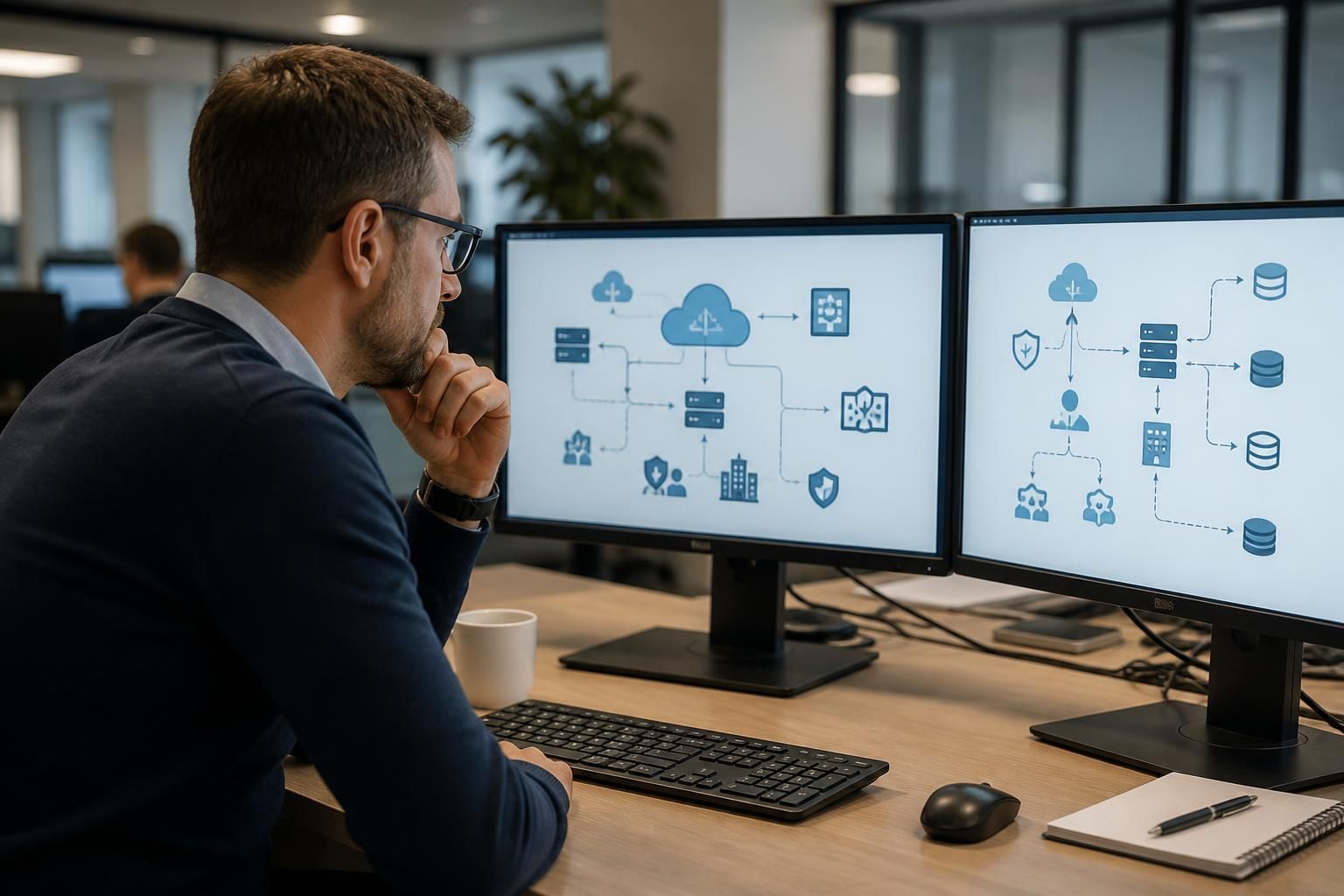
Connections between systems also need to be understood at a technical level. This includes data flows, firewall rules, synchronisation services, authentication links and automated integrations. An apparently minor change to one platform can affect another if systems share credentials, data or network access. Reviewing these relationships before changes are approved helps prevent failures caused by an overlooked integration.
Supplier changes are managed through coordination rather than isolation. The managed IT provider may need to confirm the proposed change, assess its effect on the organisation, check dependencies with other services and agree suitable testing or rollback arrangements. This is especially relevant when a supplier changes an authentication method, retires a feature, alters licensing, moves data between environments or introduces a new connection.
Supplier assurance is another part of the process. Depending on the service, relevant evidence may include security policies, independent assurance reports, vulnerability management information, data-processing terms, backup arrangements and details of how incidents are communicated. This evidence does not remove the organisation’s responsibility for its own configuration, user permissions or data-handling decisions, but it provides a basis for judging whether the supplier’s controls remain appropriate.
Contracts and service descriptions should make responsibilities clear. They may define who maintains the platform, who manages user access, who investigates faults, how incidents are escalated, what information is provided after a security event and how data is returned when the relationship ends. A supplier’s service commitment should not be treated as a substitute for the organisation’s own continuity planning; the business still needs to understand its operational impact and available alternatives.
Incident management should include a supplier-specific route. When an issue involves an external service, the support team needs enough information to distinguish a local configuration problem from a supplier outage, integration failure or security incident. The response process should set out what evidence to collect, which party leads each investigation, how affected users are identified and how temporary workarounds are authorised. This avoids delays caused by uncertainty over ownership.
Resilience planning should also consider what happens if a third party cannot provide its service. Options may include manual procedures, an alternative communication method, locally retained data, independent backups or a replacement service. These measures should be tested where practical, because a documented fallback that has never been checked may not work when it is needed. Particular attention is warranted for single-supplier dependencies and services that do not support straightforward data export.
Reviews should be triggered by more than a calendar date. A meaningful review may follow a major supplier change, a security incident, a change in business operations, the introduction of a new integration or a change in the sensitivity of the information being processed. Review records should show what was examined, what risks were identified, which actions were agreed and who owns those actions.
For a small or medium-sized organisation, this approach provides a structured way to manage risks that may otherwise be dispersed across software providers, connectivity suppliers, cloud services and specialist applications. The managed IT provider can help maintain the control framework, but the business should retain clear ownership of its risk decisions, contractual obligations and acceptable recovery options.
Third-party dependency management should also account for fourth-party dependencies: the suppliers and platforms that an organisation’s direct provider relies on. A hosted application, for example, may depend on another company for cloud infrastructure, payment processing, identity services or data storage. An outage or security issue at that underlying provider can affect the service even when the direct supplier remains operational.
Managed IT support can help identify these indirect dependencies by reviewing supplier information, service descriptions and sub-processor arrangements. The review should establish:
- which important functions are delivered through another provider
- where business data is stored or processed across the supply chain
- how incidents or service changes at an underlying provider are communicated
- whether the direct supplier has suitable oversight of its own providers
- which dependencies could create a common point of failure across several services
This gives the business a more accurate view of its technology risk. It also helps distinguish a supplier that can be changed independently from one that is embedded in a wider chain of providers, where recovery options and replacement decisions may require more careful planning.