
How does an IT outsourcing company control privileged access?
An IT outsourcing company controls privileged access by granting administrative permissions only to authorised people for defined tasks and limited periods. Secure controls such as multi-factor authentication, separate administrator accounts, approval processes, activity logging and regular access reviews help prevent misuse and identify unauthorised activity.
An IT outsourcing company controls privileged access through a documented governance process that defines who can administer systems, which resources they can reach, how credentials are protected and how exceptional access is handled. The objective is to reduce the consequences of a compromised account, prevent unnecessary changes and maintain clear accountability for administrative activity.
Effective control starts with an inventory of privileged identities and technical pathways. This includes administrator accounts, cloud management roles, remote support tools, server credentials, network devices, databases, backup platforms, security systems and service accounts used by applications. The outsourcing company should be able to distinguish human users from automated identities and identify which systems each identity can affect.
Access should then be designed around job responsibilities rather than convenience. A technician responsible for user administration does not necessarily need permission to alter firewall rules, access financial systems or manage backups. Role-based access models reduce the number of permissions assigned to any one person and make changes easier to review when responsibilities move between teams.
- Credential protection: privileged passwords should be stored in a controlled password vault rather than shared through email, documents or chat. The vault can restrict retrieval, protect credentials at rest and support controlled rotation.
- Administrative workstations: high-risk tasks should be performed from managed devices with appropriate security controls, rather than from unmanaged personal computers or ordinary browsing environments.
- Network separation: management interfaces can be isolated from general user traffic, limiting the routes through which an attacker could reach administrative systems.
- Session safeguards: remote administrative sessions can be restricted by source device, destination, protocol and command capability. For sensitive environments, session recording or command-level oversight may also be appropriate.
- Credential lifecycle management: passwords, keys, tokens and certificates need defined ownership, expiry and replacement procedures. Old credentials should be disabled when they are no longer required.
Service accounts require particular care because they may operate without a person signing in. Each account should have a named owner, a documented purpose and only the permissions needed by its application or process. Unused service accounts, embedded passwords and credentials that never change create persistent routes into an environment. Where practical, secrets should be retrieved securely by the application instead of being hard-coded into scripts or configuration files.
An outsourcing arrangement should also define how access is managed when people join, change roles or leave. The provider and client need an agreed responsibility matrix covering employees, contractors and any other external parties. Removing a person from a project is not enough if their account still belongs to a wider support platform, a shared vault or a client environment. Access to connected tools and delegated administration roles must be included in the removal process.
Emergency access needs its own procedure rather than becoming an informal shortcut. A sealed or separately controlled emergency account may be appropriate for situations where ordinary administration routes are unavailable. Its use should require a recorded reason, be limited to the incident, and trigger a follow-up review to confirm what was changed and whether normal controls have been restored.
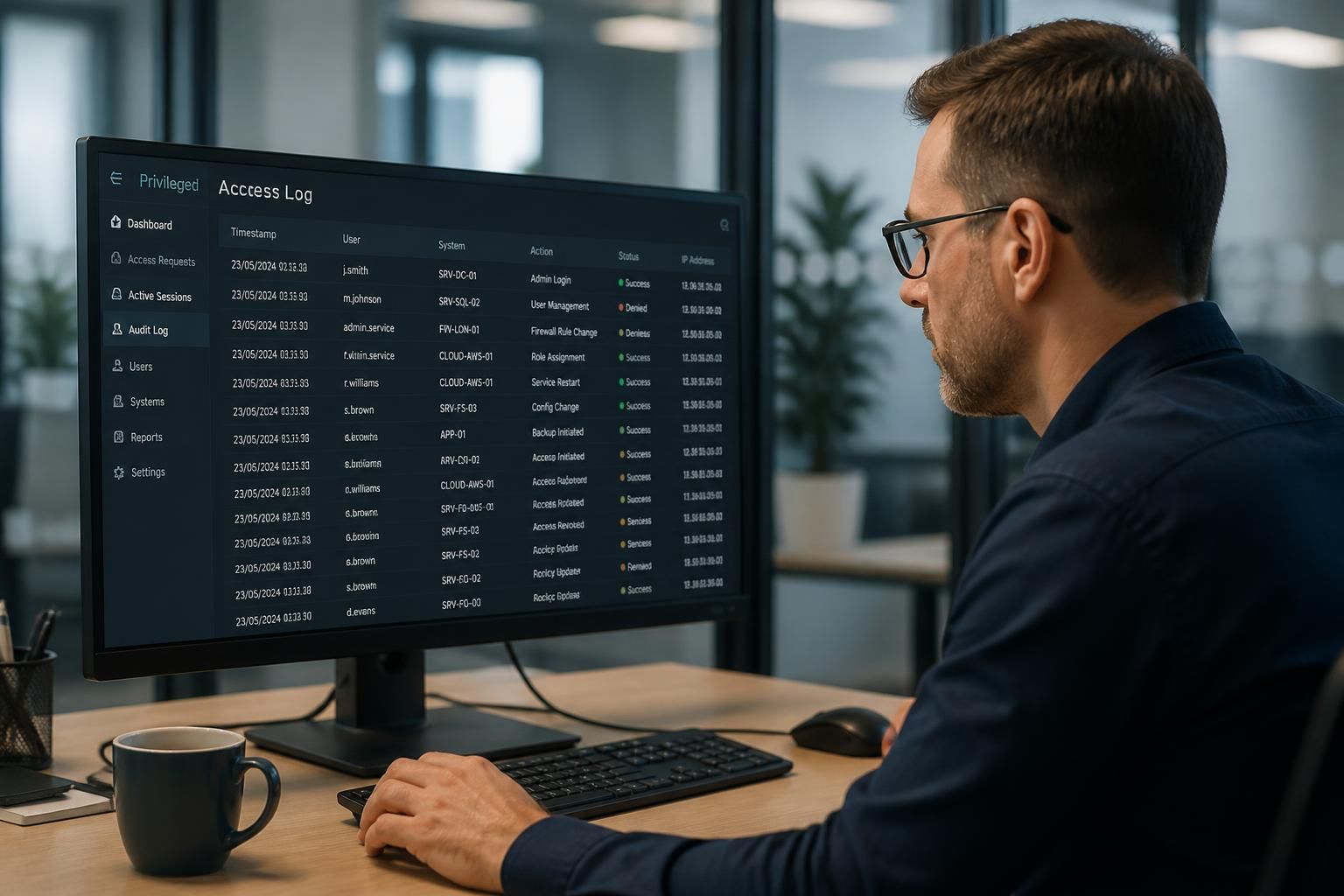
Monitoring is most useful when it supports investigation and accountability, not merely data collection. Records should connect an administrative action to a specific identity, system, time and reason. They should be protected from alteration and retained for a period agreed with the client and aligned with legal, contractual and security requirements. Alerts can then focus attention on unusual patterns, such as access to systems outside a person’s normal responsibilities, unexpected changes to security settings or attempts to use disabled credentials.
The contract and operating procedures should explain which organisation owns each part of the control framework. The client may retain authority over business-critical systems and approval of high-impact changes, while the IT outsourcing company may operate the access platform and carry out day-to-day administration. Without clear ownership, a provider can assume the client is reviewing access while the client assumes the provider is doing so.
Businesses assessing an outsourcing company should ask for evidence of its privileged access process rather than relying on a general statement that access is secure. Useful evidence may include a current access register, role definitions, identity lifecycle records, service-account ownership, emergency-access records and examples of how access exceptions are reviewed. The aim is to confirm that privileged access is treated as a controlled operational process with defined ownership, not as a collection of administrator passwords.
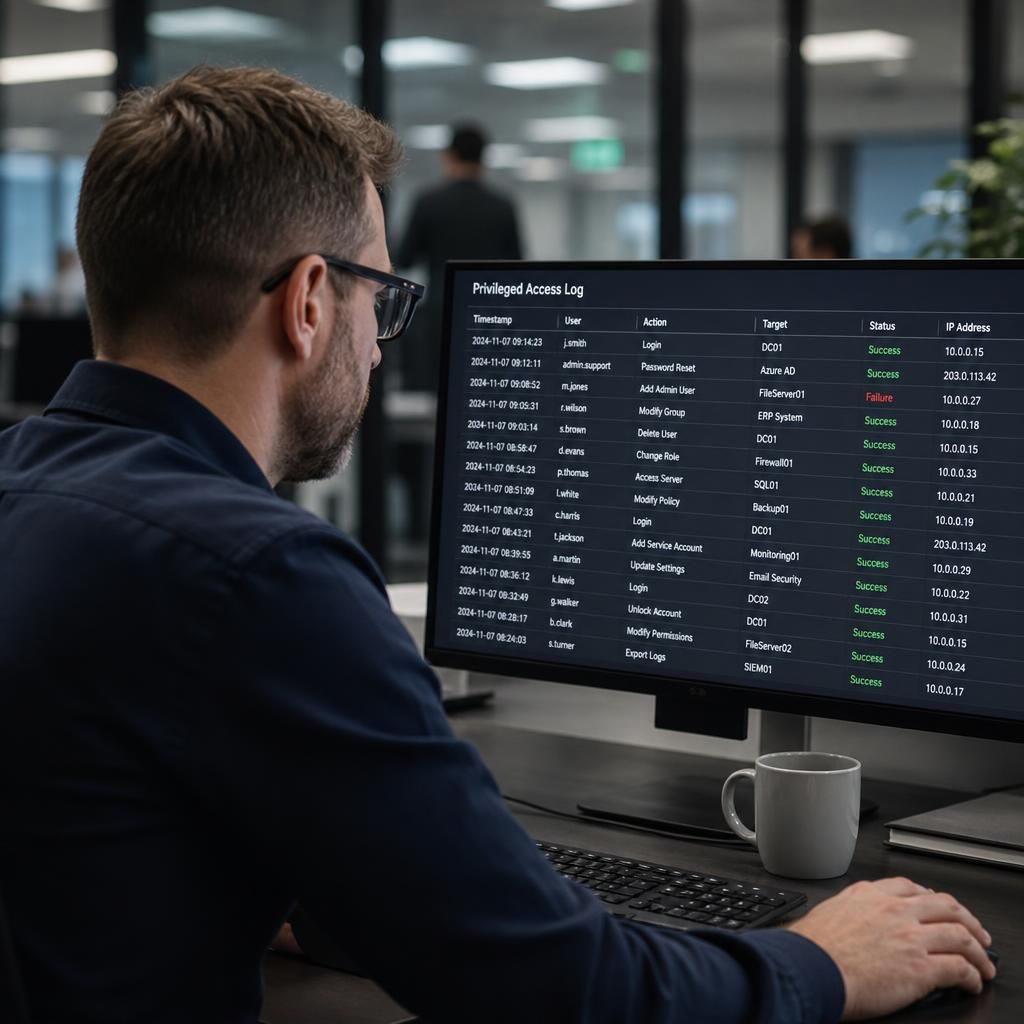
Separation of duties adds an independent check to privileged access. The person who carries out a high-impact administrative action should not always be the only person who approves and verifies it. For example, a change to identity settings, backup protection or network security may require approval from an authorised client contact, followed by review of the completed work by another suitably authorised technician.
This arrangement reduces the risk of an individual making an unauthorised change without detection and helps identify mistakes before they affect other systems. The check should cover the original request, the permission used, the systems changed and the final configuration. For particularly sensitive actions, two-person authorisation or a documented client approval may be appropriate, with the resulting evidence retained alongside the change record.