What should an IT support service include?
An effective IT support service should include proactive maintenance, user assistance, infrastructure management, cyber security, cloud support, data protection and business connectivity. It should also provide clear processes for managing incidents, access, technology changes and ongoing improvements in line with the organisation’s needs.
An effective IT support service should combine a defined operating model with dependable technical expertise, clear accountability and useful information for decision-making. It is not simply a means of contacting someone when a device stops working. A well-designed service establishes what is supported, how work is recorded and assessed, who owns each responsibility, and how technology decisions are linked to business requirements.
A clearly defined service scope
The agreement should explain which users, sites, devices, systems and suppliers are included. It should also identify exclusions, third-party responsibilities and any charges that fall outside the agreed service. This prevents uncertainty when a problem involves a hosted application, telecommunications provider, specialist equipment or a system managed by another organisation.
The scope should distinguish between routine operational support and project work. For example, resolving a configuration issue may be part of the service, while replacing an entire network or moving to a new platform may require a separately planned engagement. Responsibilities should be documented in plain language so that the business understands what it can expect from the provider and what it must manage itself.
A controlled service desk
There should be a consistent method for recording requests, faults and questions. A suitable service desk process normally includes:
- a unique record for each item of work;
- classification by service, affected users and business impact;
- an agreed priority model for distinguishing routine requests from significant disruption;
- ownership of the issue through to resolution or an agreed handover;
- escalation to the appropriate technical specialist when first-line investigation is insufficient; and
- a record of the diagnosis, action taken and final outcome.
This information creates a reliable history rather than relying on informal messages or individual memory. It also makes it possible to identify repeated faults and determine whether a permanent technical change is more appropriate than repeated short-term fixes.
Accurate technical records
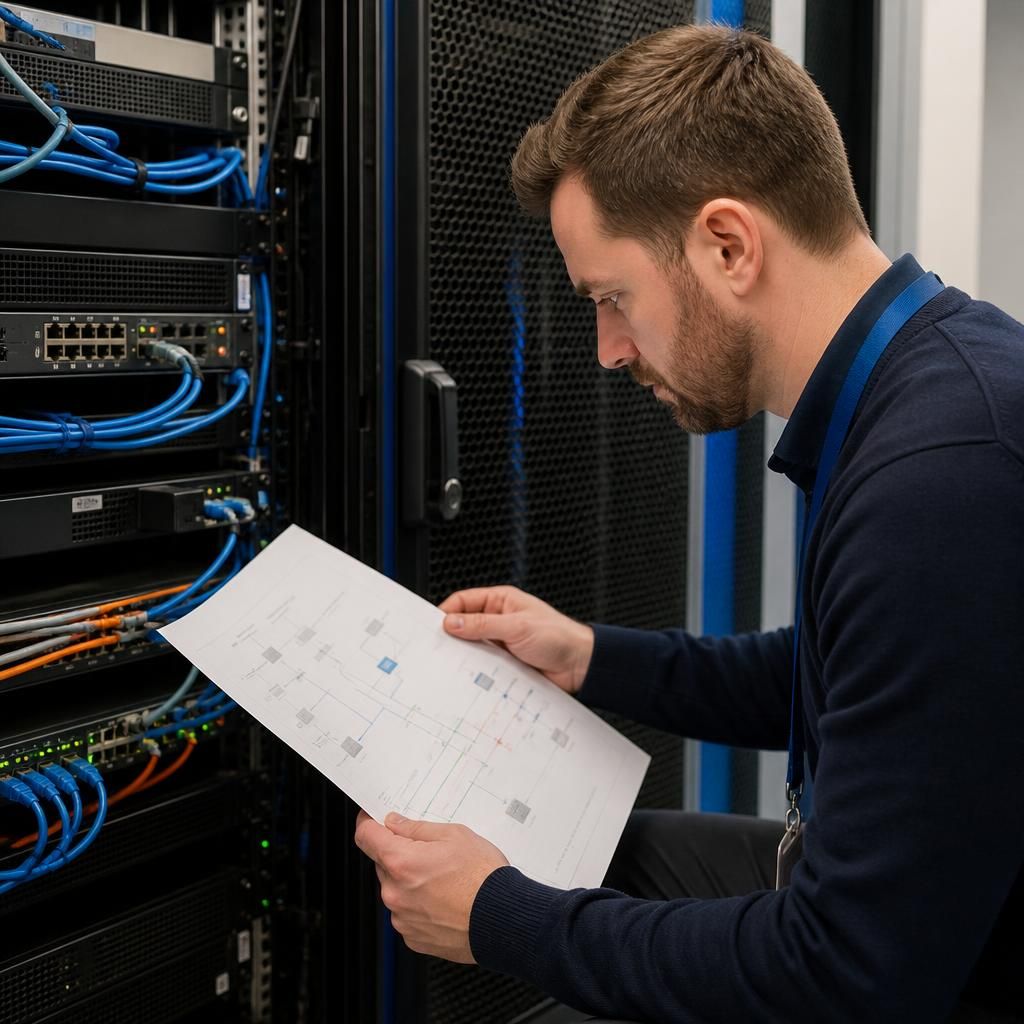
Support quality depends on the provider understanding the environment it is managing. The service should therefore maintain suitable documentation, such as an inventory of equipment, software and subscriptions; network and system diagrams; key dependencies; configuration details; supplier contacts; and records of important decisions. Documentation must be kept under controlled access and updated when the environment changes.
These records are particularly valuable when a problem affects several systems at once. They help the support team establish what depends on what, avoid unnecessary changes and explain the likely consequences of a proposed fix. They also reduce the operational risk created when knowledge exists only with one employee or contractor.
Planned operational oversight
A managed service should include regular review of the technology environment, not just reactive fault handling. This can involve examining recurring service issues, capacity concerns, unsupported components, configuration drift and outstanding recommendations. The purpose is to turn technical observations into prioritised actions based on business risk, cost, operational dependency and likely benefit.
Good oversight also includes a forward-looking technology plan. The provider should help the organisation understand which systems need attention, what decisions are approaching and how proposed changes fit with business growth. Recommendations should explain the reason for the work, available options, dependencies and the consequences of postponing it, rather than presenting technology purchases without context.
Security responsibilities that are specific and measurable
Security should be treated as an operational responsibility with named controls and evidence, rather than as a general statement that systems are protected. A service description should clarify how security requirements are assessed, how unusual activity or suspected compromise is handled, and how weaknesses are recorded and followed up.
It should also establish who is responsible for security-related decisions, what information the client must provide, how exceptions are approved and how important actions are reported. This makes it easier for management to understand residual risk and decide which measures require investment or policy changes.
Reliable continuity arrangements
The service should support the organisation’s ability to continue operating when technology is unavailable or a supplier fails. This requires more than maintaining copies of information. Relevant arrangements should identify critical services, acceptable recovery priorities, technical dependencies, responsibilities during an interruption and the steps required to restore normal operation.
Where recovery arrangements exist, they should be reviewed and tested appropriately. The results should be recorded, weaknesses assigned to an owner and improvements tracked. The provider should also explain the difference between restoring systems, restoring data and resuming business processes, as these are related but separate activities.
Communication and management information
Businesses should receive information that is useful for managing the service, not merely a list of closed tickets. Regular reporting may cover work volumes, categories of recurring issues, unresolved risks, significant changes, recommendations and actions requiring a decision. Reports should be understandable to non-technical managers while retaining enough detail for technical review.
There should also be a clear route for discussing service quality, priorities and changing business requirements. Review meetings are most useful when they examine trends and agreed actions rather than simply repeating activity statistics. Any actions should have an owner and a clear status so that recommendations do not become an untracked list.
Support that fits the organisation
The right service will vary according to the organisation’s size, sector, locations, regulatory obligations and reliance on technology. A professional services firm may place particular importance on secure access to client information, while a manufacturer may depend on the availability of site-based systems and specialist equipment. A growing organisation may need a service that can accommodate additional users, premises and applications without creating inconsistent standards.
For businesses around Stourbridge, Kinver, Wordsley, Kingswinford, Kidderminster, Halesowen, Dudley and neighbouring areas, S2 Technology Group positions its IT support around this broader model: combining day-to-day technical management with cyber security, cloud solutions, connectivity and advice suited to the organisation’s requirements. When comparing providers, businesses should assess not only the services listed, but also the quality of their processes, documentation, communication and accountability.
Cloud and connectivity support should be included where they underpin daily operations. The service should define how cloud platforms, internet connections, site-to-site links and remote access arrangements are configured, maintained and reviewed. This includes identifying dependencies between business applications, user access and network services so that a fault can be investigated at the correct point.
Support should also cover supplier coordination when an issue involves a telecommunications or cloud provider. The provider should record the fault, provide relevant technical information, track progress and confirm whether any follow-up action is needed. Regular checks of capacity, configuration and planned supplier changes can help identify issues before they affect business processes.
For organisations using several sites or a mixture of office-based and remote working arrangements, the service should explain how connectivity requirements are assessed as the business changes. This may include reviewing new premises, additional users, cloud adoption and the need for secure remote access, ensuring that connectivity remains aligned with operational and security requirements.