
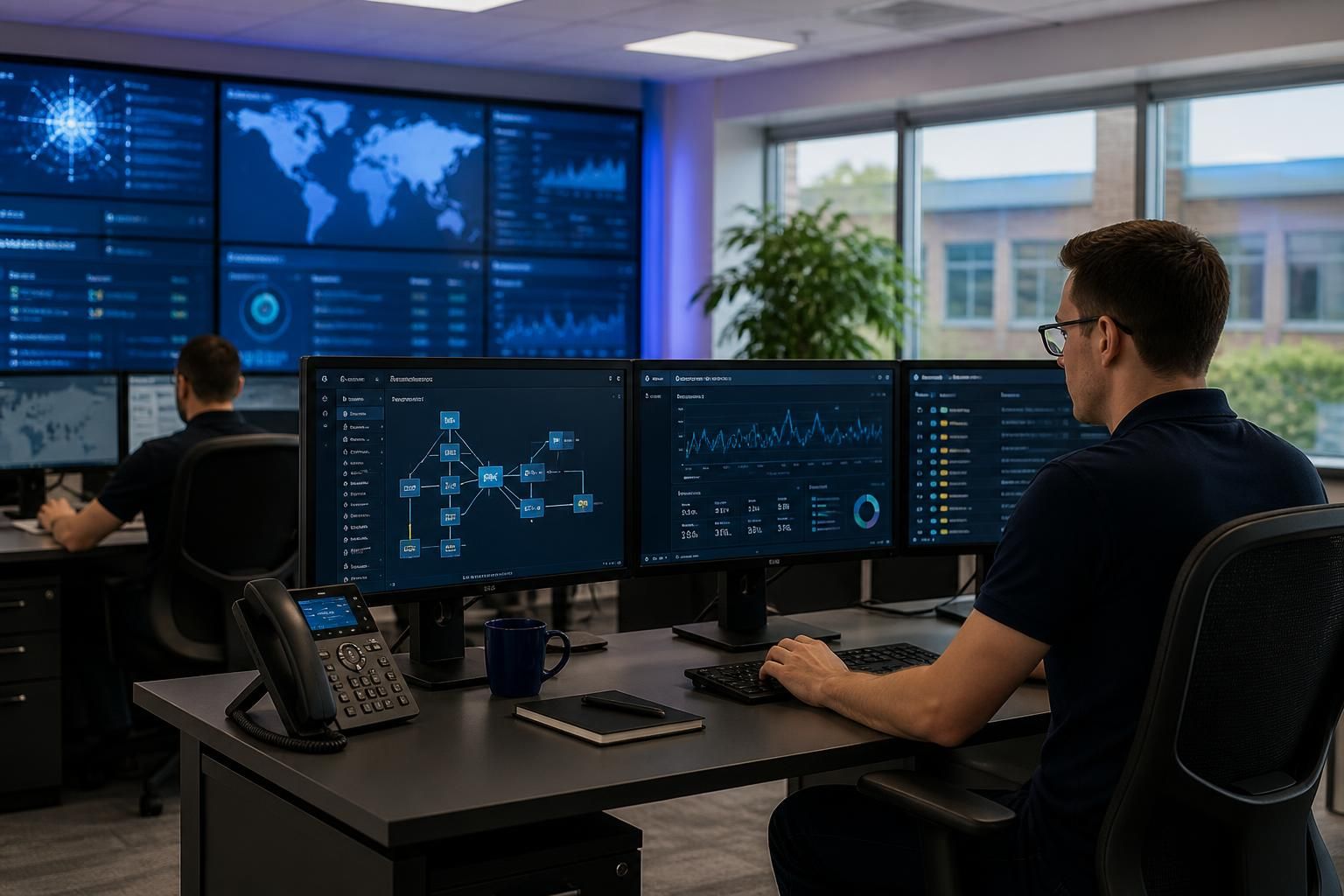
What should managed IT support include beyond resolving user faults?
Managed IT support should include proactive monitoring, security management, patching, backup oversight, cloud administration and strategic guidance, not just resolving individual user faults. It should also provide structured maintenance and advice that helps keep the organisation’s technology secure, reliable and aligned with its operational needs.
Managed IT support should include the operational controls, planning and user services that prevent recurring problems and keep technology aligned with the organisation’s working practices. Resolving faults remains important, but it is only one part of a complete service. A well-defined arrangement should also cover service requests, problem management, user lifecycle administration, technology ownership, supplier coordination, continuity planning and meaningful reporting.
Incident management and problem management should be separate. An incident restores a disrupted service, such as a failed device or inability to access an application. Problem management investigates why incidents recur and identifies a permanent remedy. Without this distinction, a provider may repeatedly resolve symptoms without addressing an underlying configuration issue, unsuitable process or ageing device. The service should therefore record recurring patterns, investigate root causes and track agreed corrective actions.
Service requests should have a defined route. Not every contact is a fault. Users may need access to an approved application, a new account, equipment for a starter, a permission change or guidance on an existing service. Managed support should explain how these requests are submitted, assessed, approved and completed. This gives the organisation a consistent way to handle routine work and helps prevent informal requests from bypassing security or business-approval controls.
User joiners, movers and leavers need structured administration. When someone joins, their account, equipment, applications and access rights must reflect their role. When their responsibilities change, permissions and assigned equipment may need to change with them. When they leave, access should be removed and company property recovered in accordance with the organisation’s procedures. Including this lifecycle work within managed support reduces reliance on ad hoc instructions and provides a clearer link between employment changes and technology access.
Equipment and software ownership should be understood. The provider and client should be able to establish which devices, accounts, applications and services are in scope, who uses them and who is responsible for decisions about them. This supports sensible replacement planning, licence management and support decisions. It also helps identify technology that has become unsupported, duplicated or unsuitable for the way the organisation now operates.
Support should include clear boundaries and escalation routes. A managed service agreement needs to state which systems are covered, what the client must provide, which activities require approval and how issues involving a software supplier, connectivity provider or other external party are handled. Where responsibility is shared, the provider should help isolate the issue, preserve relevant information and coordinate the next action rather than leaving the client to determine which party owns the problem.
Continuity planning should be part of the operating model. This is broader than maintaining copies of data. The organisation should consider how it would continue essential work if a key application, site, device group or communications service became unavailable. Support arrangements can contribute by identifying important dependencies, clarifying recovery responsibilities and helping maintain practical procedures for restoring normal operations. Plans should be reviewed when the business or its technology changes.
Advice should be based on business priorities rather than isolated technical preferences. A useful managed service helps the client assess competing needs, such as supporting additional staff, opening another site, introducing a business application or replacing equipment. Recommendations should explain the operational reason for a proposed action, its dependencies and any implications for users, risk and future support. This makes technology decisions easier to evaluate without treating every new product or upgrade as automatically necessary.
Reporting should explain service performance and outstanding work. Useful reports do more than count tickets. They can show recurring incident themes, unresolved risks, service requests, ageing equipment, account administration trends and actions requiring client decisions. The format should be suitable for the people receiving it: operational contacts may need detail, while directors may need a concise view of material risks, priorities and investment choices.
Before appointing a provider, an organisation should ask whether the proposed service includes these activities explicitly or only provides a route for reporting faults. The agreement should define the supported environment, responsibilities, approval points, escalation arrangements and review process. That distinction is important: managed IT support is not simply outsourced troubleshooting, but a coordinated way to operate, govern and improve the technology on which the business depends.
Beyond resolving user faults, managed IT support should include routine security maintenance that reduces the likelihood of disruption. This means checking whether protective controls are operating correctly, reviewing security alerts, applying relevant updates and investigating weaknesses before they become incidents.
The scope should be clear about activities such as endpoint protection, account security, vulnerability review and privileged access. A provider should distinguish between an alert that requires investigation, a weakness that needs planned remediation and a confirmed security incident requiring a coordinated response. This prevents security work from becoming an informal extension of the helpdesk.
Security activity should also produce an understandable record of findings, actions and decisions. That gives the organisation evidence of which risks remain open, what has been addressed and where approval or investment is needed. When security maintenance is included in the managed service rather than treated as an occasional task, it becomes part of the normal operation of the IT environment.
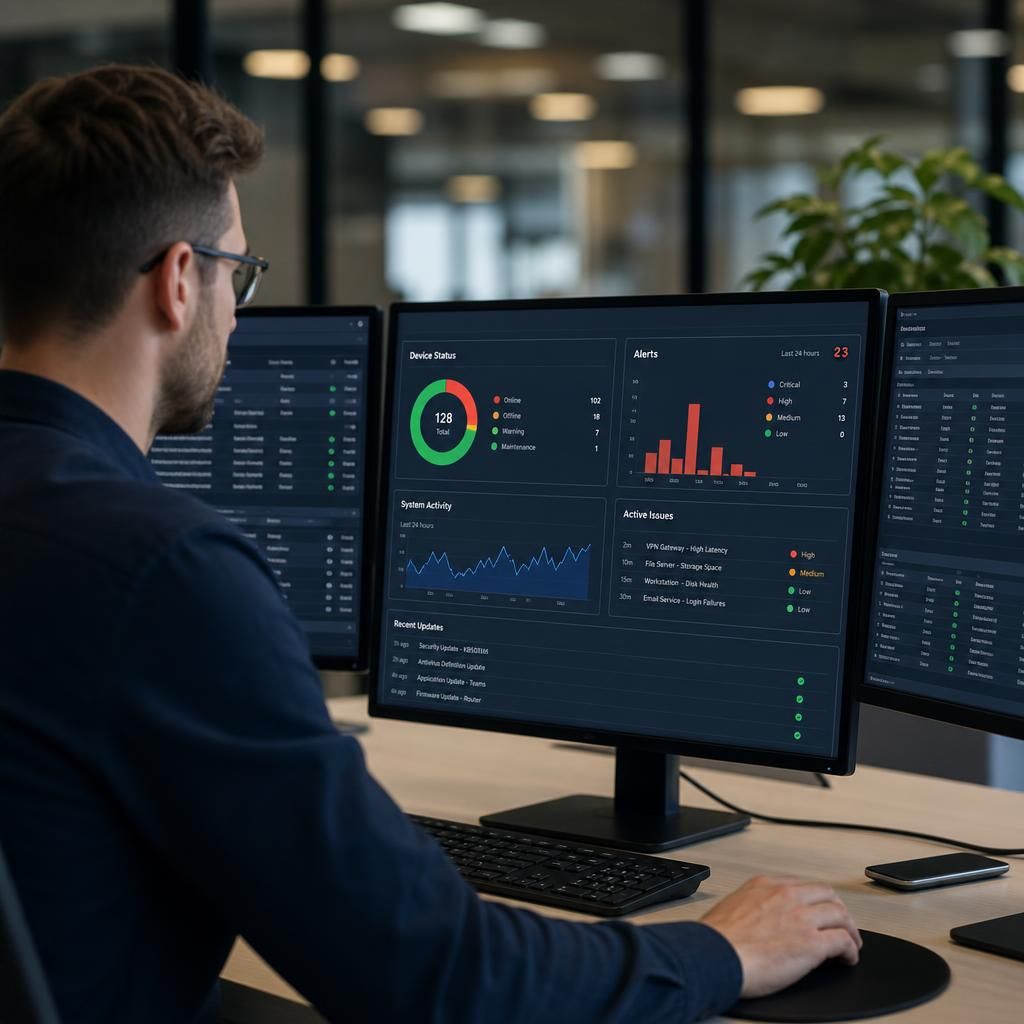
Discuss what your managed IT support should include
Review your current managed IT support agreement against these requirements and identify any gaps beyond fault resolution. Discuss your findings with S2 Technology Group to determine which areas should be included in a more structured support arrangement.