
How is cyber security built into small business IT support?
Cyber security is built into small business IT support through practical controls such as secure access management, software patching, device protection, data backup and proactive monitoring. These measures are managed alongside everyday IT services so vulnerabilities can be identified, addressed and reduced as the business’s systems and users change.
Cyber security is built into small business IT support by making security part of every technology decision, routine task and change process rather than treating it as a separate product. A well-managed service combines technical safeguards with clear policies, user awareness, risk assessment and documented response procedures, so protection remains aligned with the way the business actually operates.
The process usually starts with an assessment of the organisation’s systems, data and dependencies. This can identify which information is sensitive, which services are business-critical, where users connect from and which weaknesses could create the greatest operational or regulatory risk. The findings can then be recorded in a prioritised improvement plan rather than addressed as isolated technical issues.
Good IT support also establishes a security baseline for devices, accounts and infrastructure. This may include:
- separating administrator privileges from ordinary user accounts;
- using multi-factor authentication where it is appropriate;
- removing unused accounts and access rights;
- applying consistent configuration standards to computers and network equipment;
- restricting the installation of unapproved applications; and
- recording important changes so unusual activity can be investigated.
The objective is not to add unnecessary restrictions. It is to ensure that access, configuration and system changes are controlled according to business need. For example, a member of a finance team may require access to financial applications but not to production systems, while a user who changes role may need their permissions reviewed as part of that change.
Security is also built into the service desk and change-management process. A request to create an account, introduce a new application, connect a device or alter network access should be checked for security implications before it is completed. This creates an opportunity to confirm ownership, assess the requested permissions and consider whether the change introduces a new route into business systems.
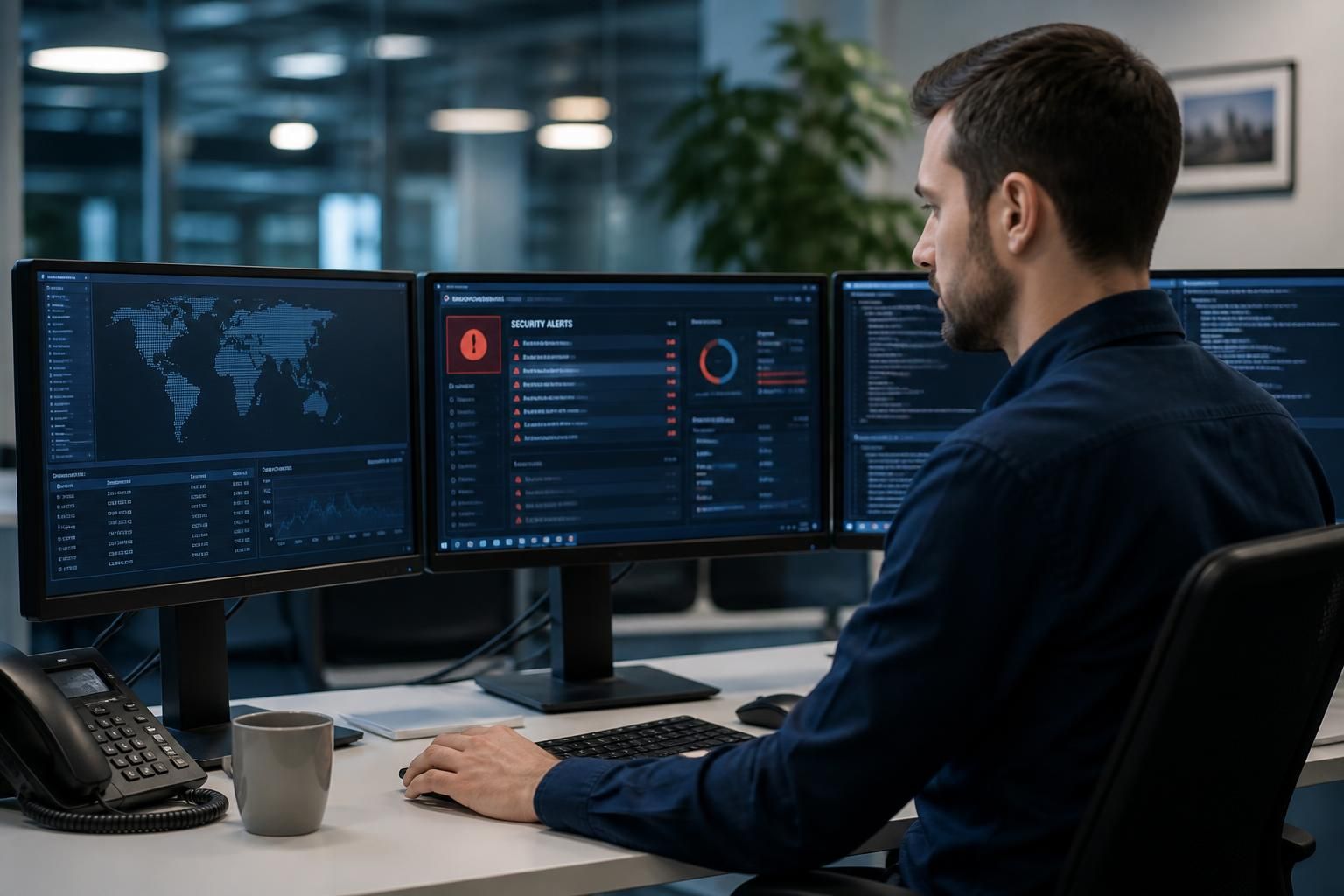
Monitoring is most useful when it produces decisions rather than a stream of unexplained alerts. IT support can review events such as repeated failed logins, unusual sign-in locations, disabled protection tools, unexpected privilege changes or devices that fall outside the organisation’s security baseline. The relevant events can then be investigated, prioritised and escalated according to their potential effect on the business.
People and processes form another essential part of the model. Staff should understand how to identify suspicious messages, handle sensitive information, report lost devices and verify unusual payment or access requests. Training is more effective when it reflects the organisation’s actual systems and working practices. Policies should also state who is responsible for approving access, reporting incidents and making decisions when a security issue affects normal operations.
Incident response should be defined before an incident occurs. A practical plan sets out how to identify and contain a suspected compromise, who must be informed, how evidence should be preserved and how affected accounts or devices will be assessed. It should also cover communication with relevant third parties where necessary. After an incident or near miss, the cause and response can be reviewed so that controls and procedures are improved.
Cyber security must continue through the technology lifecycle. When equipment or software is introduced, its security settings, ownership, support status and data handling should be considered. When it is replaced or retired, accounts, credentials and stored information should be dealt with securely. This prevents abandoned devices, forgotten services and unsupported systems from becoming overlooked risks.
For a small business, this integrated approach is valuable because it connects day-to-day IT decisions with wider business risk. S2 Technology Group provides managed IT and cyber security services for small and medium-sized organisations around Stourbridge and neighbouring areas, helping businesses bring these operational, technical and governance considerations together rather than managing them as disconnected tasks.
When evaluating an IT support arrangement, ask whether cyber security is included in routine administration, how risks are recorded and prioritised, how access changes are approved, what staff guidance is provided, how incidents are handled and how the effectiveness of controls is reported. These questions reveal whether security is genuinely embedded in support or simply offered as an optional add-on.
Secure backups are a core part of cyber security because they provide a controlled recovery option if files are encrypted, deleted or otherwise compromised. Small business IT support should define which data is backed up, how often copies are created, where they are stored and who can access them.
Protection depends on more than having backup software installed. Backup accounts should be separated from ordinary user accounts, copies should be protected from unauthorised changes and retention settings should reflect the business’s operational and legal needs. Restore tests are also important: they confirm that files can be recovered and reveal problems such as incomplete data, unsuitable retention periods or unclear recovery procedures.
A useful review therefore considers the full recovery process, including which systems must be restored first, who authorises recovery and how the business continues while systems are being rebuilt. This makes backup management a defined security control rather than an assumption that data will be available after an incident.
Discuss cyber security in your small business IT support
Discuss your current IT support arrangements with S2 Technology Group to identify where cyber security responsibilities, controls and reporting could be strengthened. Use the review to define practical next steps that fit your organisation’s systems and risks.