

What can outsourced IT include for a small business?
Outsourced IT for a small business can include day-to-day technical support, cyber security, cloud solutions, business connectivity, infrastructure management and strategic technology advice. The exact scope can be tailored to cover gaps in internal expertise, support business growth and manage essential IT responsibilities without a full in-house team.
For a small business, outsourced IT can cover the practical management, protection and development of its technology environment. The scope may include user support, device and account administration, maintenance, backup oversight, security management, cloud administration, network services and technology planning, with responsibilities divided between the provider and the business’s own staff.
The most useful way to define the service is to identify the activities that must be performed consistently, rather than simply choosing a label such as “managed IT”. A written scope should explain what is included, what is excluded and which responsibilities remain with the business.
- User and device administration: This can include setting up and removing user accounts, configuring laptops and other business devices, applying standard settings, managing permissions and helping staff resolve faults. It may also cover software installation, device encryption, access to shared resources and the maintenance of an accurate equipment register.
- Routine maintenance: An outsourced provider may oversee operating system and application updates, vulnerability remediation, storage capacity, device health and the condition of core systems. Regular maintenance reduces the risk that known faults or outdated software become operational or security problems.
- Identity and access management: This involves deciding who can access particular systems and information, applying least-privilege principles, managing joiners and leavers, reviewing administrator rights and supporting multi-factor authentication. Clear access processes are particularly important when employees change roles or work across several services.
- Cyber security management: The scope may include endpoint protection, email security, firewall administration, security policies, vulnerability checks, suspicious-activity investigation and guidance on phishing or other common threats. A provider may also help establish incident procedures so that staff know how to report a suspected compromise and the business knows which actions to take.
- Backup and recovery oversight: This can include configuring backups, checking whether jobs have completed, protecting backup access and reviewing how systems or data would be restored after accidental deletion, hardware failure or a security incident. Backup arrangements should be assessed against the business’s recovery requirements rather than treated as evidence of protection by themselves.
- Cloud administration: Support may extend to managing cloud identities, permissions, shared storage, collaboration environments, subscriptions, security settings and data retention. The provider can also help determine which workloads are suitable for cloud services and which dependencies need to be understood before systems are moved or changed.
- Network and connectivity management: This may involve configuring routers, switches, wireless networks, firewalls and remote-access arrangements, as well as diagnosing connection problems. For businesses with more than one premises or staff working away from the main office, the design needs to consider secure access, resilience, performance and consistent policies across locations.
- Infrastructure management: Servers, network equipment, virtual systems, storage and other shared resources may be monitored, maintained and documented. This can include capacity planning and lifecycle advice, helping the business identify when equipment or software should be upgraded rather than waiting for an avoidable failure.
Outsourced IT can also include a defined service desk process. This should state how users raise issues, how incidents are categorised, who is authorised to request changes and how faults are recorded through to resolution. A good process distinguishes between an incident, such as a failed service, and a request, such as a new user account. It should also explain escalation routes and any dependencies on third parties.
Strategic support is another possible component. Instead of limiting the relationship to fault resolution, the provider may review the technology roadmap, advise on security improvements, assess proposed systems, plan hardware replacement, support office moves and help align IT decisions with operational requirements. This is relevant to a small business that does not have a dedicated IT manager but still needs informed decisions about risk, growth and investment.
Project work is usually best separated from recurring support, even when the same provider delivers both. Examples can include migrating data or applications, redesigning a network, introducing new security controls, replacing infrastructure, establishing remote access or integrating a new business system. Separating project tasks makes it easier to agree objectives, responsibilities, dependencies and acceptance criteria.
Not every small business needs every element. A company with mainly cloud-based applications may need less server management but more identity, device and access control. A manufacturer may require closer attention to on-site infrastructure and the relationship between operational equipment and business systems. A multi-site organisation may need centralised policies, secure links between locations and consistent user administration.
The agreement should therefore address several boundaries before work begins:
- Which users, devices, applications, premises and suppliers are covered?
- Which tasks are included in the recurring service and which are charged or managed as separate projects?
- Who owns decisions about access, purchasing, data retention and acceptable use?
- What information must the business provide for support and security monitoring to work properly?
- How are changes approved, documented and reversed if they cause an unexpected issue?
- How are third-party services, specialist applications and unsupported equipment handled?
A small business should also look for documentation as part of the service. Useful records can include an asset register, network overview, user and access information, backup configuration, supplier details, security policies and a log of significant changes. These records make the outsourced arrangement more manageable and help the business retain oversight of its own technology.
S2 Technology Group can structure outsourced IT around these operational and strategic requirements for small and medium-sized organisations around Stourbridge, Kinver, Wordsley, Kingswinford, Kidderminster, Halesowen, Dudley and neighbouring areas. The appropriate scope depends on the organisation’s systems, risk profile, internal capability and plans for growth, so the service should be defined around actual responsibilities rather than a generic package name.
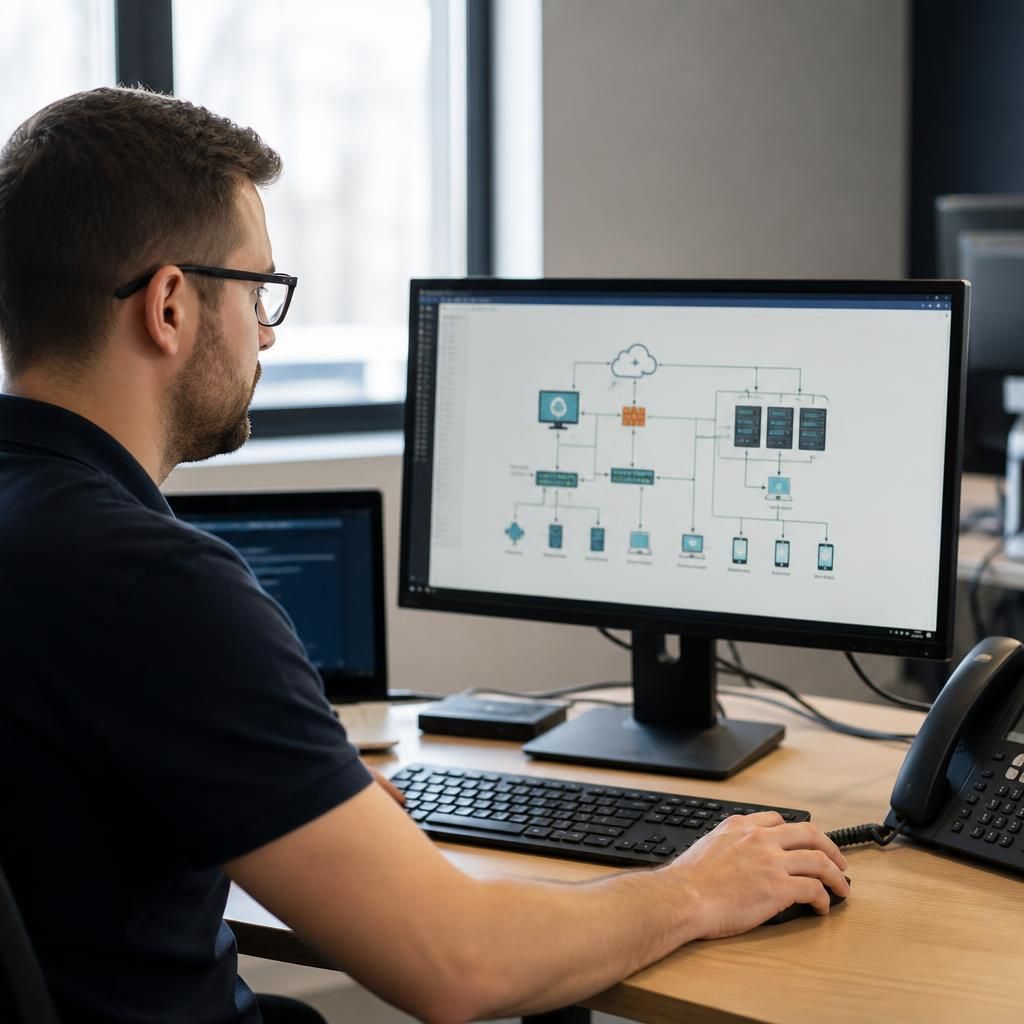
Outsourced IT can also include business continuity planning: preparing for situations where an important system, site or supplier is unavailable. This is broader than checking backups because it considers which business processes are most important, what they depend on and how staff would continue working while a service is restored.
A provider may help document technology dependencies, recovery priorities, alternative working arrangements, communication responsibilities and manual procedures. The plan should identify who makes decisions during an interruption and how recovery actions are reviewed afterwards. Keeping this information current is important when the business adds applications, changes premises or alters the way staff work.
Discuss what outsourced IT could include for your small business
Discuss what outsourced IT could include for your small business with S2 Technology Group, based on your current systems, internal capacity and operational priorities. Contact the team to explore a suitable scope before defining the service arrangement.