
Can managed IT support cover both cloud and on-premises systems?
Yes. Managed IT support can cover a hybrid environment by coordinating cloud services with on-premises servers, networks, devices and applications through one support and security framework.
A managed IT support arrangement can cover cloud and on-premises systems when responsibility is defined across the whole technology environment rather than limited to one type of infrastructure. This normally includes assessing dependencies, managing access and devices, monitoring key services, maintaining security controls and coordinating changes between systems.
The important point is integration. Cloud and on-premises platforms may perform different roles, but users experience them as one working environment. For example, a locally hosted application may depend on cloud identity services, remote users may need secure access to an on-premises file server, and cloud-based email may rely on correctly configured devices and network connectivity. Support should therefore consider how each component affects the others.
Typical areas covered include:
- On-premises servers, storage, switches, firewalls, wireless networks and business applications.
- Cloud-hosted email, file storage, productivity platforms, virtual servers and software services.
- User accounts, permissions, authentication, remote access and device configuration.
- Desktop, laptop and mobile device management across office-based and remote users.
- Backups, recovery arrangements, patching, malware protection and security monitoring.
- Connectivity between offices, users, cloud platforms and locally hosted systems.
Coverage does not mean treating every platform in the same way. An on-premises server may need hardware maintenance, operating system updates and capacity planning. A cloud service may instead require tenant administration, licence management, configuration reviews and checks that data is protected appropriately. A support provider should apply the controls suited to each environment while maintaining a consistent set of policies.
Identity and access management are central to hybrid support. Users often need one secure identity to access both cloud services and local resources. This makes account creation, role changes, leavers, privileged access and multi-factor authentication important across the entire environment. Permissions should be based on business need and reviewed when responsibilities change. Poorly managed access can expose both cloud data and on-premises systems, even when each platform is individually maintained.
Security responsibilities should be documented clearly. A cloud provider may secure the underlying service, but the customer generally remains responsible for aspects such as user accounts, permissions, data settings, endpoint security and suitable backup arrangements. With on-premises infrastructure, the business may also be responsible for physical equipment, network protection and hardware resilience. A managed IT support provider can administer these areas, but the agreement should identify what is included, what remains with the business and what depends on another supplier.
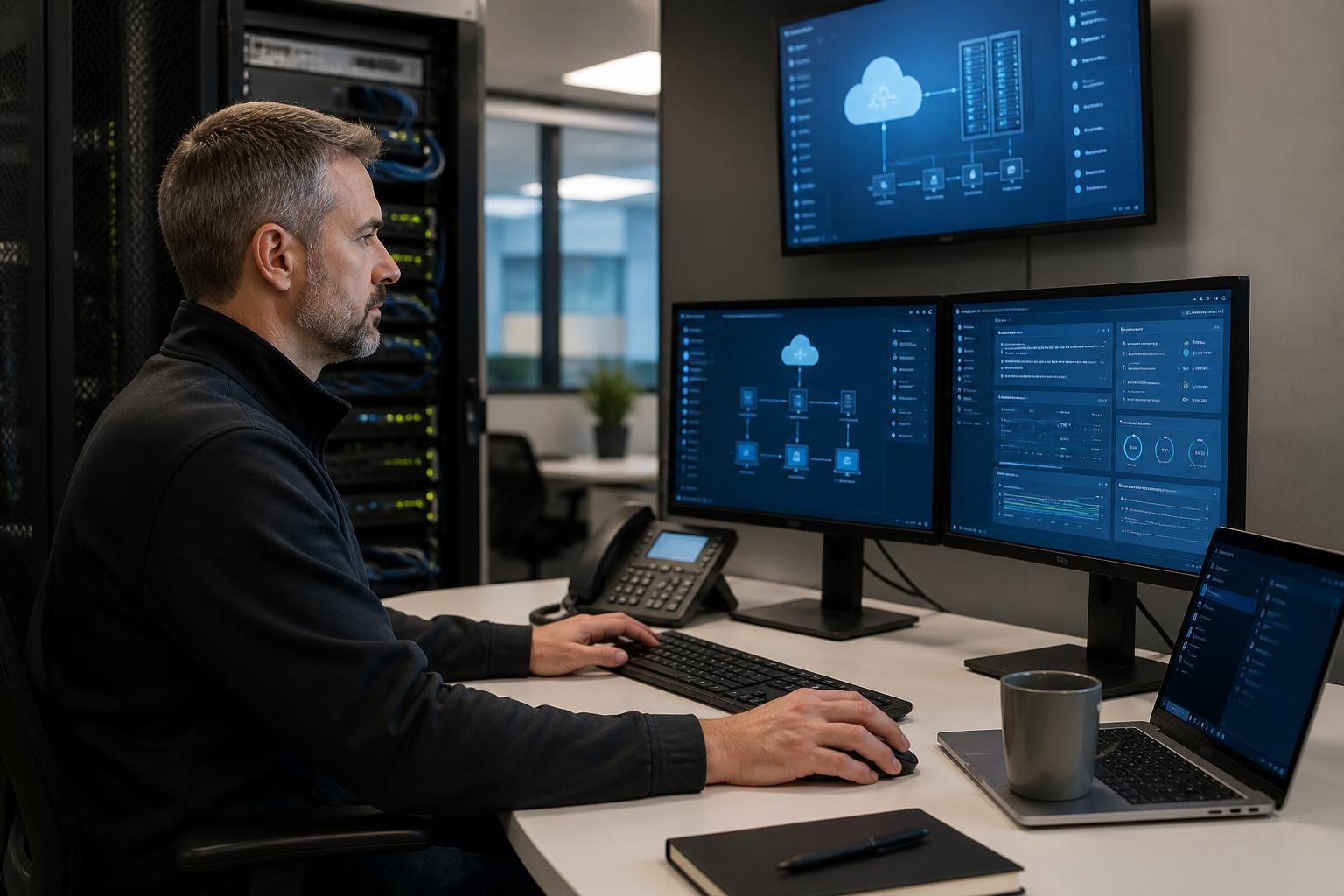
Monitoring should follow business dependencies rather than isolated devices. Checking whether a server is switched on is not enough if users cannot reach the application it hosts. Similarly, a cloud service may be available while incorrect permissions or a failed network connection prevents access. Effective monitoring considers service availability, connectivity, storage capacity, backup status, security events and other conditions that could interrupt normal work.
Change control reduces the risk of one environment disrupting another. Changes to firewall rules, identity settings, network routing, server configuration or cloud applications can have consequences beyond the system being altered. A suitable process records the requested change, assesses dependencies, identifies an implementation plan and preserves a route back if the result is not as expected. This is particularly important when legacy on-premises applications are being connected to newer cloud services.
Hybrid support also requires accurate documentation. Useful records include:
- A current inventory of servers, devices, applications, cloud services and licences.
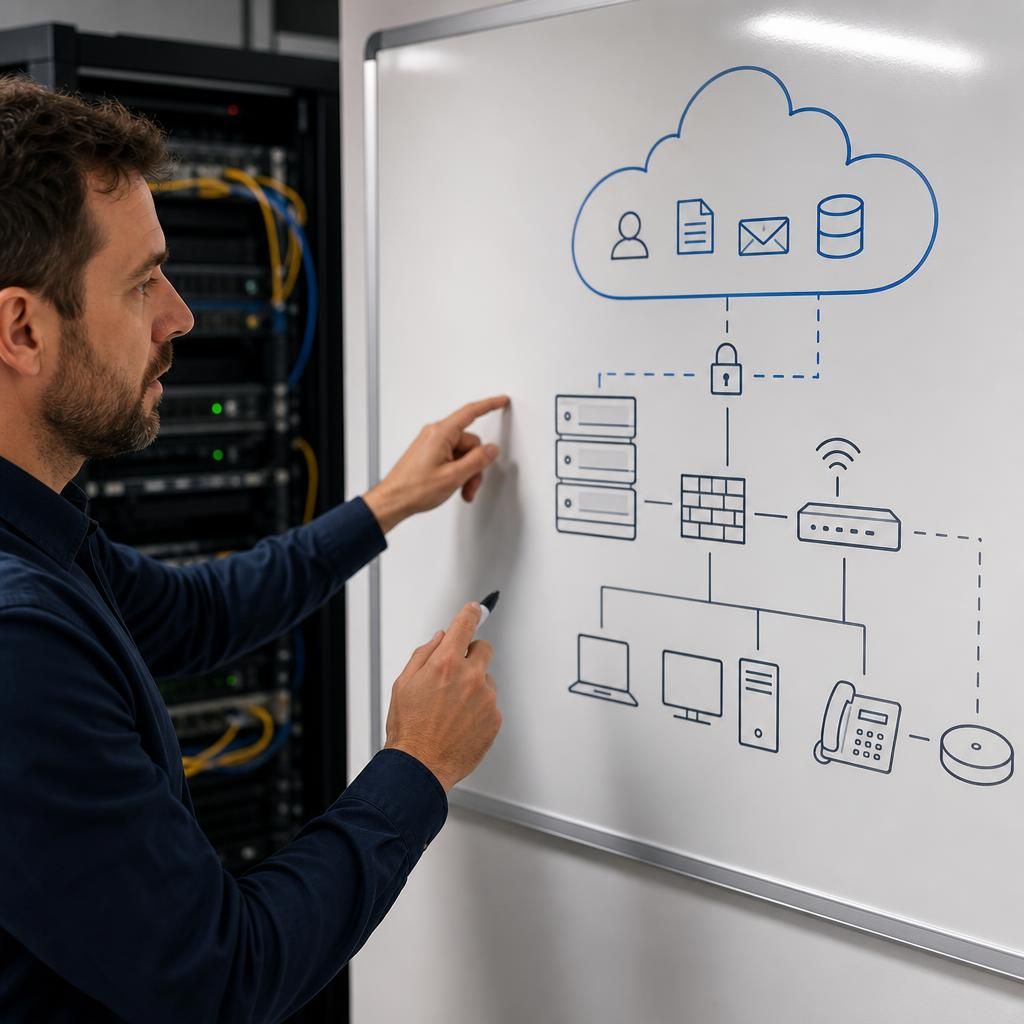
- Network diagrams showing links between offices, cloud platforms and hosted systems.
- Application dependencies, data locations and authentication methods.
- Administrative ownership and support contacts for third-party services.
- Backup arrangements, recovery priorities and documented access procedures.
These records help distinguish a fault in the local network from a cloud configuration issue, a user access problem or a failure affecting an external service. They also support technology lifecycle planning, particularly where an ageing server or application is likely to influence future cloud decisions.
When reviewing managed IT support for a hybrid environment, ask whether the provider can manage both infrastructure types, how responsibilities are divided, which security controls are included, how third-party suppliers are coordinated and how changes are approved. S2 Technology Group supports businesses with IT management, cyber security, cloud solutions and connectivity, making this joined-up approach relevant for organisations that are combining local systems with cloud services.
Managed IT support can cover cloud and on-premises systems through a combination of remote administration and physical infrastructure support. Cloud configuration, user access and many software issues can usually be investigated through secure administrative tools, while faults involving servers, cabling, network equipment or other physical assets may require an on-site process.
This distinction should be reflected in the support agreement. It should explain which systems are administered remotely, how physical faults are assessed, who is responsible for access to equipment, and how issues involving internet or third-party services are escalated. Clear arrangements prevent a cloud configuration problem from being treated as a hardware fault, or a physical network issue from being passed between suppliers without ownership.
For businesses operating a hybrid environment, the useful measure is not whether support is delivered remotely or on-site. It is whether the support model can identify where a fault originates, coordinate the relevant technical work and maintain a consistent record across both types of infrastructure.
Discuss your cloud and on-premises IT support requirements
Discuss your cloud and on-premises IT support requirements with S2 Technology Group to assess the right approach for your organisation. You can explore how your existing systems, responsibilities and future technology plans could be managed as one support arrangement.