

What should an IT helpdesk ticketing system record?
An IT helpdesk ticketing system should record who reported the issue, which user or device is affected, the symptoms, business impact, priority, relevant dates and times, and the actions taken. It should also capture communications, escalation or approval decisions, related assets or changes, the resolution, and the user’s confirmation before closure.
A well-designed IT helpdesk ticketing system records the information needed to understand, manage, audit and learn from a support request. It should create a reliable history of the case rather than act as a simple inbox, with structured fields for classification, ownership, investigation, decisions, evidence and follow-up.
Ticket type and classification
Each record should identify what kind of work is being requested. Useful classifications include incident, service request, access request, information request, problem investigation and planned change. The system should also record a consistent category and subcategory, such as connectivity, endpoint, application, account, printing or security. This makes similar cases easier to group and helps identify recurring faults.
Classification should be amendable when the investigation reveals that the original description was incomplete or inaccurate. The record should retain the change history so that reporting remains trustworthy and staff can see how the case developed.
Ownership and workflow
A ticket should show which support queue or technician owns the next action. It should distinguish between the person responsible for progressing the case and other people who have contributed to it. This avoids uncertainty when work is transferred between teams or escalated to a specialist.
Workflow fields should show whether the case is new, being investigated, awaiting information, awaiting approval, scheduled, resolved or closed. A reason for placing a ticket on hold is also useful. For example, the record might show that the support team is waiting for a supplier, an internal decision or access to an affected system. Each status change should be traceable, including who made it and why.
Technical context and evidence
The record should contain enough technical context for another authorised technician to continue the work without starting again. Depending on the issue, this may include:
- the affected service, application, site, network segment or business process;
- the relevant asset, configuration item, account or equipment identifier;
- operating system, application version or device details where they affect diagnosis;
- error messages, event references, screenshots, log extracts and other supporting files;
- the conditions under which the issue occurs and whether it is intermittent or repeatable;
- tests already completed and the result of each test; and
- known dependencies, recent changes or related tickets that may explain the symptoms.
Evidence should be attached or referenced in a way that preserves its origin and context. Sensitive files should not be copied into a general ticket unnecessarily. Where diagnostic material contains personal, financial or security-related information, access should be restricted and retention should follow the organisation’s policies.
Actions, decisions and communications
A strong record separates observations from actions and conclusions. It should show what was checked, what was changed, what result followed and what remains unverified. Recording unsuccessful steps is important because it prevents repeated work and gives later reviewers a clearer account of the investigation.
Internal technical notes should be distinguishable from messages intended for the requester. The ticket should preserve material communications, including requests for further information, explanations of proposed work, approval decisions, user instructions and notifications of planned disruption. Telephone or face-to-face discussions should be summarised rather than left outside the record.
Where a technician makes a judgement call, the reason should be documented. This is particularly important for actions that affect security, access, business continuity or production systems. If approval was required, the record should identify the approver, the decision and any conditions attached to it.
Relationships with assets, changes and recurring problems
Tickets should link to the relevant configuration item, asset record, user account, site or service rather than relying only on free-text descriptions. They should also link to associated incidents, requests, planned changes, known errors and problem records. These relationships provide useful context and help prevent a temporary workaround from being mistaken for a permanent fix.
When a ticket identifies a wider or recurring fault, the record should show whether it has been connected to a problem investigation. If the issue resulted from a change, the relevant change record should be referenced. If a workaround was used, it should be identified separately from the underlying resolution and reviewed for future removal where appropriate.
Security and audit information
Ticketing data can contain personal data, details of business systems and information about weaknesses. The system should therefore record who viewed or edited important information, while applying role-based access to sensitive tickets and attachments. It should support an audit trail that cannot be casually overwritten, including amendments to categorisation, ownership, notes, approvals and closure information.
For suspected security incidents, the record should capture the relevant indicators, affected accounts or systems, containment steps, evidence-handling decisions and escalation route. It should not expose passwords, authentication secrets or unnecessary personal information in plain text. If information must be redacted, the record should note that this has happened without reproducing the sensitive content.
Resolution quality and closure
The resolution entry should explain the cause where it is known, the corrective action taken and any remaining limitation or risk. It should distinguish between restoring service, applying a workaround and fixing the underlying cause. If follow-up work is required, that work should become a separate task or linked ticket with a named owner rather than being hidden in the closure note.
Closure criteria should be consistent. A ticket may require confirmation that the requested service was delivered, that a fix was tested, that documentation was updated or that a related action was raised. Reopening a closed case should preserve the original history and record why further work was needed.
Reporting and continual improvement
Structured fields allow an organisation to analyse support demand without relying on subjective summaries. Useful reporting dimensions include ticket type, category, affected service, recurrence, ownership changes, causes, unresolved dependencies and the volume of work awaiting customer or third-party input. The aim is not simply to count tickets, but to identify preventable faults, training needs, weak processes and services that need investment.
To make reporting dependable, field names and categories should be defined in a simple data standard. Required fields should be limited to information genuinely needed at each stage, while important changes should be validated rather than entered as unrestricted text. Periodic review can remove obsolete categories, identify incomplete records and check whether technicians are recording enough information for another person to take over the case.
In practice, the best ticketing record is complete enough to support diagnosis, handover, security review, management reporting and future prevention, without collecting irrelevant information. The exact fields should reflect the organisation’s services and risks, but the record should always provide a clear, chronological and auditable account of what happened and what was done.
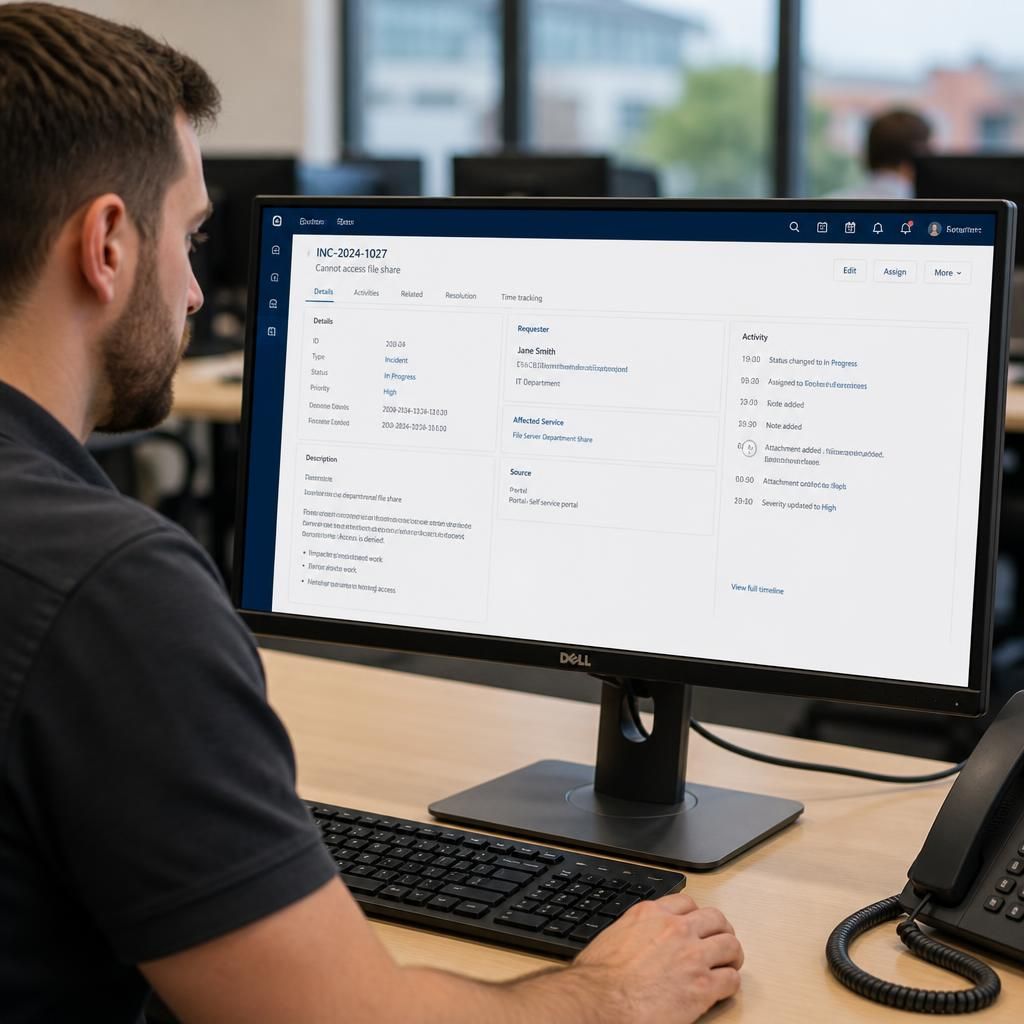
An IT helpdesk ticket should preserve where the request came from and provide a stable reference for it. The record may need to identify whether it was submitted through a portal, by email, by telephone, through monitoring, or as an internal escalation, together with any relevant external reference.
This source information makes the ticket easier to trace across related correspondence and systems. It also helps distinguish separate reports of the same fault from updates to an existing case, without losing the identity or context of each person who raised an issue.
Need help defining your IT helpdesk ticketing requirements?
If you are reviewing your IT helpdesk processes, S2 Technology Group can help you define ticketing requirements that fit your organisation’s support, security and reporting needs. Contact the team to discuss your current approach and the improvements you are considering.