
How does managed IT support handle technology lifecycle planning?
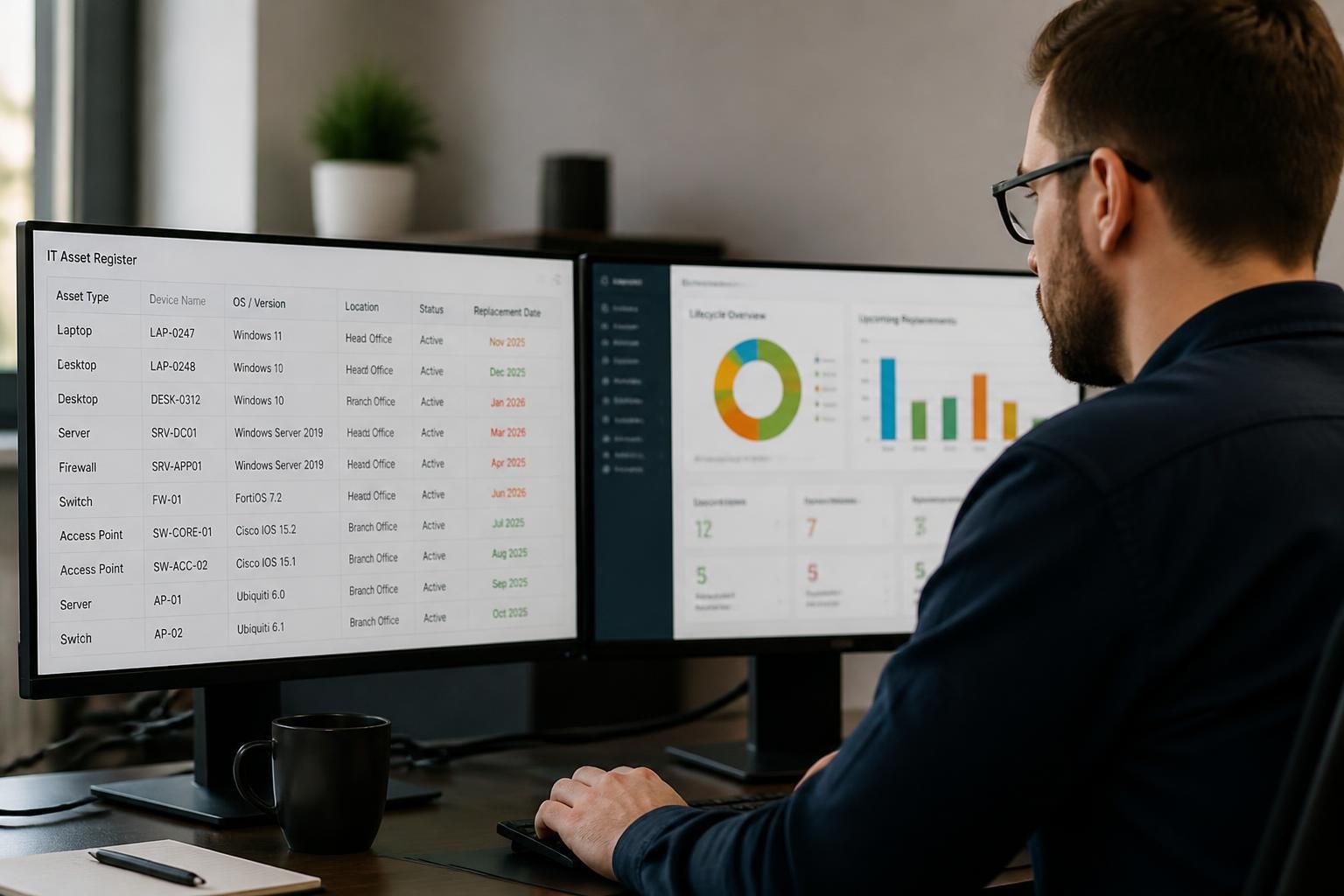
Managed IT support handles technology lifecycle planning by tracking hardware, software, cloud services and network components, then assessing their condition, compatibility, security and vendor support status. The provider uses this information to create a prioritised roadmap for upgrades, renewals and replacements, helping the business plan costs and reduce disruption caused by ageing or unsupported technology.
Managed IT support handles technology lifecycle planning as a controlled, repeatable process for deciding how business technology is introduced, maintained, changed and retired. It connects day-to-day IT management with longer-term business planning, so technology decisions are based on operational requirements rather than being made only when a problem occurs.
The process usually begins by defining the role each system or device plays in the organisation. This includes identifying the business services it supports, who is responsible for it, which other systems depend on it and what level of availability or protection it requires. Establishing these relationships is important because replacing one component can affect user access, workflows, data handling, communications or sites elsewhere in the organisation.
A managed IT provider can then help establish technology standards. Standards may cover approved device specifications, operating environments, identity controls, backup arrangements, network configurations and cloud service requirements. Standardisation reduces unnecessary variation and makes future maintenance, user support and security administration more consistent. Exceptions can still be recorded where a particular team or application has a legitimate technical requirement.
Good lifecycle planning also considers the full ownership period of a technology decision, not just its initial purchase. A business should understand:
- the intended business purpose and users;
- the implementation, configuration and data migration work involved;
- the skills and administration required during normal use;
- the renewal terms and ongoing dependencies;
- the likely effect of changes on staff, customers and connected systems; and
- the method for securely removing the technology when it is no longer required.
Technology decisions are normally prioritised according to business risk and dependency, rather than age alone. For example, a system that supports financial processing, access control or sensitive information may require earlier action than a less critical device, even if both were introduced at a similar time. Priorities may also change when the organisation opens a site, changes its working model, adopts a new application or becomes subject to different contractual or regulatory requirements.
Managed IT support can turn these priorities into a scheduled programme of work. Each item should have a proposed action, an accountable owner, key dependencies, an estimated resource requirement and a target decision point. This provides a practical basis for discussions between the provider, business leaders, finance teams and any internal IT staff. It also helps distinguish routine maintenance from projects that need formal approval and wider communication.
Planning must include change preparation, not just the final technical task. Before a significant change, the provider may document the existing configuration, confirm dependencies, check backup and recovery arrangements, prepare a rollback approach and identify users who need advance information or training. Testing should be proportionate to the risk. A minor configuration adjustment may need a controlled validation, whereas a major platform change may require a test environment, representative data and user acceptance checks.
Several events can trigger a lifecycle review:
- a supplier changing the terms or technical requirements of a service;
- a business application becoming incompatible with the current environment;
- a change in the organisation’s structure, sites or workforce;
- a security finding or change in risk exposure;
- a contract, licence or subscription approaching renewal; or
- a planned move to a different platform or operating model.
Retirement is a defined stage of the lifecycle, rather than an informal removal task. It may involve transferring records, confirming that required information is retained, removing user and administrator access, cancelling subscriptions, wiping storage securely and updating documentation. Equipment that leaves the organisation should be handled in a way that protects business and personal data. The provider should also confirm that connected services, automated processes and recovery procedures no longer depend on the retired item.
Lifecycle planning works best when it is reviewed as part of regular service governance. Reports and review meetings can record completed actions, deferred decisions, emerging dependencies and changes in business priorities. This keeps the plan useful when assumptions change and prevents it becoming a static document that no longer reflects the organisation’s operating environment.
For a small or medium-sized organisation, the main benefit is a clearer separation between urgent technical work and deliberate technology investment. Managed IT support provides the operational knowledge needed to maintain that distinction while giving decision-makers an evidence-based view of what needs attention, why it matters and what preparation is required.
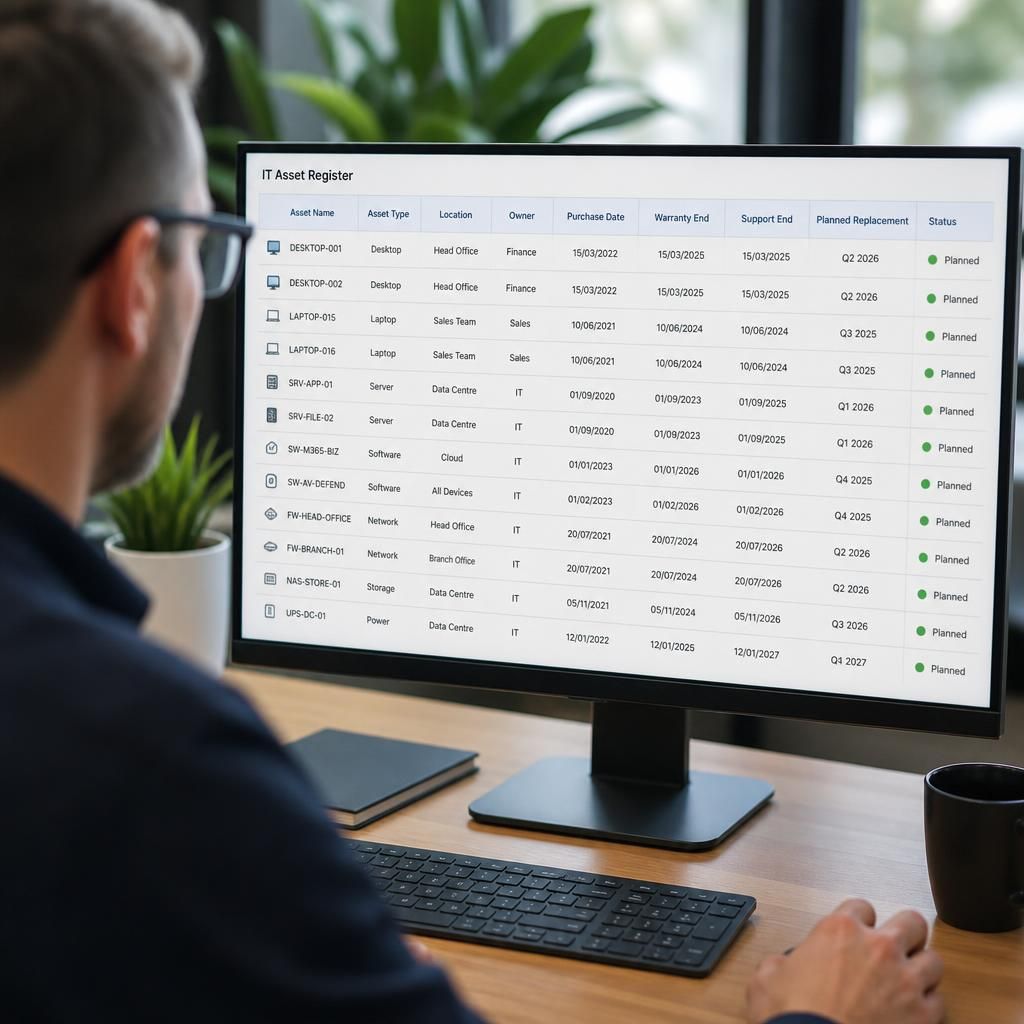
Technology lifecycle planning also gives the business a structured basis for forecasting IT expenditure. Instead of treating every replacement or renewal as an unexpected cost, the organisation can identify likely spending periods and align them with budget planning, procurement requirements and operational priorities.
A managed IT support provider can help separate predictable lifecycle costs from work that may require separate approval. The plan may record:
- upcoming licence, subscription and support renewals;
- equipment likely to require replacement or expansion;
- procurement lead times and configuration work;
- migration, training or implementation requirements; and
- contingency considerations where a delay could affect an important business service.
This financial view helps decision-makers compare extending an existing arrangement with investing in a replacement. It also supports better coordination between technical planning, finance and business operations, so approved changes can be prepared before a renewal or replacement becomes urgent.
Discuss your technology lifecycle planning needs
If you are reviewing how your business plans technology upgrades, renewals and replacements, discuss your current lifecycle planning needs with S2 Technology Group. A review can help identify the information and priorities needed for informed technology decisions.