
How are IT helpdesk tickets prioritised when several users report the same fault?
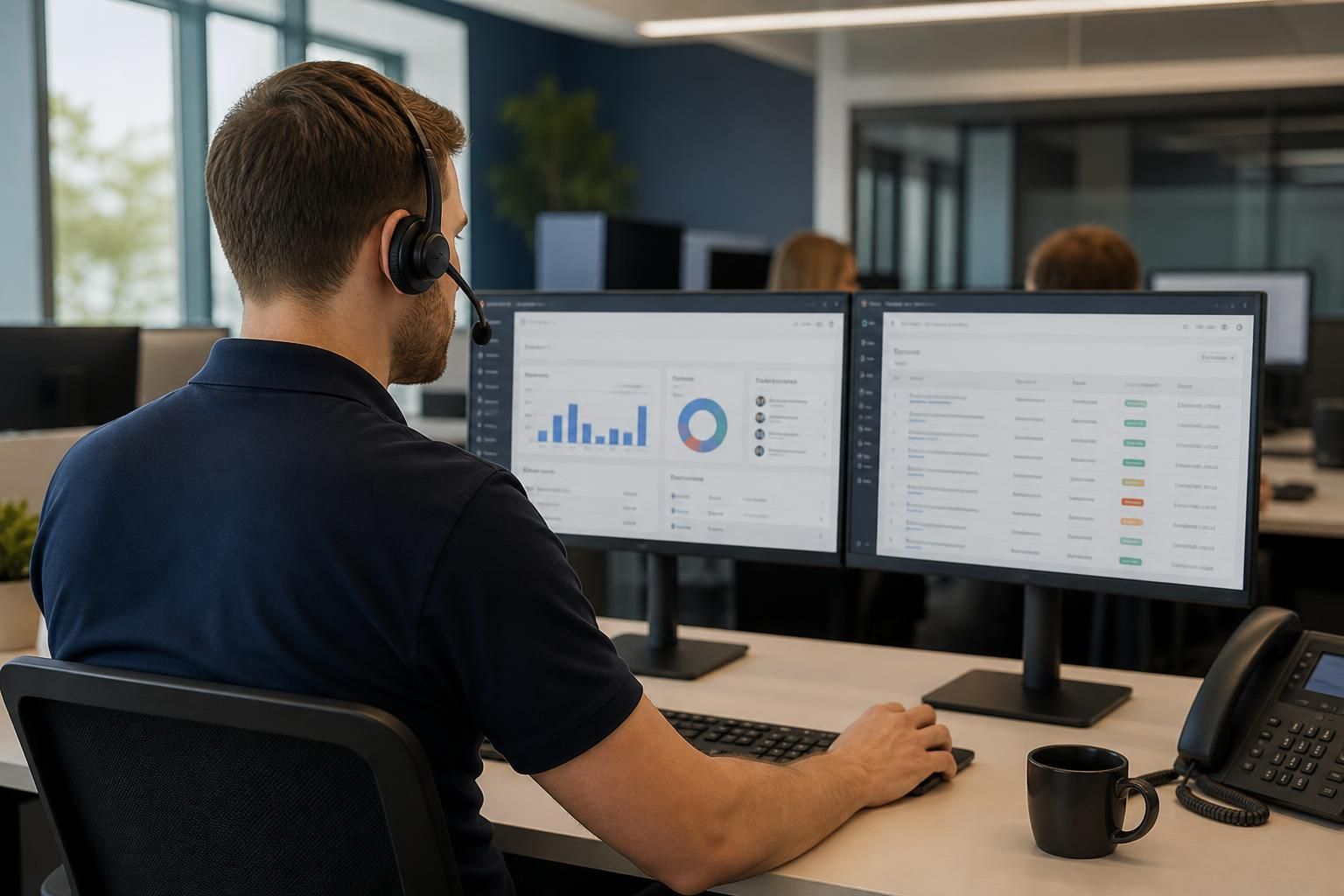
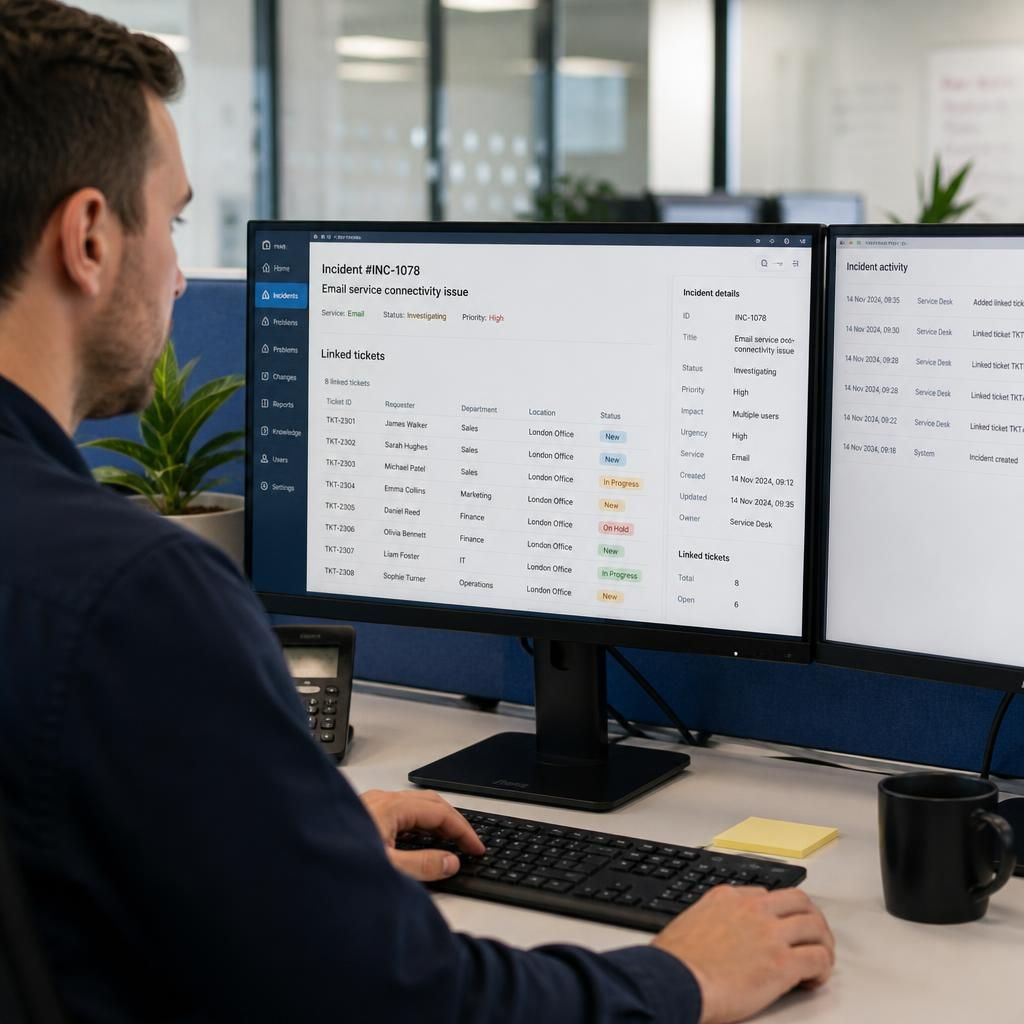
When several users report the same fault, the IT helpdesk correlates the tickets and treats them as a single incident rather than handling each report separately. Priority is then based on the fault’s scope, business impact, affected services and urgency, with a master ticket used to coordinate investigation, updates and resolution.
When several users report the same fault, the helpdesk normally assigns priority to the underlying incident rather than treating the number of tickets as the only deciding factor. The assessment considers the extent of the disruption, the importance of the affected service, the users and locations involved, the urgency of the business process, and whether a safe workaround exists.
Each report still has value. Individual tickets can provide different symptoms, error messages, affected devices or locations, helping the technician confirm whether the reports have a common cause. Once the relationship is established, the helpdesk can link the tickets to the main incident and manage the technical work through a coordinated record.
Impact and urgency are assessed separately. Impact describes how much of the organisation is affected, while urgency describes how quickly the issue needs attention. A fault affecting a small number of users may still be urgent if it prevents a time-sensitive process or affects a critical business function. Conversely, a widespread issue may receive a lower priority if an effective workaround is available and normal operations can continue.
- Scope: whether the fault affects one user, a department, several sites or most of the organisation.
- Service criticality: whether the affected system supports essential operations, customer services, production, communications, finance or security controls.
- Business effect: whether users are completely unable to work, operating with reduced functionality or experiencing inconvenience only.
- Urgency: whether the disruption is preventing a deadline, scheduled activity or important operational process.
- Workarounds: whether users can continue safely through another system, connection, device or manual process.
- Risk: whether the fault may indicate data loss, unauthorised access, a wider infrastructure failure or another security concern.
The number of reports is therefore an important signal, but it does not automatically make an incident critical. Ten users unable to access a non-essential application may represent less business risk than one user responsible for a vital operational process. The helpdesk should also avoid allowing repeated submissions from the same person or department to distort the assessment.
Location and dependency information can change the priority. If users in one office are affected, the cause may be local to that site. If the same fault appears across different locations or affects remote connections as well, it may point to a shared network, identity, cloud or core infrastructure dependency. A problem in a common dependency can justify broader investigation even before every affected user has reported it.
Where appropriate, the helpdesk classifies the incident as a major or high-impact event under the organisation’s agreed service management process. This is generally based on predefined criteria rather than personal judgement alone. Criteria may include the number or type of users affected, the importance of the service, the presence of a security implication, the lack of a workaround and the potential for the disruption to spread.
Priority can change as evidence develops. Initial reports may suggest an isolated user issue, but further diagnosis may reveal a shared service failure. Equally, an incident may be downgraded when a workaround is confirmed, the affected service is restored, or the apparent common cause turns out to be several unrelated faults. The record should show why the priority changed so that the decision can be reviewed later.
Good ticket handling also separates technical urgency from communication needs. A lower-impact incident may require clear advice to many users to prevent duplicate reports, while a high-impact incident may need regular status updates for business contacts, site managers or service owners. These communication requirements do not replace technical prioritisation, but they help control the volume of related tickets and keep affected users informed.
After the underlying issue is resolved, linked tickets should be checked before closure. The helpdesk should confirm that the affected service is usable, identify any users who still have a separate problem and record the final cause or workaround. If several users experienced the same fault, the incident may also lead to a problem-management review to identify a permanent correction, recurring pattern or preventative change.
For businesses, a well-defined prioritisation process should be documented in the IT helpdesk agreement or service management procedures. It should explain priority levels, impact and urgency criteria, escalation routes, communication responsibilities, major-incident thresholds and how linked tickets are closed. This gives the helpdesk a consistent basis for deciding which work takes precedence when multiple users report the same fault.
Prioritisation determines the order in which the underlying incident is investigated, but it does not always mean that the first technical action will be the most visible user request. A helpdesk may need to restore a shared dependency, such as authentication, a network service or an application component, before individual user access can be corrected.
This distinction helps prevent duplicated work. Technicians can record the affected users against the central incident, identify the dependency that requires attention and sequence actions according to risk and operational effect. Individual tickets remain useful for confirming recovery, but the queue is controlled through the shared incident rather than through multiple separate fixes.