
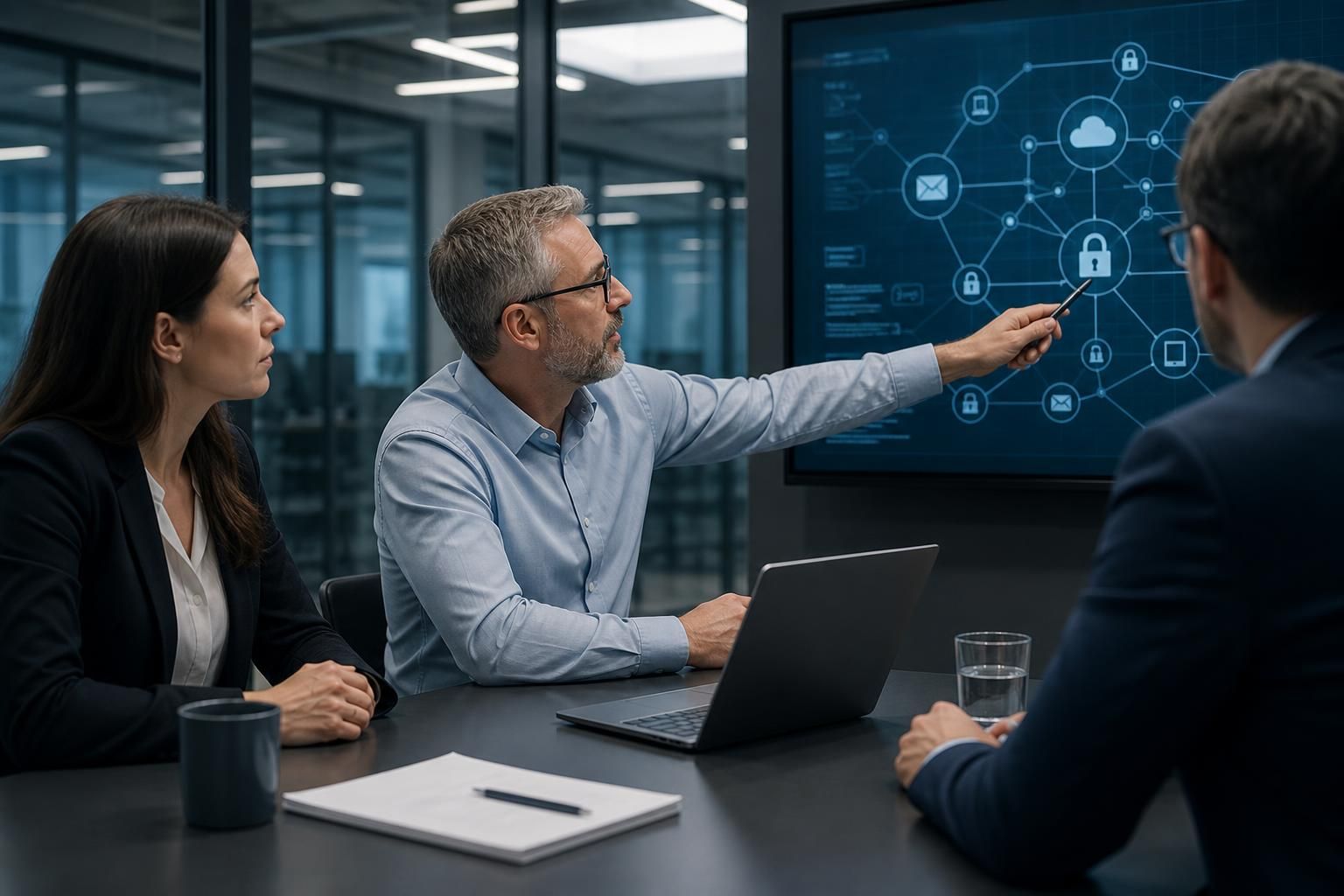
IT Security Consultancy Services
IT security consultancy services assess how a business’s technology is protected, identify weaknesses and set practical priorities across users, devices, networks and cloud systems. S2 Technology Group connects cyber risk management with ongoing IT decisions.
Practical Outcomes of IT Security Consultancy
The outcomes of IT security consultancy extend beyond technical recommendations. They include clearer ownership, more consistent decision-making, documented controls and a defined basis for reviewing risk as systems, suppliers and working practices change.
Prioritised Security Improvements
A consultancy assessment separates urgent weaknesses from lower-risk enhancements, helping the organisation direct its budget and technical effort towards the areas most likely to affect its operations.
Stronger Protection for Business Data
Reviewing access permissions, devices, networks and cloud services can identify practical changes that reduce the risk of unauthorised access, data loss and avoidable exposure.
Better Alignment Between IT and Business Needs
Security recommendations can be matched to the organisation’s working practices, operational requirements and growth plans, avoiding controls that create unnecessary friction or do not address relevant risks.
Improved Supplier and Third-Party Oversight
Consultancy can clarify how external technology providers, hosted platforms and connectivity services contribute to the overall security position, giving the business a clearer basis for assessing supplier-related risk.
A More Structured Approach to Future Change
When security considerations are built into technology planning, infrastructure upgrades, remote access arrangements and cloud decisions can be assessed consistently before changes are introduced.
Security Guidance for Real-World Business Needs
IT security consultancy is the structured process of relating security advice to the way an organisation actually works. It considers how staff handle information, how decisions are made and where technical requirements affect day-to-day operations.
Good advice should be understandable to the people responsible for acting on it. S2 discusses the reasoning behind recommendations, distinguishes urgent concerns from longer-term improvements, and explains what each change is intended to achieve. This makes technical subjects easier to evaluate without overstating the risk.
It can also support conversations between directors, internal teams and suppliers. S2 helps businesses compare practical options and select measures that fit their responsibilities, resources and plans.
Experienced, Evidence-Led IT Security Consultancy
IT security consultancy examines the relationship between an organisation’s technology architecture, information assets and business risk. S2 Technology Group brings together knowledge of infrastructure, cloud environments, endpoint protection, access controls and network security to assess how these components operate as a whole.
This breadth helps identify dependencies that a narrow technical review may miss, such as excessive access, unsupported systems, weak administrative separation or security controls that are difficult to apply consistently. Recommendations are considered in relation to operational requirements, compliance responsibilities and the organisation’s tolerance for disruption.
S2 provides an informed basis for strengthening security governance and planning future technology investment. Its consultancy-led approach is suited to businesses that need specialist IT and cyber security expertise without treating security as a separate exercise from wider technology management.
Questions to Ask Before Choosing IT Security Consultancy
Is the IT security consultant independent of specific technology vendors?
A consultancy engagement should produce prioritised actions, accountable owners, decision rationale, and review criteria, rather than a generic report. It should explain assumptions, limitations, dependencies, and intended outcomes in detail.
Does the IT security consultancy understand our industry’s regulatory requirements?
It should map applicable obligations to practical controls, evidence and review responsibilities, distinguishing legal duties from recognised frameworks. Advice must reflect the organisation’s sector, data handling, suppliers and operating model.
How does IT security consultancy test whether recommended controls will work in practice?
Testing should use representative scenarios, user workflows and technical checks, then record failures, usability issues and unintended effects. Recommendations can be adjusted before formal adoption, with evidence retained for review.
Can IT security consultancy address legacy systems without disrupting essential operations?
Legacy systems can be assessed for dependencies, unsupported components and integration constraints, then isolated, monitored or upgraded in stages. Change planning should preserve critical workflows while reducing exposure and debt.
How does IT security consultancy support knowledge transfer to internal teams?
Knowledge transfer should include documented procedures, administrator guidance, demonstrations and opportunities for questions. Internal teams need enough context to operate controls safely, recognise exceptions and maintain them after consultancy ends.
Practical Insight
S2 turns complex security requirements into clear governance decisions, giving growing organisations a practical route from technical uncertainty to accountability.
Businesses We Support

Professional Services Teams
Professional services organisations depend on controlled access to client information, dependable collaboration tools and clear technology responsibilities. IT consultancy can help review how users, devices and cloud systems support these requirements, while identifying improvements that align with the firm’s governance and risk obligations.

Manufacturing Operations
Manufacturing businesses need technology advice that reflects both office systems and operational environments. Consultancy can assess network dependencies, user access, device management and resilience, helping decision-makers understand how security considerations relate to production processes and business continuity.

Logistics Organisations
Logistics organisations often rely on connected users, suppliers and systems to coordinate information across locations. An IT consultancy review can examine access arrangements, connectivity, cloud services and information handling, giving the business a clearer basis for prioritising security and infrastructure decisions.

Multi-Site Businesses
Multi-site businesses may need consistent technology policies without overlooking the differences between individual locations. Consultancy can compare systems, access controls and operational practices across sites, helping leaders establish practical standards and identify areas where local arrangements create additional technology risk.
Where IT Security Consultancy Fits
Businesses may seek IT security consultancy when planning a technology change, reviewing supplier access, preparing for compliance requirements or investigating a suspected weakness. Each situation calls for a different combination of assessment, documentation, technical priorities and guidance for decision-makers.
Planning Technology Growth
When an organisation is expanding, consultancy can assess whether its existing systems, user access and security controls will support additional staff, locations or operational demands. The review helps separate immediate technical requirements from improvements that can be planned over time.
Changing Cloud Services
Moving applications or data to cloud platforms affects identity management, permissions, devices and information handling. IT consultancy provides a structured assessment of these dependencies so that security considerations are included in the design rather than added after implementation.
Reviewing External Access
Suppliers, contractors and other third parties may need access to business systems or information. Consultancy can examine how that access is granted, limited and reviewed, helping decision-makers establish controls that reflect the work being carried out.
Preparing for Requirements
Businesses facing contractual, regulatory or customer security requirements may need clearer evidence of how their technology is governed. Consultancy can map existing arrangements, identify gaps in documentation and organise practical actions around the obligations that apply.
Investigating a Weakness
A suspected vulnerability, unusual system behaviour or an unclear control can make it difficult to decide what should happen next. An impartial assessment can examine the relevant technology and processes, distinguish contributing factors and set priorities for corrective work.
IT Security Consultancy FAQs
What does an IT security consultancy review first?
IT security consultancy reviews technology, processes and responsibilities, then provides prioritised advice on reducing risk, meeting relevant obligations and aligning security measures with an organisation’s operational requirements and available resources.
What deliverables should an IT security consultancy provide?
Deliverables typically include an assessment report, documented findings, a risk register, prioritised recommendations, an improvement roadmap, concise guidance for decision-makers, and agreed next steps.
When should a business engage an IT security consultant?
Engage an IT security consultant before major technology changes, business growth, compliance reviews, acquisitions, or after a concerning event, so security decisions reflect changed risks and responsibilities and operational priorities.
How much does IT security consultancy cost?
Costs vary according to the consultancy’s scope, business size, technical complexity and required deliverables. A scoping discussion can establish the work involved before S2 prepares a tailored quotation for review.
What information does an IT security consultancy need before starting?
An IT security consultancy may need an outline of your systems, users, locations, suppliers, business priorities, known concerns, existing policies and relevant compliance obligations. Access details and documentation improve scoping.