

Business Broadband & Connectivity
Business broadband and connectivity provide the internet access, network links and supporting services organisations need for cloud applications, communication and secure remote working. S2 Technology Group designs and manages suitable connectivity solutions for businesses in Stourbridge and neighbouring areas.
What Effective Business Connectivity Delivers
A well-planned business connectivity arrangement produces practical outcomes across daily operations. The points below show how internet services, network links and management controls can support continuity, performance, security and flexibility as business requirements change.
More reliable access to cloud applications
Suitable broadband capacity and network design help staff use cloud platforms, hosted files and business systems with fewer connectivity-related interruptions to everyday work.
Clearer business communications
Consistent connectivity supports internet-based voice calls, video meetings, messaging and file sharing, helping teams communicate across offices and locations.
Secure remote working
Business connectivity can be configured with controlled remote access so authorised staff can reach required systems and resources without exposing them unnecessarily.
Stronger continuity for essential services
Connectivity planning can identify important dependencies and provide suitable resilience measures, helping the organisation maintain access to key systems when a connection problem occurs.
Simpler connections between sites
Managed network links can connect offices, branches, warehouses and remote users so teams can access shared resources through a more consistent business network.
Capacity that supports business growth
A scalable connectivity plan makes it easier to accommodate additional users, locations, cloud services and data demands as the organisation develops.
Better oversight of network performance
Managed connectivity gives the organisation a clearer view of how internet access and network links are being used, supporting more informed decisions about upgrades, security and future capacity.
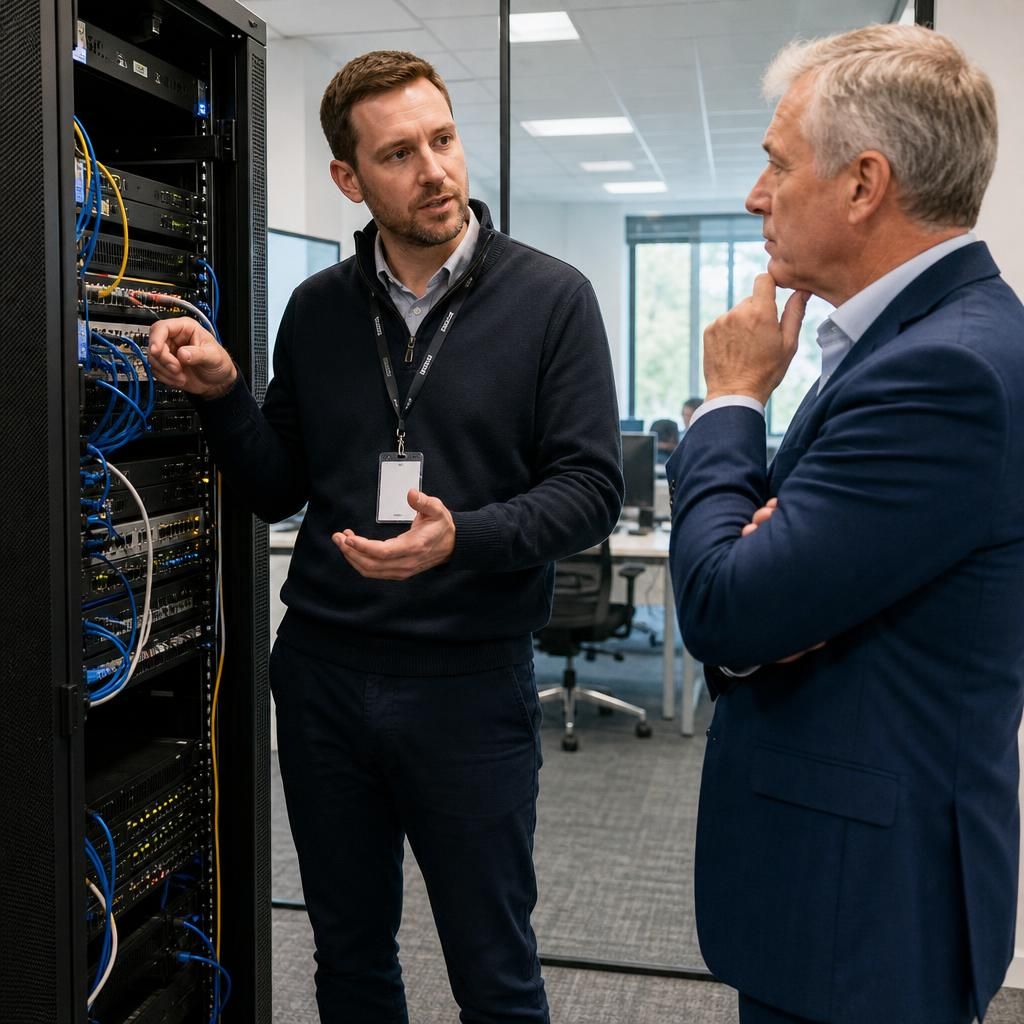
Business Connectivity with a Human Approach
Choosing connectivity involves more than selecting the fastest advertised package. The suitable option depends on how your organisation uses cloud platforms, voice services, shared systems and remote access, and on the consequences of disruption. S2 begins by understanding those requirements before recommending an approach.
Reviewing existing circuits, network equipment, wireless coverage and security controls can distinguish a capacity issue from a configuration or internal network problem. Where changes are appropriate, S2 plans the work around technical dependencies rather than treating it as an isolated broadband purchase.
People remain part of the process. S2 explains technical choices in business terms, records the reasoning behind recommendations and manages supported connectivity arrangements. This gives your team a clearer basis for deciding what should change now, what can wait and how growth may affect the network.
Specialist Expertise in Business Connectivity
Business broadband and connectivity encompass more than the access circuit itself. A robust design considers bandwidth, latency, contention, resilience and the way traffic is prioritised between cloud applications, voice services, business systems and remote users. These factors determine whether a connection remains suitable as operational demands change.
S2 Technology Group applies this technical perspective when assessing connectivity requirements and network dependencies. Recommendations can take account of circuit suitability, failover considerations, firewall configuration, traffic management and the relationship between internet access and internal infrastructure. This helps distinguish a broadband limitation from wider network design or security issues.
Connectivity also needs to be governed over time rather than treated as a one-off procurement decision. Documented configurations, clear ownership and periodic review provide a stronger basis for managing changes, investigating faults and planning capacity. S2 combines infrastructure knowledge with practical business context to help organisations make informed connectivity decisions.
Questions to Ask About Business Broadband and Connectivity
How should businesses compare broadband options beyond advertised download speed?
Review contract terms for installation responsibilities, fault escalation, service credits, renewal dates, equipment ownership and exit arrangements. Clear boundaries reduce disputes when circuits, suppliers or internal systems change over time.
Does your business broadband need symmetrical upload and download speeds?
Symmetrical speeds are valuable when staff upload large files, synchronise cloud data, use video conferencing or host services. Otherwise, prioritise usage patterns, latency and network design over advertised download speeds.
How should businesses assess broadband resilience before choosing a connectivity provider?
Assess resilience by checking whether primary and backup circuits use separate routes, carriers and power paths, then confirm automatic failover, monitoring, testing arrangements and recovery procedures for critical business services.
What network security controls should accompany a business broadband connection?
Controls should include a configured firewall, secure wireless settings, endpoint protection, multi-factor authentication and segmented access. Regular patching, log review and tested incident procedures help identify misuse and contain threats.
How should multi-site businesses design connectivity between locations?
Multi-site connectivity should reflect application flows, location dependencies and governance needs. Assess whether sites require direct communication, centralised security, cloud access or independent internet services, then document routing and ownership.
Connected Expertise
S2 Technology Group combines connectivity design, security assessment and infrastructure planning, evaluating broadband within the wider business technology context itself.
Businesses We Support

Professional Services Connectivity
Professional services firms depend on stable access to cloud applications, document systems, video meetings and voice services. Connectivity planning considers user numbers, security controls and how staff access information from office and remote locations.

Manufacturing Network Links
Manufacturing environments may need connectivity for production systems, stock information, supplier communication and office applications. Broadband and internal network design must account for operational dependencies, equipment locations and appropriate separation between business and operational systems.

Connectivity for Logistics Operations
Logistics organisations rely on internet access for planning, communication, tracking and shared business systems. A suitable connectivity arrangement supports the locations, devices and applications involved while allowing security and resilience requirements to be assessed as part of the wider IT environment.

Multi-Site Business Connectivity
Organisations operating across multiple sites may need dependable links between offices, shared access to cloud services and consistent security controls. Connectivity decisions should consider site roles, traffic patterns, remote access requirements and how changes at one location affect the wider network.
Connectivity for Different Business Requirements
Different organisations place different demands on their connectivity. The examples below show how business broadband and network services may be considered for single offices, cloud-dependent teams, multiple locations, remote users and operations where dependable communications support day-to-day work.
Single-Office Businesses
A single office still needs consistent internet access for email, cloud platforms, online services and business communications. The appropriate broadband service depends on user numbers, application demands and the capacity of the internal network.
Cloud-Dependent Teams
Organisations that rely on hosted software, cloud storage or internet-based voice services should assess connectivity as part of their wider IT design. Bandwidth, upload performance and network configuration all affect how effectively these systems can be used.
Multiple Locations
Businesses operating from more than one site may need connectivity that supports secure links between offices and consistent access to shared systems. The design should account for each location’s users, applications, network equipment and security requirements.
Remote and Hybrid Working
Remote users need dependable access to business systems without weakening security controls. Connectivity planning can include the links, authentication arrangements and remote access technologies required for staff working away from the main office.
Growing Organisations
As a business adds staff, premises, cloud services or connected devices, an existing broadband arrangement may no longer match its requirements. Reviewing the current circuit and infrastructure helps identify which changes support growth and which issues need configuration work instead.
Business Broadband & Connectivity FAQs
What is the difference between business broadband and residential broadband?
Business connectivity can include dedicated internet access, business broadband, leased lines, mobile backup and managed network services. The appropriate choice depends on capacity, resilience, security requirements and organisational operating locations.
What broadband options suit small businesses using cloud-based applications?
For cloud-based workloads, broadband with sufficient download and upload capacity may suit smaller teams. Organisations with higher reliance or continuity requirements may need dedicated access, resilience or managed network support.
How is business broadband installed?
Installation typically involves confirming site requirements, arranging the circuit, configuring associated network equipment, testing connectivity and reviewing handover details so users can operate the service securely and reliably from completion.
What affects the cost of business broadband?
Costs depend on the connection type, required bandwidth, contract terms, installation requirements, resilience, managed equipment and support. Internal network changes, additional sites and security measures may also affect total investment.
How do businesses monitor broadband performance?
Businesses can monitor broadband performance through provider reports, router metrics, latency and packet-loss tests, utilisation trends, and outage records. These measures help identify congestion, faults, or internal network issues early.