
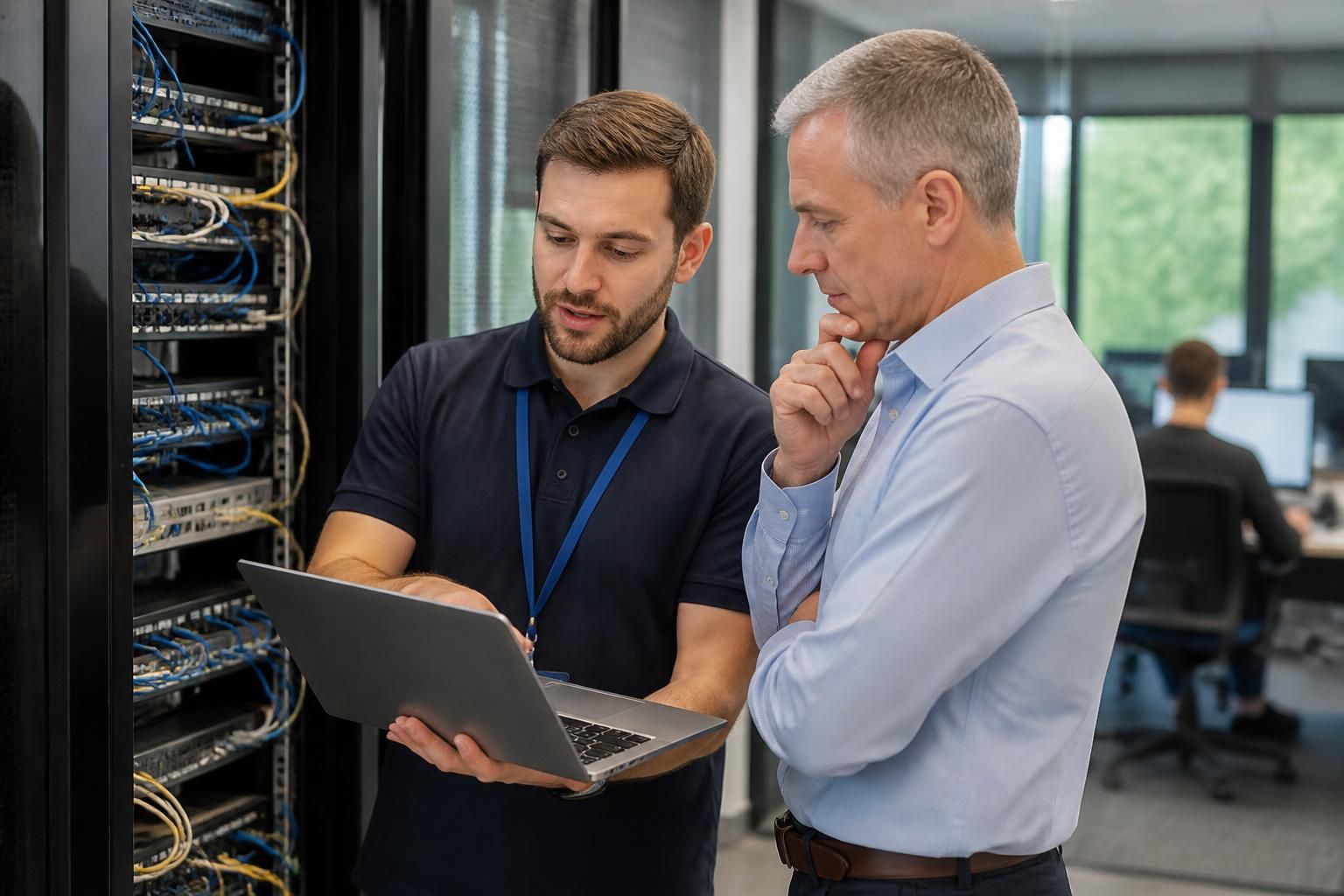
Business IT Network Support
Business IT network support covers the design, maintenance and troubleshooting of the connectivity infrastructure that links people, devices, sites and cloud services. It helps organisations manage network performance, security and access across office and remote working environments.
What Business Connectivity Services Can Deliver
Business connectivity services provide a basis for organising digital operations, with benefits that extend beyond linking devices. They can support continuity, collaboration, capacity planning and clearer technology governance when networks, sites and cloud resources must work together.
More Reliable Access to Business Systems
Well-designed connectivity helps staff access shared files, applications and cloud platforms with fewer network-related interruptions, supporting more consistent day-to-day operations.
Secure Connections Between Users and Resources
Business connectivity can separate users, devices and services appropriately, helping organisations control access to internal systems and reduce exposure across office and remote working environments.
Better Support for Remote and Hybrid Work
Secure remote access allows authorised employees to connect to business resources away from the main office, while maintaining appropriate controls over devices, users and data.
Consistent Communication Across Sites
Inter-site connectivity links offices, branches and operational locations so teams can share systems and information without treating each location as an isolated network.
Improved Cloud Application Performance
Connectivity planning considers how the organisation uses cloud services, helping align internet capacity, traffic management and network configuration with the applications employees rely on.
Clearer Capacity Planning
Monitoring usage and reviewing network requirements gives decision-makers a clearer basis for planning upgrades as staff numbers, devices, sites and cloud services change.
Stronger Business Continuity Planning
Connectivity assessments can identify single points of failure and inform practical measures for maintaining access to important systems when a network component or connection is disrupted.
A Practical Approach to Business Connectivity
Business connectivity services are the practical process of assessing, selecting and managing the communication arrangements a company relies on. This includes understanding how information moves between users, systems, sites and cloud applications, then aligning those arrangements with operational requirements.
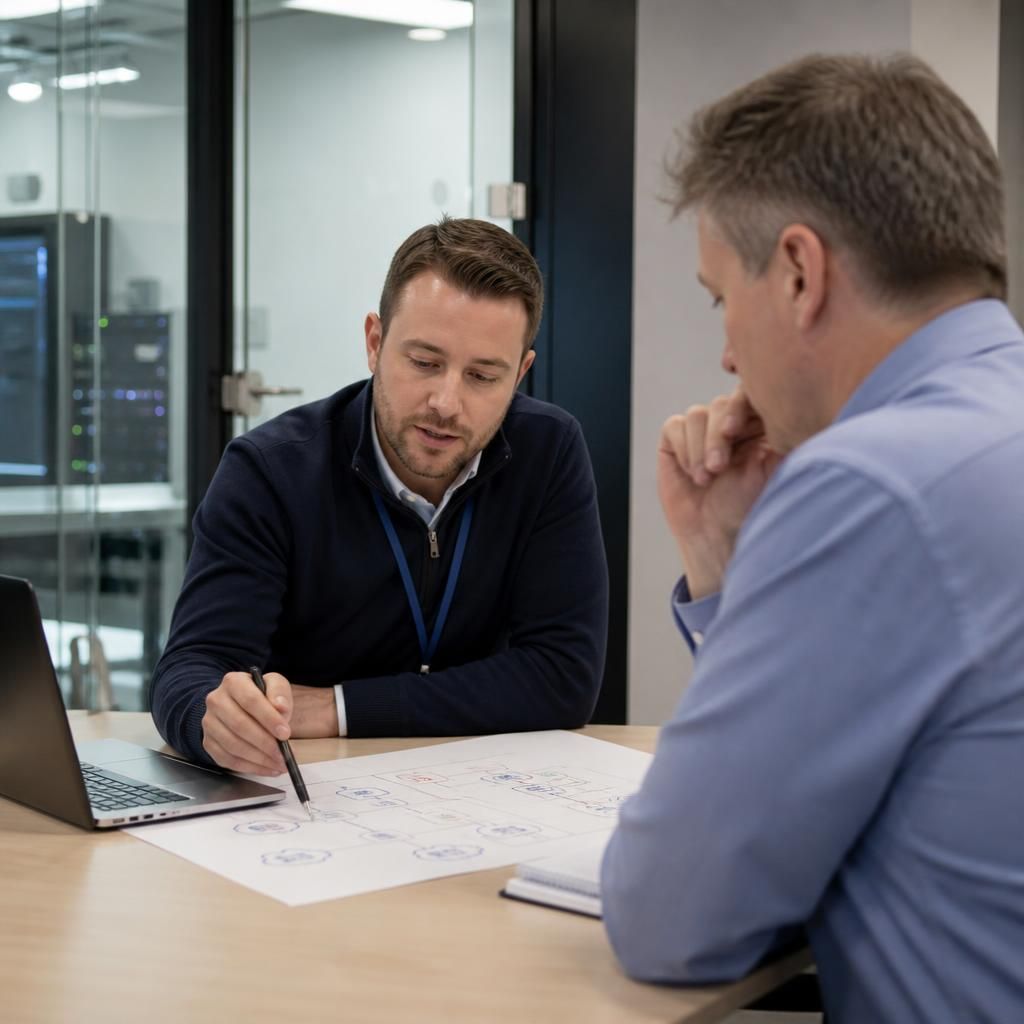
Good connectivity work starts with understanding how staff, applications and sites actually exchange information. An IT specialist can map dependencies, identify points where a fault would disrupt work, and explain which improvements are worthwhile before changes are made.
That practical discussion matters because network decisions affect people as well as equipment. S2 Technology Group works with business teams to translate technical findings into clear decisions. Recommendations can be set out by priority, technical impact and practical implications for users. As the organisation develops, this record gives decision-makers a clearer basis for reviewing connectivity, access arrangements and future infrastructure changes. The aim is a network plan people can understand and maintain, rather than a collection of unexplained settings.
Specialist Expertise in Business Connectivity
Business IT network support is the structured management of the infrastructure that enables business systems, users and services to communicate securely. It includes reviewing network architecture, configuring core services, managing access and addressing technical issues that could affect productivity or expose the organisation to unnecessary risk.
S2 Technology Group applies this work to the practical needs of small and medium-sized organisations, where network decisions must support day-to-day operations as well as future growth. Its approach considers the relationship between connectivity, cyber security, cloud services and user access, helping ensure that technical changes are made with the wider IT environment in mind.
Specialist support also provides a sound basis for infrastructure upgrades and ongoing management. By combining technical assessment with strategic advice, S2 Technology Group can help organisations establish clearer priorities for network improvements, strengthen control over connected resources and maintain a more consistent technology environment as requirements change.
Questions to Ask About Business Connectivity
How is connectivity resilience assessed across critical business services?
Assess whether the provider documents network dependencies, separates critical services, reviews supplier arrangements, and explains how proposed changes affect security, resilience, compliance and future expansion before implementation and stakeholder approval.
How is business network performance monitored?
Monitoring should combine baseline measurements with alerts for latency, packet loss, bandwidth use and service availability. Review trends alongside user reports to distinguish isolated faults from capacity or configuration issues.
How are network access permissions controlled across users, devices and cloud services?
Access control should apply least-privilege permissions, authenticated devices and separated administrative accounts. Review joiners, movers and leavers, privileged access, cloud roles and audit records regularly, removing unnecessary rights without delay.
How are network changes tested before implementation?
Testing should use documented plans, representative configurations and staged implementation where practical. Validate routing, authentication, security controls and dependent services, record results, define rollback steps, then obtain approval to deploy.
What should a business connectivity contract include?
A contract should define services, responsibilities, supported environments, security obligations, change control, documentation, escalation routes, review arrangements, termination terms and ownership of configurations and records, with service boundaries and exclusions.
Clear Guidance
S2 Technology Group connects network planning with cyber security, cloud services and user access, creating one coherent business connectivity strategy.
Businesses We Support

Professional Services Teams
Professional services organisations depend on dependable access to cloud applications, shared files and communication platforms. Connectivity planning can help separate user access, support secure remote working and identify how network changes may affect day-to-day client work.

Manufacturing Operations
Manufacturers often connect office systems with production environments, stock records and operational devices. A suitable connectivity design considers how these systems exchange information while keeping access controlled and limiting unnecessary disruption between business functions.

Logistics Businesses
Logistics organisations rely on connections between offices, warehouses, vehicles and cloud-based systems. Reviewing how sites and users communicate can clarify access requirements, highlight dependencies and support a more consistent approach to network management.

Multi-Site Organisations
Businesses operating from several locations need connectivity that supports communication between sites as well as access to central applications. Planning should account for site-to-site links, user permissions, cloud traffic and the practical requirements of each workplace.

Growing Organisations
As an organisation expands, informal network arrangements may become harder to manage. Connectivity reviews can help document existing dependencies, assess changing access needs and establish a clearer basis for future infrastructure decisions.
Connectivity Support for Different Business Needs
Business connectivity requirements vary according to how an organisation operates, communicates and accesses systems. The following situations show where structured network support can help, from improving links between locations to managing access for distributed teams and cloud-dependent workflows.
Single-Site Office Connectivity
A structured connectivity review can help offices assess how broadband, internal networks, wireless access and connected devices work together. This provides a clearer basis for addressing weak points, unsuitable arrangements or changes in the way staff use technology.
Multi-Site Business Networks
Organisations operating from multiple premises need dependable links between locations and consistent access to shared systems. Connectivity planning can examine how sites exchange information and identify practical requirements for maintaining a joined-up network structure.
Remote and Hybrid Working
Distributed teams rely on secure access from different locations, with performance affected by home connections, user devices and the systems being accessed. Connectivity support can help document these dependencies and inform suitable access and network decisions.
Cloud-Dependent Workflows
When key applications and files are hosted in the cloud, connectivity becomes central to everyday work. Reviewing how users connect to cloud services can help businesses understand network capacity, access requirements and the effect of infrastructure changes.
Growing Organisations
Business growth can introduce more users, devices, locations and applications into an existing connectivity arrangement. A planned review helps determine whether the current network can support these changes and what should be considered before further investment.
Operational and Industrial Environments
Manufacturing, logistics and other operational businesses may depend on connectivity between teams, equipment, sites and business systems. Mapping these connections helps clarify which network dependencies are important to day-to-day processes and future infrastructure planning.
Business Connectivity Questions Answered
What is the difference between business broadband and leased lines?
Business connectivity support covers internet links, internal networks, site-to-site connections, remote access and cloud traffic, with advice focused on reliability, security, capacity and practical business requirements instead of isolated changes.
How should businesses plan connectivity for remote workers?
Plan remote connectivity around secure access, user roles, device standards, application needs and connection resilience. Document how staff reach business systems, then review arrangements as working patterns and risks change.
What causes business network congestion?
Business network congestion occurs when traffic demand exceeds available capacity, causing slower applications, delayed file transfers and unstable calls. Common causes include cloud use, downloads, inadequate bandwidth and unmanaged devices.
How does DNS affect business connectivity?
DNS translates domain names to IP addresses, guiding requests to websites and cloud services. Correct records, caching, and secure configuration reduce failed lookups, delays, and unintended traffic paths for users.
What is the role of Quality of Service in business networks?
Quality of Service prioritises important traffic, such as voice or critical applications, when networks are busy. It helps preserve performance by managing queues, bandwidth allocation and traffic marking during congestion.
Discuss Your Business Connectivity Requirements
Discuss your connectivity requirements with S2 Technology Group to clarify current network constraints, access needs and planned changes. You can then assess suitable support options for maintaining dependable links between users, sites, systems and cloud services.