
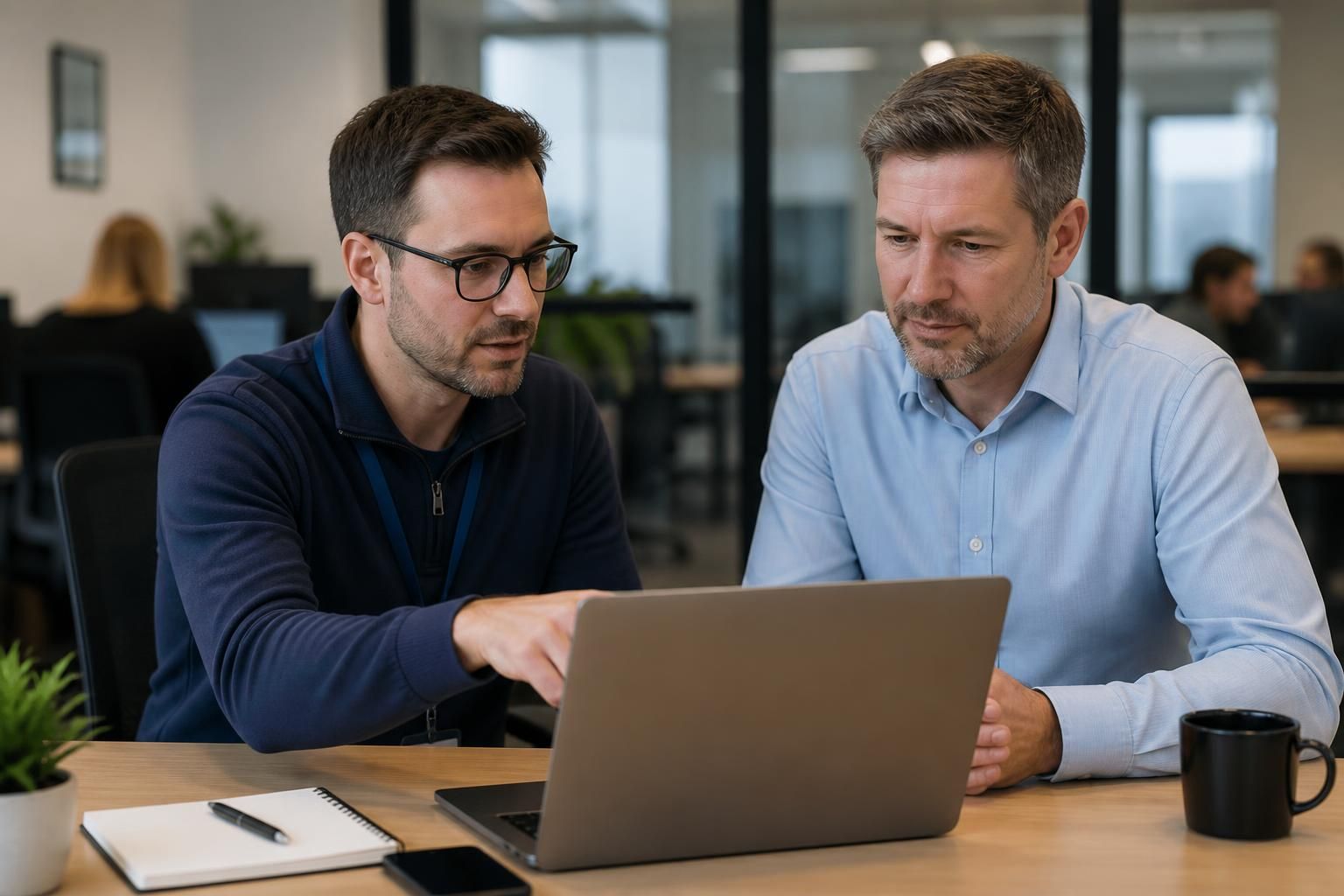
Outsourced IT for Small Business
Outsourced IT for small businesses means using an external technology partner to manage selected or complete IT responsibilities, rather than employing a full in-house team. This approach can cover day-to-day support, cyber security, cloud systems and infrastructure planning.
Benefits of Outsourced IT for Small Businesses
The right outsourced IT arrangement can give a small business clearer control over technology, without requiring every capability in-house. Its practical value is seen in how it supports secure working, informed decisions, dependable systems and planned business growth.
Access to broader IT expertise
Outsourcing gives a small business access to expertise across support, infrastructure, cloud systems and cyber security without building every specialist capability into its own team.
More consistent technology management
An outsourced IT arrangement provides a defined approach to maintaining systems, managing user needs and addressing technical issues, reducing reliance on informal or ad hoc processes.
Stronger cyber security practices
External IT support can help apply appropriate security controls, review risks and maintain protective measures as threats and business requirements change.
Better-managed cloud and remote access
Cloud platforms and remote access systems require suitable configuration, permissions and ongoing oversight. Outsourced management helps keep these arrangements aligned with how the business works.
Less reliance on individual employees
Documented systems and external technical knowledge reduce the risk of important IT knowledge being held by one employee, particularly where there is no dedicated in-house IT team.
More informed technology investment
A technology partner can relate infrastructure upgrades and service choices to business requirements, helping decision-makers understand what needs attention and why.
Technology that can support growth
Planned IT management makes it easier to adapt systems, access arrangements and security controls as a small business adds people, locations or operational requirements.

People Behind Your Small Business IT
For a small business, outsourced IT is a shared operating model: the organisation retains business decisions while an external specialist takes responsibility for agreed technical tasks. Clear boundaries help both sides know who owns each decision and when input is needed.
That model can be shaped around the business rather than a fixed package. One organisation may need help coordinating suppliers and user access; another may be preparing for new premises, hybrid working or a second site. The useful question is which responsibilities need specialist input.
S2 Technology Group bases discussions on how your people work and what the business needs. You should understand what is managed, why it matters and which decisions may need attention later. That clarity makes it easier to assess whether outsourced IT is suitable.
Specialist Expertise in Small Business IT
Outsourced IT for small businesses is most effective when technical decisions are managed as part of the organisation’s wider risk and growth planning. S2 Technology Group brings together expertise in IT operations, cyber security, cloud services and business connectivity, allowing related issues to be assessed rather than treated as isolated faults.
Specialist depth matters when systems, users and suppliers change. S2 can help businesses review access controls, device and infrastructure requirements, cloud dependencies and connectivity arrangements, then identify which improvements should be prioritised. This provides a more structured basis for decisions than responding to individual technical problems as they arise.
Good outsourced IT also depends on clear technical ownership and informed advice. S2 Technology Group explains the implications of proposed changes in practical terms, helping business leaders understand the risks, dependencies and decisions involved. That combination of operational knowledge and strategic guidance is central to building a suitable IT approach for a growing small business.
Questions to Ask About Outsourced IT for Small Business
What should a small business expect from an outsourced IT provider?
Ask how the arrangement handles documentation, supplier access and eventual handover. A sound provider should define ownership of data, configurations and credentials, avoiding dependence on undocumented knowledge or inaccessible systems.
How should a small business measure outsourced IT performance?
Use agreed measures covering service quality, issue trends, security actions, system availability and progress against planned improvements. Review these regularly alongside business impact, not ticket volume alone, to identify priorities.
Which IT responsibilities should a small business outsource?
Prioritise responsibilities requiring specialist knowledge, consistent oversight or separation from daily operations, such as security administration, cloud management and infrastructure planning, while retaining key strategic decisions internally within the business.
How is outsourced IT for small businesses priced?
Pricing typically reflects the users, devices, locations, systems and responsibilities included, alongside the support model. Request an itemised proposal separating recurring management, project work, licences and third-party charges where applicable.
What happens during the transition to outsourced IT?
Transition involves assessing existing systems, documenting dependencies, agreeing responsibilities, sequencing changes and validating access. A controlled handover should preserve essential operations while identifying risks, unresolved issues and planned follow-up actions.
Integrated Technology Advice
S2 Technology Group combines IT operations, cyber security, cloud expertise and connectivity advice into one focused partnership for small businesses.
Businesses Supported by S2 Technology Group

Client-Facing Office Teams
Professional services organisations depend on dependable devices, secure access to business data and systems that support client work. Outsourced IT can provide structured oversight of user accounts, cloud services and day-to-day technology responsibilities without requiring every specialist role in-house.
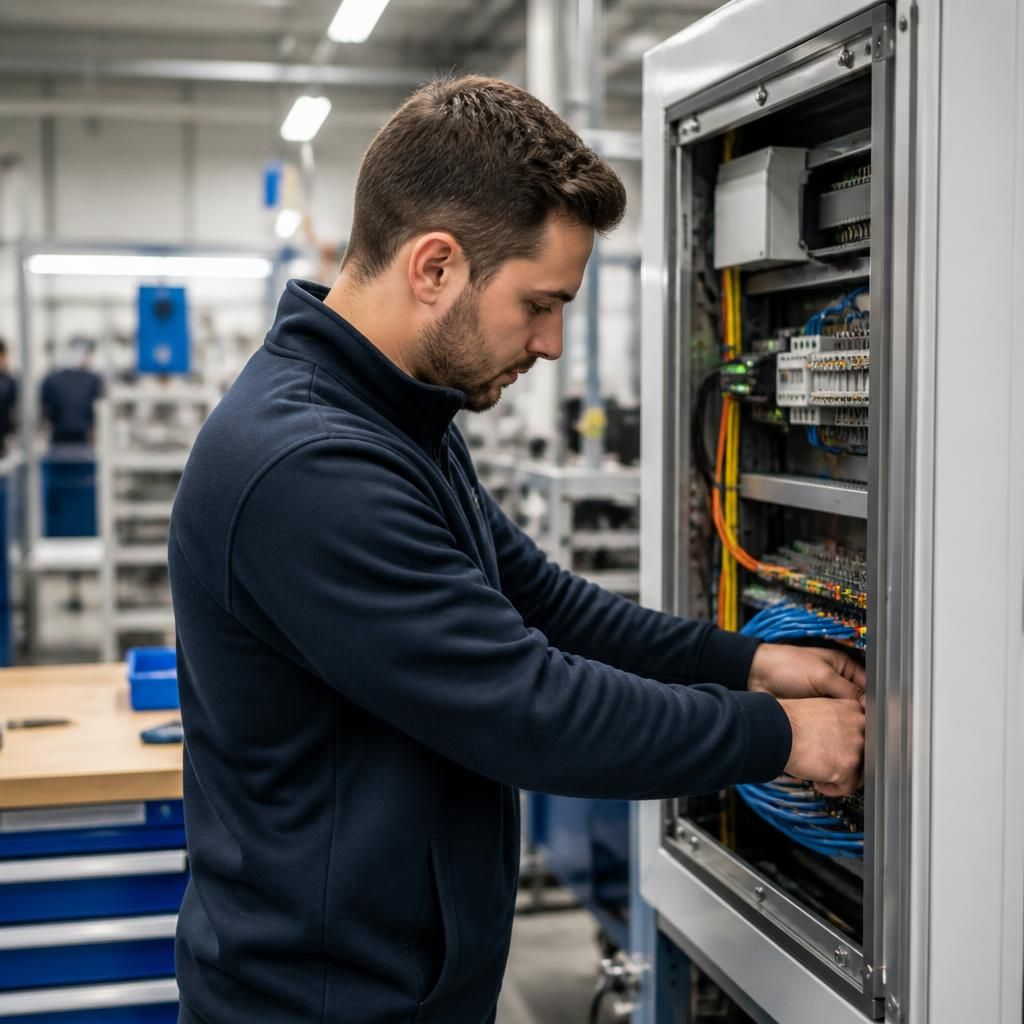
Production-Led Businesses
Manufacturing businesses need office systems and operational technology to work together reliably. An external IT partner can help coordinate infrastructure, access controls and technology planning while internal teams remain focused on production and customer requirements.

Coordinated Operations
Logistics organisations rely on communication, shared information and dependable connectivity across changing operational demands. Outsourced IT can bring clearer ownership to devices, accounts, cloud tools and security processes used by teams working across the business.

Growing Across Locations
Businesses adding premises or supporting teams in more than one location need consistent access, connectivity and security arrangements. Outsourced IT can help assess the existing setup, coordinate technical changes and align infrastructure with the organisation’s next stage of growth.
Where Small Business IT Outsourcing Fits
Small business IT outsourcing services can be structured around operational pressures, from improving device and user management to supporting expansion, strengthening controls or replacing fragmented supplier arrangements. The right scope depends on your internal capability, risk profile and technology roadmap.
No Dedicated IT Team
Suitable for small businesses where technical responsibilities sit with directors, administrators or other staff. An outsourced arrangement provides defined ownership for core IT tasks without requiring a full in-house function.
Growing Organisations
As headcount, applications and locations increase, informal IT arrangements can become difficult to control. Outsourced IT can provide a structured approach to user access, devices and technology decisions as the business develops.
Greater Security Oversight
Businesses handling sensitive information may need more consistent security practices than internal resources can support. An external IT partner can help review protective controls, identify weaknesses and coordinate improvements.
Cloud-Dependent Workplaces
Where staff rely on cloud platforms for files, applications or collaboration, the surrounding access, device and connectivity arrangements still need managing. Outsourced IT can bring these responsibilities into one defined service scope.
Several Technology Suppliers
Small businesses sometimes use separate providers for connectivity, software, hardware and support. A managed IT partner can help clarify responsibilities and coordinate technical decisions, reducing uncertainty when issues involve more than one supplier.
Questions About Outsourced IT for Small Business
Can outsourced IT support a growing small business without an in-house IT team?
Suitability depends on the responsibilities you need covered, existing internal capability, security requirements and future plans. Define scope, ownership, escalation routes, documentation and review arrangements before selecting the right provider.
What security controls should outsourced IT include for a small business?
Controls should cover multi-factor authentication, least-privilege access, secure backups, endpoint protection, patch management, email security, staff awareness, incident procedures and regular reviews, with responsibilities documented clearly for accountability and testing.
What should an outsourced IT contract include for a small business?
A contract should define services, fees, term, data protection obligations, liability boundaries, change control, termination provisions and review arrangements. It should also explain data ownership, confidentiality and dispute handling clearly.
What is the difference between outsourced IT and an in-house IT team?
An in-house team consists of employees dedicated to the organisation, while outsourced IT uses an external provider. Outsourcing offers access to broader expertise; in-house teams provide internal presence and control.
What are the risks of outsourced IT for a small business?
Risks include unclear accountability, provider dependency, inconsistent documentation, unsuitable technical decisions and difficult transitions. Mitigate them through defined ownership, access controls, documented systems, regular reviews and an early exit plan.
Discuss Your Small Business IT Requirements
Discuss your current IT responsibilities, internal resources and upcoming requirements with S2 Technology Group. You can identify which tasks are suitable for outsourcing, clarify likely priorities and decide what information is needed for a practical next step.