

Cloud IT Services for Small Business
Cloud IT services for small business provide hosted computing, storage and business applications through internet-based infrastructure rather than solely on local servers. S2 Technology Group helps organisations assess, implement and manage secure cloud environments suited to their operational needs.
Practical Benefits of Cloud IT for Small Businesses
For a small business, well-planned cloud IT can change how staff use applications, share information and recover from disruption. The practical outcomes depend on service design, permissions, connectivity and ongoing management, rather than cloud adoption alone.
Access applications and files securely
Cloud-hosted applications and storage can give authorised staff access to the systems and information they need from approved devices and locations, supporting remote and multi-site working without relying solely on an office server.
Support collaboration between teams
Shared cloud platforms provide a central environment for working on documents, communicating and accessing current information. Access permissions help ensure that users can work with the resources relevant to their role.
Reduce dependence on onsite hardware
Moving suitable applications and data into managed cloud infrastructure can reduce reliance on locally hosted servers and the maintenance they require. This can simplify the technology estate while retaining appropriate controls over access and data.
Scale technology with business needs
Cloud environments can provide a more adaptable foundation as staffing, workloads and application requirements change. Capacity, user access and services can be reviewed as the organisation develops rather than being designed only around its current premises.
Strengthen security management
A properly configured cloud environment can bring identity controls, permissions, monitoring and data protection into a managed structure. These measures need regular review to reflect changes in users, devices, applications and business risks.
Improve recovery planning
Cloud services can form part of a wider backup and recovery strategy, helping organisations restore access to important systems and information after disruption. The result depends on suitable backup arrangements, retention settings, recovery procedures and testing.
Make IT planning more consistent
Centralising selected services in a managed cloud environment gives an organisation a clearer view of its applications, users, access rights and infrastructure requirements. This supports more structured decisions about upgrades, security and ongoing IT management.

Cloud IT Guidance for Your Business
Cloud IT for a small business is not a single product; it combines hosted platforms, access rules and management decisions. A suitable arrangement should reflect how your team works, which information it handles and the level of control it needs.
S2 Technology Group discusses existing systems, working practices and future plans before recommending changes. This helps distinguish essential requirements from features that may add unnecessary complexity. Guidance can cover platform selection, permissions, device access and the practical responsibilities of managing cloud services.
For growing organisations, S2 explains options, documents the arrangement and reviews whether it remains suitable as needs change. This supports decisions about what is adopted, who can use it and how it fits the wider IT environment.
Specialist Cloud IT Expertise for Small Businesses
Cloud IT services for small business require more than moving files or applications online. S2 Technology Group considers identity management, access controls, data protection, connectivity, backup arrangements and the relationship between cloud platforms and existing infrastructure when assessing a service design.
Its technical approach covers the practical detail behind dependable cloud operations, including user permissions, device policies, application dependencies, storage structures and recovery planning. This helps identify risks that can be missed when cloud services are selected in isolation or configured without regard to the wider business environment.
S2 Technology Group also supports the ongoing governance of cloud arrangements, with attention to documentation, security review and future scalability. That depth of oversight gives small and growing organisations a clearer basis for managing cloud technology as part of their wider IT estate, rather than treating it as a standalone purchase.
Questions to Ask About Cloud IT for Small Business
What happens to your data if you change cloud providers?
Before choosing cloud IT services, confirm data portability, export formats, termination procedures, support boundaries, and responsibility for backups during transition. These checks expose lock-in risks and clarify transition support requirements.
What ongoing costs should small businesses expect from cloud IT services?
Budget for user licences, storage, connectivity, backup, security features, support and implementation. Review billing models, minimum commitments, usage-based charges and annual increases before selecting a cloud service for your organisation.
Who is responsible for securing a small business cloud environment?
Security responsibility is shared: cloud providers protect underlying infrastructure, while the business remains accountable for identities, permissions, devices, configurations, data handling and user behaviour. Define these duties contractually and operationally.
Where will your small business data be stored in the cloud?
Confirm the provider’s storage regions, applicable data-protection jurisdictions, replication arrangements and subcontractors. These details affect legal responsibilities, access during incidents and whether location requirements for regulated information are met fully.
What support is included with cloud IT services?
Check whether support covers user administration, monitoring, configuration changes, incident coordination, updates and documentation. Confirm escalation routes, service boundaries, included work and separately charged consultancy, especially for platform-specific issues.
Tailored Cloud Strategy
S2 Technology Group integrates cloud management, cyber security and connectivity planning, aligning technical decisions with each small business’s operating model.
Businesses We Support

Professional Services Cloud Workspace
Professional services organisations often need controlled access to client records, working documents and specialist applications. A well-managed cloud environment can support secure document handling while applying permissions that reflect individual roles and responsibilities.

Manufacturing Systems in the Cloud
Manufacturing businesses may use cloud services alongside production technology and local equipment. The design needs to account for operational dependencies, user permissions and the separation of business information from systems that support production activity.

Cloud Tools for Logistics Operations
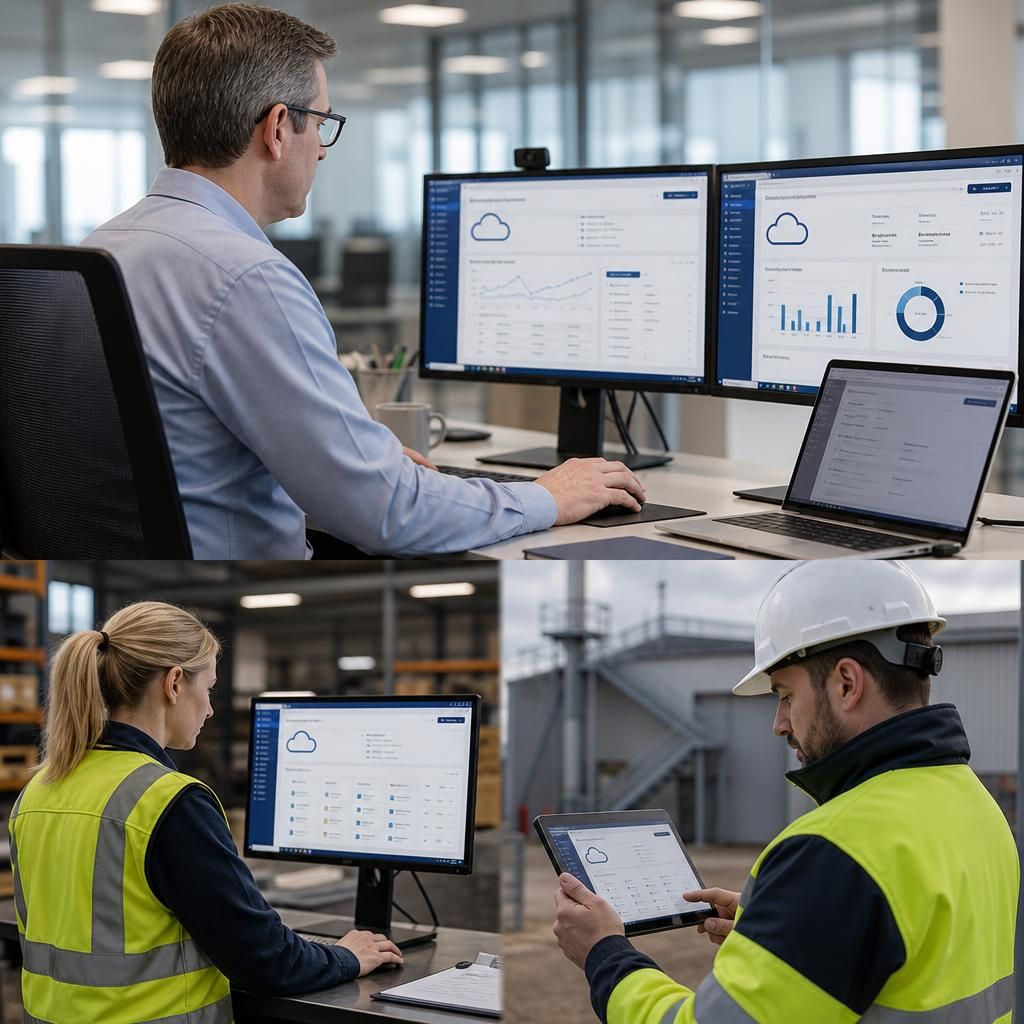
Logistics teams depend on accurate information across planning, administration and field-based work. Cloud applications can provide a shared operating environment, provided access is managed carefully across users, devices and operational locations.
Multi-Site Cloud Management
Organisations with several sites need consistent rules for accounts, access and information handling. Centralised cloud management can help align these controls while allowing each location to use the systems relevant to its day-to-day responsibilities.

Cloud Foundations for Growing Businesses
As a small business expands, informal arrangements can become difficult to govern. A documented cloud structure helps clarify ownership, permissions and system dependencies, making future changes easier to assess and manage.
Cloud Services for Different Business Needs
Cloud IT services for small business can suit organisations with distributed teams, changing staffing needs, limited server-room capacity or a preference for managed infrastructure. Each situation presents different considerations around connectivity, administration and the organisation’s ongoing technical responsibilities.
Distributed and Hybrid Teams
Cloud-based applications and file access can support staff working across different locations, provided identity controls, device security and connectivity requirements are properly assessed.
Growing Organisations
Cloud IT services can add users, storage and applications without requiring a small business to expand its own server infrastructure. Access permissions should be reviewed as responsibilities change.
Reducing Local Server Dependence
Businesses with ageing or capacity-limited servers may consider moving suitable workloads to hosted infrastructure. The decision should account for application compatibility, data handling and any remaining on-site systems.
Multi-Site Operations
A managed cloud environment can provide a consistent basis for applications, information access and user administration across offices or operational locations.
Businesses Without a Full IT Team
Cloud management can be appropriate where internal staff need technical guidance with configuration, permissions, updates and security rather than responsibility for every platform detail.
Security-Conscious Organisations
Cloud adoption should include access policies, authentication, device controls and data protection measures. These safeguards need to align with the information the business stores and the way staff use it.
Cloud IT Services for Small Business: FAQs
How can small businesses move existing applications to the cloud?
Cloud IT services for small businesses can include hosted storage, applications, computing environments, user access controls, security measures, backups and ongoing administration, selected according to operational requirements and risk considerations.
What should small businesses check before choosing a cloud service provider?
Check security controls, data handling, compliance responsibilities, service limitations, contract terms, support arrangements, integration requirements, backup provisions and exit processes. Confirm these align with your business’s risk profile and resources.
How do cloud IT services scale as a small business grows?
Cloud environments can expand through additional users, storage, applications or computing capacity. However, growth should be planned alongside licensing, permissions, connectivity and security controls to avoid unmanaged access or costs.
Can cloud IT services integrate with existing business systems?
Yes, cloud services can integrate with existing business systems through connectors, application programming interfaces and migration tools. Compatibility, data formats, authentication and ongoing maintenance should be assessed before implementation begins.
What internet connection does a small business need for cloud IT services?
A reliable, adequately sized internet connection supports cloud IT services by carrying application traffic, authentication and file access. Requirements vary with users, workloads, video meetings, resilience needs and user location.
Discuss Your Small Business Cloud Requirements
To evaluate whether cloud IT services are suitable for your organisation, speak with S2 Technology Group. We can review your current arrangements, clarify practical requirements and outline appropriate next steps for a secure, manageable cloud environment.